

Holistic Somatic Therapy: Unlock Healing 2025
Why Holistic Somatic Therapy Is Changing Mental Health Treatment
Holistic somatic therapy is a body-centered approach to healing that addresses trauma, stress, and emotional challenges by working directly with the nervous system and physical sensations. Unlike traditional talk therapy that focuses primarily on thoughts and emotions, this approach recognizes that our bodies store experiences and trauma at a cellular level.
Quick Overview: What You Need to Know About Holistic Somatic Therapy
- What it is: A therapy that uses body awareness, breathwork, and nervous system regulation to heal trauma
- How it works: Helps release stored tension and trauma through physical sensations rather than just talking
- Best for: PTSD, anxiety, depression, chronic pain, addiction recovery, and stress-related conditions
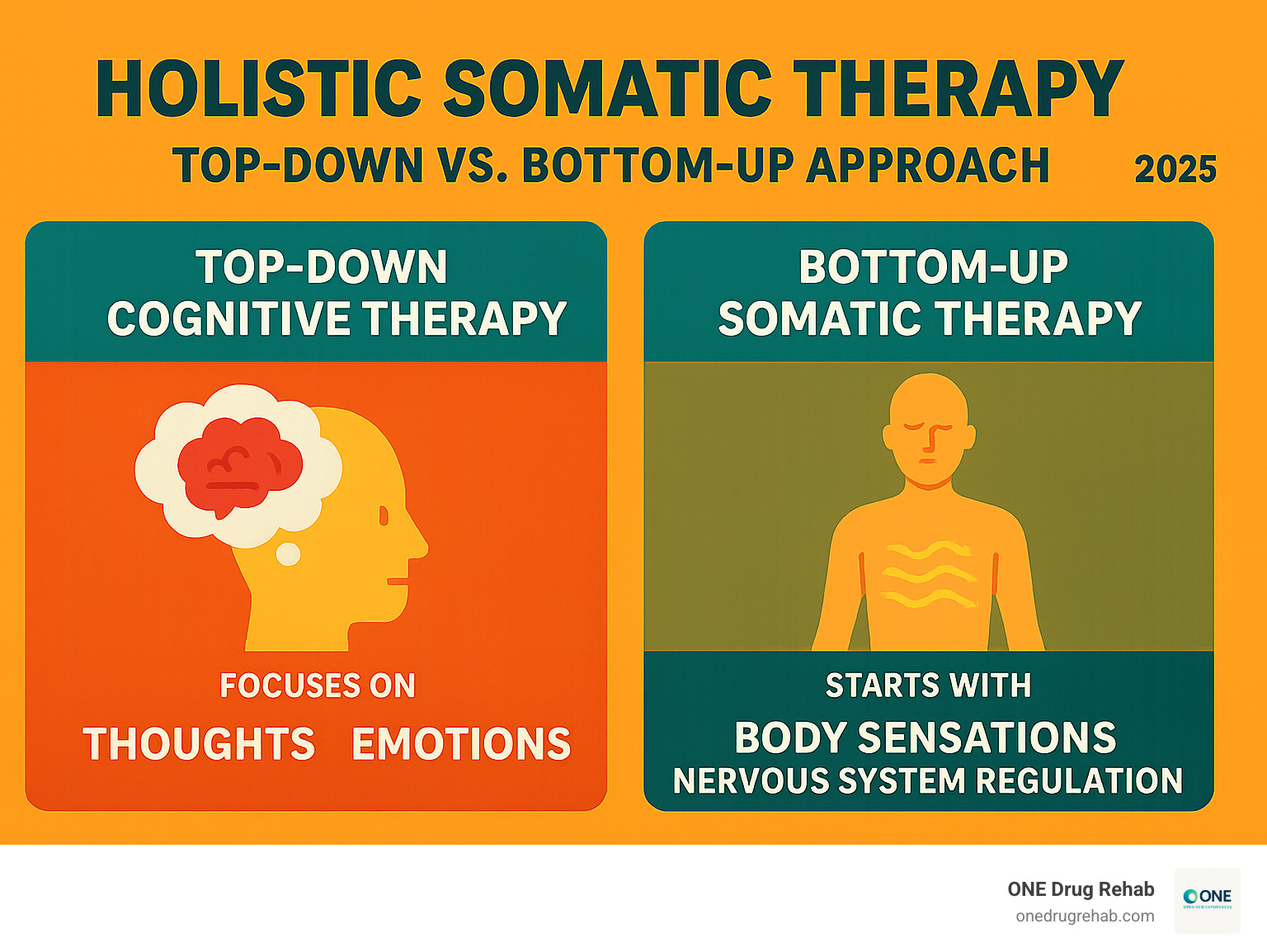
- Key difference: Uses a “bottom-up” approach starting with the body, versus “top-down” cognitive approaches
- Sessions include: Body scanning, breathing exercises, gentle movement, and mindful awareness practices
The growing awareness of trauma’s impact on the body has sparked new interest in these approaches. As The Body Keeps the Score – which has remained on the New York Times bestseller list for over four years – demonstrates, there’s a hunger for healing methods that go beyond traditional talk therapy.
Research shows that 90% of participants who used Somatic Experiencing for trauma treatment reported improvement in their symptoms. This success rate reflects what many people find: when talk therapy reaches its limits, the body often holds the key to deeper healing.
For those struggling with addiction, anxiety, or trauma, holistic somatic therapy offers a path that honors both mind and body. It’s particularly valuable because trauma often gets “stuck” in our nervous system, creating physical symptoms that pure cognitive approaches may not address.
Understanding Somatic Therapy: Beyond Words
For decades, traditional therapy focused almost entirely on the mind. The thinking was simple: change your thoughts, change your feelings, change your life. But as we’ve learned more about trauma and how our bodies actually work, we’ve found something important – our minds are just one piece of a much bigger puzzle.
Your body isn’t just carrying you around while your brain does all the work. It’s actually an active participant in everything you experience, especially when it comes to storing and processing trauma. Think about it – when you’re scared, your heart races. When you’re stressed, your shoulders tense up. Your body is constantly responding to and remembering your experiences, holding a story that words alone cannot always tell.

This understanding isn’t entirely new. Back in the early 1900s, a pioneer named Wilhelm Reich suggested something radical for his time – that our bodies actually hold onto trauma. He noticed that repressed emotions could show up as physical “armor” or chronic muscle tension. While his ideas were controversial then, they laid the groundwork for what we now understand about the deep connection between our psychological and physical selves.
Here’s where holistic somatic therapy comes in. While traditional talk therapy is incredibly valuable, it might not fully address what’s happening when trauma, chronic stress, and nervous system problems are involved. This is where working with the body alongside the mind can make all the difference, offering a complete path to healing that honors both your mental and physical experience.
What is Holistic Somatic Therapy?
Holistic somatic therapy brings together both psychotherapy and physical practices to create deep, lasting healing. The word “soma” comes from Greek, meaning “the living body” – emphasizing that your body is a unified, conscious whole, not just a collection of separate parts. It views the mind and body as inseparable partners in your overall well-being.
This approach is built on a powerful understanding: your life experiences, especially overwhelming or traumatic ones, don’t just live in your memories. They’re actually physically encoded in your nervous system and tissues. When something traumatic happens, your body’s natural survival responses – like fight, flight, or freeze – can get “stuck,” creating a buildup of unprocessed emotions and physical tension. This unresolved energy remains trapped, influencing your behavior, emotional state, and physical health long after the event has passed.
This shows up in many ways. You might experience anxiety, depression, chronic pain, or even conditions like somatic symptom disorder, where psychological distress expresses itself through physical symptoms. For individuals in recovery, this can manifest as persistent cravings or a feeling of being unsafe in one’s own skin, making relapse a constant risk.
Holistic somatic therapy takes a “bottom-up” approach, meaning it starts with your physical body to release stuck energy and regulate your nervous system. By focusing on physical sensations, gestures, posture, and movement, it creates gateways to understanding and healing that ultimately lead to psychological and emotional shifts. It helps you listen to the story your body is telling, rather than just the one your mind repeats.
This approach recognizes something beautiful: by working with your body, you can access and resolve things that talk therapy alone might not reach. It’s about fostering a profound connection between your mind, body, and spirit – because true healing encompasses your entire being. You can learn more about this approach through resources like A holistic path to healing.
Somatic Therapy vs. Traditional Talk Therapy (CBT)
To really understand what makes holistic somatic therapy special, it helps to compare it with traditional talk therapies like Cognitive Behavioral Therapy (CBT), which has long been considered the gold standard in mental health treatment. While both approaches aim for healing and well-being, they work in fundamentally different ways.
| Feature | Holistic Somatic Therapy | Traditional Talk Therapy (CBT) |
|---|---|---|
| Approach | Bottom-Up (starts with the body) | Top-Down (starts with thoughts) |
| Focus | Body sensations and nervous system regulation | Thought patterns and cognitive restructuring |
| Techniques | Body awareness, breathwork, movement, grounding | Cognitive restructuring, thought challenging, behavioral exercises |
| Goals | Releasing stored tension and trauma from the body | Changing unhelpful thinking patterns |
The key difference is in the direction of healing. Traditional CBT works from the top down – it focuses on identifying and changing thought patterns to influence emotions and behaviors. This Cognitive Behavioral Therapy approach has helped millions of people and remains highly effective for many conditions, particularly when the primary issue is rooted in cognitive distortions.
Holistic somatic therapy, on the other hand, works from the bottom up. Instead of starting with your thoughts, it begins with what’s happening in your body right now. The idea is that by releasing physical tension and regulating your nervous system first, you create space for emotional and mental shifts to happen naturally. This can be especially powerful when trauma has made it difficult to even access or articulate thoughts and feelings clearly.
Both approaches are valuable, and many people find that combining them – or choosing the one that feels right for their particular situation – gives them the best results. Some people find that talk therapy takes them as far as they can go, and then body-based work helps them access deeper layers of healing that were previously unreachable.
Core Principles and Common Techniques
Holistic somatic therapy is built on several core principles that guide how healing happens. These techniques are designed to be gentle, empowering you to become an active participant in your own recovery journey.
The first is body awareness – learning to tune into what your body is telling you moment by moment. This involves noticing subtle shifts in sensation, like a tightness in your chest or warmth in your hands, without judgment. This might sound simple, but many of us have learned to disconnect from our physical sensations, especially if they’re uncomfortable or linked to past trauma.
Grounding techniques help you feel safe and connected to the present moment, anchoring you when you feel overwhelmed. This might involve feeling your feet on the floor, noticing the support of the chair beneath you, or using your senses to connect with your environment. When you’re grounded, your nervous system receives the signal that you are safe, allowing it to begin to relax and heal.
Breathwork is another cornerstone of somatic therapy. Your breath is directly connected to your autonomic nervous system, and learning to breathe in specific ways can consciously shift you from a state of stress to a state of calm. It’s a powerful, portable tool for regulating your emotions and releasing stored tension. It’s amazing how something as simple as changing your breathing pattern can shift your entire state of being.
Two important concepts that ensure safety are pendulation and titration. Pendulation involves gently moving your awareness between a state of distress and a state of calm or resourcefulness. This helps your nervous system build resilience and learn that it can handle difficult feelings without getting stuck. Titration means working with small, manageable amounts of difficult material at a time, so you don’t get re-traumatized or overwhelmed.
Movement is often incorporated, whether it’s gentle stretching, shaking, yoga, or more structured movement practices. Your body naturally wants to move to release tension and complete survival responses that were interrupted. Somatic therapy helps you tune into and follow these natural impulses in a safe, contained way.
Many somatic therapists are trained in specific approaches like Sensorimotor psychotherapy or Somatic Experiencing. While the specific techniques may vary, they all share the common goal of helping you reconnect with your body’s natural wisdom and capacity for healing.
The beauty of these techniques is that they work with your body’s existing abilities rather than trying to force change. Your nervous system already knows how to heal – sometimes it just needs the right support and guidance to remember how.