
Why Reading Can Transform Your Recovery Journey
Addiction recovery books offer powerful support for anyone navigating sobriety, whether you’re in early recovery or supporting a loved one through their journey. These books provide fresh perspectives, reduce isolation, and reinforce that you’re not alone in this process.
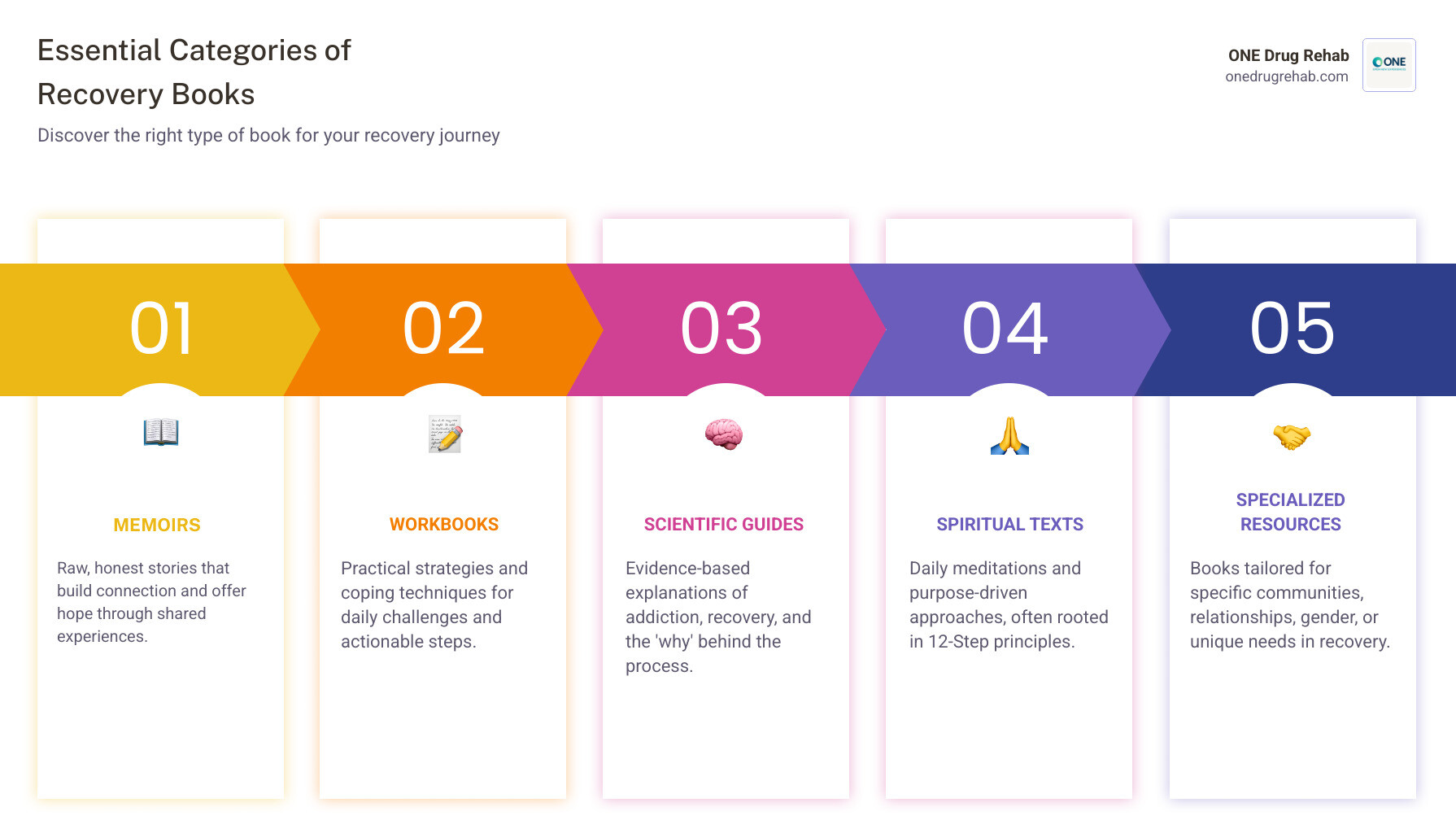
Essential Categories of Recovery Books:
- Memoirs – Raw, honest stories that build connection and hope
- Workbooks – Practical strategies and coping techniques for daily challenges
- Scientific Guides – Evidence-based explanations of addiction and recovery
- Spiritual Texts – Daily meditations and purpose-driven approaches
- Specialized Resources – Books for specific communities, relationships, and unique needs
Research shows that while books can’t replace professional treatment, they serve as valuable tools that complement therapy and provide support between sessions. This therapeutic use of reading is often called bibliotherapy, and it can reinforce lessons learned in treatment and offer inspiration during difficult moments.
The beauty of recovery literature lies in its diversity. From Sarah Hepola’s Blackout exploring alcohol’s grip on women to Gabor Mat’s In the Field of Hungry Ghosts explaining the science behind addiction, these books meet readers wherever they are in their journey.
Whether you’re seeking practical daily strategies, scientific understanding, or simply the comfort of shared experience, the right book can become a trusted companion in recovery. Our curated list includes best-selling and award-winning titles that have helped thousands of people find their path to sobriety.
Memoirs: Finding Connection and Hope in Shared Stories
When you’re struggling with addiction, it can feel like you’re the only person in the world going through this experience. That’s where addiction recovery books in the memoir category become so powerful – they remind us that we’re not alone in this fight.
Reading someone else’s raw, honest story about their journey through addiction and recovery can be incredibly healing. These memoirs don’t sugarcoat the experience. They show us the messy reality of addiction, the denial, the rock bottom moments, and yes – the hope that comes with recovery.
What makes these books so special is how they help reduce shame. When you read about someone else’s struggles and think “wow, that sounds exactly like what I went through,” something shifts inside. You realize that your experiences, no matter how dark they felt, are shared by others who have found their way out.
These stories also show us what life can look like on the other side. They explore how people rebuild their identity beyond addiction and find new purpose in sobriety. Most importantly, they prove that recovery is possible.
Raw and Relatable Narratives of Addiction
Some memoirs have become true lifelines for people in recovery. These books offer profound insights and remind us of our shared humanity.
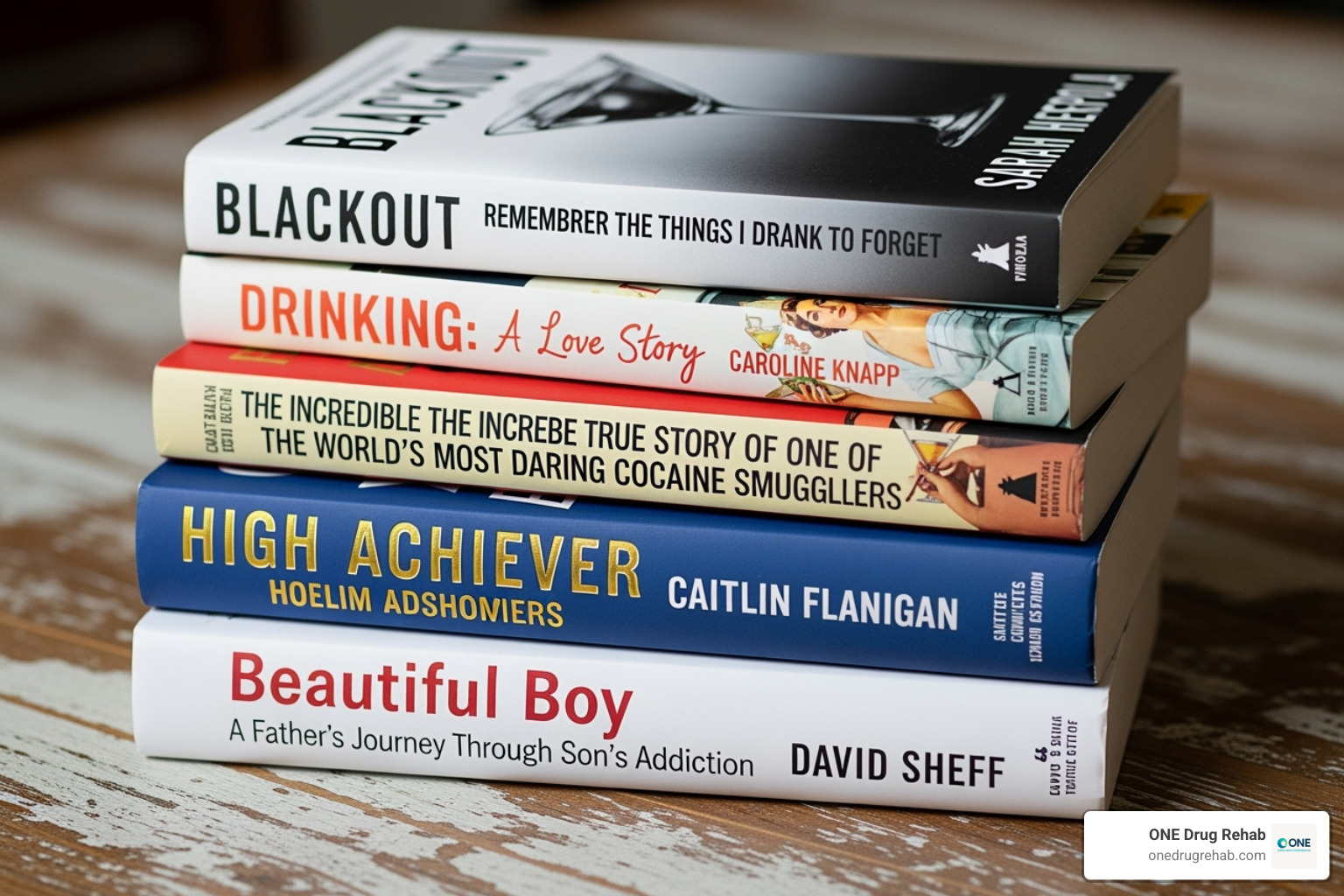
Blackout: Remembering the Things I Drank to Forget by Sarah Hepola captures the female experience with alcohol in a way that resonates with so many women. Sarah writes honestly about how she used alcohol to find confidence she couldn’t access sober. Her story shows how drinking until she blacked out became her normal, and how sobriety ultimately helped her find genuine self-worth. If you’ve ever felt like you needed alcohol to be your “real” self, Sarah’s journey will speak to you.
Drinking: A Love Story by Caroline Knapp is often called the ultimate addiction memoir, and for good reason. Caroline perfectly captures the emotional dependency that develops with alcohol – that intricate dance of denial and secrecy that so many high-functioning alcoholics know well. Her ability to put into words what addiction actually feels like has inspired countless readers to seek their own path to recovery.
High Achiever by Tiffany Jenkins takes us into opioid addiction with brutal honesty. Tiffany shows us her double life as a mother struggling with addiction, her time in jail, and her journey back to recovery. This memoir offers hope specifically for those battling opioid addiction, showing that even after hitting rock bottom, it’s possible to rebuild your life.
The father-son duo of David and Nic Sheff provides something unique with Beautiful Boy and Tweak. David’s perspective as a father watching his son struggle with methamphetamine addiction is heartbreaking, while Nic’s own account gives us the raw reality of addiction from the inside. Together, these books show how addiction affects entire families and illustrate the difficult cycle of relapse and recovery. They prove that love endures, even through the darkest times.
These memoirs don’t just tell us what happened – they help us understand how it felt and show us that healing is possible.
Practical Guides & Workbooks: Your Roadmap to Sobriety
Reading someone else’s recovery story can be incredibly inspiring, but what happens when you close the book and face your own daily challenges? That’s where addiction recovery books focused on practical guidance become invaluable companions in your journey.
Unlike memoirs that touch your heart, workbooks and practical guides roll up their sleeves and get to work with you. These books don’t just tell you that recovery is possible—they show you exactly how to make it happen, one day at a time.
Think of these resources as your personal recovery toolkit. They’re packed with actionable strategies you can use when cravings hit, coping techniques for stressful situations, and structured plans that help you build new, healthy habits. The best part? They’re designed to work alongside your therapy sessions, reinforcing what you learn with your counselor and giving you something concrete to practice at home.
What makes these books special is their interactive nature. You’re not just reading—you’re actively participating in exercises, filling out worksheets, and working through prompts that help you understand your own patterns and triggers. It’s like having a recovery coach available 24/7, ready to guide you through whatever challenges come your way.

Essential Addiction Recovery Books with Actionable Strategies
When you’re ready to move beyond inspiration and into action, these books offer the concrete tools you need to build a solid foundation for recovery.
The Recovery Book by Al J. Mooney, Catherine Dold, and Howard Eisenberg has earned its reputation as the go-to comprehensive guide for good reason. More than 350,000 people have turned to this book for its straightforward, no-nonsense approach to recovery. What sets it apart is the brilliant Recovery Zone System, which breaks your journey into three manageable phases: the Red Zone (focused on survival and getting through early recovery), the Yellow Zone (rebuilding your life and relationships), and the Green Zone (thriving in long-term recovery and helping others).
The book also introduces the TAMERS technique, a daily practice that uses your brain’s natural ability to rewire itself. This isn’t complicated neuroscience—it’s a simple, practical method that helps make sobriety feel natural rather than like a constant struggle. If you’re curious whether this approach resonates with you, you can read the first three chapters for free before committing.
The Addiction Recovery Workbook by Paula A. Freedman takes a hands-on approach that many people find incredibly helpful. Freedman, drawing on Cognitive Behavioral Therapy (CBT) skills, provides exercises and strategies you can use immediately when facing triggers, stressors, or those everyday challenges that can threaten your sobriety. This isn’t meant to replace your therapist, but rather to give you practical tools to practice between sessions. The workbook format means you’re actively engaging with your recovery rather than passively reading about it.
Beyond Addiction by Jeffrey Foote, Carrie Wilkens, and Nicole Kosanke stands out because it recognizes that recovery affects entire families, not just individuals. Written by addiction professionals, this book offers a refreshing science and kindness approach that moves beyond tough love tactics. It shows family members and friends how to use positive reinforcement strategies and behavioral techniques to genuinely support their loved ones’ recovery efforts. The authors also provide valuable insights into navigating treatment options and understanding how the rehab system works, making it an essential resource for anyone supporting someone in recovery.
These practical guides serve as your roadmap for recovery, offering structure and support when the path ahead feels uncertain. They complement professional treatment beautifully, giving you concrete tools for relapse prevention and daily maintenance of your sobriety.
The Science and Psychology Behind Addiction: Understanding the ‘Why’
There’s something deeply healing about finally understanding why addiction happens. For years, many people in recovery carry shame, wondering if they’re simply weak or broken. The truth is far more complex and, honestly, much more hopeful.
Modern addiction recovery books that explore the science behind substance use help us see addiction for what it really is: a complex health condition rooted in brain chemistry, trauma, and our deepest human needs for connection and relief from pain. When you understand how addiction actually works in your brain, it becomes easier to be gentle with yourself and develop strategies that actually work.
The link between trauma and addiction is particularly eye-opening. Many people find that their substance use wasn’t random—it was their brain’s attempt to cope with overwhelming experiences or emotions. This knowledge doesn’t excuse harmful behaviors, but it does help reduce the crushing shame that often keeps people stuck in cycles of relapse.
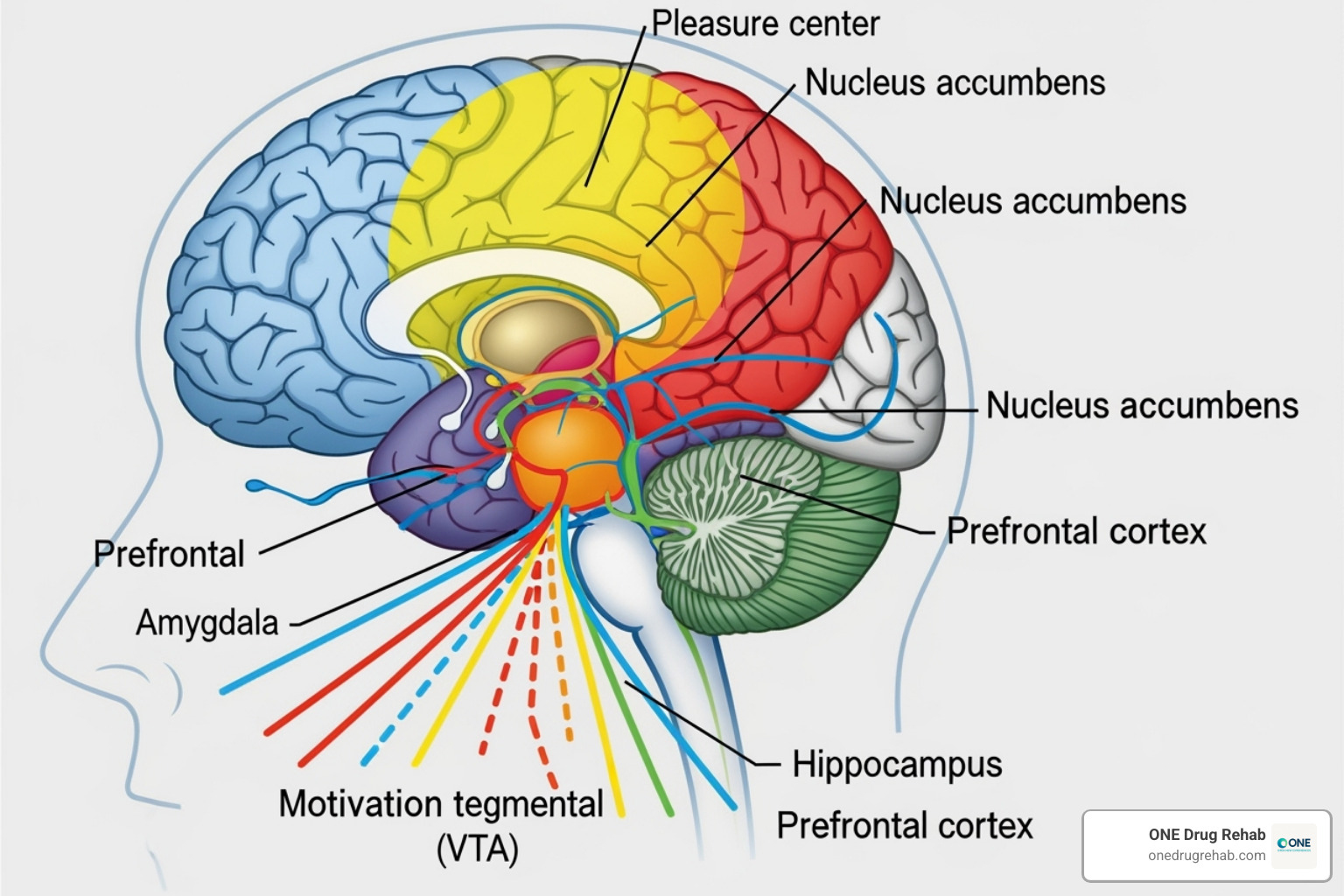
Understanding the science also empowers you with better tools for recovery. When you know how your brain’s reward pathways work, you can make informed decisions about treatment approaches and daily strategies that support lasting sobriety.
Insightful Books on the Nature of Addiction
These books transform how you think about addiction by explaining the fascinating science behind it:
In the Field of Hungry Ghosts: Close Encounters with Addiction by Gabor Maté stands out as one of the most compassionate explorations of addiction’s roots. Dr. Maté, a world-renowned trauma expert, weaves together brain science with real stories from his work in Vancouver’s Downtown Eastside. His central message is revolutionary: addiction isn’t primarily a disease or moral failing, but a complex response to trauma and emotional pain.
What makes this book special is how Maté explains brain science in simple terms while never losing sight of the human stories behind the statistics. He shows how early trauma literally reshapes our brains, making us more vulnerable to addiction later in life. This understanding opens the door to compassionate self-understanding—perhaps the most crucial ingredient for lasting healing.
Quit Like a Woman: The Radical Choice to Not Drink in a Culture Obsessed with Alcohol by Holly Whitaker takes a bold feminist approach to understanding alcohol addiction. Whitaker doesn’t just explain the neuroscience of drinking; she examines how our societal drinking culture specifically targets and harms women. Her book reveals how marketing, social pressures, and cultural norms create the perfect storm for alcohol dependency.
This isn’t your typical recovery book. Whitaker offers a feminist recovery perspective that challenges traditional approaches and provides a new path to sobriety that many women find more relevant than conventional methods. She backs up her insights with solid science while maintaining a refreshingly honest, sometimes irreverent tone.
The Unexpected Joy of Being Sober by Catherine Gray combines neuroscience of alcohol with personal storytelling in a way that’s both educational and deeply encouraging. Gray digs into the psychology of drinking—why we reach for alcohol when we’re stressed, bored, celebrating, or grieving—and explains what’s actually happening in our brains during these moments.
What sets this book apart is its focus on the benefits of an alcohol-free life. Rather than dwelling on what you’re giving up, Gray paints a vivid picture of what you’re gaining: better sleep, clearer thinking, deeper relationships, and yes, unexpected joy. Her approach is backed by interviews with neuroscientists and psychologists, but delivered with the warmth of a conversation with a wise friend.
Diverse Perspectives: The Best Addiction Recovery Books for Specialized Needs
Recovery isn’t a one-size-fits-all journey. What speaks to your heart might not resonate with someone else, and that’s perfectly okay. The world of addiction recovery books recognizes this beautiful diversity, offering specialized resources for different communities, spiritual paths, and life experiences.
Whether you’re looking for daily spiritual guidance, culturally-informed healing approaches, or advice on navigating relationships in sobriety, there’s likely a book written specifically for your situation. These specialized resources understand that recovery intersects with many aspects of our identity – our gender, culture, spirituality, and relationships all play important roles in how we heal.
Finding Your Niche in Recovery Literature
Some of the most powerful recovery books address the unique challenges and strengths of specific communities:
Twenty-Four Hours a Day by Richmond Walker has been a trusted companion since 1954 for people in 12-Step programs. This classic offers daily meditations, thoughts, and prayers designed to help readers maintain sobriety one day at a time. Its spiritual focus provides comfort and a sense of shared purpose, making it feel like having a wise friend check in with you every morning.
Indigenous healing and recovery literature explores the profound connection between addiction, trauma, and cultural identity. These powerful narratives highlight how intergenerational trauma from colonialism impacts communities, while celebrating the resilience found in reconnecting with traditional knowledge and ceremonies.
Authors like Helen Knott in In My Own Moccasins: A Memoir of Trauma, Resiliency, and Reconciliation share deeply personal journeys of reclaiming spirit through sisterhood, ceremony, and family love. Jesse Thistle’s From the Ashes: My Story of Being Indigenous, Homeless, and Finding My Way offers hope through his account of overcoming homelessness and addiction by reconnecting with his roots and embracing decolonization therapy.
A Woman’s Way Through the Twelve Steps by Stephanie S. Covington recognizes that women often face unique challenges in recovery. This book addresses how trauma, relationships, and societal expectations can impact a woman’s journey to sobriety. Covington’s gender-specific approach helps women steer recovery in a way that honors their experiences and needs.
For those wondering about relationships and dating in sobriety, Dry Humping by Tawny Lara offers a refreshingly honest and lighthearted guide to sober dating. Lara explores how to steer relationships without alcohol as a social lubricant, proving that romance and fun are absolutely possible – and often better – in sobriety.
The beauty of these specialized resources is that they meet you exactly where you are. They understand that your recovery journey is uniquely yours, shaped by your background, beliefs, and personal experiences.