
Rehab Facility Reviews: 10 Powerful Ways to Avoid Bad Choices 2025
Why Finding Trustworthy Rehab Facility Reviews Matters
Rehab facility reviews are comprehensive evaluations of treatment centers that include ratings, patient experiences, and facility details to help you make informed decisions about addiction treatment. Here’s what you need to know:
Key Review Sources:
- Medicare Care Compare: Official ratings for 1,000+ facilities
- U.S. News Rankings: Professional evaluations of top 50 rehab hospitals
- Patient testimonials: Real experiences from former clients
- Accreditation status: CARF and Joint Commission certifications
- Star ratings: Treatment effectiveness, amenities, and nutrition scores
What to Look For:
- Consistent patterns across multiple reviews
- CARF or Joint Commission accreditation
- Specific details about treatment programs
- Staff qualifications and credentials
- Insurance and payment options
The search for quality addiction treatment can feel overwhelming. With over 1,000 inpatient rehabilitation facilities nationwide tracked by Medicare Care Compare, finding reliable information is like searching for a needle in a haystack.
“Before going into inpatient rehab, it’s important to have an idea of the kind of environment that exists in that rehab,” notes one treatment guide. Yet many families find too late that flashy websites don’t always match reality.
The stakes are too high for guesswork. Understanding how to read between the lines of facility reviews – and knowing which sources to trust – can mean the difference between finding genuine help and ending up disappointed.
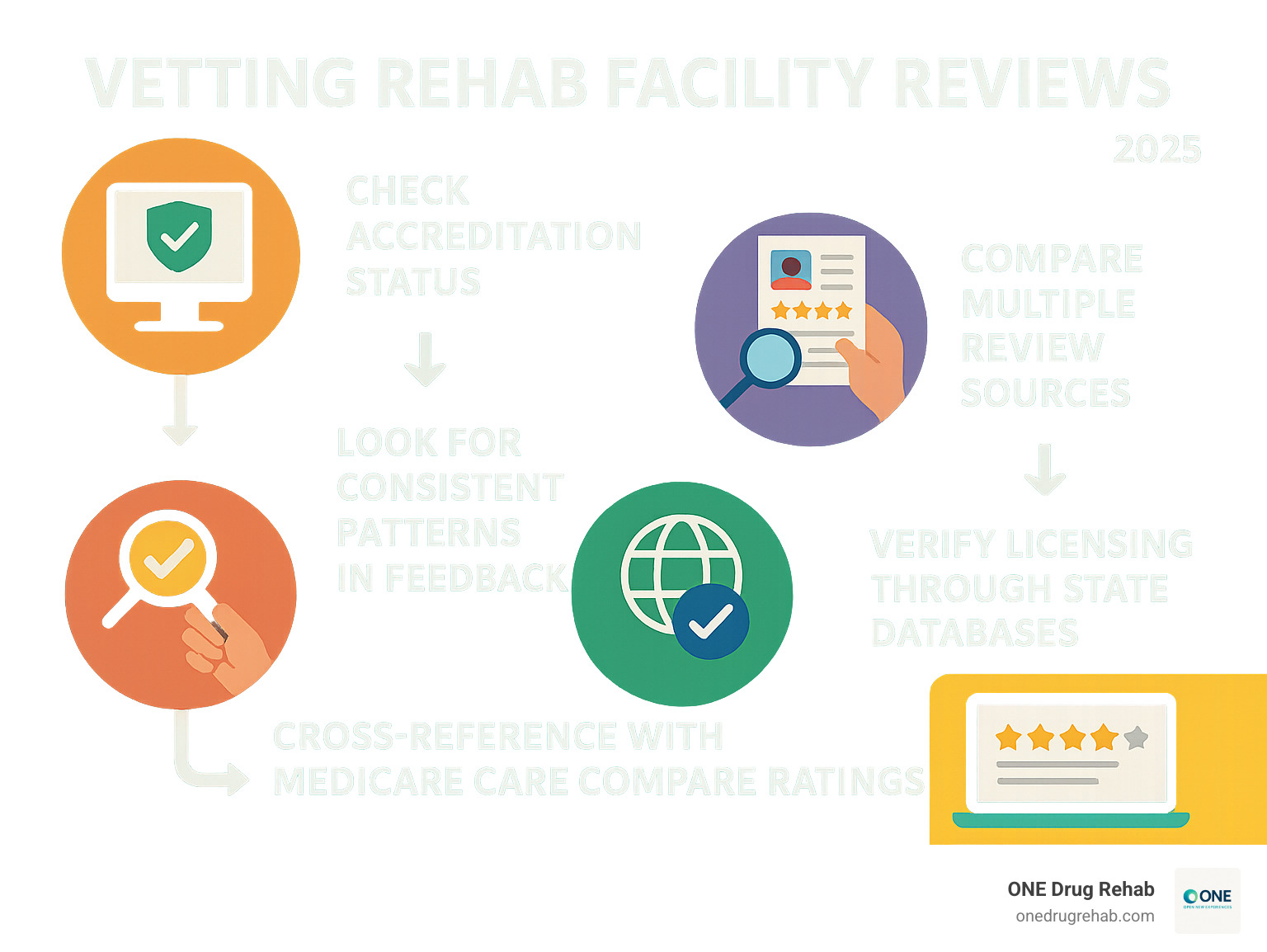
Understanding Rehab Facility Reviews
When you’re searching for addiction treatment, you’ll encounter rehab facility reviews from many different sources – and they’re not all created equal. Think of it like getting restaurant recommendations: your friend’s opinion matters, but so does the health inspector’s report.
User-generated reviews are the personal stories from people who’ve actually been there. These folks share the real deal about daily life – whether the rooms were clean, if staff treated them with respect, and yes, even how the food tasted. Most review sites use a simple 1-5 star system, breaking things down into categories like treatment quality, living conditions, and meals.
Expert ratings come from organizations like U.S. News, which recently evaluated over 1,000 rehab hospitals using strict professional standards. They’re not rating the pizza quality – they’re looking at medical outcomes, safety records, and whether facilities actually help people get better.
Official quality measures from Medicare track cold, hard numbers: How many patients improved? How many had to come back? How safe is this place? It’s like having access to a facility’s report card, complete with grades you can trust.
The magic happens when you combine all three perspectives. Personal experiences tell you what daily life feels like, expert evaluations reveal professional standards, and official data shows real results.
Reading Rehab Facility Reviews Like a Pro
Here’s a secret about rehab facility reviews: the star rating is just the beginning of the story, not the whole book.
Take two real examples. Lake Place Retreat Center has 5.0 stars from 14 reviews, while Bluff Augusta sits at 3.7 stars from 31 reviews. Which one’s better? You can’t tell just from those numbers. Lake Place might be amazing, or it might just be newer with fewer reviews.
The real gold is in the stories people tell. When you see the same complaint popping up again and again – broken bathrooms, rude staff, terrible food – that’s not coincidence. That’s a pattern worth paying attention to.
Look for reviews with specific details. Someone who writes “the night staff did ankle monitor checks at 2 a.m. every single night” is probably telling the truth. Someone who just says “worst place ever” without any details? Take that with a grain of salt.
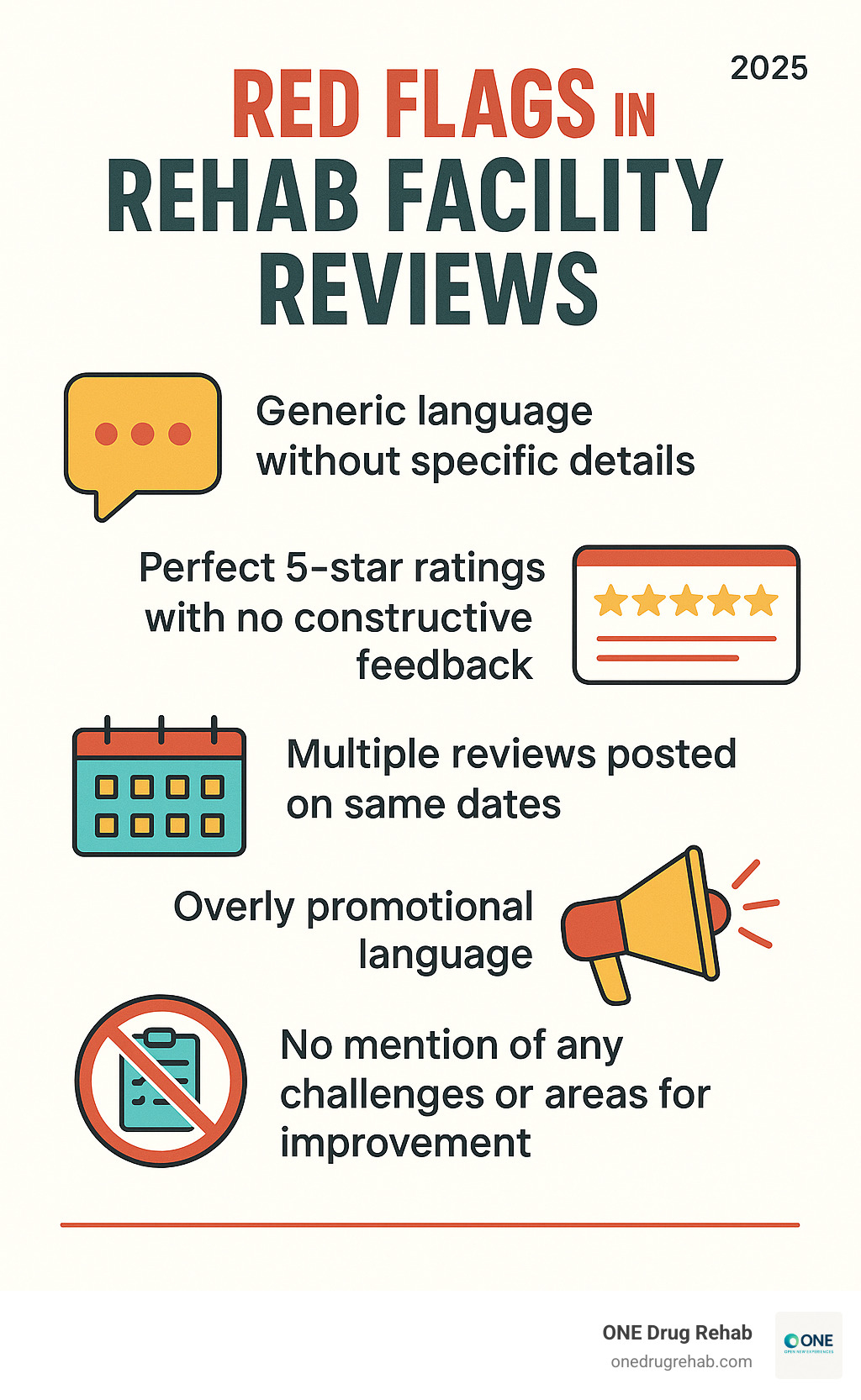
Red Flags in Rehab Facility Reviews
Unfortunately, not all rehab facility reviews are honest. Some warning signs should make you pause and dig deeper.
Watch out for reviews that sound like they were written by the same person. If multiple “different” reviewers use identical phrases or the same unusual words, something’s fishy. Real people write differently – their personalities show through their words.
Be suspicious of perfect scores everywhere or terrible ratings across the board without specific reasons. Life isn’t that black and white, and neither are most treatment experiences.
Missing credentials are a huge red flag. Legitimate facilities proudly display their CARF accreditation, Joint Commission certification, or state licensing. If you can’t find this information easily, ask yourself why they’re hiding it.
Pay-to-play review sites are another concern. Some platforms let facilities pay for better placement or to suppress negative reviews. Always check if a site discloses these relationships – honest platforms are upfront about how they make money.
Credibility Check: How to Separate Fact From Hype
Think of verifying rehab facility reviews like checking someone’s references before hiring them for the most important job in your life – your recovery. You wouldn’t trust just anyone with that responsibility, right?
The gold standard for credibility comes from official accreditation bodies that actually visit facilities and put them through rigorous testing. CARF (Commission on Accreditation of Rehabilitation Facilities) and The Joint Commission don’t just take a facility’s word for it – they dig deep into treatment quality, staff credentials, and financial stability.
When a facility earns CARF accreditation, it’s like having a trusted friend vouch for them. These organizations examine everything from how they track patient outcomes to whether their staff actually knows what they’re doing. It’s your best protection against facilities that look great online but fall short when you need them most.
HIPAA compliance should be a given, not a bonus. Any legitimate treatment center will clearly explain how they protect your privacy. If a facility seems casual about confidentiality or doesn’t mention privacy protections, that’s a red flag waving right in your face.
The real magic happens when you use pattern recognition across multiple sources. Take those heartfelt patient stories and cross-reference them with cold, hard data from Care Compare. When personal experiences align with official quality scores, you’ve found something trustworthy.
Certifications & Accreditations Matter
Look for CARF’s gold seal like you’d look for a lifeguard at a beach – it means someone qualified is watching out for your safety. This isn’t just a pretty logo; it represents months of evaluation covering treatment protocols, staff training, and financial management.
The Joint Commission emblem carries extra weight if you need medical detox or have health complications alongside addiction. These folks specialize in healthcare safety standards, so their stamp of approval means the facility can handle complex medical situations.
State licensing is the absolute bare minimum – like having a driver’s license to operate a car. Every legitimate rehab must hold current state licenses, which you can verify through your state’s health department website.
Data-Driven Quality Scores
Numbers don’t lie, and that’s exactly why Medicare’s IRF Quality Reporting Program tracks concrete measures like falls with major injury and discharge mobility scores. These aren’t feel-good metrics – they’re real outcomes from the most recent reporting period.
U.S. News rankings take the guesswork out of quality comparisons by evaluating facilities on patient outcomes, safety measures, and specialized care capabilities. When a hospital excels in multiple specialties, it usually means they’ve got their act together across the board.
Patient satisfaction scores from official surveys cut through the marketing fluff to tell you how facilities really handle communication, pain management, and discharge planning. These standardized measures let you compare apples to apples instead of trying to decode conflicting online reviews.
Comparing Rehab Centers Side-by-Side

The real power of rehab facility reviews becomes clear when you put potential treatment centers side by side. Think of it like shopping for a car – you wouldn’t buy the first one you see without comparing features, reliability, and value.
Creating a simple comparison framework makes all the difference. When we look at accredited versus non-accredited centers, the differences are striking. Accredited facilities typically employ licensed professionals who follow evidence-based treatment protocols, while non-accredited centers might cut corners on staff credentials or use inconsistent approaches.
| Quality Measure | Accredited Centers | Non-Accredited Centers |
|---|---|---|
| Staff Credentials | Licensed professionals | May lack proper licensing |
| Treatment Protocols | Evidence-based practices | Inconsistent approaches |
| Safety Standards | Rigorous monitoring | Variable oversight |
| Outcome Tracking | Documented results | Limited data |
| Financial Protection | Regulated billing | Higher fraud risk |
Functional outcomes – basically how much patients actually improve – should be at the top of your comparison list. Look for facilities that can show concrete improvements in their patients’ daily living skills and independence levels.
Readmission rates are like a report card for treatment effectiveness. If people keep coming back because they weren’t ready for discharge, that’s a red flag about the facility’s aftercare planning.
For a comprehensive look at treatment options in your area, browse our Drug Rehab Facilities directory where you can compare multiple facilities at once.
Online vs Offline Review Sources
Google stars give you a quick temperature check on patient satisfaction. Generally speaking, four-star ratings indicate higher quality than three-star ratings, but don’t stop there. The real gold is in reading what people actually wrote about their experiences.
Word-of-mouth recommendations from healthcare professionals, support group members, or trusted friends often carry more weight than anonymous online reviews. These sources usually know facility reputations from multiple perspectives and aren’t trying to sell you anything.
CMS data from Medicare gives you the most objective quality measures available. This government data tracks concrete outcomes without any commercial bias or marketing spin.
Tech Tools for Quick Comparison
Modern technology makes comparing facilities easier than ever. Filter systems on review sites let you narrow your search by location, insurance acceptance, treatment specialties, and accreditation status. The key is using multiple filters together to find facilities that truly match your specific needs.
Interactive maps show you exactly where facilities are located relative to your home, work, or support network. This proximity factor can be crucial for family involvement and might even affect your insurance coverage.
Beyond Reviews: Questions, Coverage & Family Role
Finding the right facility goes beyond reading reviews—you need to understand what your insurance actually covers and how to ask the right questions. The financial side of treatment can be just as overwhelming as choosing a facility, but knowing your options upfront prevents surprises later.
Medicare covers addiction treatment for eligible individuals, typically including inpatient detox and rehabilitation services. The coverage includes both the medical and therapeutic components of treatment, though you’ll want to verify specific benefits with your plan.
Medicaid often provides comprehensive coverage with little to no out-of-pocket costs. Many people don’t realize they qualify for Medicaid, especially during health crises. Each state has different eligibility requirements, so it’s worth checking even if you think your income is too high.
Private insurance plans vary dramatically in their addiction treatment benefits. Some cover 80% of costs after deductibles, while others have strict limits on treatment duration or facility types.
If you’re facing treatment without insurance coverage, our Find Rehab Without Insurance resource explains payment options, sliding scale programs, and facilities that offer financial assistance.
Must-Ask Questions for Admissions Teams
The admissions conversation is your chance to dig deeper than any rehab facility reviews can take you. Quality facilities welcome detailed questions—if they seem evasive or rushed, that’s a red flag worth noting.
Staff credentials matter more than fancy facilities. Ask specifically about therapist licensing, medical staff board certifications, and staff-to-patient ratios. A beautiful building with underqualified staff won’t deliver the care your loved one needs.
Treatment philosophy should be clearly explained. Evidence-based approaches like Cognitive Behavioral Therapy (CBT) and Dialectical Behavior Therapy (DBT) have proven track records. If a facility can’t explain their treatment model in simple terms, or relies heavily on non-traditional methods without scientific backing, proceed with caution.
Success metrics tell the real story. While facilities may hesitate to share specific relapse rates, quality programs track their outcomes and can discuss how they measure effectiveness.
Aftercare planning often determines long-term success. Ask detailed questions about discharge planning, alumni support programs, connections to sober living facilities, and ongoing therapy arrangements. The best facilities start planning your next steps from day one, not during your last week.
Supporting a Loved One Using Reviews
Shared decision-making works better than forcing choices. When possible, involve your loved one in reviewing facilities together. Rehab facility reviews can help both of you understand what to expect and prepare meaningful questions for facility tours or phone calls.
Reading reviews together also helps align expectations before treatment starts. If multiple reviews mention strict phone policies or limited visiting hours, discussing these restrictions beforehand prevents frustration and feelings of abandonment during treatment.
Real-World Snapshots: Best & Worst Facilities

Sometimes the best way to understand rehab facility reviews is through real examples. We’ve seen facilities that truly transform lives – and others that fall short of basic standards.
Lake Place Retreat Center shows what excellence looks like with its perfect 5.0 rating from 14 reviews. Nestled in Minnesota’s wooded mountains, this facility combines traditional treatment with nature-based recovery. Patients can fish, work in the woodshop, or find peace by the lake. One reviewer captured it perfectly: “Heaven on earth!!! This is where New Life Begins and Recovery really takes hold.”
Rebound Behavioral Health Hospital earned its solid 8 out of 10 score through consistent quality care. With 63 beds and Joint Commission accreditation, they’ve built a reputation for helping veterans and offering personalized treatment plans.
On the flip side, Bluff Augusta tells a more complicated story with its 3.7 out of 5 rating from 31 reviews. While some families credit the facility with saving their loved one’s life, others point to management issues and strict communication policies that left them feeling disconnected.
Low-scoring facilities across our research share troubling patterns. Poor cleanliness, unprofessional staff behavior, inadequate medical supervision, and chaotic programming appear repeatedly in negative reviews.
Lessons From Highly Rated Centers
The best facilities we’ve studied share some remarkable similarities. Nature-based settings like Lake Place aren’t just pretty – they create healing environments that feel nothing like hospitals. There’s something powerful about combining therapy with outdoor activities and peaceful surroundings.
Evidence-based treatment forms the backbone of successful programs. Top-rated centers don’t just throw around buzzwords – they clearly explain their approaches and have staff credentials to back them up.
Strong family involvement consistently appears in highly rated facilities. The best programs don’t just treat the patient – they educate families, include them in therapy sessions, and provide ongoing support that strengthens the entire support network.
Cautionary Tales From Poorly Rated Centers
Unfortunately, we’ve also seen what happens when facilities cut corners. Cleanliness problems might seem minor, but they often signal deeper issues. When multiple reviewers mention broken bathrooms, poor hygiene, or basic maintenance failures, it usually indicates management that doesn’t prioritize patient wellbeing.
Staff-related complaints are particularly concerning when they show patterns. Rough handling of patients, unprofessional attitudes, or lack of compassion aren’t just bad customer service – they can actually harm recovery.
Inadequate medical oversight poses real dangers, especially during detox. We’ve read heartbreaking reviews from families whose loved ones suffered through withdrawal without proper medication management. This isn’t just uncomfortable – it can be medically dangerous.
Frequently Asked Questions about Rehab Facility Reviews
How do I know a review site isn’t sponsored by a rehab?
The truth is, many review sites have hidden financial relationships with the facilities they’re supposedly reviewing objectively. It’s like asking a car salesman which car is best – you might get good advice, but there’s definitely a conflict of interest.
Look for clear disclosure statements about paid partnerships or advertising relationships. Legitimate sites will tell you upfront if they receive commissions or fees from facilities. If you can’t find any mention of how the site makes money, that’s a red flag.
Independent sites like ours at ONEDrugRehab.com explicitly state our non-affiliated status because transparency matters when you’re making such an important decision. We don’t get paid by facilities to feature them or rank them higher.
Be suspicious of sites that only feature glowing reviews or seem to push specific facilities without balanced coverage. Real review sites include both positive and negative feedback because, let’s face it, no facility is perfect for everyone.
What weight should I give star ratings vs written comments?
Think of star ratings like movie ratings – they give you a quick sense of quality, but the actual review tells you if it’s your kind of movie. Star ratings provide quick comparisons, but they don’t tell you why someone loved or hated their experience.
Written comments offer crucial context that numbers simply can’t capture. A facility might have a 4-star average, but if the detailed reviews mention excellent addiction counseling and strong family support programs, that could matter more than a 5-star rating with only generic comments.
Focus on patterns in written reviews rather than getting hung up on average scores. If three different people mention the same strength or weakness, that’s probably accurate.
Do certifications guarantee a good personal experience?
Here’s the honest answer: certifications ensure minimum standards for safety, staff qualifications, and treatment protocols, but they don’t guarantee you’ll love every minute of your stay. Think of accreditation like a restaurant’s health department grade – it tells you the kitchen is clean, but not whether you’ll enjoy the food.
CARF accreditation or Joint Commission certification should be baseline requirements, not the only factors in your decision. These credentials mean the facility meets professional standards for things like staff training, safety protocols, and treatment documentation.
Combine official credentials with patient reviews and facility visits when possible. A facility might have perfect accreditation but terrible customer service, or excellent credentials but an approach that doesn’t click with your learning style.
Conclusion
Choosing the right rehab facility isn’t about finding the perfect 5-star rating – it’s about finding the right fit for your unique situation. After reading hundreds of rehab facility reviews and digging into quality metrics, we’ve learned that the best treatment centers share certain key traits, while the worst ones wave red flags that are hard to miss once you know what to look for.
Start with the basics every time. Confirm that any facility you’re considering has CARF or Joint Commission accreditation – this isn’t negotiable. These certifications act like a safety net, protecting you from facilities that might look good online but cut corners where it matters most.
Cross-reference everything. One glowing review might be fake, but consistent patterns across multiple sources tell the real story. Check Medicare Care Compare ratings alongside patient testimonials, and verify state licensing through official databases.
The red flags we’ve covered aren’t just minor inconveniences – they’re warning signs of potentially dangerous situations. Missing accreditation information, reviews that all sound exactly the same, or facilities that ignore patient complaints are telling you something important.
Here’s what we’ve learned matters most: rehab facility reviews are incredibly valuable research tools, but they’re just the starting point. The facility that works miracles for one person might not be right for another. Your insurance coverage, location needs, family situation, and personal treatment goals all play a role in what makes a facility “perfect” for you.
That’s why we built ONEDrugRehab.com as a neutral resource. We don’t get paid by facilities to promote them, and we don’t steer you toward any particular treatment center. Our job is giving you the tools and information to make your own informed decision.
Ready to start your search? Our Rehab Near Me tool helps you find accredited facilities in your area, complete with the quality information and review sources we’ve discussed. Quality treatment absolutely exists – you just need to know how to separate the genuine options from the marketing noise.
The effort you put into researching thoroughly, asking the right questions, and verifying what you read online isn’t just busy work. It’s potentially life-changing work. Your future self – or your loved one’s future self – will be grateful that you took the time to get this decision right.