

Understanding TRICARE Rehab Coverage: Your Essential Guide
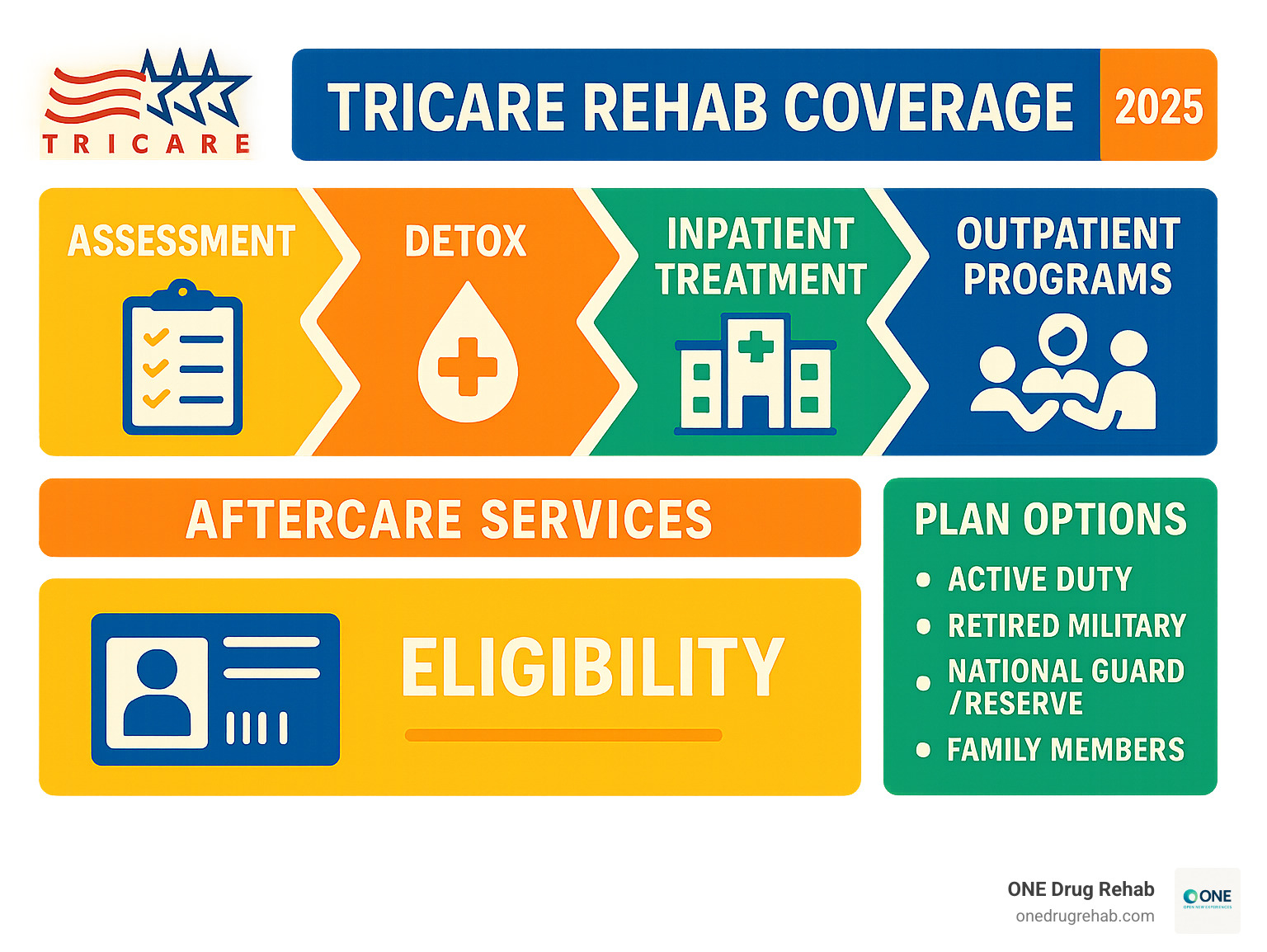
TRICARE rehab coverage offers comprehensive addiction treatment for military service members, veterans, and their families via the Department of Defense Military Health System. TRICARE covers medically necessary substance use disorder treatment, including medical detox, inpatient/residential rehab, various outpatient programs (PHP, IOP), medication-assisted treatment (MAT), and mental health services for co-occurring disorders like PTSD or depression.
Military life presents unique challenges that can contribute to substance use disorders. More than one in ten veterans have been diagnosed with a substance use disorder, a rate higher than the general population. The stress of combat, trauma, and frequent relocations are significant risk factors that TRICARE’s benefits are designed to address.
To use your benefits, you must be registered in the Defense Enrollment Eligibility Reporting System (DEERS). Coverage details vary by plan (Prime, Select, etc.), affecting referrals, provider networks, and costs. A 2017 expansion of mental health benefits greatly improved addiction treatment coverage, aligning it with other medical care standards.
Introduction to TRICARE and Its Role in Addiction Treatment
For military service members and their families seeking addiction treatment, understanding TRICARE rehab coverage is the first step. As the healthcare program for the military community, TRICARE provides comprehensive medical benefits through the Department of Defense.
Coverage extends to active-duty members, veterans, and military families, including National Guard and Reserve members. While active-duty personnel are automatically enrolled, family members must be registered in the Defense Enrollment Eligibility Reporting System (DEERS) to access benefits. Proper registration is your gateway to care.
TRICARE prioritizes mental health because military life involves unique stressors like deployments and combat exposure, which are known risk factors for substance use disorders and conditions like PTSD. Recognizing that veterans experience SUDs at higher rates, TRICARE expanded its mental health benefits to ensure addiction treatment receives the same level of coverage as other medical conditions.
This comprehensive approach addresses interconnected issues, as recovery often means treating both addiction and co-occurring conditions like trauma or depression. Understanding the continuum of care is key; effective treatment involves moving through different levels of care, from inpatient programs to outpatient support, as your needs evolve.
What Addiction Treatment Services Does TRICARE Cover?
TRICARE offers comprehensive support across various levels of care, understanding that each recovery journey is unique. Coverage is provided for addiction treatment services that are both medically necessary (appropriate for your condition) and proven effective (backed by research). This ensures you receive quality, evidence-based care.
Coverage includes not only Substance Use Disorder (SUD) but also co-occurring mental health conditions. A full list of Covered Treatments is available on the TRICARE website, and our Types of Addiction Treatment page provides more insight. Covered services range from medical detoxification and inpatient services to partial hospitalization, intensive outpatient programs, and medication-assisted treatment, ensuring you get the right level of care when you need it.
Medical Detox and Inpatient/Residential Rehab
The recovery journey often starts with medical detoxification, a supervised process to safely manage withdrawal with 24/7 monitoring, medication, and nutritional support. TRICARE rehab coverage includes medical detox, but it’s important to know that detox alone is rarely sufficient for long-term recovery. It is the first step, preparing you for comprehensive treatment.

Following detox, inpatient and residential rehab programs offer an immersive, structured environment with 24/7 medical supervision. This allows you to focus completely on recovery away from daily triggers. TRICARE covers inpatient rehab when medically necessary, such as for those with a formal SUD diagnosis, severe withdrawal symptoms, or significant functional impairment.
While TRICARE covers inpatient rehab for SUD, TRICARE coverage for Residential Treatment Centers has specific rules, often applying to beneficiaries under 21 with other primary diagnoses. For adults, general inpatient care for addiction is covered when deemed medically necessary.
Outpatient Programs (PHP, IOP, and Standard Care)
Outpatient programs offer flexibility for those who don’t require 24/7 supervision or are transitioning from inpatient care.
- Partial Hospitalization Programs (PHP): The most intensive outpatient option, PHPs (or “day treatment”) involve several hours of treatment daily, five days a week, while you return home at night. This bridges the gap between inpatient and standard outpatient care. See PHP treatment details.
- Intensive Outpatient Programs (IOP): A step down from PHP, IOPs involve fewer hours, typically for several hours a day, three to five days a week. They are ideal for those needing significant support without inpatient care. Learn more about IOP treatment details.
- Standard Outpatient Therapy: The most flexible option, this involves individual or group therapy sessions a few times per week, suitable for early recovery or as step-down care.
Within these settings, TRICARE covers individual therapy, group counseling, and family therapy. Family involvement is a key part of recovery, a topic explored on our Rehab for Families page.
Medication-Assisted Treatment (MAT) and Co-Occurring Disorders
Medication-Assisted Treatment (MAT) is an evidence-based approach combining FDA-approved medications with therapy. TRICARE covers MAT for opioid use disorder and alcohol use disorder. Covered medications like Suboxone, naltrexone, and others help manage cravings and prevent relapse, though some may require pre-authorization. You can find more Information on Medically Assisted Treatment.
Addiction often co-occurs with other mental health conditions, known as a dual diagnosis. Common co-occurring disorders include PTSD, depression, and anxiety. Treating these conditions simultaneously is crucial for lasting recovery.
TRICARE covers integrated treatment for co-occurring disorders, including assessments, therapy (individual, group, family), and medication management. Evidence-based therapies like Cognitive Behavioral Therapy are covered, as research like this Cognitive-behavioral therapy research shows its effectiveness. This integrated approach leads to better outcomes by addressing the deep connection between mental health and addiction.
Understanding Your TRICARE Rehab Coverage by Plan
Understanding your specific plan is key to navigating TRICARE rehab coverage. Your plan type determines your costs, including deductibles and copayments. TRICARE is divided into regions: TRICARE East, TRICARE West, and TRICARE Overseas, so your location affects available providers.

Knowing your region and plan is crucial. The TRICARE Health plans overview offers detailed information to help you choose the right option.
How Different Plans Affect Your TRICARE Rehab Coverage
The most common plans are TRICARE Prime and TRICARE Select, which have different structures for cost and flexibility.
| Feature | TRICARE Prime | TRICARE Select |
|---|---|---|
| PCP Requirement | Yes, you must have a Primary Care Manager (PCM) | No, you can choose any TRICARE-authorized provider |
| Referrals | Required for most specialty care (including rehab) | Not required for most specialty care |
| Network Flexibility | Limited to network providers (HMO-like) | More flexibility, can see network or non-network providers |
| Costs | Generally lower out-of-pocket costs, fixed copays | Higher out-of-pocket costs, deductibles, and cost-shares |
| Premiums | May have annual enrollment fees (especially for retirees) | May have annual enrollment fees (especially for retirees) |
| Best For | Those who prefer managed care and lower costs | Those who want more choice in providers and don’t mind higher costs |
TRICARE Prime is an HMO-style plan where a Primary Care Manager coordinates your care and provides referrals for specialty services like rehab, resulting in lower costs.
TRICARE Select is a PPO-style plan offering more freedom to see any TRICARE-authorized provider without a referral, but with higher out-of-pocket costs.
Other plans include TRICARE For Life (for Medicare beneficiaries), TRICARE Reserve Select (for Guard/Reserve members), TRICARE Young Adult, and the US Family Health Plan. Each has a unique cost structure, so it’s important to balance provider choice with your budget.
In-Network vs. Out-of-Network: What You Need to Know
Your costs for TRICARE rehab coverage are heavily influenced by whether you use an in-network or out-of-network provider.
- Network providers have contracts with TRICARE and agree to accept negotiated rates. This means lower out-of-pocket costs for you (just your copayment/cost-share after your deductible) and direct billing.
- Non-network providers do not have contracts with TRICARE. Using them usually results in higher costs. They can charge up to 15% more than TRICARE’s allowed amount, and you may have to pay upfront and file for reimbursement yourself.
To find facilities, use the official TRICARE-authorized provider directory or our Rehab Near Me tool. In-network providers offer the best value, but out-of-network care is an option if you prefer a specific facility and are willing to pay more.
How to Access and Use Your TRICARE Benefits for Rehab
Accessing your TRICARE rehab coverage involves a clear process: verifying coverage, getting authorizations, finding a facility, and completing admission. While it may seem complex, rehab facilities have staff to guide you. Our One Drug Rehab Blog also offers helpful resources.
Verifying Your TRICARE Rehab Coverage and Starting Treatment
First, confirm what your specific plan covers. You can do this in several ways:
- Call TRICARE: Use the customer service number on your TRICARE card to ask about addiction treatment coverage, deductibles, and copayments.
- Use Patient Portals: The secure TRICARE Patient Portals let you review benefits and eligibility online.
- Contact a Rehab Facility: Most facilities have admissions navigators who can verify your benefits for free. They work with TRICARE directly to determine your coverage and potential out-of-pocket costs.

An admissions team can also confirm if a facility is in-network with your plan. Our Compare Rehab Centers tool can help you find facilities that accept TRICARE.
The Pre-Authorization Process Explained
For many services, especially inpatient rehab and certain medications, TRICARE requires pre-authorization. This process ensures the requested treatment is medically necessary for your condition. Your provider will submit documentation about your diagnosis and treatment plan to TRICARE for approval.
- Referrals: If you have TRICARE Prime, you will likely need a referral from your Primary Care Manager (PCM) to start the authorization process.
- Emergency vs. Non-Emergency Care: In a true emergency, like life-threatening withdrawal, pre-authorization is not required for initial care. However, for planned, non-emergency inpatient services, it is almost always needed.
TRICARE may determine that a different level of care (e.g., outpatient instead of inpatient) is more appropriate based on medical necessity. Policies can also change, like the temporary Referral approval waiver for West Region, so always verify current requirements.
Fortunately, your chosen treatment facility’s admissions team will typically handle the pre-authorization paperwork. They act as your advocate, submitting the necessary documentation to get your treatment approved.
Frequently Asked Questions about TRICARE Coverage
We know you’ve got questions, and we’re here to provide clear, straightforward answers. Let’s tackle some of the most common inquiries about TRICARE rehab coverage that come up when families are navigating this important journey.
How long will TRICARE cover rehab?
TRICARE does not have rigid day limits for rehab. Instead, medical necessity determines duration. While facilities often offer 30, 60, or 90-day programs, your length of stay depends on the severity of your SUD, co-occurring conditions, and your progress.
As long as your treatment team demonstrates that continued care is medically necessary, TRICARE will typically provide coverage. This aligns with research showing that longer treatment durations, often 90 days or more, lead to better outcomes. TRICARE supports a continuum of care, allowing you to move through different levels of treatment (e.g., from inpatient to outpatient) as your needs change. This step-down care model provides the right support at each stage of recovery.
What services are generally not covered by TRICARE for addiction?
TRICARE focuses on proven, medically necessary treatments, so some services are not covered. Exclusions generally include:
- Unproven or experimental therapies: Treatments without strong scientific backing, such as aversion therapy, are not covered.
- Non-medical services: Luxury amenities like massage therapy, gourmet meals, or private rooms are not covered unless deemed medically necessary.
The guiding principle is medical necessity. TRICARE will not cover services that are not considered appropriate and reasonable for your specific condition.
Are there specialized programs for veterans covered by TRICARE?
Yes. TRICARE recognizes the unique challenges of military service, such as combat exposure and deployment stress, which are risk factors for SUDs. The link between PTSD and substance abuse is especially strong in this community; PTSD in veterans information shows a significant prevalence of PTSD, which often co-occurs with addiction.
Many TRICARE-approved facilities offer specialized programs for veterans and military personnel. These programs often feature:
- Trauma-informed care that addresses military-specific experiences.
- Peer support groups with other veterans.
- Family programs focused on military life stressors.
- Collaboration with VA services to ensure comprehensive, integrated care for both addiction and service-related conditions.
Conclusion: Taking the Next Step on Your Recovery Journey
We hope this guide has clarified how TRICARE rehab coverage provides comprehensive support for addiction treatment. From detox and inpatient care to outpatient programs and dual diagnosis treatment, TRICARE’s benefits reflect an understanding of the unique challenges faced by service members, veterans, and their families.
Asking for help takes incredible strength. Choosing recovery is a courageous decision for yourself and your loved ones. It is a sign of strength, not weakness.
Recovery is a journey, and the right resources are essential. As an independent directory, ONE Drug Rehab empowers you with information to find the best treatment for your needs. Our platform allows you to compare centers, read Rehab Facility Reviews from real people, and explore options. For those exploring all payment avenues, our guide on how to Find Rehab Without Insurance can also be helpful.
Your TRICARE coverage is a commitment to your well-being, earned through service. The benefits are ready when you are. You don’t have to walk this path alone; with TRICARE’s support and resources like ours, you have what you need to reclaim your life from addiction. Take the next step toward a healthier future.