

Why Recovery Shouldn’t Cost Everything You Have
Affordable rehab options exist, and they’re more accessible than most people realize. If you’re worried about paying for addiction treatment, you’re not alone—financial concerns are one of the biggest barriers preventing people from getting help. But here’s the truth: recovery doesn’t require emptying your savings account.
Quick Answer: Your Affordable Treatment Options
- State-funded programs: Free or low-cost care for eligible residents
- Insurance coverage: Most plans now cover substance use treatment under the Affordable Care Act
- Sliding-scale fees: Pay based on your income (potentially $0-$1,500 for programs normally costing $5,000+)
- Non-profit centers: Mission-driven facilities offering reduced-cost care
- Outpatient programs: Cost-effective alternative to residential treatment ($5,000 vs. $12,000-$60,000)
- Community support groups: Free resources like AA, NA, and SMART Recovery
- Payment plans: Spread costs over time with facility financing
- VA benefits: Free or subsidized treatment for veterans
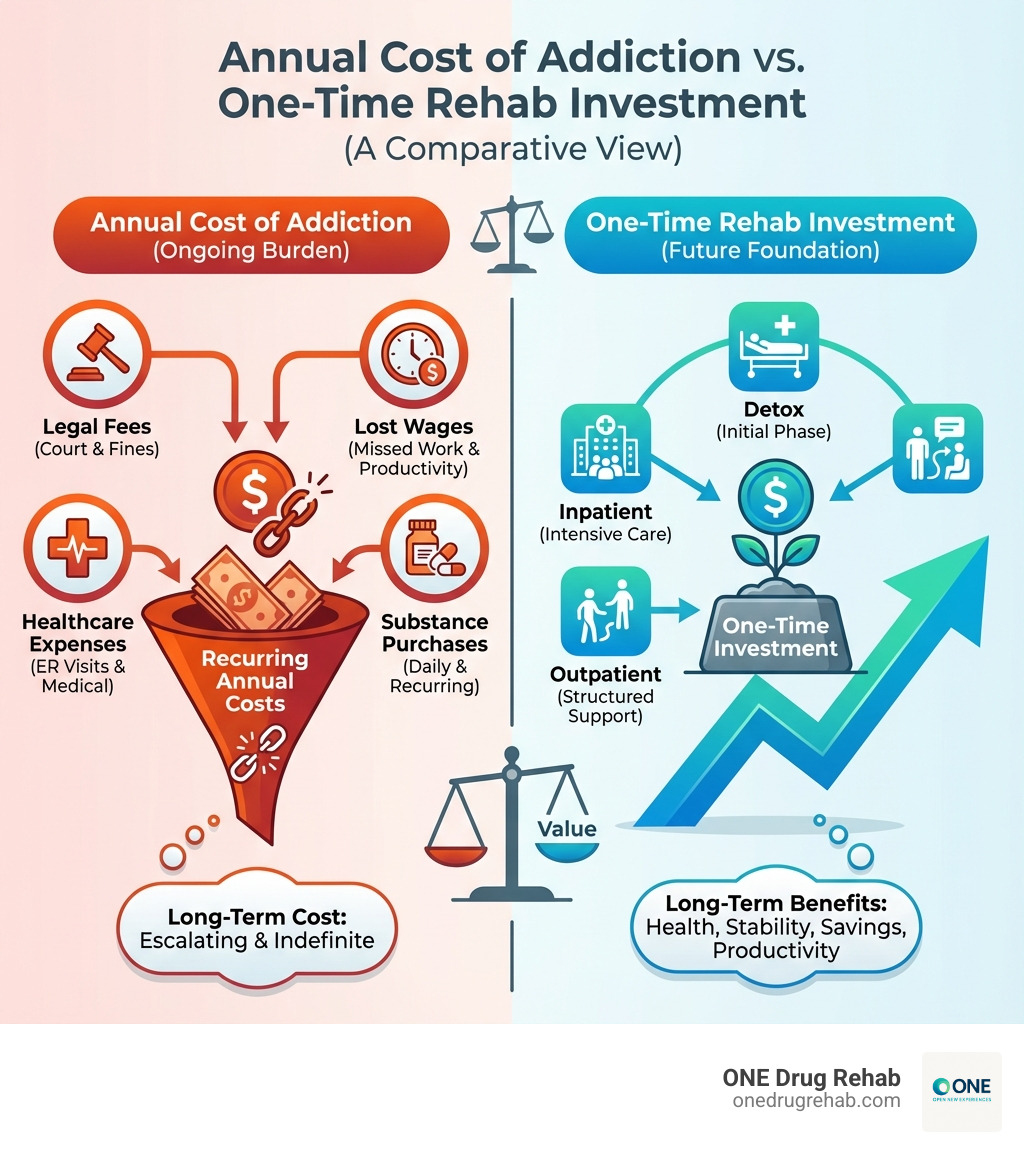
The financial burden of addiction treatment feels overwhelming, especially when you’re already struggling. One person searching for help described it perfectly: “The cost of recovery can feel like an impossible barrier.” But consider this—the average cost of untreated addiction far exceeds the one-time investment in rehab. An alcoholic drinking a 12-pack daily spends over $3,000 annually just on alcohol, not counting legal fees, lost wages, or medical emergencies.
The reality is that 47,000 Canadian deaths and countless American lives are lost to substance abuse each year, often because people believe they can’t afford help. Meanwhile, outpatient detox costs $1,000-$1,500 total, and year-long methadone treatment runs about $4,700—less than many people spend maintaining their addiction.
In 2024, only 1 in 5 people who needed substance use treatment actually received it. Cost was a major factor. But between insurance mandates, government programs, and creative financing options, there’s a path forward for virtually everyone.
Understanding the Landscape of Rehab Costs
When we talk about affordable rehab options, it’s important to first understand what factors contribute to the overall cost of addiction treatment. The price tag for rehab isn’t one-size-fits-all; it can vary wildly depending on several key elements.
The main factors influencing the cost of addiction treatment typically include:
- Type of Center: Is it a luxurious private facility or a more basic, state-funded program? The amenities and exclusivity play a big role.
- Program Duration: How long will you or your loved one be in treatment? Programs can range from a few days for detox to several months for residential care. The National Institute on Drug Abuse (NIDA) emphasizes that remaining in treatment for the full recommended duration yields better outcomes, so factoring in length is crucial. You can learn more about how different program lengths impact costs on our Rehab Cost Comparison page.
- Location Impact: Geographical location can significantly affect costs, mirroring the general cost of living in an area.
- Amenities Offered: Luxury centers offer private rooms, gourmet meals, and holistic therapies like yoga or equine therapy, which naturally drive up the price. More basic centers focus solely on core treatment.
- Treatments Offered: Specialized treatments, such as medication-assisted treatment (MAT) or dual diagnosis care for co-occurring mental health disorders, can add to the expense.
Let’s look at the typical costs associated with different levels of addiction treatment:
| Type of Treatment | Typical Cost Estimate |
|---|---|
| Outpatient Detox | $1,000 to $1,500 (total) |
| Inpatient Rehab | $12,000 to $60,000 (for 60- or 90-day programs) |
| Outpatient Programs | $5,000 (for a three-month program) |
| Year-long Methadone MAT | $4,700 (for heroin users) |
Note: These are average costs and can vary widely.
Medical detox costs can range from $1,000 to $1,500 for an outpatient program. For more severe cases requiring inpatient medical supervision, costs can be higher. This initial phase is crucial for safely managing withdrawal symptoms.
For inpatient rehab, which provides 24/7 care in a residential setting, the costs can be substantial, ranging from $12,000 to $60,000 for 60- or 90-day programs. Some 30-day programs might be around $6,000, while well-known centers can reach up to $20,000 for a month. While these figures might seem daunting, these programs offer immersive treatment that can be life-changing.
Outpatient programs offer a more cost-effective alternative to inpatient care, allowing individuals to live at home while attending scheduled treatment sessions. A three-month outpatient program can cost around $5,000. These programs are ideal for those with milder addictions or who have completed inpatient care and need ongoing support while maintaining work or family responsibilities.
Finally, specific treatments like medication-assisted treatment (MAT), such as year-long methadone treatment for heroin users, can cost around $4,700. These costs demonstrate that effective, medically sound treatment doesn’t always require the highest price tag.
Understanding these costs is the first step in finding truly affordable rehab options.
Leveraging Insurance and Government-Funded Programs
One of the most significant breakthroughs in making addiction treatment accessible has been the expansion of insurance coverage and the availability of government-funded programs. Many people are surprised to learn just how much support is out there.
Verifying insurance coverage for addiction treatment is often the first and most crucial step. Thanks to the Affordable Care Act (ACA), substance use disorder treatment is considered an essential health benefit. This means that all Marketplace health insurance plans and most individual and small group plans are required to cover mental health and addiction services similarly to medical and surgical services.
To verify your coverage, simply call your insurance provider using the number on the back of your insurance card. They can help you understand your benefits, deductibles, co-pays, and which local facilities accept your plan. Don’t hesitate—it’s a free call that can save you thousands. Our dedicated page on the Affordable Care Act provides even more detail on this vital legislation.

State-funded rehab programs are another cornerstone of affordable rehab options. These programs are supported by government resources—federal grants (often through the Substance Abuse and Mental Health Services Administration, SAMHSA) and state budgets—to provide free or low-cost treatment to eligible residents.
How state programs work: Each state distributes funds to treatment centers, offering services like medical detox, residential rehab, outpatient programs, and dual diagnosis care. Eligibility typically requires proof of residency, income verification (often for low-income individuals), and sometimes a referral. While these programs can have waiting lists due to high demand, they often prioritize vulnerable populations like pregnant women or veterans. You can explore Medicaid Approved Rehab Centers to find facilities that accept this crucial state-funded insurance.
Medicare coverage is available for individuals aged 65 or older, and some younger people with certain disabilities. If you qualify for Medicare, it can help cover parts of your addiction treatment costs, including inpatient hospital stays, doctor visits, and prescription drugs.
For veterans, VA benefits can be a lifeline. The U.S. Department of Veterans Affairs (VA) provides comprehensive addiction treatment services for eligible veterans, often covering the full cost. If you’re a veteran or active military personnel, contact the VA or a Veteran Liaison to understand your benefits and access the care you deserve.
Accessing Treatment in Canada
Our Canadian neighbors also have a unique system for affordable rehab options. The Canadian Medicare system is a publicly funded healthcare structure comprising 13 provincial and territorial plans. It aims to ensure equitable access to essential health services without direct charges. While it covers addiction and psychiatric disorders, there’s a distinction between public and private payment options.
Public vs. private payment options:
- Public treatment is generally free at the point of service, covered by federal and provincial taxes. However, public facilities often come with longer wait times.
- Private treatment offers quicker access and more amenities but requires out-of-pocket payment or private insurance. Even so, private treatment in Canada can be more affordable than many US rehabs.
Canada’s approach to substance use is guided by the ‘4 Pillars of Care’: prevention, treatment, harm reduction, and enforcement. This comprehensive strategy emphasizes a multi-faceted approach to addressing addiction across the country. The Canadian government has also established a province-by-province hotline that can provide direction and information on government-funded options if cost is a barrier.
Navigating Your Affordable Rehab Options
Beyond insurance and government programs, several other avenues offer affordable rehab options, ensuring that everyone has a chance at recovery.

Non-profit rehab centers play a critical role in providing affordable care. Unlike for-profit facilities, non-profits are mission-driven, meaning they reinvest funds back into their programs and services. They often receive support from grants, donations, and community funding, allowing them to offer reduced costs, sliding-scale fees, or even free treatment to those in need. These centers often embody the spirit of community and compassion, focusing on providing quality care over profit margins.
Faith-based rehabilitation facilities are another significant source of accessible treatment. Organizations like The Salvation Army have been offering free or low-cost rehab services for over a century, providing emotional, social, and spiritual assistance. The Salvation Army’s programs are well-known for their long-term residential approach, often incorporating work therapy and spiritual guidance. Other faith-based groups also offer similar support, sometimes integrating specific religious traditions into their treatment. Many of these programs do not require adherence to specific religious beliefs, focusing instead on a holistic approach to healing.
Community-supported recovery groups are invaluable, free resources that can aid significantly in addiction treatment and ongoing recovery. These groups, such as Alcoholics Anonymous (AA), Narcotics Anonymous (NA), and SMART Recovery, provide peer support, shared experiences, and a structured path to sobriety. They are free to attend and offer a sense of belonging and accountability that is crucial for long-term recovery. While not a substitute for professional treatment, they are an excellent complement and a vital part of many people’s recovery journey.
Outpatient programs offer a more cost-effective alternative to inpatient care. As we discussed earlier, they allow individuals to live at home or in a sober living facility while attending scheduled treatment sessions. This flexibility makes them ideal for those who need to maintain work, family, or educational commitments. Outpatient options include:
- Standard Outpatient: Fewer hours per week, suitable for less severe addictions or as step-down care.
- Intensive Outpatient Programs (IOPs): More structured than standard outpatient, with several hours of therapy multiple days a week.
- Partial Hospitalization Programs (PHPs): The most intensive outpatient option, often mirroring the hours of inpatient care but allowing patients to return home at night.
These programs offer evidence-based therapies like cognitive-behavioral therapy (CBT) and group counseling, providing effective treatment at a fraction of the cost of residential programs. If you’re looking to understand more about finding treatment without insurance, our guide on Find Rehab Without Insurance has more insights.
Finding Free and Low-Cost Affordable Rehab Options
If you’re wondering how to find free rehabs near you, we’ve got some practical steps. The key is knowing where to look and what information you’ll need.
- Use Online Directories and Tools: Start by checking online directories. Resources like the Find a health center tool can help you locate federally funded health centers that provide free or low-cost care based on income.
- Contact State Agencies: Reach out to your state mental health and substance use agency. These agencies manage state-funded programs and can provide information on local resources, eligibility requirements, and application processes. Each state’s offerings and requirements can vary, so it’s essential to contact your specific agency.
- Explore Non-Profits and Faith-Based Organizations: As mentioned, organizations like The Salvation Army and various local churches or community centers often offer free or very low-cost programs. A quick search for “faith-based rehab near me” can yield local options.
- Inquire at Local Health Departments: Your local Department of Health and Human Services (DHHS) or public health department can also be a valuable resource for finding free or low-cost services and checking eligibility for state-funded assistance.
Eligibility criteria for free rehab typically include:
- Proof of residency: You’ll likely need to demonstrate that you are a resident of the state or county providing the funding.
- Income verification: Many programs are income-based, requiring you to provide proof of income (e.g., pay stubs, tax returns) to show financial need.
- Insurance status: Priority is often given to individuals who are uninsured or underinsured. If you have insurance, you might still qualify if your plan doesn’t cover sufficient treatment.
While access to free services may be limited and involve waiting lists, these affordable rehab options are designed to help those who need it most.
Creative Financing: Paying for Treatment Without Full Coverage
What if insurance is insufficient, or free programs aren’t immediately available? Don’t despair! There are many creative financing solutions that can make treatment manageable.
Sliding-scale payment models are fantastic affordable rehab options that base fees on an individual’s income and family size. This means the price you pay depends on how much money you make, making treatment accessible for people of varying financial situations. For example, a $5,000 outpatient program could be reduced to as little as $0-$1,500 for someone qualifying for a sliding-scale discount based on federal poverty levels (FPL).
How sliding scales work: Programs often use FPL guidelines or income brackets to determine your payment rate. You’ll typically need to provide financial documentation, like pay stubs or tax returns, to prove your income and household size. Many community-based programs, non-profit centers, and even some private facilities offer this model.
Payment plans are another common way to make rehab more manageable. Many facilities are willing to negotiate terms, allowing you to pay for treatment in installments over time rather than an upfront lump sum. Don’t be afraid to ask about this option; understanding the terms of repayment (when and how much) is key.
Grants and scholarships specifically for addiction treatment are available from various sources. Some treatment centers offer their own need-based scholarships, while government agencies (like SAMHSA) and non-profit organizations provide grants to individuals or fund treatment centers. It’s always worth asking facilities if they have such programs or can direct you to organizations that do.
Charity care programs, often found at larger hospitals or treatment centers, can also help cover costs for individuals who meet specific financial hardship criteria.
Finally, crowdfunding for medical costs has become a viable option for many. Platforms allow individuals to share their story and raise funds from their community, friends, family, and even strangers. While it requires effort, it can provide significant financial relief. Our guide on How to Afford Rehab digs deeper into these and other financing strategies.
What Are My Affordable Rehab Options if I Don’t Qualify for Free Programs?
If you don’t qualify for free rehab but still need financial assistance, here are several alternative financing strategies to consider:
- Combine Partial Insurance with a Payment Plan: Even if your insurance only covers a portion, use that coverage and negotiate a payment plan for the remaining balance with the facility.
- Seek a Facility with a Scholarship Program: Many private and non-profit centers offer scholarships to make their programs more accessible. Inquire directly about these opportunities.
- Explore Lower-Intensity Outpatient Care: If inpatient care is too expensive, a less intensive outpatient program (IOP or PHP) might be a more affordable starting point, especially if combined with strong community support.
- Use Free Community Support Groups Alongside Professional Therapy: Even if you can only afford individual therapy sessions, supplementing them with free groups like AA, NA, or SMART Recovery can provide comprehensive support.
- Consider Telehealth/Virtual Recovery Programs: These programs can significantly reduce costs by eliminating the need for travel or residential stays, offering a flexible and often more affordable treatment option.
- Look into Employer Assistance Programs (EAPs): Some employers offer EAPs that can provide confidential counseling and referrals to treatment resources, sometimes even covering initial costs.
- Apply for Healthcare Loans: Specialized lenders offer loans for medical and addiction treatment expenses, allowing you to pay for treatment upfront and repay the loan over time.
Frequently Asked Questions about Affordable Treatment
We understand you likely have many questions about finding the right affordable rehab options. Let’s tackle some common ones.
What services are typically included in free drug and alcohol rehab programs?
While services can vary, free drug and alcohol rehab programs typically aim to provide comprehensive care. You can often expect:
- Detoxification: Medically monitored or supervised detox to safely manage withdrawal symptoms. It’s crucial to prioritize medically assisted treatment over self-detox, especially for substances like opioids, alcohol, and benzodiazepines, as going “cold turkey” can be dangerous.
- Counseling and therapy: Individual and group therapy sessions, often utilizing evidence-based approaches like Cognitive Behavioral Therapy (CBT).
- Group support: Peer support groups to foster a sense of community and shared experience.
- Medication-assisted treatment (MAT): For certain addictions, medications may be provided to reduce cravings or prevent relapse.
- Aftercare planning: Assistance in developing a plan for continued sobriety after completing the program, which might include referrals to sober living, outpatient services, or support groups.
Services may also include educational workshops, life skills training, and sometimes assistance with employment reintegration. However, amenities might be basic compared to private facilities, and waiting lists can be common.
What is the difference between inpatient and outpatient rehab?
The distinction between inpatient and outpatient care is fundamental when considering affordable rehab options:
- Inpatient (residential) care: This is a more intensive treatment where individuals reside at the rehab facility 24/7 for the duration of their program (typically 30, 60, or 90 days). It offers a highly structured and supervised environment, removing individuals from triggers and providing constant support. The comprehensive nature and round-the-clock care contribute to its higher cost.
- Outpatient care: This allows individuals to live at home or in a sober living facility while attending scheduled treatment sessions. It’s a more flexible and generally more affordable option. Outpatient programs vary in intensity, from standard outpatient (a few hours a week) to Intensive Outpatient Programs (IOPs) and Partial Hospitalization Programs (PHPs) which involve more hours of therapy but still allow patients to return home. It’s suitable for individuals with strong support systems at home or those who need to balance treatment with work, school, or family responsibilities.
How does the cost of continuing addiction compare to the cost of rehab?
This is perhaps one of the most critical questions. The financial benefits of choosing rehab over continuing addiction are profound. While rehab costs can seem high, they are often a one-time investment compared to the ongoing, escalating costs of untreated addiction.
Consider the financial cost of substances themselves: an alcoholic drinking a 12-pack a day for a year spends over $3,000 on alcohol alone. For illicit drugs, the figures can be tens of thousands annually. Beyond direct substance costs, addiction incurs:
- Legal fees: Arrests, DUIs, and other legal troubles can lead to thousands in fines, court costs, and legal representation.
- Lost wages: Addiction often leads to job loss, decreased productivity, and missed work, resulting in significant income loss.
- Healthcare expenses: Addiction contributes to numerous health issues, leading to increased doctor visits, hospital stays, and medication costs.
- Damaged relationships: While not directly financial, the breakdown of relationships can have indirect financial consequences.
In contrast, rehab is a long-term investment in your health and financial stability. By breaking the cycle of addiction, you regain your ability to work, avoid legal troubles, improve your health, and repair relationships, ultimately saving you money in the long run and vastly improving your quality of life. The initial cost of rehab pales in comparison to the endless drain of addiction.
Conclusion: Your Path to Recovery is Within Reach
Navigating addiction treatment can feel overwhelming, especially when financial concerns weigh heavily on your mind. However, as we’ve explored, affordable rehab options are not only available but are more diverse and accessible than ever before. From state-funded programs and comprehensive insurance coverage to non-profit centers, faith-based initiatives, and flexible financing, cost should never be a barrier to seeking the help you need.
Recovery is possible for everyone, regardless of their financial situation. The first step, though daunting, is often the most courageous. We encourage you to take that step, knowing that there are countless resources and compassionate individuals ready to support your journey. ONEDrugRehab.com serves as a third-party, non-affiliated resource to help you research treatment options without endorsing specific providers, empowering you to make informed decisions for your unique path.
Don’t let the misconception that effective treatment is out of reach hold you back. Your path to a healthier, happier life is within reach. Explore holistic treatment programs to start your journey today.