
Table of Contents
Drug and Alcohol Rehab Centers in Pennsylvania: Key Criteria at a Glance
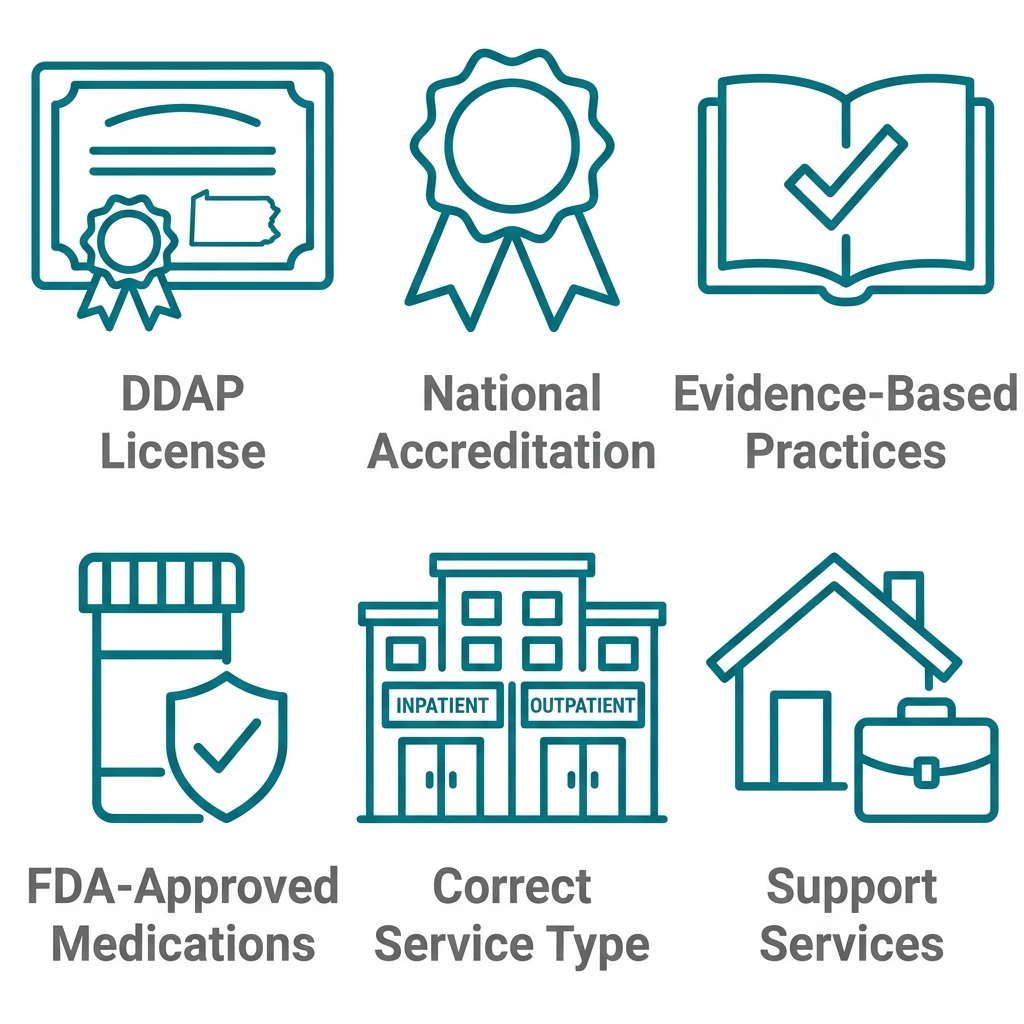
Evaluating drug and alcohol rehab centers in Pennsylvania starts with nationally recognized quality criteria to compare providers without endorsing or steering to any specific facility. Look for programs that combine evidence-based therapies with comprehensive support services to address the full scope of recovery needs.
- Licensing and accreditation by state and national bodies
- Evidence-based practices such as CBT, motivational interviewing, and psychoeducation
- FDA-approved medications for alcohol, tobacco, and opioid use disorders
- Whole-person support services addressing housing, food assistance, and job placement
One of the primary factors to check out is whether the rehab center has proper license and certification from authorities to operate. If you need help finding facilities based on geographic location, consider exploring drug rehab and addiction treatment options in Philadelphia and Pittsburgh to find programs that align with your location and recovery goals.
Key Takeaways
- The first step when choosing a drug and alcohol rehab center in Pennsylvania should be confirming that it has proper licensure.
- It’s critical to assess how much time you want to devote if you’re considering any of the rehab centers located in Pennsylvania.
- When evaluating drug and alcohol rehab centers in Pennsylvania, families should verify a few critical details before committing.
- Medicaid (Medical Assistance), in Pennsylvania, provides coverage of drug and alcohol rehabilitation services for adults aged 19–64 with incomes at or below 133 percent of federal poverty guidelines.
- Drug and alcohol rehab centers in Pennsylvania vary by city, reflecting differences in licensing scope and local resources.
Licensing and Accreditation
The first step when choosing a drug and alcohol rehab center in Pennsylvania should be confirming that it has proper licensure. Any facility doing business in this state needs to have an active license issued by the Pennsylvania Department of Drug and Alcohol Programs (DDAP). The agency oversees licenses for various types of care depending on where they’re located as well as what kind of programs these centers offer including inpatient, outpatient, residential, partial hospitalization, narcotics treatment, and telehealth services.
DDAP licenses are renewed on a yearly basis and linked to certain facilities’ locations and activities that have been approved. This department conducts onsite visits as well to make sure they comply with state rules around safety and quality. Anyone who would like to find out if facilities are licensed can use PA’s online public look up system, allowing users to check qualifications and licenses directly from there.
Quality programs take things even farther by obtaining national accreditation, which is a voluntary process indicating that they have met certain standards. SAMHSA advises that you choose those organizations that offer both state licenses and national accreditations because these types of organizations provide evidence-based treatment and accountability in their operations.
Levels of Care: Inpatient, Outpatient, and Beyond
It’s critical to assess how much time you want to devote if you’re considering any of the rehab centers located in Pennsylvania. There can be differences between programs based on the amount of commitment required from its members, so people need to understand the various options before making a choice for themselves and/or loved ones.
Inpatient or residential care offers round-the-clock oversight and assistance in a more organized setting. Outpatient programs feature regular meetings but allow participants to live at their own homes and attend to other obligations such as work, school, or families. Often, patients undergo medically monitored detoxification initially when they enroll in drug addiction recovery services located in the Philadelphia area prior to receiving additional treatment through counseling sessions.
Most treatment journeys move through stages, often stepping down from residential care to intensive out-patient, then to standard out-patient, and finally to aftercare. Across all levels, quality programs hold state licensing and national accreditation and use evidence-based practices.
The directory allows you to sort services based on their type of care, which enables you to focus solely on services in a category, without being biased about another specific facility.
Specialized Programs and Co-Occurring Disorders
With regard to drug and alcohol rehab centers in Pennsylvania and those having special program offerings, consider this fact: some treat co-occurring mental health disorders, also called dual diagnosis, while others take different approaches for particular substances like opioids. Programs that prioritize quality follow evidence-based practices identified by SAMHSA, including cognitive behavioral therapy and motivational interviewing.
Medication-assisted treatment (MAT) is a recognized approach for opioid use disorder and uses FDA-approved medications for alcohol, tobacco, and opioids. Do any of Philadelphia’s programs have this type of treatment available? Yes, most major Pennsylvania cities have some form of MAT available for addiction. Cities like Philadelphia and Pittsburgh generally provide multiple types of specialized treatment approaches including both dual diagnosis care for mental illness and MAT for opioid use disorders. These programs usually help their participants find more stable homes, places to eat, jobs, etc., aligning with SAMHSA recommendations regarding quality standards for treatment centers. Now that you’re aware of all your potential options, the final step is finding a facility that will fulfill those needs for you. Does Philadelphia offer programs that include medication-assisted treatment (MAT) for addiction?
Red Flags to Watch For
When evaluating drug and alcohol rehab centers in Pennsylvania, families should verify a few critical details before committing. First, confirm the facility holds a valid Pennsylvania Department of Drug and Alcohol Programs (DDAP) license, which is mandatory for all providers in the state. Programs without this license cannot legally operate and may not meet basic safety or quality standards.
Additionally, check for national accreditation, as reputable facilities pursue both state licensing and independent accreditation to demonstrate adherence to quality care standards. Moreover, those who don’t include any form of empirically validated practices like CBT or MI also pose problems because many treatments have proven effective with respect to substance abuse problems.
Questions to Ask Before Admission
Now that you have noted warning signs, use those criteria to form specific questions to ask your facility’s admissions officers, especially if considering an alcohol rehabilitation center and drug detox in Philadelphia. Verify if this location has achieved a State license as well as National Accreditation, which ensures that it must meet acceptable standards for all clients’ care.
- Does your program use evidence-based practices like cognitive behavioral therapy or motivational interviewing? This helps confirm the facility relies on proven methods rather than untested approaches.
- Are FDA-approved medications for alcohol or opioid use disorders available if needed? Medication-assisted treatment can be critical for some individuals’ recovery journeys.
- How does your program support housing and job placement assistance? Addressing social needs alongside treatment improves long-term outcomes.
What should I ask a drug rehab facility in Philadelphia before admission? Ask about the license and accreditations first, as well as if they offer evidence based therapies along with FDA approved medication. What else do I need to know when selecting a Philadelphia rehab center? Prioritize programs that address holistic needs, including housing and job placement support.
Cost Expectations and Payment Options
Medicaid (Medical Assistance), in Pennsylvania, provides coverage of drug and alcohol rehabilitation services for adults aged 19–64 with incomes at or below 133 percent of federal poverty guidelines. Apply online through COMPASS, over the phone, via mail or go into your local County Assistance Office to apply. If you’re denied assistance, you may be directed to Pennie, the state’s marketplace.
Does Pennsylvania Medicaid pay for addiction treatment programs? Yes. Is there any free or low-cost rehab facility for people who live in Philadelphia? If you don’t have medical coverage then there are some substance abuse centers that cater for patients without health insurance living within Philly. What is the price tag for therapy sessions at these centers? Prices differ between programs and providers; common forms of payment accepted include Pennsylvania Medicaid coverage, private medical care plans, sliding-scale fees, and installment loans.
Local Considerations Across Pennsylvania Cities
Drug and alcohol rehab centers in Pennsylvania vary by city, reflecting differences in licensing scope and local resources. Every facility operating in the state must hold a valid DDAP license specific to its location and approved treatment activities, so verifying a program’s license aligns with both the city and the services you need is essential.
Start by setting up an evaluation for addiction treatment in the Pittsburgh area, then look into community based support groups and sober living in Pittsburgh to build a strong foundation for recovery. Immediate addiction treatment is available in Philadelphia, and programs here often encourage family members to get involved in the addiction treatment process where clinically appropriate. Ask centers about the aftercare planning services they provide at Philadelphia addiction treatment centers—these questions help you choose a program that supports long-term success. This information will enable you to confirm facts and compare the different facilities on offer in our directory.
Your Pennsylvania Rehab Comparison Checklist
After you have filtered out some facilities based on locations, here’s how you can compare different drug and alcohol rehab centers in Pennsylvania as per their qualifications. Verify each facility’s credentials using this concise checklist when comparing drug and alcohol rehab centers in Pennsylvania.
- Confirm a current Pennsylvania DDAP license — required for all providers and renewed annually
- Verify the specific service license — inpatient, outpatient, residential, partial hospitalization, narcotic treatment, or telehealth
- Look for national accreditation in addition to state licensing
- Ask which evidence-based practices the program uses, such as cognitive behavioral therapy or motivational interviewing
- Confirm FDA-approved medications are available for alcohol or opioid treatment when clinically appropriate
There could be some additional inquiries that pop up here and there. That’s what you’ll find in this FAQ section.
Frequently Asked Questions About Pennsylvania Rehab
What should I look for in a quality drug and alcohol rehab center in Pennsylvania? Quality programs hold both state licensing and national accreditation and use evidence-based practices such as cognitive behavioral therapy and motivational interviewing. They also offer FDA-approved medications for treating alcohol and opioid use disorders.
Will Pennsylvania Medicaid pay for substance abuse treatment? If you’re between 19 and 64 years old with income at or below 133 percent of the federal poverty guidelines, then you could be eligible to have this medical insurance plan pay for substance abuse treatment. Your application can be turned into the system COMPASS online, via telephone, by mail, or in-person at your local county assistance office. Does Pennsylvania Medicaid (Medical Assistance) cover addiction treatment?
There are different kinds of addiction treatment programs offered at Pittsburgh’s hospitals. They include inpatient rehabilitation, outpatient therapy as well as medication assisted treatments. What types of addiction treatment programs are available through major health systems in Pittsburgh?
In what ways can medication be part of Pittsburgh’s drug addiction recovery program. Combining FDA-approved medications with behavioral therapies, medication-assisted treatment reduces cravings and supports long-term recovery. What role does medication-assisted treatment play in Pittsburgh’s addiction recovery services?
Frequently Asked Questions About Pennsylvania Rehab
How do I choose the best drug and alcohol rehab center in Pennsylvania for my specific needs?
Quality programs hold both state licensing and national accreditation and use evidence-based practices such as cognitive behavioral therapy and motivational interviewing. They also offer FDA-approved medications for treating alcohol and opioid use disorders.
Does Pennsylvania Medicaid cover drug and alcohol rehabilitation services?
If you’re between 19 and 64 years old with income at or below 133 percent of the federal poverty guidelines, then you could be eligible to have this medical insurance plan pay for substance abuse treatment.
What is the difference between inpatient and outpatient rehab programs in Pennsylvania?
Inpatient or residential care offers round-the-clock oversight and assistance in a structured setting, while outpatient programs feature regular meetings but allow participants to live at home and attend to work, school, or family obligations.
Are there specialized rehab programs in Pennsylvania for co-occurring mental health disorders?
Some programs in Pennsylvania treat co-occurring mental health disorders, also called dual diagnosis, alongside substance use disorders. These programs use evidence-based practices identified by SAMHSA, including cognitive behavioral therapy and motivational interviewing.
How can I find accredited drug and alcohol treatment facilities throughout Pennsylvania?
Start by confirming the facility holds a current Pennsylvania Department of Drug and Alcohol Programs (DDAP) license, which is mandatory for all providers in the state. Quality programs also pursue national accreditation to demonstrate adherence to quality care standards.
Find the ONE for Your Recovery Today
Use our nationwide directory to compare drug and alcohol rehab centers in Pennsylvania, verifying licensing, accreditation, and evidence-based practices. This educational resource is not medical advice. Consult a healthcare professional for clinical decisions. If you are in immediate danger, call 911; for suicide or crisis support, call or text 988.
Resources


