

Compare Rehab Centers: 5 Powerful Ways to Avoid Costly Mistakes 2025
Why Choosing the Right Rehab Center Changes Everything
When you compare rehab centers, you’re making one of the most important decisions in your recovery journey. With over 14,500 specialized treatment facilities across the United States, finding the right fit can feel overwhelming—but the stakes couldn’t be higher.
Quick comparison checklist for rehab centers:
- Accreditation – Look for CARF, Joint Commission, or state licensing
- Treatment approach – Evidence-based therapies like CBT, DBT, MAT
- Staff credentials – Licensed addiction counselors, medical doctors, psychiatrists
- Program length – 30-90 days standard, longer programs often more effective
- Cost & insurance – Verify coverage, ask about hidden fees
- Specializations – Dual diagnosis, trauma, specific demographics
- Location – Consider family support vs. trigger-free environment
- Aftercare – Alumni programs, continuing support services
The research is clear: facilities with proper accreditation deliver better patient outcomes. Yet many people choose based on price alone or go with the first center that has an open bed.
Nearly 48.7 million Americans battled addiction in the past year, but only 10.3% received treatment. Those who do get help often face a confusing maze of options, from luxury facilities costing $100,000+ per month to basic outpatient programs.
The difference between a good rehab center and a great one can mean the difference between lasting recovery and becoming part of the 40-60% relapse statistics. That’s why taking time to properly compare your options isn’t just smart—it’s essential.
1. Know Your Rehab Landscape: Types & Levels of Care
Think of addiction treatment like a ladder—each rung represents a different level of care. When you compare rehab centers, you’re selecting the intensity and type of support that best matches where you are right now.
Inpatient residential treatment sits at the top of this care ladder. You’ll live at the facility full-time, typically for 30 to 90 days, receiving round-the-clock medical supervision and intensive therapy. This level works best if you’re dealing with severe addiction, have tried outpatient before without success, or are managing both addiction and mental health challenges.
Outpatient programs let you keep one foot in your regular life while getting treatment. You might attend sessions a few times a week or participate in an intensive outpatient program (IOP) that requires 9 to 20 hours weekly. It’s perfect if you have a stable home environment and strong motivation to change.
Partial hospitalization programs (PHP) offer a middle ground. You’ll spend most of your day in treatment—often 6 or more hours—but sleep in your own bed at night.
Detoxification programs handle the medical side of getting substances out of your system safely. If you’re dependent on alcohol, benzodiazepines, or opioids, medical detox isn’t just helpful—it can be life-saving.
The landscape also includes public facilities funded by government programs (expect longer wait times but lower costs), private centers with shorter waits and more amenities, and luxury rehabs that feel more like high-end retreats.
1.1 Inpatient vs Outpatient—Where to Start When You Compare Rehab Centers
Inpatient treatment removes you completely from your daily environment. That means no access to your usual triggers and familiar places that remind you of using. You’ll typically spend 6 to 8 hours daily in various therapies, with medical staff available 24/7.
Outpatient treatment lets you practice your new recovery skills in the real world immediately. You can continue working, caring for family, or attending school while getting treatment. The cost difference is dramatic—often one-tenth the price of residential care.
Research consistently shows that residential treatment has higher success rates overall, but outpatient can be just as effective for the right person. The key is honest self-assessment about your addiction severity, home environment, and motivation level.
| Factor | Inpatient | Outpatient |
|---|---|---|
| Cost | $7,000-$20,000/month | $1,000-$5,000/month |
| Time commitment | 24/7 for 30-90+ days | 3-20 hours/week |
| Success rates | Generally higher | Effective for motivated patients |
| Best for | Severe addiction, multiple relapses | Stable home environment, strong motivation |
1.2 Niche & Emerging Options
Wilderness therapy combines outdoor trips with traditional counseling—particularly effective for young adults who feel disconnected from nature and themselves.
Virtual rehab became mainstream during COVID-19. Telehealth programs offer incredible flexibility for ongoing support and less intensive treatment needs.
Faith-based programs weave spiritual elements throughout clinical treatment, emphasizing prayer, meditation, and religious community support alongside evidence-based therapies.
Executive programs cater to professionals who need treatment but can’t completely unplug from work responsibilities. Adolescent programs specialize in the unique needs of teenagers, while medication-assisted treatment (MAT) programs use FDA-approved medications alongside counseling for opioid addiction.
2. Quality First: Licenses, Accreditations & Staff Credentials
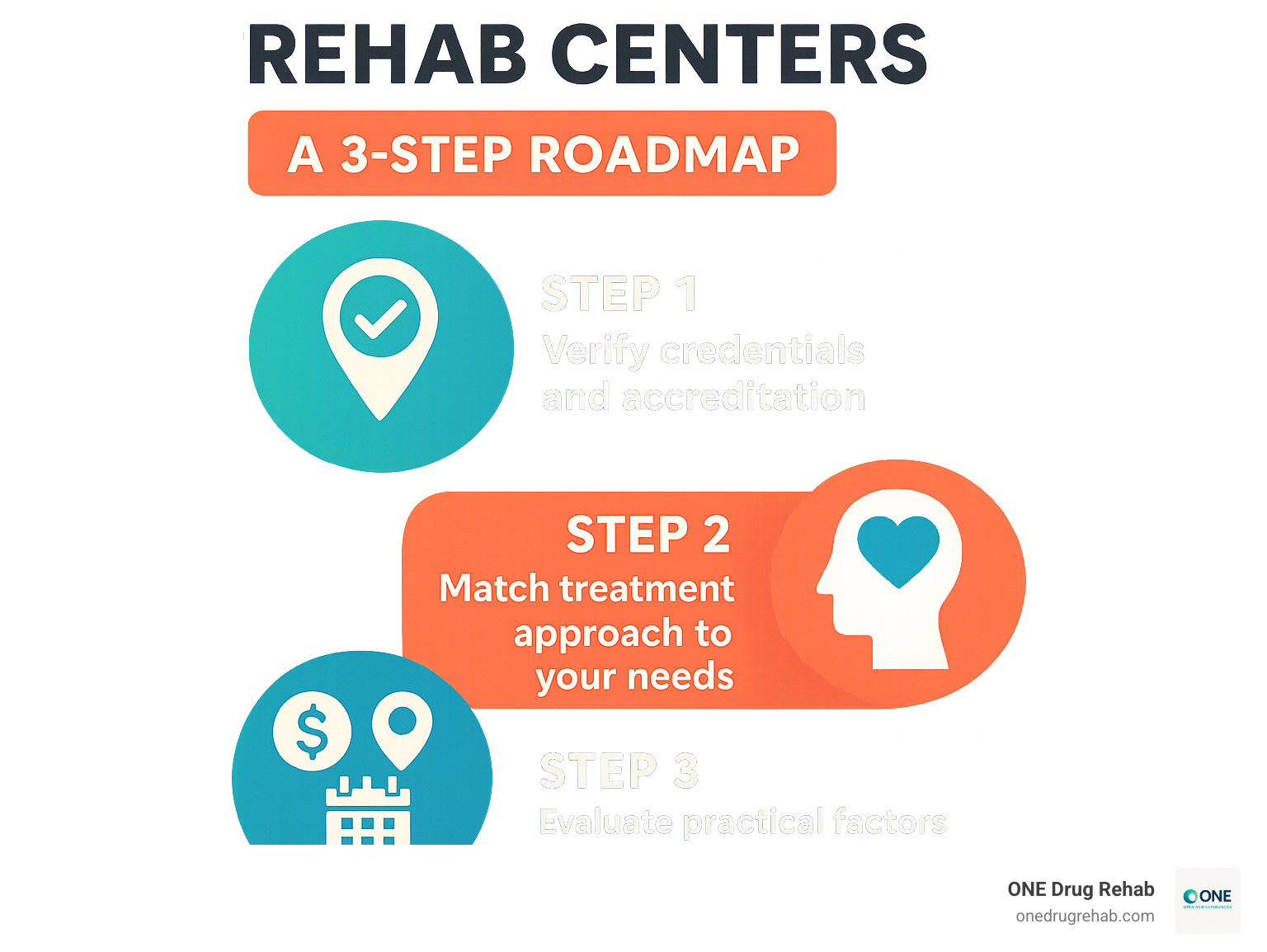
When you compare rehab centers, accreditation should be your first checkpoint—it separates legitimate treatment facilities from places that might do more harm than good.
CARF (Commission on Accreditation of Rehabilitation Facilities) is the gold standard. Getting CARF accreditation isn’t easy—facilities must prove they’re following best practices, tracking results, and actually helping people get better.
The Joint Commission focuses heavily on safety and medical protocols. If you see their accreditation, you know the facility follows strict guidelines for everything from medication management to emergency procedures.
Every legitimate facility must have state licensing—this is the absolute bare minimum. But don’t stop there. State licenses just mean they’re legal to operate, not that they’re effective.
Scientific research on accreditation impact shows accredited facilities consistently deliver better patient outcomes, fewer dropouts, and safer care overall.
The best facilities build multidisciplinary teams because addiction isn’t just one problem with one solution. You need addiction doctors handling the medical side, psychiatrists addressing mental health issues, licensed therapists teaching coping skills, and peer counselors who’ve walked in your shoes.
Quality centers measure their success rates and aren’t afraid to share them. They track completion rates, sobriety at 6 months, and patient satisfaction. If a facility gets defensive about their results, consider it a red flag.
2.1 How to Verify a Facility Before You Compare Rehab Centers
Don’t just take their word for it. Check accreditation dates first—accreditations expire, and some facilities keep advertising old credentials. Go directly to CARF’s or The Joint Commission’s website and verify.
Most states publish inspection reports online. Look for patterns—one minor violation might not mean much, but repeated issues with staffing, safety, or clinical care should make you think twice.
Disciplinary history tells a story too. State licensing boards keep records of complaints and violations.
2.2 Meet the Team Who Will Treat You
Addiction physicians need to be board-certified in addiction medicine or psychiatry. They manage your medical care, prescribe medications if needed, and ensure detox goes safely.
Psychiatrists become crucial if you’re dealing with depression, anxiety, or other mental health issues alongside addiction. Nearly half of people in treatment have co-occurring disorders.
Licensed therapists should hold credentials like LCSW, LPC, or LMFT, plus additional training in addiction counseling. These are the people you’ll work with most closely.
Peer counselors bring lived experience. They should have solid recovery time themselves and proper training in peer support.
Staff-to-client ratios affect how much individual attention you’ll get. Quality facilities keep group sizes manageable—usually no more than 8-10 people per counselor.
3. Inside the Program: Evidence-Based Therapies, Personalization & Amenities
When you compare rehab centers, the actual treatment approaches they use will determine whether you walk out with real recovery tools or just good intentions.
Cognitive Behavioral Therapy (CBT) helps you spot thought patterns that lead to relapse—like “I’ve had a terrible day, so I deserve a drink.” CBT teaches you to catch these thoughts and flip the script.
Dialectical Behavior Therapy (DBT) goes deeper into emotional regulation. If your emotions control you instead of the other way around, DBT teaches practical skills for riding out intense feelings without reaching for substances.
Motivational Interviewing (MI) meets you where you are, helping you work through ambivalence about recovery without judgment.
Medication-Assisted Treatment (MAT) combines therapy with FDA-approved medications. For opioid addiction especially, medications like buprenorphine and naltrexone dramatically improve success rates.
Family therapy brings your loved ones into the healing process. Addiction affects entire families, and recovery works better when everyone learns healthier ways of relating.
Trauma-informed care recognizes that many people use substances to cope with past trauma. Therapies like EMDR help process traumatic memories so they stop driving your addiction.
Quality facilities also weave in holistic approaches like yoga, meditation, and art therapy. While these aren’t cure-alls, they give you healthy ways to manage stress and connect with yourself.
Amenities matter more than you’d think. Private rooms give you space to process emotions. Quality meals show you deserve good things. Comfortable common areas make it easier to connect with peers who become lifelong recovery allies.
3.1 Individualized Treatment Planning
Quality facilities start with a comprehensive assessment that looks at your unique situation—not just what substances you use, but why you use them.
They’ll evaluate your addiction severity and history, screen for co-occurring mental health conditions, assess any medical issues, and understand your social support system.
Co-occurring disorders are especially important—nearly half of people with addiction also struggle with mental health conditions. Facilities that treat these separately often fail because they’re only addressing part of the problem.
The best programs make you a partner in goal-setting. You’re more likely to stick with treatment when you help design it.
Length flexibility matters too. While 30-day programs are common, research consistently shows longer treatment produces better results. Quality facilities adjust your stay based on your progress, not arbitrary timelines.
More info about Rehab Facility Reviews can give you insights into how different facilities approach personalized care.
3.2 Relapse Prevention & Aftercare That Last
Treatment doesn’t end when you walk out the door. The best facilities know that lasting recovery requires ongoing support.
Alumni networks connect you with people who’ve walked your path. These relationships often become lifelines during difficult moments in early recovery.
Sober living arrangements provide a bridge between treatment and independent living. If your home environment isn’t recovery-friendly yet, quality sober living gives you structure and accountability.
Telehealth services keep you connected with your treatment team after discharge. That therapist who really “got” you? You can continue working with them even after leaving residential treatment.
Integration with 12-step programs or other support groups helps you tap into local recovery communities. While not everyone accepts 12-step approaches, these meetings provide free, widely available peer support.
The best facilities track success metrics and share them transparently. They’ll tell you their completion rates, employment outcomes, and sobriety rates at 6, 12, and 24 months after discharge.
4. Dollars, Days & Doors-Open Dates: Practical Comparison Factors

When you compare rehab centers, money talks. Treatment costs vary wildly—from $1,000 monthly for basic outpatient programs to over $100,000 per month for luxury facilities. Most standard residential programs cost $7,000-$20,000 monthly.
Insurance coverage has improved significantly since the Affordable Care Act. Your private insurance plan is legally required to cover addiction treatment just like any other medical condition. But coverage varies wildly depending on which facilities accept your insurance, whether you need prior approval, and what you’ll pay out of pocket.
Medicare and Medicaid both cover addiction treatment, though your options might be more limited.
Don’t assume you’re stuck if money’s tight. Many facilities offer financing options like payment plans, sliding scale fees based on what you can afford, and scholarships or grants through nonprofits and government programs.
The timing factor can be crucial. Wait lists at public facilities sometimes stretch for months, while private facilities often offer same-day admission.
4.1 Insurance & Budget Checklist
Before you get your heart set on any facility, do your homework on coverage verification. Call your insurance company to understand exactly what your addiction treatment benefits include.
You need to know your in-network versus out-of-network costs—this difference can be huge. Even if a facility accepts your insurance, being out-of-network might mean you pay 40-60% of costs instead of a typical 10-20% copayment.
Find out about deductibles, copayments, prior authorization requirements, and length of stay limits. Some plans cap residential treatment at 30 days, while others allow longer stays when medically necessary.
More info about Find Rehab Without Insurance can help if you’re uninsured or have limited benefits.
Watch out for hidden fees that aren’t included in quoted prices. Some facilities charge extra for admission processing, medications, specialized therapies, amenities, or discharge planning services.
4.2 Admission Speed & In-Program Relapse Policies
Medical detox availability can affect how quickly you can start treatment. If you need supervised detox from alcohol, benzodiazepines, or opioids, the facility must have proper medical staff and protocols.
Understanding privacy rights helps set expectations about family communication. HIPAA protects your medical information, but facilities can share basic information with family members if you sign release forms.
Safety rules typically cover visitor policies, phone and internet access, what personal items you can bring, and whether you can leave the facility grounds.
Relapse policies during treatment are crucial to understand. Some facilities discharge patients immediately after any relapse, while others see relapse as part of the recovery process and adjust treatment accordingly.
5. Location, Environment & Reviews: The Intangibles That Matter

Location and environment significantly impact treatment success and your overall experience.
Urban vs. nature settings each offer advantages. Urban facilities provide access to medical specialists and established recovery communities. Nature-based facilities offer tranquility, reduced distractions, and opportunities for outdoor therapy activities.
Travel for treatment can be beneficial or challenging. Benefits include removal from familiar triggers and drug-using networks, plus a fresh start in a new environment. However, traveling for treatment also means separation from family support systems and higher costs for family visits.
Family proximity affects both treatment engagement and aftercare success. Having family nearby can provide support and enable their participation in therapy. However, if family relationships are toxic or enabling, distance might be therapeutic.
Online ratings provide valuable insights but require careful interpretation. Look for patterns in reviews rather than focusing on individual complaints. Pay attention to staff professionalism, facility cleanliness, food quality, clinical program effectiveness, and aftercare support quality.
5.1 Reading Real-World Feedback When You Compare Rehab Centers
Third-party directories like ONEDrugRehab.com provide unbiased information without endorsing specific providers. These platforms aggregate reviews and facility information, making comparisons easier.
Star ratings offer quick comparisons but don’t tell the whole story. A facility with 4.5 stars might be excellent for certain needs but wrong for others. Look beyond the numbers to understand why facilities received their ratings.
Alumni stories provide deeper insights into long-term outcomes. Facilities willing to connect you with graduates demonstrate confidence in their results.
Red-flag patterns in reviews might include consistent complaints about staff turnover, safety concerns, billing disputes, poor communication with families, or inadequate aftercare support.
More info about Rehab Near Me can help you find local options and read reviews from people in your area.
5.2 Balancing Setting With Support Systems
Trigger distance is crucial for early recovery. Being too close to old using environments can jeopardize sobriety, while being too far might create isolation.
Travel costs for family visits add up quickly. Factor in transportation, lodging, and time off work when considering distant facilities.
Cultural fit matters more than many people realize. Facilities serving diverse populations might better understand your background and needs.
Local recovery community strength varies by location. Areas with robust AA/NA meetings, sober living options, and recovery-friendly employment might offer better long-term support.
Frequently Asked Questions about Comparing Rehab Centers
What accreditation or license is non-negotiable?
Every legitimate facility must hold current state licensing from their substance abuse regulatory agency. This isn’t optional—it’s the law.
CARF accreditation represents the gold standard in addiction treatment. When a facility has CARF certification, they’ve undergone rigorous evaluation of their clinical practices, staff qualifications, and success measurement. Joint Commission certification is equally impressive, focusing on safety standards and evidence-based care.
State licensing is like having a driver’s license—it means you’re legal to operate. CARF or Joint Commission accreditation shows you’re going above and beyond.
If you’re looking for specialized care, dig deeper. Facilities treating teenagers should have youth-specific accreditation. Centers offering medication-assisted treatment need proper DEA licensing for controlled substances.
How long should I stay in treatment for best results?
The honest answer: longer is almost always better. While insurance companies love 30-day programs, research from NIDA shows that 90 days minimum produces the best outcomes.
In the first 30 days, you’re often just getting physically stable and starting to think clearly. Real behavior change—the kind that prevents relapse—takes time to develop and practice.
Consider longer programs if you’ve been through treatment before, have depression or anxiety alongside addiction, or face serious medical complications. People returning to high-stress jobs or unsupportive home environments also benefit from extended treatment.
The best facilities offer flexible lengths based on your progress, not arbitrary calendar dates.
Can I transfer if the first center isn’t a fit?
Yes, but it’s more complicated than switching gyms. Most facilities require voluntary discharge before you can admit elsewhere, which might create gaps in your care.
Insurance complications are real. Many plans won’t cover multiple admissions in the same benefit period. Medical detox typically can’t be repeated immediately, so if you need detox again, you might face delays.
Transfers can disrupt momentum you’ve built with therapists and peers. Sometimes what feels like a “bad fit” is actually resistance to change—a normal part of early recovery. Before making this decision, talk honestly with your treatment team about what’s not working.
That said, if you’re truly in the wrong place—maybe you need dual diagnosis treatment and they don’t offer it—don’t stay somewhere that can’t meet your needs.
Conclusion
Finding the right rehab center isn’t like shopping for shoes—it’s finding a trusted partner for one of life’s most important journeys. When you compare rehab centers, the fanciest facility isn’t always the best match, and the one with the shortest wait time might not be worth the rush.
Think of ONEDrugRehab.com as your impartial friend in this process. We don’t get paid by facilities to recommend them, and we don’t have hidden agendas. Our purpose is giving you honest, comprehensive information so you can make the choice that’s right for you.
Here’s how to turn everything you’ve learned into action. Start by creating a shortlist of three to five facilities that check your most important boxes. Maybe that’s location, cost, or a specific therapy approach that resonates with you.
Next, dig into those credentials. A facility’s website might look impressive, but five minutes checking their accreditation status could save you from a costly mistake.
Pick up the phone and talk to real people at these facilities. Ask the hard questions about their success rates, their policies if you struggle during treatment, and what happens after you leave.
Money matters, so get crystal clear on costs upfront. Call your insurance company, understand what you’ll pay out of pocket, and ask about any fees that might surprise you later.
Listen to other people’s experiences through reviews and testimonials, but remember everyone’s journey is different.
Finally, trust that gut feeling. If something feels off during your research or conversations, pay attention to that instinct. You’re looking for a place where you feel safe, respected, and hopeful about your future.
Taking time to research isn’t procrastination—it’s one of the smartest investments you can make in your recovery. The right treatment center becomes more than just a place you went once; it becomes the foundation for everything that comes after.
More info about Drug Rehab Centers Directory gives you access to comprehensive listings and detailed information to continue your research with confidence.
Recovery isn’t just possible—it’s probable when you find the right support. You’ve already taken the hardest step by deciding to seek help. Now take the time to choose wisely. Your future self is counting on the care you put into this decision today.