

Why Your Living Environment Matters in Early Recovery
A sober living environment is an alcohol and drug-free group home that helps people in recovery transition from treatment to independent living. These homes offer a supportive, structured setting with peer accountability but without the intensity of formal rehab. They are ideal for individuals finishing treatment, leaving incarceration, or seeking a stable, substance-free home to support their sobriety.
In early recovery, a person’s home life can be a major roadblock. Triggers, substance-using housemates, or a lack of structure can undermine progress. Research shows that a lack of stable, alcohol and drug-free housing can derail recovery, even for highly motivated people. A destructive environment can undo months of hard work.
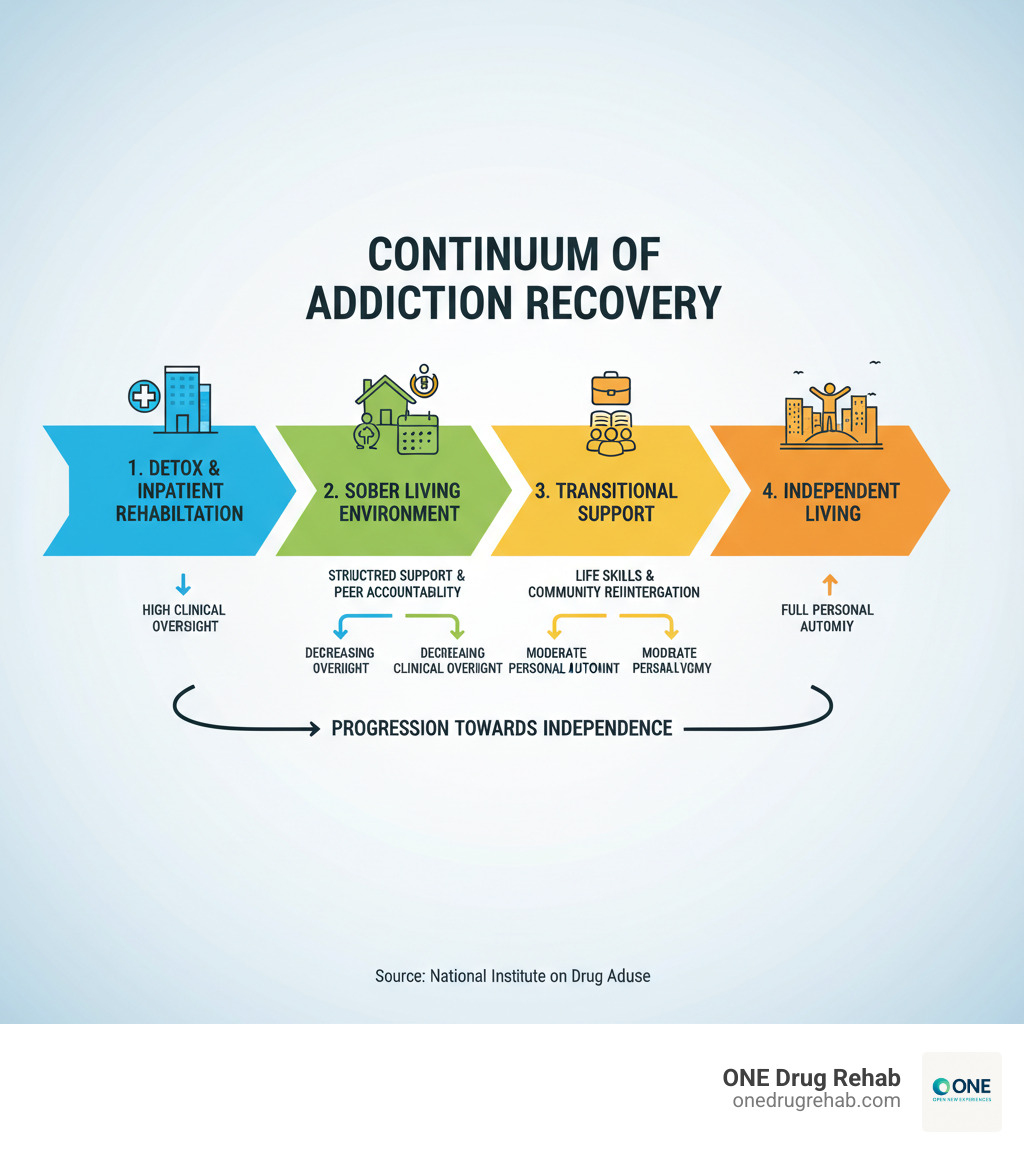
Sober living homes act as a crucial bridge between intensive inpatient treatment and full independence. They provide the freedom to work or attend school while offering a safety net of accountability, structure, and a community of peers who understand the recovery journey.
Studies tracking residents over 18 months confirm their effectiveness. Abstinence rates jumped from 11-20% at entry to 42-68% at follow-up. Additionally, arrests dropped, employment improved, and psychiatric symptoms decreased. The data is clear: these environments work.
Understanding Sober Living: Definition, History, and Models
Sober living environments occupy a unique space in the recovery world, acting as a launching pad for individuals not yet ready to return to their old lives. Whether you’ve just completed an inpatient program, are seeking an alternative to formal treatment, or are re-entering society after incarceration, these homes provide a vital transitional phase. Research shows that sober living houses serve all these purposes and more.
Defining a Sober Living Environment
A sober living environment is a home where alcohol and drugs are strictly forbidden, and all residents are committed to abstinence. More than just a substance-free address, it’s a stable place to focus on recovery without the dangers of a previous living situation. These are not clinical treatment facilities; you won’t find therapists or medical staff on-site. Instead, the power comes from peer support—living with others who understand the challenges of recovery. This shared experience creates natural accountability and a supportive “bubble” where you can practice sober living skills.
How SLHs Differ from Other Recovery Housing
It’s easy to confuse sober living homes with halfway houses or inpatient rehab. Understanding the key differences is crucial.
Sober living homes (SLHs) are typically funded by resident fees, and there’s no set time limit on your stay. They offer high autonomy, allowing residents to work or attend school. Halfway houses are often government-funded, have time limits (e.g., six months to a year), and involve more structured oversight. Inpatient rehab is the most intensive option, providing 24/7 clinical care in a highly structured, short-term setting (e.g., 30-90 days).
| Feature | Sober Living Homes (SLHs) | Halfway Houses | Inpatient Rehab |
|---|---|---|---|
| Funding | Primarily resident fees | Often government-funded | Insurance, private pay, government grants |
| Length of Stay | Typically open-ended (as long as rules are followed) | Time-limited (e.g., 6 months to 1 year) | Short-term (e.g., 30, 60, 90 days) |
| Treatment | No formal on-site clinical treatment; encourage 12-step participation | May offer some on-site counseling or require outpatient attendance | Intensive, 24/7 clinical care and supervision |
| Independence | High; residents work, attend school, manage finances | Moderate; more structure than SLHs, less autonomy | Low; highly structured, supervised environment |
| Licensing | Generally not state-licensed (unless affiliated with coalitions) | Often state-licensed and regulated | State-licensed and highly regulated |
| Admission | No requirement to have recently completed formal rehab; active recovery commitment expected | Often requires completion of a rehab program | Requires active addiction and medical assessment |
The Evolution and Different Models of Sober Living
The concept of recovery housing dates back to the 1830s with “dry hotels” run by groups like the YMCA. The modern sober living environment emerged after WWII, when members of Alcoholics Anonymous opened “twelfth step houses” for those leaving treatment with nowhere safe to go.
A key development was the Oxford House model, which began in 1975. In this democratic, peer-run model, residents manage the house collectively, from finances to rules, creating powerful shared accountability. Today, there are over 1,000 Oxford Houses in the U.S.
An alternative is the “strong manager” model, where a house manager or owner has more direct authority. Both models can be effective. To ensure quality across different models, the National Alliance of Recovery Residences (NARR) was established in 2011. NARR provides national standards and a voluntary certification process, helping distinguish reputable homes from fraudulent operators.

The Core Components: Structure, Rules, and Safety
The structure in a sober living environment isn’t about control; it’s about creating a stable foundation for recovery. Predictable routines and clear expectations allow residents to focus their energy on healing rather than just surviving. This structure is often a welcome relief from the chaos of active addiction.
Typical Requirements for Residents
While rules vary, most sober living homes share common requirements designed to keep everyone safe and focused:
- Complete Abstinence: No alcohol or illicit drugs are permitted.
- Drug and Alcohol Testing: Mandatory and often random testing ensures accountability.
- Active Recovery Participation: This usually means attending 12-step meetings (like AA/NA), working with a sponsor, and engaging in the recovery process.
- House Responsibilities: Residents are expected to adhere to curfews, complete assigned chores, and attend regular house meetings.
- Productive Activity: Most homes require residents to be employed, in school, or in an outpatient program.
- Financial Responsibility: Paying rent on time is a key requirement and a vital life skill.
The Structure of a Sober Living Environment
Sober living environments balance structure with flexibility to prepare residents for independent living. Many use highly structured schedules, which research shows improves long-term sobriety. Some homes use a phase system, where new residents have more supervision and earn privileges over time.
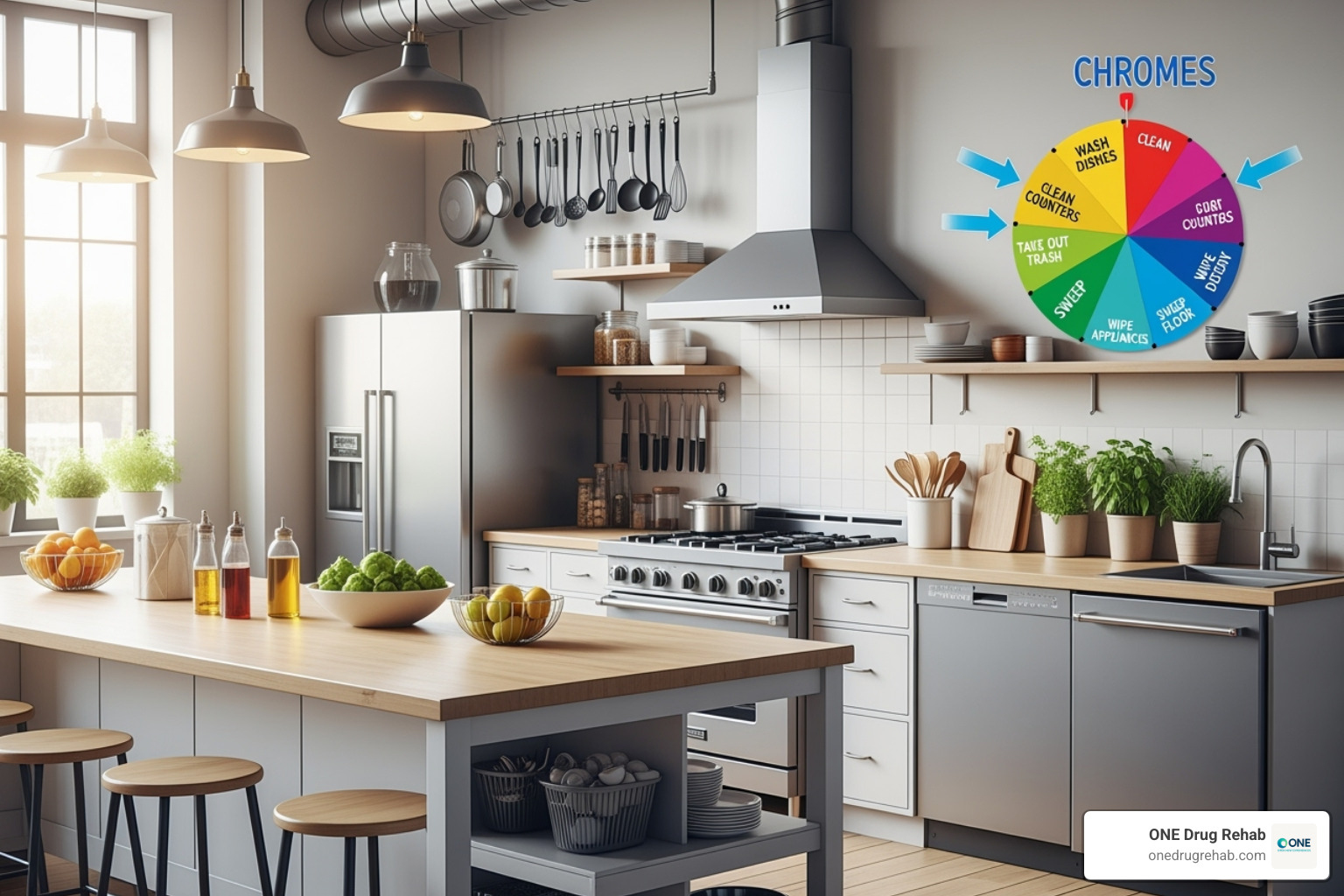
The house manager, often a senior resident in recovery, helps maintain order. In democratic models like Oxford House, resident councils share leadership, making decisions collectively. Simple tools like a chore wheel or sign-in/out sheets reinforce routine, accountability, and safety.
Safety, Support, and Relapse Prevention
A sober living environment is a safe haven from triggers. A zero-tolerance policy for substance use, backed by drug testing, maintains physical safety. Emotional safety comes from the powerful peer support networks that form within the house, combating the isolation that often triggers relapse.
Learning to handle disagreements constructively is another key skill, and homes often have processes for conflict resolution.
Relapse protocols vary. Some homes have a strict policy of immediate eviction to protect the community. Others view relapse as a learning opportunity, offering a path to return after the resident seeks additional support (like detox) and recommits to recovery. The goal is to encourage honesty and provide support, recognizing that recovery is not always a straight line.
The Impact of a Sober Living Environment on Recovery
Entering a sober living environment is a choice to rebuild your life. These homes are active workshops for fostering independence and long-term sobriety, and the research backing their effectiveness is compelling.
Scientific studies tracking residents over 18 months show abstinence rates jumping from 11-20% at entry to 42-68% at follow-up. Beyond sobriety, residents saw improved employment, fewer arrests, and lessened psychiatric symptoms. The data confirms that these environments work.
Building New Habits and Fostering Personal Responsibility
Recovery is about learning a new way to live, and the structure of an SLE helps re-establish healthy routines like regular sleep and meals. Many homes offer life skills classes on topics like financial management and job searching. Accountability is key; residents are responsible not just to the rules but to their peers. This fosters a deep sense of personal responsibility. Many homes also require community service, which helps residents make amends and build self-worth.
The Power of Community and Peer Support
Community is the heart of a sober living environment. In one study, 63.2% of residents cited wanting to live with others in recovery as a key reason for choosing an SLE. The shared experience among residents creates powerful bonds and reduces the isolation that can trigger relapse. This camaraderie provides a lifeline of support and advice. The social model recovery approach, used in many SLEs, thrives on this peer-driven dynamic, helping residents build a lasting sober social network. This effect is amplified when combined with 12-step programs.
Improving Mental Health and Overall Well-being
Many people in recovery also have co-occurring mental health disorders. The stability of an SLE has a profound impact on mental health. Research using the Psychiatric Diagnostic Screening Questionnaire (PDSQ) found that residents’ symptom totals decreased significantly from an average of 27.0 at baseline to 17.7 at six months. Interestingly, residents who chose an SLE for affordability experienced less psychiatric distress, while those who entered because they had “no other place to live” showed greater distress, highlighting the importance of empowerment in recovery. By providing a safe space to heal, SLEs foster holistic well-being.
Choosing an SLE: Reasons, Challenges, and Practicalities
Choosing to enter a sober living environment is a significant step. It’s a decision that requires careful planning and self-reflection, representing a gradual transition back to mainstream society with the support needed to steer life’s challenges sober.
Common Reasons for Choosing an SLE and Their Impact
Research shows that the reasons people choose an SLE can correlate with their recovery outcomes.
- Affordability (74.4%): For many, SLEs are a budget-friendly housing option. Choosing a home for this reason was associated with less psychiatric distress, suggesting financial stability aids recovery.
- Living with others in recovery (63.2%): The desire for peer support is a powerful motivator, creating a community where residents feel understood.
- Location (62.8%): Proximity to work, meetings, or family is important. This choice was linked to fewer employment problems.
- No other housing option (61.9%): While SLEs provide a crucial safety net, those who enter for this reason showed greater psychiatric distress, underscoring the need for more supportive housing options.
How to Find and Choose a Suitable Sober Living Home
Finding the right sober living environment is critical for your recovery. Here are key steps to take:
- Look for Accreditation: Check if the home is certified by the National Alliance for Recovery Residences (NARR) or a state affiliate. This indicates it meets quality standards for safety and ethics.
- Ask About Rules and Structure: Inquire about curfews, drug testing frequency, meeting requirements, and conflict resolution. A highly structured environment is often linked to better outcomes.
- Visit the House: If possible, tour the home to see if it feels clean, safe, and comfortable. Trust your gut instinct.
- Talk to Current Residents: Get an unfiltered perspective on daily life, house culture, and the level of support.
- Verify Safety Standards: Ensure the home has basic safety features like working smoke detectors and functional plumbing.
- Understand the Relapse Protocol: Know what happens if a resident relapses. Does the house have a strict eviction policy or a supportive re-entry plan?
- Consider the Management Style: Decide if you’d prefer a democratic, peer-run model (like Oxford House) or a home with a “strong manager.”
Be wary of fraudulent operators or homes with substandard conditions. Verify any claims of licensing with the appropriate state agency.
Financial Considerations and Potential Criticisms
Most sober living environments are funded by resident fees, not government aid. Costs vary by location and amenities, often ranging from $395 to $695 per month. Residents typically pay through employment, savings, or family support, which helps build financial responsibility.
Insurance rarely covers SLE costs because they are not licensed treatment facilities. Always check with your provider directly. Some homes may offer scholarships or sliding-scale fees.
A major criticism of the industry is the lack of formal regulation for many homes, which has allowed some fraudulent operators to exploit residents. This has led to calls for better oversight. Another challenge is community opposition (NIMBYism), where neighborhoods resist the presence of recovery homes despite evidence that they improve public safety. Despite these issues, SLEs play a vital role in addressing homelessness and providing the stable housing that is critical for long-term recovery.
Frequently Asked Questions about Sober Living
Here are clear, straightforward answers to common questions about sober living environments.
How long can you stay in a sober living home?
Unlike halfway houses with firm deadlines, most sober living homes have no set time limit. You can stay as long as you follow the rules, maintain sobriety, and pay your fees. This flexibility allows you to move on when you feel genuinely ready for independent living, whether that’s after a few months or more than a year.
Do sober living homes have staff?
Most sober living environments have a house manager, who is often a senior resident in recovery. They oversee daily operations and enforce rules. However, SLEs are not treatment facilities, so they do not have on-site clinical staff like therapists, doctors, or nurses. The support is peer-driven, and residents access clinical services from outside providers.
What happens if you relapse in a sober living home?
Policies vary greatly. Some homes have a strict zero-tolerance policy, meaning immediate eviction to protect the sober environment for all residents. Others view relapse as part of the recovery process and may offer a path to return. This could involve a temporary leave, seeking additional professional help, and returning with a revised recovery plan and increased accountability. It is crucial to understand a home’s specific relapse policy before moving in.
Conclusion: Your Next Step in a Supported Recovery Journey
From their origins as “dry hotels” to modern peer-run communities, sober living environments have become a vital component of the recovery landscape. The evidence is clear: these homes significantly improve outcomes. Abstinence rates climb, employment improves, and psychiatric symptoms ease as residents find their footing in a supportive setting.
The effectiveness of sober living environments lies in their unique blend of structure, accountability, and community. They bridge the critical gap between intensive treatment and full independence, offering the freedom to rebuild a life with the safety net of a substance-free home and a network of peers who understand.
Choosing the right environment is a personal decision. Whether you need the democratic structure of an Oxford House or the guidance of a strong manager, the path forward begins with research. Visit homes, ask questions, and look for NARR-certified options to find the best fit for your journey.
At ONE Drug Rehab, we provide unbiased information to help you make an informed choice. We don’t endorse specific providers, because we believe your recovery deserves clarity, not a sales pitch. Your supported recovery journey can start today.
Find more information on sober living and other treatment options