
When Addiction Hits Home: Understanding Couples Rehab
Inpatient rehab for couples provides specialized residential programs where both partners receive simultaneous addiction treatment while addressing their relationship dynamics. These programs combine individual therapy, couples counseling, and group sessions in a structured, 24/7 supervised environment to help couples achieve sobriety together.
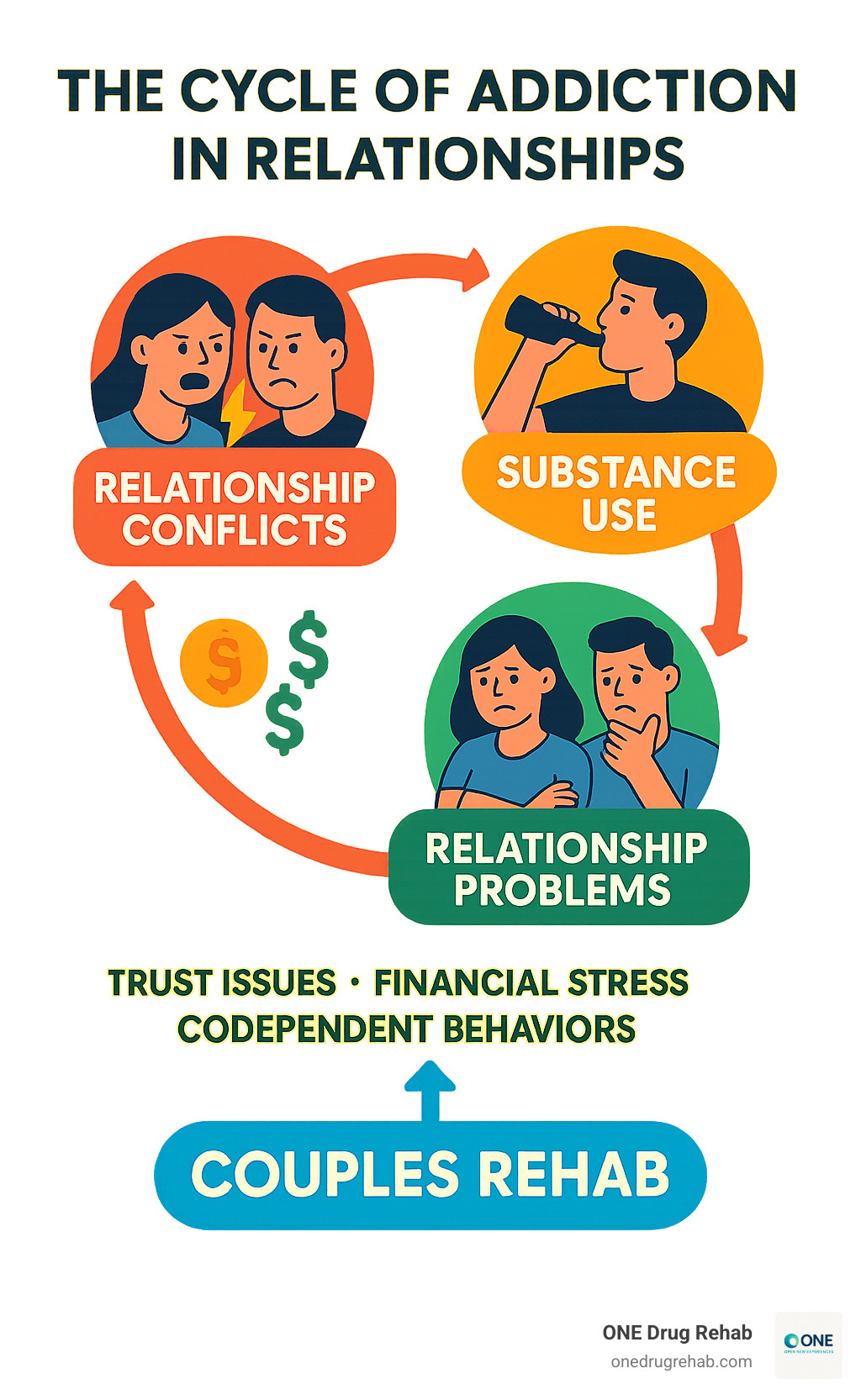
When substance use disorder affects a relationship, it can create a destructive cycle where addiction and conflict fuel each other. With 46.3 million Americans having a substance use disorder in 2021, many are in relationships where both partners struggle. Traditional individual treatment often fails because it doesn’t address the complex dynamics of couples who use substances together, such as shared triggers or enabling behaviors.
Couples rehab recognizes that addiction is rarely an individual problem. Research shows that couples who get treatment together often have better outcomes, learning to become allies in recovery. These programs help transform the relationship from an obstacle into a source of mutual support.
Inpatient rehab for couples glossary:
What is Inpatient Rehab for Couples?
Inpatient rehab for couples is an evolution in addiction treatment. The old belief that partners should be treated separately due to codependency or enabling behaviors has been largely dismissed. Today’s programs are designed to help partners who both face drug or alcohol abuse in a residential setting.
Living at the treatment center 24/7 provides a structured, supportive environment, removing external triggers and offering immediate access to medical and therapeutic care. The core of these programs is a dual focus: treating each person’s addiction while healing the relationship. Partners receive personalized care for their substance use and any co-occurring mental health issues, alongside joint therapy sessions. The goal is to break negative cycles and foster healthier ways of interacting, turning the relationship into a powerful tool for lasting sobriety.
Why Consider Rehab as a Couple?
When both partners struggle with addiction, it can devastate their lives. Entering inpatient rehab for couples together offers unique advantages. Shared motivation is a key benefit; when both individuals are committed, they become allies, leveraging their bond for strength. This mutual support can significantly improve long-term sobriety rates.
These programs also provide a crucial opportunity to rebuild trust and learn sober communication skills. In a safe therapeutic setting, couples can address deep-seated issues like dishonesty and resentment, replacing enabling behaviors with constructive coping mechanisms. They also tackle the root causes of addiction within the relationship, such as codependency or shared trauma. By learning to interact and spend time together without substances, couples can create a sober home environment that nurtures their recovery and strengthens their bond.
The Transformative Benefits of Shared Recovery

When couples enter inpatient rehab for couples together, they begin rebuilding their lives and relationship from the ground up. The process goes beyond just getting sober; it’s about creating a partnership based on mutual support and accountability.
Recovery as a team creates a ripple effect of positive changes. Partners learn to see each other as allies in the fight against addiction, turning a damaged relationship into a source of strength. A key practical benefit is creating a home environment that supports recovery. With no hidden substances or enabling behaviors, mutual accountability helps both individuals stay on track.
Strengthening the Partnership
Couples rehab helps partners heal their connection, which is often damaged by addiction. Through therapy, they learn essential skills for a healthy relationship:
-
Improved communication: Therapies like Behavioral Couples Therapy (BCT) teach partners to express their needs constructively and practice active listening, moving away from blame.
-
Increased intimacy: As communication improves, emotional and physical closeness can be rebuilt. Couples often refind their affection for one another once substances are no longer clouding their judgment.
-
Conflict resolution and anger management: Instead of arguments escalating and leading to substance use, couples learn to manage disagreements calmly and work toward solutions together.
-
Developing new sober activities: A vital part of recovery is finding shared interests and hobbies that don’t involve drugs or alcohol, rebuilding the friendship that addiction eroded.
-
Setting healthy boundaries: Partners learn the crucial difference between supportive helping and harmful enabling, changing how they care for each other.
Improving Treatment Outcomes
Research and real-world results show the power of joint treatment. Higher abstinence rates are consistently reported when couples attend rehab together versus individually. Having your life partner as your recovery partner is a powerful motivator.
Studies show that couples that have undergone BCT were happier and healthier and less likely to separate, creating a stable foundation for long-term sobriety. A strong relationship makes it easier to resist the temptation to use substances as a coping mechanism.
From a practical standpoint, couples treatment can be cost-effective, combining two treatment episodes into one. This efficiency improves access to quality care. Furthermore, BCT has been shown to reduce incidents of domestic conflict and violence, which often co-occur with substance use, creating safer homes for families.
For more information on different treatment approaches, explore our resources on Types of Addiction Treatment.
A Look Inside: What to Expect from an Inpatient Rehab for Couples Program

Entering an inpatient rehab for couples program is the start of a transformative journey. Knowing what to expect can ease any anxiety and set you up for success.
The process begins with a comprehensive intake process, including detailed evaluations of your medical history, substance use patterns, and relationship dynamics. This creates a personalized roadmap for your recovery. A medical assessment follows, which is crucial for determining if medically supervised detox is needed. Withdrawal can be dangerous without professional oversight, and this step ensures your safety and comfort during the initial 7-10 day detox period.
After assessment and detox, you’ll settle into the program’s structured environment. Daily schedules are filled with a mix of individual and couples counseling, group therapy, and educational sessions. This routine replaces the chaos of addiction with a predictable and supportive atmosphere, minimizing distractions and triggers.
The Core Components of Treatment
Effective inpatient rehab for couples programs are built on several key components that support both individual and relationship healing.
-
Medical detox: This is often the first step, allowing the body to safely withdraw from substances under medical supervision. It provides the physical stability needed to engage in the psychological work of recovery.
-
Individual therapy: Each partner works one-on-one with a therapist to explore personal triggers, address underlying trauma or mental health concerns, and develop personal coping strategies.
-
Group therapy: Participating in groups with other couples creates a sense of community and shows you that you’re not alone. It’s a safe space to practice new skills and gain fresh perspectives.
-
Family involvement: Addiction impacts the entire family. Many programs offer sessions to help rebuild damaged relationships with children, parents, and other loved ones, which is vital for long-term success. Learn more about how treatment can benefit families at Rehab for Families.
Key Therapies in an Inpatient Rehab for Couples Program
The therapeutic approaches used in couples rehab are evidence-based and chosen for their proven results.
-
Behavioral Couples Therapy (BCT): This is the backbone of most programs. BCT focuses on reshaping unhealthy relationship patterns, improving communication, and increasing positive interactions. It may include “recovery contracts” to formalize each partner’s commitment to sobriety.
-
Cognitive Behavioral Therapy (CBT): CBT helps each partner understand the connection between their thoughts, feelings, and behaviors, providing practical tools to cope with stress and triggers.
-
Dialectical Behavior Therapy (DBT): DBT is valuable for managing intense emotions and co-occurring disorders. It teaches skills in emotional regulation, distress tolerance, mindfulness, and interpersonal effectiveness.
-
Holistic therapies: Approaches like yoga, mindfulness, art therapy, and acupuncture support overall well-being, reduce stress, and help foster a sense of balance.
-
Medication-Assisted Treatment (MAT): For opioid or alcohol addiction, medications like buprenorphine or naltrexone can reduce cravings and withdrawal symptoms, making other therapies more effective.
-
Psychiatric support: Since mental health issues like depression and anxiety often co-occur with addiction, integrated psychiatric care is essential for recovery. For more information, visit SAMHSA’s page on Psychotherapy for mental health issues.
-
Aftercare planning: From day one, your team helps you develop a plan for maintaining sobriety after treatment, including ongoing therapy and support group connections.
How to Find the Right Program for Your Journey Together
Finding the right inpatient rehab for couples program is a critical decision that will shape your recovery journey. It’s worth taking the time to research your options thoroughly to find a program that is genuinely right for your unique situation.
As an unbiased resource, we are here to help you steer this process. Our goal is to help you find a quality program without any hidden agenda or provider endorsements.
Criteria for Choosing a Top-Rated Program
When evaluating programs, focus on these essential criteria to distinguish excellent facilities from mediocre ones:
- Accreditation: Look for accreditation from the Joint Commission (JCAHO) or the Commission on Accreditation of Rehabilitation Facilities (CARF). This signifies that the facility meets high standards for safety and quality of care.
- Specialized Couples Track: Ensure the program has a dedicated track for couples, not just a co-ed facility that admits couples. True couples rehab addresses the unique dynamics of joint recovery.
- Evidence-Based Therapies: The program should explicitly offer research-backed approaches like Behavioral Couples Therapy (BCT), Cognitive Behavioral Therapy (CBT), and Dialectical Behavior Therapy (DBT).
- Dual Diagnosis Care: Since addiction often co-occurs with mental health conditions like depression or anxiety, the facility must be equipped to treat both issues simultaneously.
- Comprehensive Aftercare: Recovery continues long after you leave the facility. Ask about their aftercare planning, ongoing counseling, and sober living options for couples.
- Living Arrangements: Policies on whether couples share a room vary. Know the facility’s approach upfront and whether it aligns with your preferences.
- Insurance & Cost: A reputable program will be transparent about pricing, what your insurance covers, and any available payment options.
To start exploring your options, you can use our comprehensive directory to Find Rehab Centers in your area.
Navigating Cost and Insurance
While inpatient rehab for couples can be expensive, the cost of untreated addiction—including lost work, legal troubles, and health issues—is often far greater. Think of treatment as an investment in your future.
The Affordable Care Act requires most insurance plans to cover substance use disorder treatment. This includes many Medicaid and state exchange programs. Your first step should be to verify your insurance benefits. The admissions team at a prospective rehab center can help you with this process, as they are experts at navigating different plans.
If insurance doesn’t cover the full cost, don’t panic. Many facilities offer payment plans or operate on a sliding scale fee based on income. State-funded options may also be available, though they can have waiting lists. Investing in a quality program is the foundation for building a healthy, sober life together.
For more guidance on financial options, explore our page on Finding Rehab Without Insurance if you need additional resources.
Important Considerations and Potential Drawbacks
Deciding to enter inpatient rehab for couples is a personal choice. While these programs are transformative for many, they aren’t the right fit for every situation. Being honest about your circumstances and understanding potential challenges will help you make the best decision.
When is Couples Rehab Not Recommended?
In certain situations, individual treatment may be more beneficial, at least initially. Couples rehab is generally not recommended if:
-
There is a history of severe domestic violence. Safety is the top priority. In these cases, individual treatment in separate environments is necessary to ensure a safe therapeutic space for both partners.
-
One partner is unwilling to participate. For couples rehab to work, both partners must be genuinely committed. A resistant partner can sabotage the process for both individuals.
-
A partner has severe mental health needs. Some conditions, such as antisocial personality disorder, may require specialized individual treatment before relationship issues can be effectively addressed.
-
There is no commitment to the relationship. If one or both partners do not intend to continue the relationship after treatment, individual rehab is a more practical use of time and resources.
-
Codependency is extremely severe. While couples rehab addresses these patterns, some extreme cases may require individual work first to establish personal boundaries and self-awareness.
Can Couples Stay in the Same Room?
This is a common question, and policies vary by facility. Most programs require separate living quarters, at least in the early stages of treatment. This approach has a therapeutic purpose: it helps each person focus on their individual recovery without falling back into old, enabling patterns.
The real work of healing the relationship happens in joint therapy sessions, regardless of sleeping arrangements. Separate rooms reinforce that while you are a team, individual recovery is the foundation. Some facilities may allow shared rooms later in treatment once both partners have made significant progress. When researching facilities, be sure to ask about their specific policies and the reasoning behind them.
Frequently Asked Questions about Couples Rehab
It’s normal to have questions when considering inpatient rehab for couples. This is a major decision affecting your recovery and your relationship. Here are answers to some common concerns.
What if only one partner has an addiction?
Couples rehab can be incredibly valuable even if only one person has a substance use disorder. Addiction affects the entire relationship, and the non-addicted partner has likely experienced trauma and developed unhealthy coping mechanisms or enabling behaviors.
In a couples program, the non-addicted partner learns how to provide healthy support, sets boundaries, and better understands the disease of addiction. Both partners work together in therapy to heal the relationship damage, such as broken trust and poor communication. This collaborative approach helps create a home environment that supports long-term recovery.
What happens after we complete the program?
Graduating from an inpatient rehab for couples program is the start of your recovery journey, not the end. Comprehensive aftercare is crucial for maintaining sobriety. Your aftercare plan, developed during treatment, will likely include:
- Sober living homes: Many couples transition to sober living homes designed for couples, which provide a structured, supportive environment.
- Continued counseling: Ongoing couples and individual therapy helps reinforce new skills and steer challenges.
- Support groups: Organizations like Recovering Couples Anonymous (RCA) offer a community of peers who understand your journey.
- Relapse prevention planning: You’ll leave with a concrete plan to identify triggers and manage high-risk situations together.
How long does an inpatient rehab for couples program last?
The length of an inpatient rehab for couples program is custom to each couple’s needs. The severity of the addiction, the presence of co-occurring mental health disorders, and specific relationship challenges all play a role.
- 30-day programs can provide a solid foundation for less severe issues.
- 60-day programs allow more time to address underlying issues and practice sober living skills.
- 90-day programs are generally recommended for more severe or long-standing addiction, especially when dual diagnoses are present.
Longer stays of up to nine months may be necessary for complex cases or chronic relapse. Your treatment team will recommend the appropriate duration during your initial assessment to give you the best chance of success.
Begin Your Journey to Sobriety and a Stronger Bond
Taking the first step toward recovery as a couple requires incredible courage. Inpatient rehab for couples offers a path not just to sobriety, but to refinding the love and connection that brought you together.
We understand that reaching out for help can be overwhelming. It’s important to know that you can heal and grow stronger together. The power of shared commitment in recovery is remarkable. When you face addiction as a team, you shift from a cycle of blame to one of mutual support. This change is the foundation for rebuilding trust and learning to live a fulfilling life without substances.
Hope for recovery is real. Every day, couples take this brave step and find that a sober life together is not only possible but deeply rewarding. The journey isn’t always easy, but with professional support and your shared commitment, you can break free.
At ONEDrugRehab.com, we are an independent resource dedicated to providing you with unbiased information to make the best decision for your recovery. We don’t profit from referrals or endorse specific providers.
Begin your journey to sobriety and a stronger bond today. Use our comprehensive directory to research your options and Compare Rehab Centers that offer specialized couples programs. Your sober, healthy future together is waiting.