
Why Finding 12-Step Groups Near You Can Change Everything
12 step groups near me are free, peer-led support meetings that help millions of people overcome addiction and maintain recovery. Here’s how to find them quickly:
- Visit official websites – AA.org, NA.org for meeting locators
- Download apps – Meeting Guide app for iOS/Android
- Call helplines – 24-hour support lines provide meeting lists
- Check online – Virtual meetings available worldwide
- Contact local offices – Intergroup offices have current schedules
Recovery doesn’t happen in isolation. As one member shared, “We found in each other what we could find nowhere else: people who knew the depth of our pain. Together we found hope and the care of a loving Higher Power.”
The numbers tell the story: Alcoholics Anonymous has helped more than two million people stop drinking over its 80-year history. These programs work because they’re built on a simple foundation – one person in recovery helping another.
Whether you’re struggling with alcohol, drugs, gambling, food, or other addictive behaviors, there’s likely a 12-step fellowship designed specifically for your situation. And here’s the best part: meetings are completely free and available in virtually every community.
For families affected by addiction, specialized groups like Al-Anon provide support and healing for loved ones who didn’t choose addiction but are living with its effects.
The beauty of 12-step programs lies in their accessibility. You don’t need insurance, appointments, or even the courage to speak. You can simply show up, listen, and begin connecting with others who understand your struggle.
Understanding the 12-Step Model: A Foundation for Recovery
When you search for 12 step groups near me, you’re tapping into a recovery model that’s been changing lives for nearly 90 years. It all started in 1935 when two men – Bill Wilson (known as Bill W.) and Dr. Robert Smith (Dr. Bob) – finded something remarkable: one person struggling with addiction could help another in ways that doctors, family, and friends simply couldn’t.
Their simple yet idea became Alcoholics Anonymous, and it sparked a movement that would eventually help millions of people worldwide. The secret wasn’t in complex theories or expensive treatments. It was in the power of peer support – people who truly understood each other’s struggles because they’d lived them too.
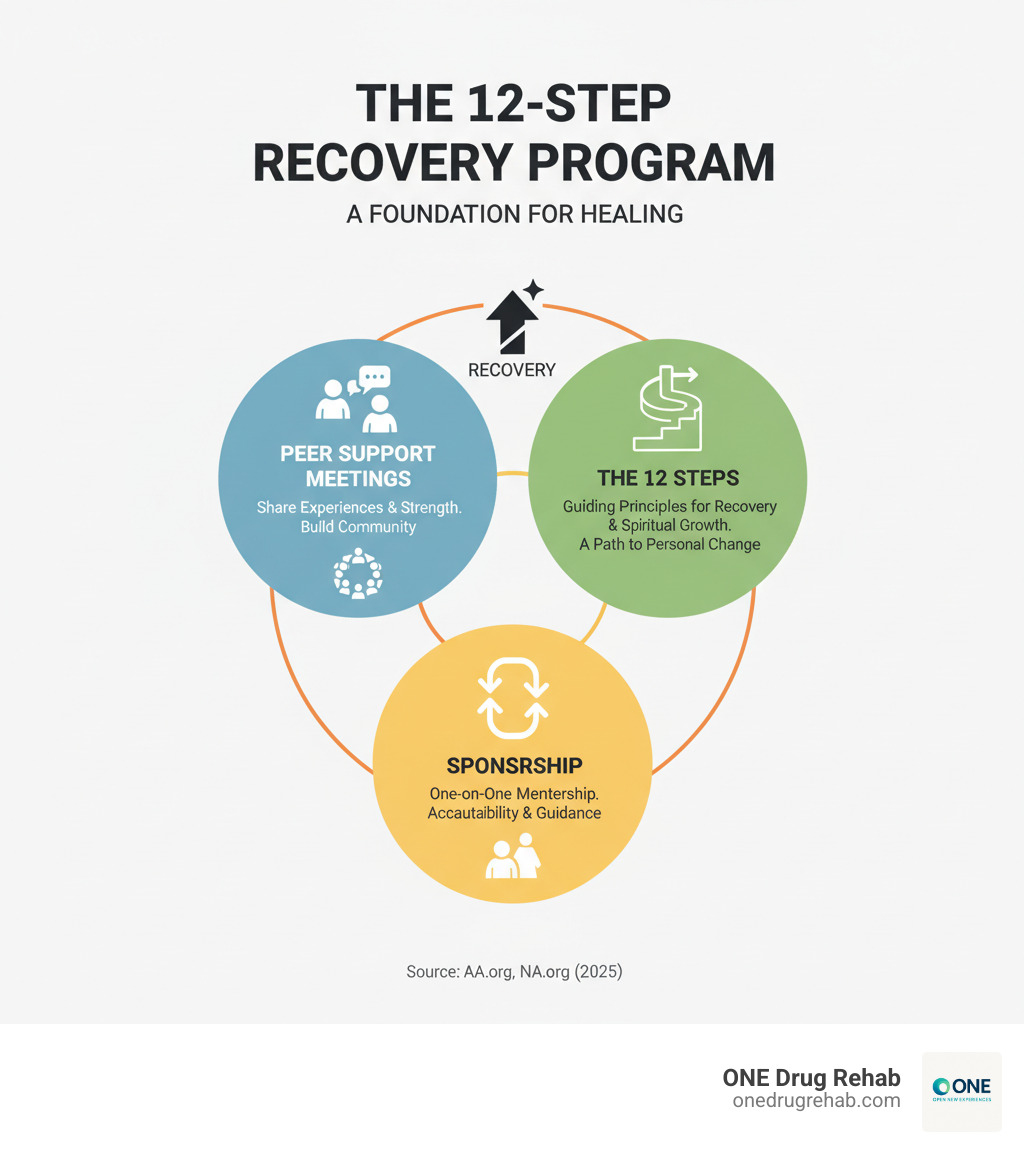
The 12-step model rests on three pillars that make it work: anonymity (what’s shared in meetings stays in meetings), spiritual principles (not religious rules, but universal values like honesty and humility), and community support (you’re never alone in your recovery).
What makes this approach so effective? It’s built around The 12 Steps – a series of actions that guide people through recovery – and The 12 Traditions – guidelines that keep groups focused and unified. Together, they create a framework that’s helped more people achieve long-term sobriety than any other single approach.
What are the Core Principles?
The heart of any 12-step program lies in The 12 Steps themselves. While different fellowships might adjust the wording slightly (Narcotics Anonymous talks about “addiction” while Alcoholics Anonymous focuses on “alcohol”), the core journey remains the same.
Admitting powerlessness is where everyone starts. This isn’t about giving up – it’s about stopping the exhausting fight against something that’s been winning. When you can honestly say “I can’t control this on my own,” you’ve taken the hardest step of all.
From there, you’ll explore belief in a Higher Power – and here’s where many people get nervous. Don’t worry. This isn’t about joining a religion or changing your beliefs. Your Higher Power can be God, the universe, nature, or even the group itself. The point is recognizing that you don’t have to carry this burden alone.
The middle steps involve taking a personal inventory – basically, an honest look at your life, your mistakes, and your patterns. It sounds scary, but remember: you’re doing this with support from people who’ve been exactly where you are. Then comes making amends to people you’ve hurt, which helps heal relationships and clear away guilt that often fuels addiction.
Finally, the program emphasizes helping others. There’s something powerful about sharing your story with someone who’s just starting their recovery journey. It keeps you connected to how far you’ve come and reminds you why sobriety matters.
Research consistently shows that people involved in 12-step programs develop stronger coping skills and higher self-confidence in their ability to stay sober. The benefits of peer support groups in addiction treatment are well-documented, making these programs a valuable part of many people’s recovery toolkit.
The Role of a Sponsor and the “Higher Power”
Two aspects of 12-step programs often raise questions: sponsors and the Higher Power concept. Let’s clear up any confusion.
A sponsor is like having a recovery mentor who’s walked the path you’re starting to explore. They’re usually someone with at least a year of continuous recovery who volunteers to guide newcomers through the 12 steps. Think of them as your personal recovery coach – someone you can call when you’re struggling, someone who’ll celebrate your victories, and someone who’ll gently redirect you when you’re heading toward trouble.
Your sponsor helps with guidance and accountability. They’ll help you work through the steps at your own pace, answer questions about the program, and provide the kind of support that only comes from lived experience. The relationship is voluntary – you choose your sponsor, and they choose to help you.
Now, about that Higher Power – this might be the most misunderstood part of 12-step programs. Here’s the truth: these programs are spiritual, not religious. You won’t be asked to adopt any particular faith or change your existing beliefs.
The Higher Power concept is about personal interpretation. Some people connect with God, others find strength in nature, the universe, or even the collective wisdom of their recovery group. The key is finding something greater than yourself that you can turn to for strength and guidance.
This approach ensures inclusivity for all beliefs. Whether you’re deeply religious, spiritual but not religious, agnostic, or atheist, there’s room for you in 12-step programs. The only requirement is being open to the possibility that you don’t have to face recovery entirely alone.
Many people find that their understanding of their Higher Power evolves as they grow in recovery. What matters isn’t having it all figured out from day one – it’s being willing to stay open to the support and strength that comes from something beyond your individual willpower.
How to Find 12-Step Groups Near Me: Your Guide to Local and Online Meetings
![IMAGE of a person using a smartphone with a map app to find a location]
Taking that first step to find a meeting can feel overwhelming, but 12 step groups near me are everywhere – you just need to know where to look. The beauty of these programs is that they’ve made finding help as simple as possible, whether you prefer meeting face-to-face or connecting from home.
Think of it this way: somewhere in your community right now, people just like you are gathering to support each other. They’ve been where you are, and they’re waiting to welcome you with open arms.
Finding In-Person 12-step groups near me
There’s something special about walking into a room and seeing real faces, hearing real stories, and feeling that immediate human connection. If you’re ready to find 12 step groups near me in person, here’s your roadmap to success.
Start with the official websites – they’re your most reliable source. The Alcoholics Anonymous Meeting Finder will connect you with local resources, while the Narcotics Anonymous Meeting Search helps you locate NA meetings in your area. These sites are updated regularly by local members who want to make sure newcomers can find them.
Your local intergroup office is like mission control for recovery meetings in your area. These offices are staffed by people in recovery who know exactly where meetings happen and when. They can tell you which meetings are beginner-friendly, which ones have great coffee, and which groups might feel like the right fit for your personality.
Download the meeting guide app – AA offers a free app for both iPhone and Android that uses your location to show nearby meetings. It’s like having a recovery GPS in your pocket. You can even filter by meeting type, time of day, or distance from your current location.
Don’t overlook community centers, churches, and hospitals either. Many host meetings and post schedules on bulletin boards or websites. Even if you’re not religious, church-hosted meetings welcome everyone – the location doesn’t change the program’s spiritual (not religious) approach.
Accessing Online 12-step groups near me
The internet has revolutionized how we connect, and 12 step groups near me now include virtual meetings that bring the fellowship directly to your living room. This has been a game-changer for people in rural areas, those with mobility challenges, or anyone who feels more comfortable starting their recovery journey from home.
The Online Intergroup for AA serves as your gateway to meetings happening around the clock. You’ll find meetings in different time zones, which means you can attend a 2 AM meeting in Australia if you’re having a sleepless night in Ohio.
Zoom meetings have become incredibly popular, offering that face-to-face connection without leaving home. Many people find they can attend meetings they never could have reached geographically – like that amazing speaker meeting in Seattle or the women’s group in Florida that meets at the perfect time for your schedule.
Social media and messaging apps have created new ways to stay connected between meetings. The East Bay Intergroup WhatsApp Group is just one example of how local fellowships are using technology to keep members connected throughout the week.
The flexibility of online access means you can attend different types of meetings to find your perfect fit. Maybe Monday’s discussion group doesn’t click, but Thursday’s step study feels like home. With online options, you can explore meetings from different regions and cultures, expanding your recovery network in ways that weren’t possible before.
Whether you choose in-person meetings, online gatherings, or a combination of both, every meeting has the same goal: helping people find freedom from addiction through shared experience and mutual support.
A Spectrum of Support: Types of 12-Step Programs
When Bill W. and Dr. Bob founded Alcoholics Anonymous, they probably never imagined their simple idea would grow into dozens of specialized fellowships. Today, there are 12 step groups near me for almost every type of addiction or compulsive behavior you can think of.
The beauty of this expansion comes from AA’s “singleness of purpose” tradition. Each group focuses on one specific issue, which means you can find people who truly understand your exact struggle. Whether you’re battling substances, behaviors, or helping a loved one, there’s likely a fellowship designed just for your situation.
Groups for Substance and Behavioral Addictions
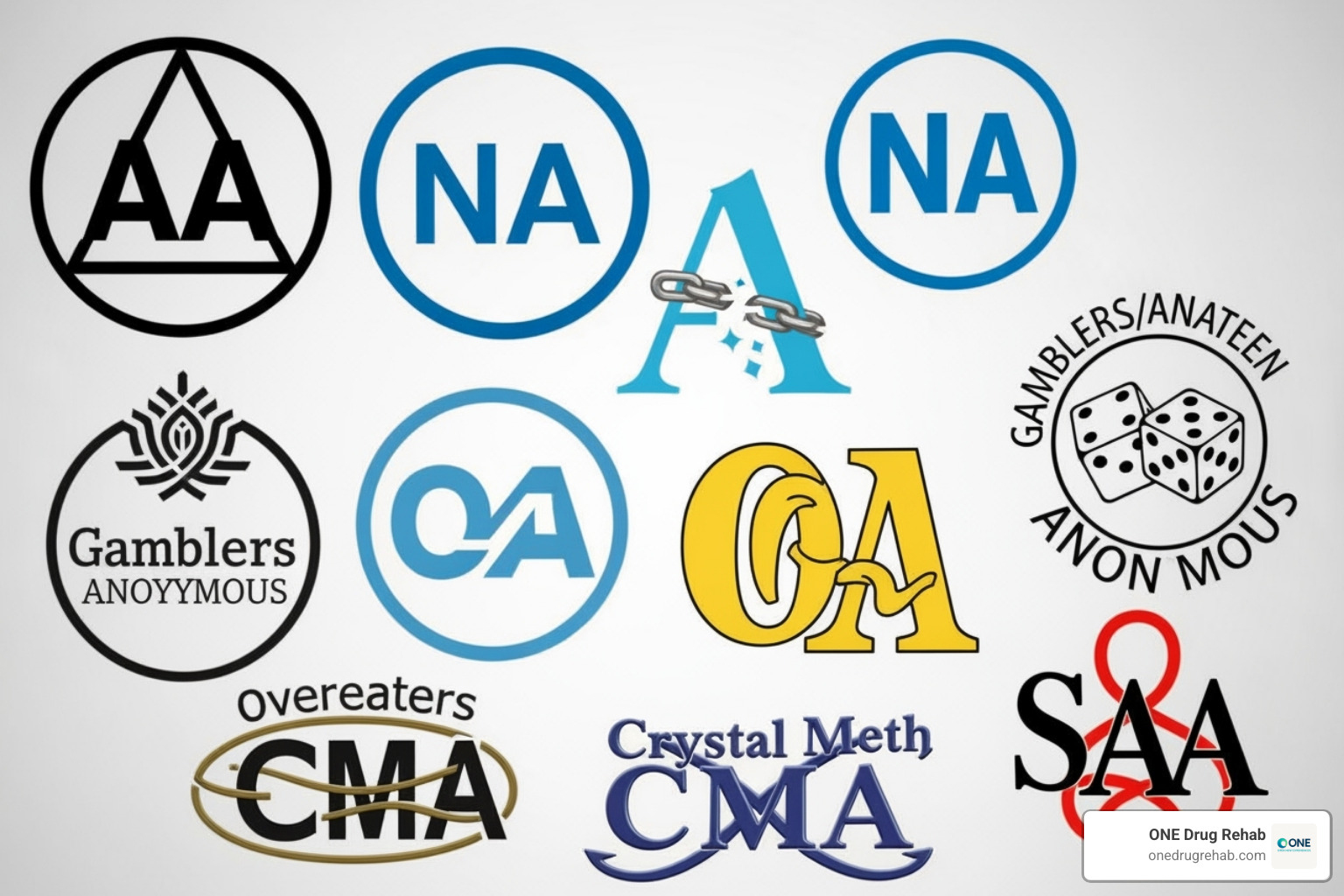
The most well-known programs focus on substance addictions. Alcoholics Anonymous (AA) remains the largest, helping millions recover from alcohol addiction. Narcotics Anonymous (NA) welcomes anyone struggling with drug addiction, including alcohol, using the simple message that “the only requirement for membership is a desire to stop using.”
For more specific substance issues, there’s Cocaine Anonymous (CA) for cocaine and other substances, Crystal Meth Anonymous (CMA) for crystal meth recovery, and Marijuana Anonymous (MA) for those wanting to quit cannabis. Even Nicotine Anonymous (NicA) exists for people trying to break free from tobacco and nicotine products.
But addiction goes far beyond substances. Gamblers Anonymous (GA) has helped countless people overcome gambling problems using the same 12-step principles. Food-related issues have multiple options: Overeaters Anonymous (OA) serves compulsive overeaters, anorexics, and bulimics, while Addictive Eaters Anonymous (AEA) and Anorexics and Bulimics Anonymous (ABA) offer more specialized approaches.
Sexual addiction recovery happens through Sex Addicts Anonymous (SAA) and related fellowships like Sexaholics Anonymous and Sex and Love Addicts Anonymous. There are even groups for modern challenges like Online Gamers Anonymous (OLGA) for excessive gaming and Pills Anonymous (PA) for prescription pill addiction.
Some of the more unique fellowships include Debtors Anonymous (DA) for compulsive spending, Workaholics Anonymous (WA) for work addiction, Clutterers Anonymous (CLA) for hoarding behaviors, and Emotions Anonymous (EA) for mental and emotional wellness.
Support for Family and Loved Ones
Here’s something many people don’t realize: addiction hurts everyone in the family, not just the person using. That’s why some of the most important 12 step groups near me are designed specifically for family members and loved ones.
Al-Anon/Alateen provides a lifeline for families affected by someone else’s drinking. Al-Anon helps adults understand they didn’t cause the addiction, can’t control it, and can’t cure it. Alateen offers the same support specifically for teenagers living with an alcoholic family member.
Nar-Anon serves families dealing with drug addiction, while Co-Anon focuses on cocaine addiction’s impact on loved ones. Gam-Anon helps families affected by gambling addiction, and Families Anonymous provides support for relatives dealing with various behavioral problems.
Co-Dependents Anonymous (CoDA) takes a slightly different approach, helping anyone who struggles with codependent relationships. While not exclusively for addiction families, many CoDA members are learning to love someone with an addiction without enabling their behavior.
These family programs teach a powerful truth: you can find peace and healing whether your loved one is still using or not. Recovery isn’t just for the person with the addiction—it’s for everyone whose life has been affected by it.
Your First Meeting: What to Expect and How to Prepare
Walking into your first 12 step groups near me meeting takes courage, and we want you to know that every person in that room understands exactly how you’re feeling right now. They’ve all been where you are – nervous, uncertain, maybe even scared. The beautiful thing about 12-step fellowships is that they’re built on a foundation of welcome and understanding, not judgment.

Here’s something that might surprise you: you don’t need to prepare anything. You don’t need to have your life figured out, you don’t need to know what to say, and you certainly don’t need to be “ready” to get sober. You just need to show up. Many newcomers spend their first few meetings simply listening, and that’s perfectly okay.
The most important thing to remember is that there’s absolutely no pressure to share. Anonymity is key in these meetings – what happens there stays there, and you’re only known by your first name. This creates a safe space where people can be honest about their struggles without fear of judgment or consequences.
Open vs. Closed Meetings
Before you attend your first meeting, it helps to understand the difference between open and closed meetings. This distinction ensures you find the most comfortable environment for your needs.
Open meetings welcome anyone who’s interested in learning about recovery. This includes family members, friends, students, healthcare professionals, and anyone curious about how 12-step programs work. These meetings often feature speaker meetings where one or two members share their personal story of recovery from beginning to end. It’s inspiring to hear how someone went from their lowest point to finding hope and healing.
Closed meetings are specifically for people who identify with the addiction that fellowship addresses. For example, a closed AA meeting is only for those who consider themselves alcoholics or have a desire to stop drinking. These meetings create a more intimate setting where members can share their daily struggles and victories without worrying about outside observers.
You might also encounter discussion meetings where someone reads a topic from program literature and members share their thoughts and experiences related to that topic. Don’t worry about choosing the “perfect” meeting format – just pick one and try it. If it doesn’t feel right, there are plenty of others to explore.
Meeting Etiquette and What to Expect
Every meeting has its own personality, but most follow a similar structure that creates comfort and predictability. Here’s what typically happens when you walk through that door:
The meeting usually begins with a welcome and group readings from program literature. You’ll hear the Twelve Steps read aloud, along with other foundational readings that explain how the program works. This gives newcomers a chance to absorb the basic principles without any pressure.
During the sharing portion, members voluntarily talk about their experiences, challenges, and victories in recovery. This isn’t a cross-talk format – people share without interruption or advice-giving. You can always say “I pass” if you’re not ready to speak, and absolutely no one will think less of you for it. Many people find tremendous comfort in simply hearing others tell stories that sound remarkably similar to their own.
The 7th Tradition involves voluntary contributions to keep the meeting running. Someone will pass a basket, and members contribute what they can – usually just a dollar or two – to cover things like rent for the meeting space, coffee, and literature. Meetings are completely self-supporting, and no one is ever turned away for not contributing. If you don’t have money to give, that’s perfectly fine.
Most meetings close with a moment of reflection, often the Serenity Prayer or another group reading, followed by any announcements about upcoming events or service opportunities.
The real magic often happens during fellowship after the meeting. People stick around for coffee and informal conversation, and this is where many lasting friendships begin. Don’t feel obligated to stay, but if you’re comfortable, it’s a wonderful opportunity to ask questions, get phone numbers, and start building your support network.
Your first meeting is simply about showing up and experiencing the warmth of people who understand your journey. You belong there, and you are not alone in this fight.
Beyond the 12 Steps: Integrating Support with Professional Care
Recovery isn’t a one-size-fits-all journey, and the most successful paths often combine multiple forms of support. While 12 step groups near me provide incredible peer support and community, they work even better when paired with professional addiction treatment.
Think of it this way: professional treatment gives you the tools, while 12-step groups give you the daily practice space to use them. Together, they create a comprehensive support system that addresses both the clinical and social aspects of recovery.
How 12-Step Groups Improve Professional Treatment
Professional treatment – whether it’s outpatient rehab programs or inpatient facilities – provides the medical care, therapy, and initial stabilization you need. But what happens when treatment ends? This is where 12-step programs become invaluable.
Building a sober network becomes crucial as you transition back to daily life. Treatment centers provide a temporary sober environment, but 12 step groups near me help you create lasting connections with people who understand your journey. These relationships often become lifelines during challenging moments.
Practicing coping skills learned in therapy takes on new meaning in group settings. The stress management techniques, emotional regulation strategies, and relapse prevention tools from professional treatment get real-world testing and reinforcement during meetings and in conversations with your sponsor.
The 24/7 support system aspect cannot be overstated. While therapy sessions are scheduled, 12-step meetings happen around the clock. When cravings hit at 2 AM or you’re struggling with a difficult situation, there’s likely a meeting you can attend or a member you can call.
Accountability through sponsorship and group involvement adds another layer of support. Your sponsor and fellow group members provide gentle but firm accountability that complements your professional treatment team’s efforts.
Perhaps most importantly, 12-step programs serve as a bridge from treatment to daily life. They help you transition from the structured environment of professional care back into your regular routine, maintaining the progress you’ve made. Research consistently shows that people who combine professional treatment with peer support groups have better long-term outcomes. You can learn more about treatment success rates in our guide on inpatient vs outpatient alcohol rehab success rates.
For those exploring treatment options, understanding addiction treatment without insurance can help you access the professional care that works best alongside peer support.
Exploring Alternatives to 12-Step Programs
While 12-step programs help millions of people, we understand they’re not the right fit for everyone. The spiritual emphasis or group format might not resonate with your personal beliefs or recovery style. The good news? There are many effective alternatives.
Secular options focus on evidence-based approaches without spiritual components. SMART Recovery uses motivational and cognitive-behavioral techniques, teaching you practical tools for managing cravings and making healthy choices. LifeRing emphasizes personal empowerment with their motto “Sobriety, Secularity, Self-Help,” focusing on your individual strengths rather than powerlessness.
Women for Sobriety recognizes that women often face unique challenges in recovery, offering a program built around building self-esteem and positive thinking specifically for women.
For those who prefer faith-based alternatives, Celebrate Recovery combines Christian principles with recovery work, using eight principles based on the Beatitudes alongside adapted 12-step concepts. Various other religious communities offer recovery programs rooted in their specific traditions and beliefs.
The key is finding what works for you. Some people thrive in the spiritual framework of traditional 12-step programs, while others prefer the practical, skills-based approach of secular alternatives. Still others find comfort in faith-based programs that align with their religious beliefs.
You can explore different options or even participate in multiple types of support groups. Your recovery journey is unique, and combining various resources – whether it’s traditional 12-step meetings, alternative peer support, and professional treatment – can give you the best chance at long-term success.
If you’re ready to explore different types of support, our resource on types of addiction treatment can help you understand the full spectrum of options available to support your recovery journey.
Frequently Asked Questions about 12-Step Groups
If you’re considering attending 12 step groups near me, you probably have questions. That’s completely normal! Here are the most common concerns we hear from people taking their first steps toward recovery.
Are 12-step meetings really free?
Yes, they absolutely are! This might seem too good to be true in a world where everything costs money, but 12-step fellowships operate on a beautiful principle: there are no dues or fees for membership. The only requirement is a desire to stop your addictive behavior.
Meetings are self-supporting through something called the 7th Tradition – voluntary contributions from members. You’ll see a basket passed around during meetings, and people drop in what they can afford. This might be a dollar, five dollars, or nothing at all. No one is ever turned away for not contributing, and there’s absolutely no pressure or judgment if you can’t give anything.
This system ensures that help is available to anyone who needs it, regardless of their financial situation. Whether you’re struggling financially or simply want to attend a few meetings before deciding to contribute, you’re welcome.
What is the difference between an ‘open’ and ‘closed’ meeting?
Understanding this difference helps you choose the right meeting for your needs and comfort level.
Open meetings welcome everyone – members, family members, friends, students, professionals, or anyone curious about how the program works. These meetings often feature speakers sharing their recovery stories and provide a great introduction to the fellowship. If you’re nervous about your first meeting or want to bring a supportive friend or family member, an open meeting is perfect.
Closed meetings are exclusively for people who identify with the specific addiction and have a desire to stop. For example, a closed AA meeting is only for those who consider themselves alcoholics. These meetings create a more intimate, confidential space where members feel safe sharing their deepest struggles and victories with others who truly understand.
If you’re unsure which type to attend, most newcomers start with open meetings to get comfortable. You can always ask someone at the meeting or check the schedule – most meeting lists clearly mark which meetings are open and which are closed.
How do I get involved or contribute to a fellowship?
Getting involved in service work is one of the most rewarding aspects of 12-step programs. It’s not just about giving back – helping others actually strengthens your own recovery. The saying “you have to give it away to keep it” rings true for many members.
Starting small is perfectly fine. You might volunteer to set up chairs before meetings or help clean up afterward. Making coffee, greeting newcomers with a warm smile, or simply being a friendly face can make someone’s day. These small acts of service are deeply appreciated and help create the welcoming atmosphere that makes meetings special.
As you gain more experience and sobriety time, you might chair a meeting – leading discussions, introducing speakers, or guiding the group through readings. Welcoming newcomers becomes especially meaningful because you remember exactly how scary that first meeting felt.
Many local intergroups have committees that always need volunteers – literature committees, public information teams, or groups that bring meetings to hospitals and institutions. Some members even explore starting a new meeting if they see a need in their community for a specific type of meeting or one at a new location.
The beautiful thing about service work is that every contribution matters, no matter how small. Whether you’re making coffee or serving on a committee, you’re helping maintain the lifeline that saved your life and continues to help others find recovery.
Your Path to Recovery Starts with a Single Step
Taking that first courageous step toward recovery might feel overwhelming, but finding 12 step groups near me can truly transform your entire life. We understand the weight of that moment when you realize you need help – the mixture of fear, hope, and uncertainty that comes with reaching out. What we want you to know is this: you are not alone, and millions of people have walked this exact path before you.
The beautiful truth about recovery is that it begins with community and connection. When you walk into your first meeting, you’ll find something remarkable – people who genuinely understand your struggle without judgment. They’ve felt the same desperation, the same shame, and the same longing for something better. More importantly, they’ve found hope and healing, and they’re eager to share that gift with you.
Hope and healing aren’t just possibilities – they’re waiting for you right now. Every person sitting in those circles once sat exactly where you are today. They took that same frightening first step, and it changed everything. Some came broken and desperate, others came curious and cautious. All found a place where they belonged.
Recovery isn’t a destination you reach – it’s a daily journey you take with others by your side. The 12 step groups near me that you’ll find offer more than just meetings; they provide a blueprint for living that has helped countless individuals rebuild their lives from the ground up. Whether you’re struggling with alcohol, drugs, gambling, food, or any other addictive behavior, there’s a fellowship designed specifically for your situation.
Your journey is unique, but you don’t have to walk it alone. The support of a fellowship can make the difference between struggling in isolation and thriving in community. These programs work because they’re built on the simple but powerful principle of one person helping another – no fees, no barriers, just genuine human connection.
For those exploring comprehensive treatment options, ONEDrugRehab.com provides general information to help you understand the full spectrum of available resources. We believe that combining peer support with professional care often creates the strongest foundation for lasting recovery. To learn more about how different approaches can work together, we encourage you to explore different types of addiction treatment.
Don’t let fear or uncertainty hold you back another day. Reach out, attend a meeting, listen to the stories, and feel the power of shared experience. Your path to recovery starts with a single step – and that step is closer than you think.