

Why Comparing Rehab Facilities Matters More Than You Think
Compare rehab facilities and you’ll quickly realize that not all programs are created equal. Nearly 48.7 million Americans struggled with substance use disorders in 2022, and with over 14,500 specialized addiction treatment facilities in the United States, the choices can feel overwhelming. The right decision can set the foundation for a lifetime of recovery, while the wrong one can waste precious time and resources.
Here’s what you need to know when comparing rehab facilities:
- Start with your needs – Assess the substance you use, addiction severity, and any co-occurring mental health conditions
- Verify credentials – Look for state licensing and accreditation from The Joint Commission or CARF International
- Examine treatment approaches – Ensure they use evidence-based practices like CBT and offer therapies custom to your situation
- Check staff qualifications – Confirm counselors hold licenses (LADC, LPC, LCSW) and that there’s a multidisciplinary team
- Ask about outcomes – Request data on patient progress tracking and long-term recovery rates
- Understand the policies – Learn how they handle relapse, family involvement, and aftercare planning
- Review insurance and costs – Verify coverage, in-network status, and payment options before admission
Choosing a rehab facility is a monumental decision. The right program can set the foundation for a lifetime of recovery. This guide provides a step-by-step framework for looking beyond the marketing and making an informed choice that fits your unique needs.
Many facilities tout great amenities and beautiful locations, but those comforts mean nothing if the center doesn’t provide the type of treatment you need. Quality of care is paramount. Accreditation doesn’t guarantee perfection, and its absence doesn’t mean poor care, but it’s a critical starting point.
The truth is simple: no single treatment type works for everyone. Your personal circumstances, the substances you use, your mental health status, and your support system all play vital roles in determining which program will give you the best chance at sustained recovery.
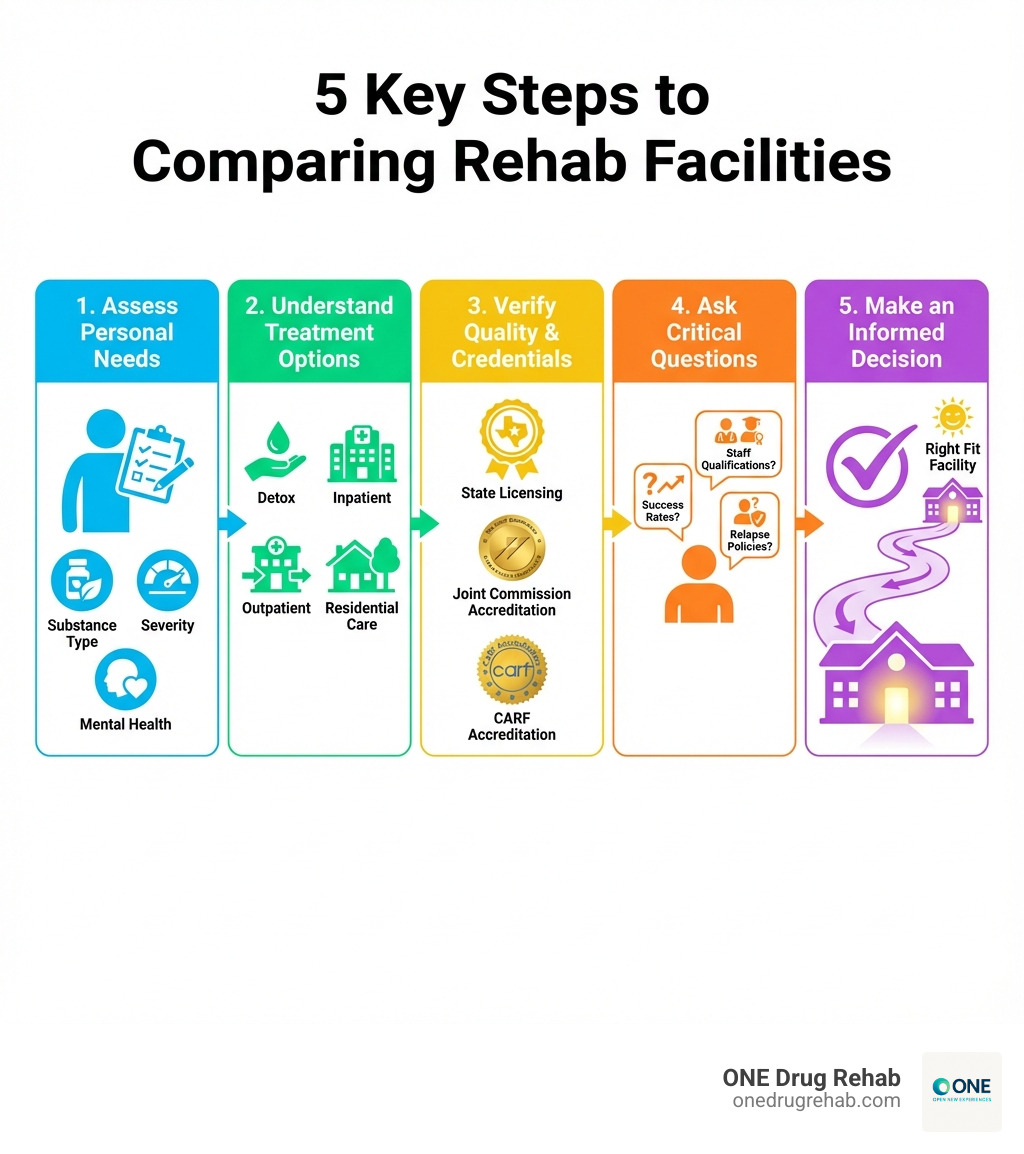
Step 1: Assess Your Personal Needs and Goals
Before you can compare rehab facilities, you must first understand what you’re looking for. A thorough self-assessment is the critical first step toward finding a program that aligns with your specific recovery requirements. The best care plan is the one that’s a perfect fit for you, not the masses.
Defining Your Recovery Goals
Our recovery journey is profoundly personal. To effectively choose the right rehab, we need to make a mental—or better yet, written—inventory of our current situation. This includes:
- Substance type: What substances are we primarily struggling with? Is it alcohol, opioids, stimulants, or multiple substances? Different substances may require specialized detox protocols or therapeutic approaches.
- Addiction severity: How long have we been using, and to what degree do we misuse substances? This helps determine the intensity of care needed.
- History of use: Have there been previous attempts at recovery? What worked or didn’t work then? This insight can guide future treatment choices.
- Co-occurring medical conditions: Beyond mental health, do we have any physical health issues that require medical attention during treatment?
We must define what success means and looks like to us. Is it complete abstinence, improved relationships, better physical health, or a combination? Having clear goals empowers us to find a program that effectively supports them. For guidance on starting this crucial process, explore our resources on Getting Sober Help.
Identifying Co-Occurring Disorders
It’s a common misconception that addiction occurs in isolation. In reality, many individuals with substance use disorders also experience co-occurring mental health problems. In fact, as many as 7.9 million Americans suffered from both addiction and a mental health disorder in 2014. These “dual diagnoses” often involve conditions like anxiety, depression, bipolar disorder, or PTSD.
The importance of integrated treatment for co-occurring disorders cannot be overstated. If a facility only treats the addiction without addressing underlying mental health challenges, or vice-versa, the chances of sustained recovery significantly decrease. The ideal scenario is a program where staff members are qualified to treat both mental health issues and addiction simultaneously, providing integrated care that addresses all aspects of our well-being. This integrated approach is considered optimal for higher success rates. To learn more about comprehensive care, visit our page on Co-occurring Disorder Treatment.
Determining the Right Level of Care
The addiction treatment landscape offers a spectrum of care levels, designed to meet varying needs and intensities of addiction. The American Society of Addiction Medicine (ASAM) provides a widely used set of guidelines—the ASAM Criteria—which helps professionals determine the appropriate placement, transfer, and discharge of patients across a continuum of care from 0.5 to 4.0. Understanding these levels is fundamental when we compare rehab facilities:
- Detox: Often the first step, medically assisted detox provides medications and support to manage withdrawal symptoms safely and comfortably. However, detoxification alone is rarely sufficient for preventing relapse; it’s crucial that detox facilities proactively connect patients to ongoing treatment. Learn more about initial steps through our Detox Treatment Options guide.
- Inpatient/Residential Treatment: These programs offer 24/7 care and recovery support, with patients residing at the facility for days, weeks, or even months. Residential treatment generally has a higher success rate, making it suitable for those with severe addictions, a history of relapse, or unstable home environments. We have more insights on Inpatient Rehab for Drugs.
- Outpatient Treatment: For individuals who don’t require 24/7 supervision or who need to maintain work or family responsibilities, outpatient options allow them to live at home while attending multiple therapy sessions a week. This includes:
- Partial Hospitalization Programs (PHPs): The most intensive form of outpatient care, often requiring 6 hours or more of daily participation.
- Intensive Outpatient Programs (IOPs): Typically requiring about 9 hours of weekly contact.
Outpatient treatment is less expensive and disruptive but generally has a lower success rate compared to inpatient programs. Explore our Outpatient Rehab Programs for more details.
- Sober Living Homes: These act as a transitional environment, bridging the gap between intensive treatment and independent living. They provide a safe, stable environment with zero tolerance for substance use, offering continued structure and peer support. Learn more about creating a supportive environment in our Sober Living Environment article.
Choosing the right level of care ensures that we receive the appropriate support custom to our specific needs. For a deeper dive into the professional guidelines, we recommend exploring The ASAM Continuum of Care.
Step 2: Key Factors to Compare Rehab Facilities

With a clear understanding of our needs, we can begin to evaluate potential centers. Focus on these core components to ensure we are comparing the substance, not just the style, of each program.
Treatment Approach and Therapies Offered
The heart of any rehab facility lies in its treatment approach and the therapies it offers. When we compare rehab facilities, we need to ensure they provide a wide range of effective, evidence-based methods. These are treatments proven through scientific research to be effective. Examples include:
- Cognitive Behavioral Therapy (CBT): Helps us identify and change negative thought patterns that contribute to substance use.
- Motivational Interviewing (MI): Guides us in exploring and resolving ambivalence about recovery.
- Contingency Management (CM): Uses positive reinforcement to encourage abstinence.
Beyond these, a holistic treatment center might incorporate a blend of traditional and alternative therapies to promote healing and overall wellness. These could include yoga, meditation, art therapy, or even equine therapy. Medication-Assisted Treatment (MAT) is another critical component, especially for opioid or alcohol use disorders, as it has demonstrated efficacy in improving patient retention and ongoing recovery. A combination of behavioral therapies and pharmacological methods is generally considered the gold standard of care.
We should also ask if the treatment is custom for each patient. Programs should be able to customize care to our specific needs, rather than offering a one-size-fits-all approach. For more on diverse therapeutic methods, see our Addiction Therapy Methods guide, and for those interested in alternative approaches, our Holistic Treatment Center Complete Guide offers valuable insights.
Staff Qualifications and Facility Accreditation
When we compare rehab facilities, the credentials of both the facility and its staff are non-negotiable indicators of quality. All facilities must be licensed by their state to provide addiction treatment, but state requirements can vary widely. To ensure a higher standard of care, look for additional accreditations:
- The Joint Commission: An independent, nonprofit organization that accredits and certifies nearly 21,000 health care organizations and programs in the United States. Their accreditation signifies a commitment to high-quality care. For more information, visit The Joint Commission.
- CARF International (Commission on Accreditation of Rehabilitation Facilities): Another independent accreditor that bases its standards on industry performance and demonstrated results. CARF has been accrediting health and human service providers since 1966. You can learn more at CARF International accreditation.
These accreditations indicate that a facility has undergone rigorous review and meets specific quality and safety standards. LegitScript certification is also a good sign, as it’s required for treatment centers to advertise on Google and Facebook, indicating a vetting process.
Equally important are the qualifications of the staff. A quality rehab program should boast a multidisciplinary team, potentially including:
- Medical doctors and nurses (for medical oversight and MAT)
- Psychiatrists and psychologists (for co-occurring mental health disorders)
- Chemical dependency counselors (LADC, LCDC, CAC, NCAC, MAC)
- Licensed Professional Counselors (LPC)
- Licensed Clinical Social Workers (LCSW)
- Nutritionists and wellness specialists
Be wary if one staff member seems to wear too many hats; a diverse team ensures comprehensive care. We should inquire about the staff-to-patient ratio, as a lower ratio often indicates more individualized attention. For example, some intensive rehabilitation facilities boast a nurse-to-patient ratio as low as 1:6, ensuring constant, attentive care.
Location, Amenities, and Facility Features
The physical setting of a rehab facility can significantly impact the treatment experience. When we compare rehab facilities, we often weigh the pros and cons of staying close to home versus traveling for treatment.
Traveling for treatment:
- Pros: Removes us from environmental triggers, unhealthy relationships, and daily stressors, allowing for a more focused recovery. It can offer a fresh start in a new environment.
- Cons: Can make family involvement more challenging and may distance us from our local support systems.
Staying local:
- Pros: Easier for family to participate in therapy and visitation, allowing for stronger reintegration into a supportive home environment. Maintains access to existing local support networks.
- Cons: Proximity to triggers and potentially unsupportive social circles can increase the risk of relapse.
While amenities aren’t the most important factor, they can certainly contribute to comfort and overall well-being. Many facilities tout beautiful locations and features like private rooms, which can improve the healing process. Specialized environments, such as those that are Pet Friendly Inpatient Rehab, can also cater to unique needs, making the transition into treatment smoother. However, as we always say, those comforts are insignificant if the center doesn’t provide the type of treatment that you need. Prioritize clinical quality first, then consider how facility features like Rehab With Private Rooms align with our preferences for a conducive recovery environment.
How to Compare Rehab Facilities for Cost and Insurance
The financial aspect is a major concern for many families. When we compare rehab facilities, understanding payment options and insurance coverage is crucial. Most people rely on insurance plans to pay for rehab treatment, and thankfully, the Affordable Care Act (Obamacare) has increased access to health insurance for drug rehab services.
Here’s what to look for:
- In-network vs. Out-of-network: An in-network provider has a contract with our insurance company, meaning lower out-of-pocket costs. Being “in-network” often implies a program has met certain quality standards, not just that they “work with” insurance. Always verify our coverage directly with our insurance provider. We can start this process with a Rehab Insurance Verification.
- Medicaid and Medicare: These government programs can cover significant portions of addiction treatment costs, but coverage varies, and not all facilities accept them.
- Private Pay Options: If insurance coverage is limited or unavailable, facilities may offer private pay options.
- Sliding Scale Fees: Some facilities adjust costs based on our income and ability to pay.
- Scholarships and Grants: Non-profit organizations and some facilities offer financial aid.
- Payment Plans and Financing: Many centers can help arrange payment plans or connect us with financing options.
It’s important to work out a budget and discuss payment options and financial information prior to admission. The financial toll of long-term addiction is often greater than the cost of treatment, so investing in recovery is a wise decision. For more detailed strategies on managing costs, our guide on How to Afford Rehab can provide valuable insights.
Step 3: Digging Deeper with Critical Questions

Once we have a shortlist of facilities that seem to align with our needs, it’s time to interview them. This is where we move beyond the glossy brochures and ask the tough questions. Asking specific, pointed questions about their policies and outcomes is essential for uncovering the truth behind their marketing.
Measuring Program Effectiveness and Success
When we compare rehab facilities, we often look for “success rates.” However, we must approach these claims with a healthy dose of skepticism. Be wary of any rehab facility that claims to have “the cure” or “100% success” rates. Addiction is a chronic condition, and recovery is a lifelong process; such claims are unrealistic and often misleading.
Instead, we should ask:
- How do you measure patient progress? Reputable programs will track outcomes using research-based methods, not just anecdotal evidence. This might involve surveys, clinical assessments, or other data points.
- How do you determine if treatment has been effective? Look for facilities that define “effectiveness” in terms of sustained abstinence, improved quality of life, and functional outcomes, rather than just completion of a program.
- Can you provide data on your patients’ long-term recovery? While direct patient data might be confidential, a facility should be able to discuss general trends or published outcomes. The Centers for Medicare & Medicaid Services (CMS) provides public data on specific quality measures for Inpatient Rehabilitation Facilities (IRFs), such as the national “Rate of hospital readmissions after discharge from IRFs” which is 13.06 percent. While this specific statistic applies to physical rehab, it highlights the importance of asking for similar outcome data in addiction treatment.
Understanding that relapse is a common component of drug addiction—with rates typically between 40 and 60 percent—helps set realistic expectations. The goal isn’t necessarily a perfect, linear recovery, but a program that equips us with the tools to steer setbacks. To dig deeper into understanding these metrics, explore our articles on Rehab Success Rates and What is the Success Rate of Rehab?.
Understanding Policies on Relapse, Family, and Aftercare
The journey to recovery is rarely without its challenges, and a facility’s policies on relapse, family involvement, and aftercare are crucial indicators of its comprehensive approach.
- Relapse Policy: What happens if a patient uses alcohol or other drugs during treatment? A quality rehab program should not automatically discharge patients for resuming substance use. Instead, it should be handled on a case-by-case basis, with the treatment plan adjusted if safe, or the patient transitioned to a higher level of care if appropriate. We should ask if staff members are trained to handle a patient’s resumption of substance use and adjust treatment plans accordingly.
- Family Involvement: Addiction is often referred to as a family disease, impacting everyone around the individual. Therefore, family involvement in the recovery process can significantly improve patient outcomes. We should inquire about family programs, therapy sessions for loved ones, and how families are kept informed and supported. Our guide on Rehab for Families provides more insight.
- Aftercare Planning: Treatment doesn’t end when the program does. Aftercare planning and connections to resources are as crucial as the initial treatment for long-term recovery. We need to ask what kind of post-treatment support the facility provides. This can include:
- Alumni programs, which suggest a facility is concerned about its patients’ long-term well-being.
- Connections to Sober Living Environments.
- Ongoing therapy, support groups (like 12-Step programs), or follow-up phone coaching.
These questions reveal a facility’s commitment to holistic, long-term recovery rather than just short-term stabilization.
Frequently Asked Questions about Comparing Rehab Facilities
Navigating addiction treatment can bring up many questions. Here, we address some of the most common ones we hear when people look to compare rehab facilities.
How do I know if a rehab center is reputable?
A reputable center will always be licensed by the state in which it operates. This is the bare minimum. Beyond that, look for accreditation from national bodies like The Joint Commission or CARF International accreditation. These accreditations mean the facility has voluntarily undergone rigorous evaluations and meets high standards for patient care, safety, and ethical practices. Their clinical staff should also hold relevant licenses and certifications appropriate to their roles (e.g., Licensed Alcohol and Drug Counselor (LADC), Licensed Professional Counselor (LPC), Licensed Clinical Social Worker (LCSW)). Finally, transparency about their treatment methods, staff qualifications, and outcomes is a hallmark of a trustworthy center. Don’t be afraid to ask for this information!
Should I travel for rehab or stay close to home?
This is a personal choice with distinct pros and cons, and there’s no single “right” answer.
Pros of traveling for treatment:
- Removal from triggers: Being away from familiar environments, people, and situations that might trigger substance use can provide a much-needed break and allow for deeper focus on recovery.
- Anonymity: Some individuals prefer the privacy and anonymity that a distant facility can offer.
- Access to specialized care: Traveling might open up access to facilities with highly specialized programs or unique approaches that aren’t available locally.
Cons of traveling for treatment:
- Limited family involvement: It can be harder for family members to participate in therapy sessions or visit regularly, which can be a crucial part of the recovery process.
- Post-treatment transition: Returning to the same environment after treatment can be challenging without a strong local aftercare plan already in place.
Pros of staying close to home:
- Stronger family involvement: Easier for loved ones to participate in family therapy and provide support.
- Seamless aftercare: Easier to integrate into local support groups, outpatient programs, and sober living communities after residential treatment.
- Cost-effective: Reduces travel expenses and logistical complexities.
Cons of staying close to home:
- Proximity to triggers: Being near the same people, places, and stressors that contributed to addiction can make early recovery more difficult.
- Lack of a fresh start: It might be harder to break old patterns if the environment remains unchanged.
The decision depends on your individual circumstances, the strength of your local support system, and whether removing yourself from your current environment is essential for your initial recovery.
What’s the most important factor when comparing rehabs?
While amenities, location, and cost certainly matter for comfort and practicality, the single most important factor when we compare rehab facilities is the quality of clinical care. This encompasses several key elements:
- Evidence-based therapies: Prioritize facilities that use treatment methods proven by scientific research to be effective (e.g., CBT, MI, MAT).
- Integrated treatment for co-occurring disorders: If you have underlying mental health issues, ensure the facility can treat both conditions simultaneously.
- Qualified, multidisciplinary staff: Look for a team of licensed and experienced professionals across various disciplines (medical, psychological, counseling).
- Personalized treatment plans: The program should be custom to your unique needs, not a generic approach.
- Robust aftercare planning: A good program prepares you for life after treatment, offering support and resources for long-term recovery.
Without these foundational elements, even the most luxurious facility in the most beautiful location will likely fall short in providing lasting recovery.
Conclusion: Making Your Informed Decision
Comparing rehab facilities is a journey that requires diligence and self-awareness. It’s about more than just finding a place to stay; it’s about finding the right environment, the right expertise, and the right support system to guide you toward lasting sobriety. By assessing your needs, evaluating key factors, and asking critical questions, you can move beyond the glossy brochures to find a program that offers a genuine path to lasting recovery.
We understand that this process can feel daunting, but you don’t have to steer it alone. ONEDrugRehab.com provides resources to help you steer this process, offering an unbiased platform to research and understand your options. To begin exploring your options and take that vital first step, you can start your search today.