
Why Getting Sober Help is the Most Important Step You Can Take
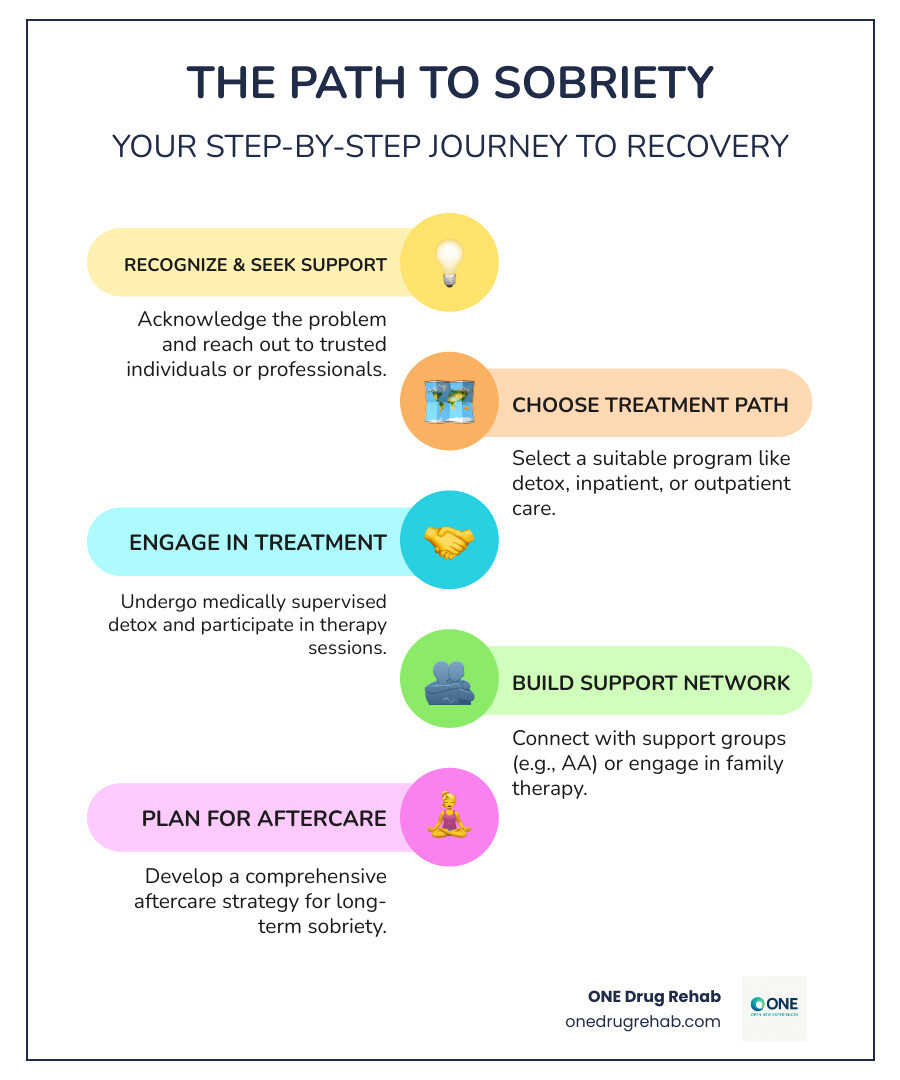
Getting sober help begins with recognizing you need support and knowing where to find it. Here’s a quick guide to getting started:
- Recognize the problem – Acknowledge that substance use is negatively affecting your life.
- Reach out for support – Talk to a trusted person, doctor, or call a helpline like SAMHSA at 1-800-662-4357.
- Explore treatment options – Consider inpatient rehab, outpatient programs, or support groups.
- Get through withdrawal safely – Seek medical supervision for detox when needed.
- Build ongoing support – Participate in therapy, aftercare, and mutual support groups.
- Plan for long-term recovery – Create a sober lifestyle with new habits and connections.
According to the National Survey on Drug Use and Health, 48.5 million people aged 12 or older had a substance use disorder in 2023. That’s 17.1% of the U.S. population, which means you are not alone in this struggle.
Deciding to get help for a substance use problem is difficult, and the search for treatment can feel overwhelming. But sobriety is not a solo mission. Research shows that support from others significantly improves your chances of success. Whether it’s for alcohol, opioids, or other substances, treatment works.
This guide walks you through every step of getting sober, from recognizing the problem to finding the right treatment and building a life in recovery. Recovery is possible, and you don’t have to do it alone.
Recognizing the Need for Change: First Steps on the Path to Sobriety

The hardest step in getting sober help is often admitting that something needs to change. Denial is powerful, but admitting you have a problem isn’t weakness—it’s courage. This moment of recognition opens the door to healing and support.
Understanding the health risks of substance use can make this clearer. Alcohol and drugs take a real toll on your body and mind, but studies show that sobriety brings tangible benefits like better sleep, more energy, and sharper thinking.
What are the signs of a substance use problem?
Recognizing the warning signs is the first step toward change. Alcohol Use Disorder (AUD) affects about 1 in 10 Americans aged 12 and older.
- Behavioral changes: Using more than planned, trying to cut back unsuccessfully, spending excessive time on substance-related activities, or taking risks like driving under the influence.
- Physical symptoms: Increased tolerance (needing more to get the same effect), experiencing withdrawal symptoms (shakiness, nausea, headaches) when trying to stop, and neglecting personal appearance or health.
- Psychological impact: Intense cravings, mood swings, increased anxiety or depression, and using substances to cope with these feelings.
- Social and relationship problems: Neglecting responsibilities at work, school, or home; losing interest in hobbies; and continuing use despite causing issues with loved ones.
How much is too much?
This question doesn’t have a single answer, but guidelines can help you assess your use. Alcohol Use Disorder (AUD) is a medical condition characterized by difficulty controlling your drinking and continuing despite negative consequences.
The U.S. dietary guidelines for alcohol recommend limiting consumption to one drink per day for women and two for men. These are maximums, not targets.
What counts as “one drink”? Many people underestimate their consumption. A standard drink contains about 14 grams of pure alcohol, which is 12 oz of regular beer, 5 oz of wine, or 1.5 oz of spirits. Many restaurant pours and craft beers contain more. Tracking your consumption for a week can be an eye-opening exercise and provide concrete information if you decide to talk with a healthcare provider.
If you’re asking yourself “how much is too much?”—that question itself might be telling you something important.
Exploring Your Options for Getting Sober Help
Once you’ve recognized a problem, the next step is finding help. Getting sober help isn’t a one-size-fits-all process. The level of care you need depends on the severity of your addiction, your mental health, your home situation, and your budget.
Look for programs that use evidence-based care, meaning their methods are proven to work through research. You can learn more about the various types of addiction treatment available. While cost can be a concern, insurance, sliding-scale fees, and payment plans can make it more accessible. We have more information on how to afford rehab to help you steer this.
Inpatient vs. Outpatient Treatment
The biggest decision is often between inpatient and outpatient treatment. Both are effective but suit different needs.
Inpatient or residential rehab involves living at a treatment facility for 30, 60, or 90 days. This immersive, 24/7 supportive environment is ideal for severe addiction, an unsupportive home environment, or co-occurring mental health disorders that require close monitoring.
Outpatient rehab allows you to live at home while attending scheduled therapy. This flexibility is ideal for those who need to maintain work or family responsibilities. Levels of intensity vary, from Partial Hospitalization Programs (PHP) and Intensive Outpatient Programs (IOP) to standard weekly sessions. Our Outpatient Rehab Program Ultimate Guide offers more detail.
Professionals use criteria like those from the American Society of Addiction Medicine (ASAM) to recommend the right level of care based on your specific situation.
| Feature | Inpatient/Residential Treatment | Outpatient Treatment |
|---|---|---|
| Setting | 24/7 supervised facility, removed from daily triggers | Live at home, attend scheduled therapy/group sessions |
| Intensity | High, structured schedule, round-the-clock support | Flexible, allows for work/school, varying levels of intensity |
| Medical Care | Often includes medical detox, psychiatric care | May include medication management, but typically not detox |
| Support System | Built-in community of peers and staff | Relies on external support system (family, friends, groups) |
| Cost | Generally higher due to accommodation and intensive care | Generally lower, more accessible |
| Ideal For | Severe addiction, unstable home environment, co-occurring disorders | Mild to moderate addiction, strong home support, work/school commitments |
The Rise of Telehealth and Online Resources
Telehealth has made getting sober help more accessible than ever. Virtual therapy, online support groups, and even medical consultations remove barriers like transportation, distance, and childcare.
The flexibility is a major benefit, allowing you to fit treatment into your life. However, it’s crucial to choose credible providers. Look for licensed professionals who offer evidence-based therapies and have clear privacy policies.
The NIAAA Alcohol Treatment Navigator® is an excellent, non-commercial tool from the National Institute on Alcohol Abuse and Alcoholism that helps you find quality treatment, both online and in-person.
Online resources are a powerful tool, especially for aftercare or for those with less severe substance use issues, but they may not replace intensive treatment if that’s what you need.
The Treatment Process: From Detox to Aftercare

The journey of getting sober help unfolds in phases, from the physical challenge of detox to the ongoing support of aftercare. The rehabilitation of substance abuse process is about healing your body and mind to build a life where sobriety is sustainable.
Understanding Withdrawal and Medically-Supervised Detox
When you stop using a substance your body has adapted to, it goes through withdrawal. Symptoms can range from nausea and anxiety to dangerous complications like seizures, especially with alcohol or benzodiazepines.
This is why medical support during detox is critical. A supervised detox is safer and more comfortable. Healthcare professionals monitor you and can provide medications to ease symptoms. Detoxing alone from heavy alcohol or drug use can be life-threatening. For those who don’t need 24/7 care, outpatient detox programs are an option. Medications for addiction treatment (MAT) can also reduce cravings and ease withdrawal, helping you focus on recovery.
Therapeutic Interventions and Personalized Care
After detox, the deeper work of understanding the why behind your substance use begins. A personalized treatment plan is key, as no single approach works for everyone.
- Cognitive Behavioral Therapy (CBT) helps you identify and change negative thought patterns that lead to substance use.
- Dialectical Behavior Therapy (DBT) focuses on emotional regulation, distress tolerance, and mindfulness.
- Family therapy helps repair relationships and build a supportive home environment.
- Holistic treatment programs incorporate practices like yoga, meditation, and nutrition to support overall well-being.
It’s also vital to address any co-occurring disorders like depression or anxiety. Treating both substance use and mental health issues simultaneously—called co-occurring disorder treatment—dramatically improves outcomes.
The Role of Aftercare in Long-Term Sobriety
Recovery doesn’t end when a treatment program does. Aftercare is the continued support that helps you transition back to daily life and maintain sobriety.
Aftercare options include:
- Sober living homes: Substance-free housing with peer support and structure.
- Alumni programs: Connections with others who have completed the same program.
- Continued therapy: Individual or group sessions to manage new challenges.
- Mutual support groups: Peer-led groups like Alcoholics Anonymous or SMART Recovery provide long-term community.
The goal of aftercare is relapse prevention. Research shows that ongoing support, even through simple things like motivational texts, significantly improves addiction recovery success rates. Recovery is about building a life with resources to lean on when things get hard.
Building a Supportive and Sober Lifestyle

Completing treatment is the start of building a new lifestyle where sobriety is about creating genuine connections and meaningful activities. This is where getting sober help transforms into living a fulfilling, sober life.
The ‘sober curious’ movement shows that many people are questioning their relationship with alcohol for health benefits like better sleep, more energy, and improved liver function. Choosing sobriety means finding new hobbies—like hiking, art, or volunteering—that connect you with like-minded people and help you build an authentic, supportive community.
How to Support a Loved One
Watching a loved one struggle is incredibly difficult. Your role is to support them without taking over their recovery journey.
- Communicate with empathy: Listen more than you talk. Express concern from a place of love, not judgment (e.g., “I’m worried about you” instead of “You’re ruining your life”).
- Avoid enabling: Don’t make excuses or provide financial support that allows them to continue using. Facing natural consequences can motivate change.
- Set boundaries: Protect your own well-being by setting clear limits, such as not allowing substance use in your home. This is an act of love for both of you.
- Encourage professional help: Offer to help them research options or find resources like Al-Anon Family Groups, which support families. Our guide on rehab for families can also help.
Remember to seek your own support. You can’t pour from an empty cup.
Practical Tips for Social Gatherings
Social events can be intimidating when you’re newly sober. With a few strategies, you can steer them with confidence.
- Plan ahead: Mentally prepare for the event and how you’ll handle drink offers.
- Bring your own non-alcoholic drinks: This ensures you always have something to sip on.
- Have an exit strategy: Give yourself permission to leave if you feel uncomfortable. Your sobriety comes first.
- Focus on the activity, not the alcohol: Engage in conversations, enjoy the food, and be present.
- Practice saying “no”: A simple, confident “No, thank you” is enough. You don’t owe anyone an explanation.
- Find sober social groups: Look for activities and communities that don’t revolve around alcohol.
Frequently Asked Questions about Getting Sober
Starting this journey brings up many questions. Here are answers to some of the most common ones about getting sober help.
What are the first steps for getting sober help?
The first step is admitting a problem exists. From there:
- Reach out: Talk to a trusted friend, family member, or a healthcare professional.
- Research options: Learn about different programs like inpatient, outpatient, and support groups.
- Contact a helpline: Confidential services can help you find local resources and figure out the next steps.
What is the difference between support groups?
Support groups offer community and understanding, but they have different approaches. Finding the right fit is key.
- Alcoholics Anonymous (AA) / Narcotics Anonymous (NA): Peer-led, 12-Step programs focused on mutual support and complete abstinence.
- SMART Recovery: A science-based program using cognitive behavioral therapy tools for self-empowerment.
- LifeRing Secular Recovery: An abstinence-based, non-religious alternative.
- Moderation Management: For those who want to reduce their drinking rather than quit entirely.
- Women for Sobriety: A supportive, women-only group focused on emotional and spiritual growth.
- Al-Anon/Alateen: For family and friends affected by someone else’s drinking.
Try a few different meetings to find a community that feels right for you.
Where can I find professional resources for getting sober help?
Several trusted resources can point you in the right direction.
- The SAMHSA National Helpline: Call 1-800-662-HELP (4357) for this free, 24/7 confidential referral service. This national helpline can connect you to local treatment centers and support groups. You can also call or text 988 for crisis support.
- Your primary care doctor: They can assess your situation and refer you to addiction specialists.
- Mental health professionals: Therapists and counselors specializing in addiction can provide personalized treatment.
- Online treatment locators: Tools like the NIAAA Alcohol Treatment Navigator® and the SAMHSA Treatment Facility Locator help you find accredited programs.
- ONE Drug Rehab: Our online directory provides information on facilities across the country. For immediate guidance, contact our 24 Hour Rehab Hotline.
Conclusion
The journey to sobriety is a personal one, marked by courage and the belief that a better life is possible. We’ve walked through every stage of getting sober help—from recognizing the need for support to building a fulfilling life in recovery.
The key takeaway is this: recovery is a process, not a destination. There will be good days and challenging ones. What matters is that you keep moving forward, one day at a time, using the support available to you.
You’ve learned about the signs of substance use, different treatment options like inpatient and outpatient care, the importance of medical detox, and the crucial role of aftercare. You are not alone in this; millions of people are finding their way to recovery. Treatment works, support works, and you can do this.
At ONE Drug Rehab, we are a trusted, third-party resource for your search. We provide general information about drug rehab options to help you make an informed decision that feels right for you.
Hope and recovery are real and waiting for you. Taking action today can change everything.
Ready to take the first step? Search for a rehab facility and begin your journey to a healthier, sober life.