

Why Rehabilitation of Substance Abuse is a Life-Saving Journey
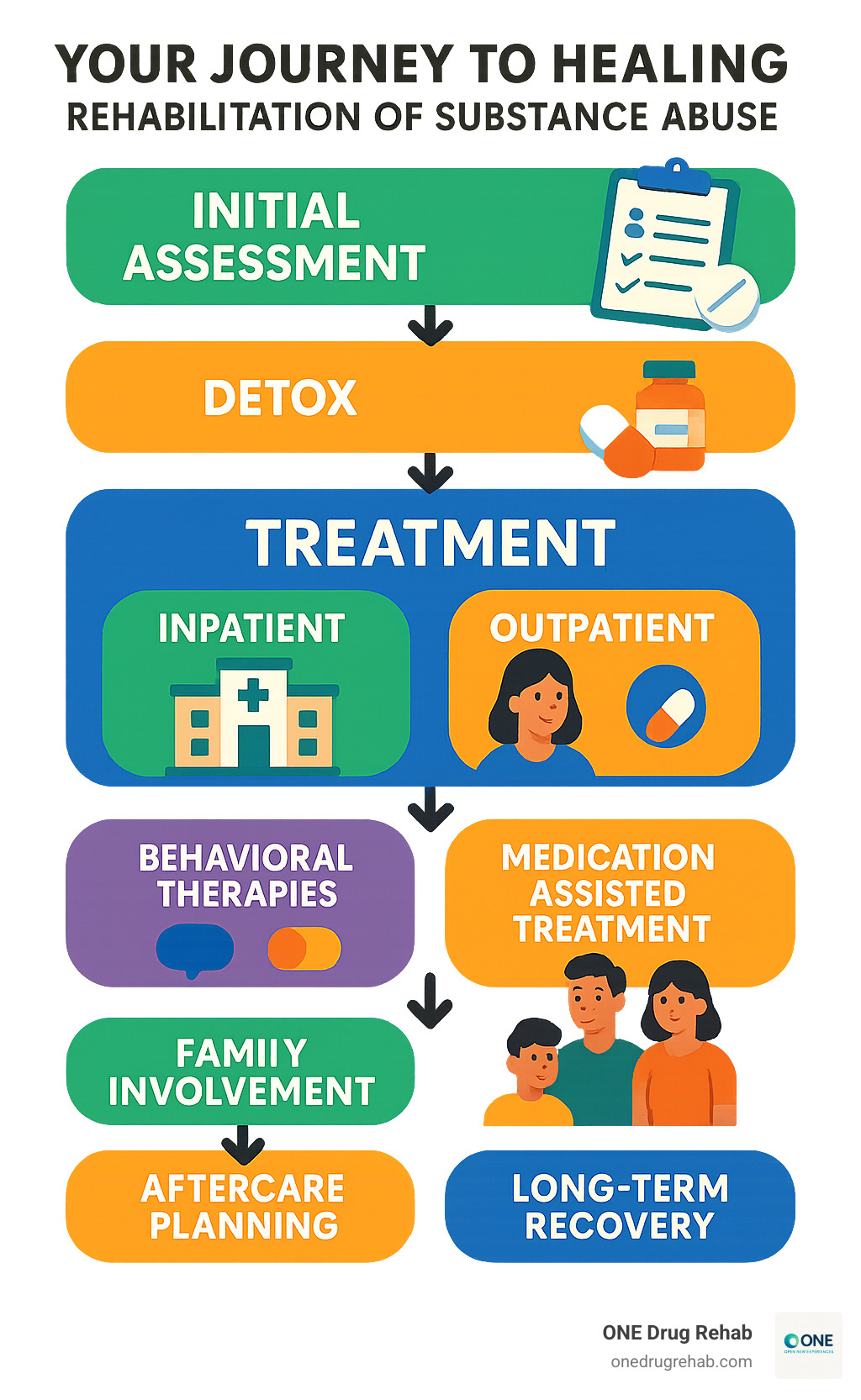
Rehabilitation of substance abuse is a structured process to help people overcome drug or alcohol dependence. It addresses the whole person, not just the substance use, by tackling medical, mental health, and social challenges.
Core treatment approaches include:
- Detoxification: Safely managing withdrawal.
- Behavioral Therapy: Changing thought patterns and behaviors.
- Medication-Assisted Treatment: Using medications to reduce cravings.
- Support Groups & Aftercare: Providing long-term recovery support.
Treatment occurs in various settings, from 24/7 inpatient care to flexible outpatient programs that allow you to live at home.
Addiction is a chronic but treatable brain disease, similar to diabetes or heart disease. It requires ongoing management, and millions of people achieve recovery every year. The process often takes at least three months, as longer treatment is linked to better outcomes. Relapse is not a failure but a part of the journey for many; treatment can always be resumed or adjusted.
As one person in recovery shared, it often takes serious trouble with the law, school, work, or family for someone to seek treatment.
Rehabilitation of substance abuse glossary:
The Cornerstones of Effective Addiction Treatment
There is no single magic bullet for addiction. Rehabilitation of substance abuse is a complex process because addiction affects each person’s brain and life differently. Effective treatment must be flexible and readily available to adapt to your specific situation.
Decades of research have identified key principles for successful treatment, which you can explore in these scientific research findings on effective treatment principles. A critical factor is time; most people need at least three months in treatment to achieve lasting change, as the brain needs time to heal and form new, healthy patterns. Your needs will also change during recovery, so the best programs conduct ongoing assessments and adjust your treatment plan accordingly.
Treating the Whole Person
Modern rehabilitation of substance abuse recognizes that addiction rarely exists in isolation. It’s often connected to other challenges, including medical issues, mental health conditions, family problems, and legal or vocational difficulties.
In fact, about 45 percent of people with addiction also have a co-occurring mental health disorder. Treating addiction without addressing underlying depression, anxiety, or trauma is often ineffective. Comprehensive programs address both issues simultaneously through specialized Co-occurring Disorder Treatment.
Effective treatment also helps you steer social and legal problems, rebuild family trust, and develop vocational skills. The goal isn’t just to stop using substances but to build a meaningful life. Because each person’s story is unique, every individual receives a personalized treatment plan.
The Importance of a Research-Based Approach
Scientific research has transformed addiction treatment, reframing addiction as a treatable brain disease rather than a moral failing. This has led to the development of evidence-based practices that are proven to work.
Detoxification alone is not treatment. While detox is a necessary first step to manage withdrawal, it doesn’t address the psychological and behavioral aspects of addiction. Lasting recovery requires more comprehensive care.
The most effective strategies often combine medications and therapy. For opioid addiction, Medication-Assisted Treatment (MAT) paired with counseling is the gold standard. This approach uses FDA-approved medications to reduce cravings and withdrawal, allowing you to focus on therapy. Different addictions respond to different approaches, and there are more options about different types of addiction treatment available than ever before. A research-based approach takes the guesswork out of recovery, using tested strategies to help people achieve and maintain sobriety.
Exploring the Landscape of the Rehabilitation of Substance Abuse
Choosing the right rehabilitation of substance abuse program is like finding the right path up a mountain—the best route depends on your personal needs and circumstances. The American Society of Addiction Medicine provides guidelines to help match people with the appropriate level of care.

Here’s how the main program types compare:
| Program Type | Description | Key Features |
|---|---|---|
| Inpatient/Residential | Patients live at the treatment center 24/7. | Intensive, structured environment; around-the-clock care; removes individuals from triggers. |
| Outpatient | Patients live at home and attend therapy sessions. | Flexible; allows continuation of work/school; less intensive than inpatient. |
| Therapeutic Communities (TCs) | Long-term residential programs (6-12 months) where residents play an active role in their own and others’ recovery. | Peer-led; focus on resocialization; addresses severe substance use and criminal involvement. |
Types of Rehabilitation Programs
Inpatient and residential treatment provides 24/7 support in a setting free from daily triggers. These programs, which can last from weeks to months, are ideal for those with severe addiction or co-occurring mental health issues. Learn more about Inpatient Rehab for Drugs.
Outpatient programs offer flexibility, allowing you to live at home while receiving care. Options range from standard weekly therapy to more structured Intensive Outpatient Programs (IOPs) and Partial Hospitalization Programs (PHPs). Explore Outpatient Alcohol Rehab Programs for more details.
Therapeutic Communities are long-term (6-12 months) residential programs where the community itself is a key agent of healing. Sober living homes offer a transitional, substance-free environment to practice recovery skills with peer support.
The Role of Medication in Recovery
Medication can be a game-changer in rehabilitation of substance abuse. Medication-Assisted Treatment (MAT) uses FDA-approved medications to stabilize brain chemistry, reduce cravings, and manage withdrawal, giving you the space to focus on therapy.
- For opioid addiction, methadone and buprenorphine stabilize the brain, while naltrexone blocks the effects of opioids.
- For alcohol addiction, naltrexone reduces cravings, acamprosate eases withdrawal symptoms, and disulfiram creates an unpleasant reaction to alcohol.
- For nicotine addiction, medications like bupropion can make quitting easier.
While medications for stimulants or cannabis are still being researched, behavioral therapies are highly effective for these substances.
The Power of Behavioral Therapies
Behavioral therapies teach you to rewire your thinking and build a sober life. They provide practical skills for managing cravings, stress, and relapse triggers.

Common approaches include:
- Cognitive-Behavioral Therapy (CBT): Identifies and changes negative thought patterns and behaviors.
- Motivational Interviewing: Helps you find your own motivation to change.
- Contingency Management: Provides tangible rewards for positive behaviors like staying sober.
- Family Therapy: Repairs relationships and builds a supportive home environment.
- Dialectical Behavior Therapy (DBT): Teaches skills for emotional regulation, distress tolerance, and mindfulness.
- Twelve-Step Facilitation: Prepares you to engage with support groups like AA and NA.
These therapies, delivered in individual, group, or family settings, provide the life skills needed for lasting recovery.
The Recovery Journey: Relapse, Support, and Family Involvement
Recovery from addiction is a process of building a new life, not a single event. It involves rewiring your brain, learning new coping skills, and rebuilding relationships. The goal of rehabilitation of substance abuse is to develop wellness in all areas of life—physical, emotional, and social.

Understanding and Preventing Relapse
Relapse is often part of recovery, not a sign of failure. Relapse rates for addiction (40-60%) are similar to those for other chronic diseases like diabetes or asthma. It doesn’t mean treatment was ineffective, but that the plan needs adjustment.
Prevention starts with identifying personal triggers—people, places, or emotions that lead to cravings. Building a “recovery toolbox” with stress management techniques, healthy hobbies, and a strong support system is key. If a relapse occurs, it’s crucial to contact a healthcare professional immediately to resume or modify treatment. A relapse is a detour, not a dead end.
The Role of Peer Support: AA, NA, and More
Connecting with others who understand the struggle is uniquely powerful. Mutual support groups offer healing through shared experiences without judgment.
- Alcoholics Anonymous (AA) and Narcotics Anonymous (NA) use the 12-step model, providing a spiritual framework and peer support through sponsorship and meetings.
- SMART Recovery offers a self-empowering alternative, using cognitive-behavioral tools to help you manage thoughts, feelings, and behaviors.
These groups provide ongoing support, reduce shame and isolation, and help build a sober social network that is vital for long-term recovery.
Family Involvement: Healing Together
Addiction impacts the entire family, causing worry, betrayal, and confusion. Family involvement in rehabilitation of substance abuse is therefore critical for healing.
Family therapy provides a safe space to improve communication, address resentments, and rebuild trust. It helps family members understand that addiction is a disease, not a moral failing, which reduces blame and allows for compassion. Families learn to identify enabling behaviors and create a supportive home environment, which significantly improves treatment outcomes and strengthens the foundation for lasting recovery.
Overcoming Barriers and Finding Specialized Care
Even when someone is ready for help, the path to rehabilitation of substance abuse can have obstacles. Understanding these common challenges is the first step to overcoming them.
Barriers often include:
- Stigma: The societal shame surrounding addiction can prevent people from seeking help.
- Financial Concerns: Treatment costs can feel overwhelming. Our guide on how to Find Rehab Without Insurance can help you explore affordable options.
- Geographic Limitations: Quality treatment may be far from home, especially in rural areas. Resources like Rehab Near Me can help locate care closer to you.
Key challenges in the rehabilitation of substance abuse
Beyond broad barriers, individuals face personal obstacles:
- Fear of withdrawal: While the fear is understandable, medical detox is designed to be as safe and comfortable as possible.
- Lack of readiness: Motivation can grow during the treatment process, so not feeling “ready” shouldn’t stop you from exploring options.
- Childcare responsibilities: For parents, getting healthy is one of the best things they can do for their children, and some programs offer support.
- Legal troubles: Some worry that admitting to substance use will worsen legal issues. However, treatment, including Court Ordered Inpatient Rehab, can often be a positive step in resolving legal matters.
Specialized Care for Adolescents and Mothers
Standard treatment doesn’t fit everyone. Specialized care is available for unique populations.
Adolescents face different challenges than adults, including peer pressure and the effects of substances on a developing brain. Effective teen treatment involves significant family participation and educational support to ensure they don’t fall behind. The scientific guide for adolescent treatment offers evidence-based insights.
Mothers with children need programs that address their responsibilities. Some residential facilities allow mothers to bring their children, providing substance abuse treatment alongside parenting skills support. This holistic approach recognizes that when a mother heals, the entire family benefits, creating a stronger foundation for everyone’s future.
Frequently Asked Questions about Substance Abuse Rehabilitation
Considering treatment brings up many questions. Here are straightforward answers to the most common ones we hear about rehabilitation of substance abuse.
Can addiction be cured?
Addiction is not “cured” in the traditional sense, but it is a highly manageable chronic condition, much like diabetes or heart disease. Rehabilitation of substance abuse provides the tools to manage the condition effectively, allowing for a full, healthy life. While addiction may require lifelong management, recovery is absolutely possible and can dramatically improve your quality of life.
How long does rehabilitation take?
There is no one-size-fits-all timeline. However, research consistently shows that a treatment duration of at least three months is most effective for lasting change. The brain needs time to heal and form new, healthier neural pathways. The ideal length depends on the severity of the addiction, co-occurring conditions, and individual progress. Longer treatment stays are often linked to higher success rates.
What is the success rate of rehab?
Success in rehab is measured by more than just abstinence. It includes reduced substance use, improved social functioning, and better overall health. It’s about rebuilding a life—mending relationships, returning to work or school, and improving well-being.
Effective treatment can reduce drug use by 40-60% and significantly decrease criminal activity while improving employment prospects. Relapse does not equal failure. Like with other chronic diseases, a relapse is a sign that the treatment plan needs to be adjusted. You can find more statistics on our pages about Addiction Recovery Success Rates and what percentage of heroin addicts recover. The bottom line is that recovery is a lifelong journey, and treatment works.
Conclusion: Taking the First Step Towards a New Beginning
Understanding rehabilitation of substance abuse is the first step toward healing. We’ve established that addiction is a treatable brain disease, not a moral failing. Recovery is possible.
From inpatient to outpatient care, and with the help of medications and behavioral therapies, there is a path that fits your personal journey. Support systems like peer groups and family therapy are lifelines that provide connection and strength.
While barriers like stigma and cost exist, resources are available to help you overcome them. Specialized programs for teens, mothers, and others ensure that everyone can find the right fit. Millions of people have walked this path and built fulfilling lives in recovery.
Recovery is about more than stopping substance use; it’s about creating a life you want to live. You don’t have to figure it out alone. ONEDrugRehab.com is your unbiased guide to research options without pressure.
That first step—a phone call or an appointment—is not an ending, but a new beginning. Your future deserves a chance to flourish.
Ready to explore your options? Find the right support for your journey to healing and take that brave first step toward the life you deserve.