

Inpatient Rehab for Drugs: 2025 Ultimate Hope
Understanding Inpatient Rehab: Your Path to Healing
Finding help for substance use can feel overwhelming. Many people find that inpatient rehab for drugs is a powerful step toward recovery. This treatment offers a structured, supportive environment away from daily triggers, designed to help individuals begin their healing journey in a safe space.
If you’re wondering if inpatient drug rehab is right for you, consider these points:
- What it is: Inpatient rehab, or residential treatment, means living at a facility 24/7. You receive constant care, medical support, therapy, and a structured routine to focus fully on recovery.
- Who it’s for: This option is often best if you have a severe substance use disorder, have relapsed after past treatments, need medical detox, or have an unsupportive home environment or co-occurring mental health conditions.
- How to start:
- Talk to your doctor or an addiction professional for guidance.
- Call your insurance provider to understand your coverage and find in-network facilities.
- Search national directories like SAMHSA’s FindTreatment.gov.
Addiction is a chronic disease that needs ongoing management. Inpatient rehab provides a dedicated space to start this vital process, offering comprehensive support for your body, mind, and spirit.
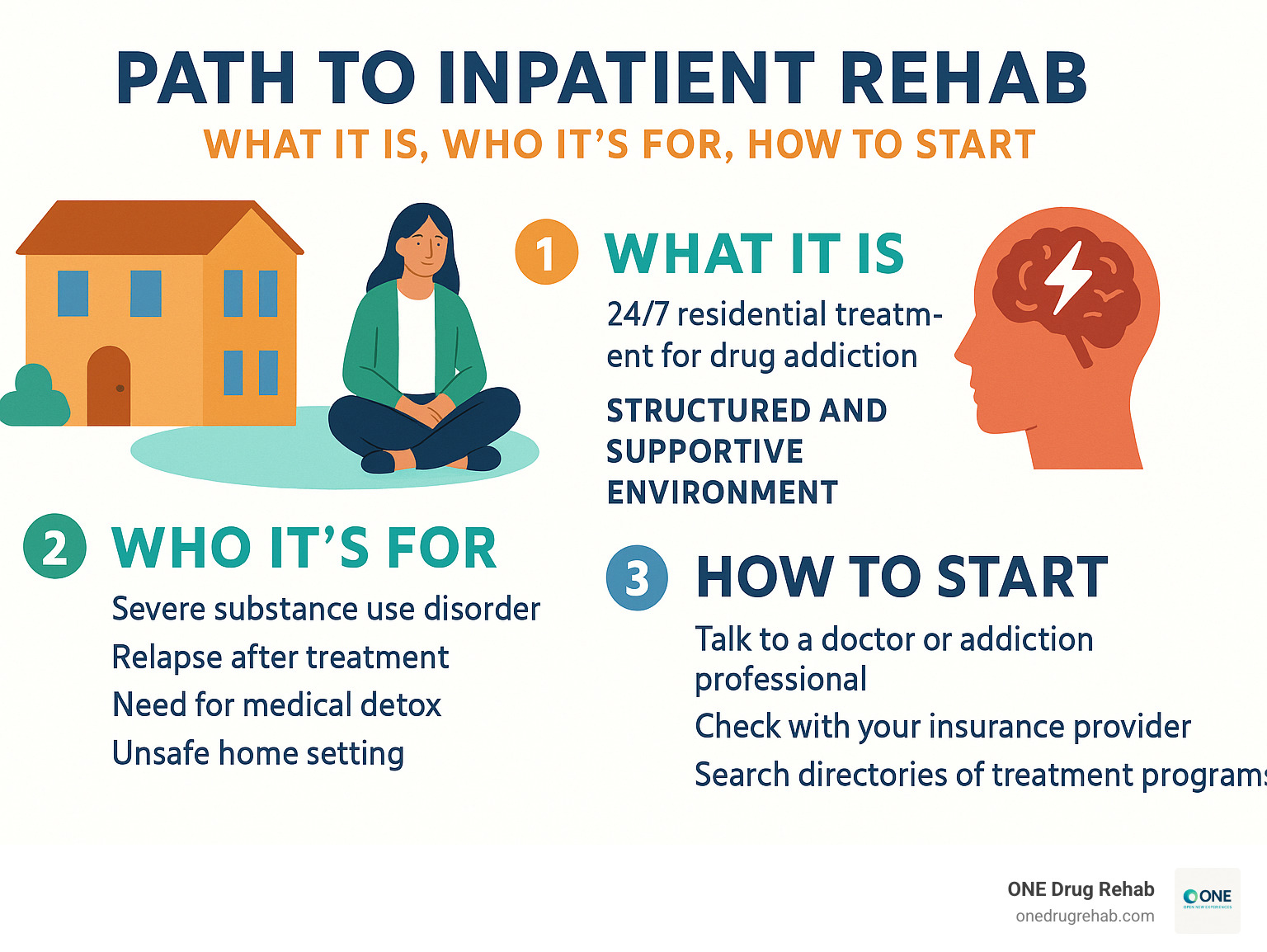
Inpatient rehab for drugs terms at a glance:
Understanding Inpatient Rehab: A Comprehensive Overview

Residential treatment means you live at the facility, fully immersed in your recovery. This provides 24/7 medical and emotional support from a dedicated, multidisciplinary team of physicians, therapists, and wellness specialists. They work together to create a holistic, individualized care plan that addresses not just substance use, but also any underlying mental and physical health needs. It’s a truly comprehensive approach to getting you back on your feet.
What is Inpatient Drug and Alcohol Treatment?
Inpatient treatment, or residential treatment, is the highest level of care for substance use disorder. It’s a live-in facility providing continuous, supervised, and highly structured care. The primary goal is to remove you from daily triggers and stressors, allowing you to focus completely on recovery. This safe, structured environment is crucial in the early stages. Integrated mental health services are also a cornerstone of quality care, as addressing co-occurring disorders is often the most effective path to long-term sobriety.
Inpatient vs. Outpatient: Making the Right Choice
Deciding between inpatient and outpatient treatment depends on your individual needs, the severity of your addiction, and your support system. Inpatient rehab offers a total immersion experience with round-the-clock support, making it ideal for those with severe addictions, co-occurring mental health issues, or an unsupportive home life.
Outpatient treatment, on the other hand, allows you to live at home while attending scheduled therapy sessions. This offers more flexibility to maintain work or family responsibilities but requires a strong support system and the ability to manage triggers.
Here’s a quick comparison to help you weigh your options:
| Factor | Inpatient Rehab | Outpatient Treatment |
|---|---|---|
| Living Arrangement | Reside at the facility 24/7 | Live at home, attend sessions at a facility |
| Time Commitment | Full-time, highly structured daily schedule | Part-time, flexible schedule (e.g., a few hours a day) |
| Level of Support | 24/7 medical and clinical supervision | Scheduled therapy and counseling, less direct supervision |
| Ideal Candidate | Severe SUD, co-occurring disorders, unstable home | Mild to moderate SUD, strong home support, work/school needs |
| Typical Cost | Higher (includes room, board, 24/7 care) | Lower (no room/board, fewer hours of direct care) |
Both are part of a ‘continuum of care,’ meaning you might start with inpatient and transition to outpatient as you progress. The key is finding the right intensity of care for your journey.
For more detailed information on different types of addiction treatment, explore our guide at More info about different types of addiction treatment.
Who Should Consider Inpatient Rehab for Drugs?
Inpatient rehab is often the most effective path for individuals who meet certain criteria. We recommend considering inpatient rehab for drugs if you identify with the following:
- Severe Substance Use Disorder: If addiction makes it difficult to function in daily life or you have a severe physical dependence, inpatient care provides the intensive support needed.
- History of Relapse: If you’ve tried less intensive treatments and relapsed, the structured, trigger-free environment of inpatient rehab can offer a stronger foundation for recovery.
- Co-occurring Mental Health Conditions: Many people with substance use disorders also have conditions like depression, anxiety, or PTSD. Inpatient programs are equipped to provide integrated, holistic treatment for these dual diagnoses, which is the most effective long-term approach. For more information, refer to Information on co-occurring disorders from NIDA.
- Unstable or Unsupportive Home Environment: If your home life is filled with triggers or lacks support for sobriety, a dedicated treatment center provides a much-needed sanctuary.
- Need for Medical Detox: For substances like alcohol, benzodiazepines, or opioids, withdrawal can be dangerous. Inpatient facilities offer medically supervised detox to ensure your safety and comfort.
The decision is personal, but if these points resonate with you, it’s worth exploring inpatient rehab for drugs as a powerful option.
The Journey Through Treatment: What to Expect

Stepping into an inpatient rehab for drugs program is a chance to pause, step away from daily chaos, and focus on healing. You’ll learn new coping skills and build healthy habits in a supportive peer environment. This dedicated time focuses on your total well-being—from nutrition and exercise to stress management—which are all crucial for a healthy, long-lasting recovery.
The Admissions and Intake Process
The admissions process starts with a confidential phone call to assess your health and history, ensuring inpatient rehab for drugs is the right fit. The team will help you verify insurance coverage and then create a personalized treatment plan. They also assist with logistics like choosing a start date and arranging travel, making the transition as smooth as possible.
The First Step: Medically Supervised Detox
For many, the first step in inpatient rehab for drugs is detox, where your body safely clears itself of substances under 24/7 medical supervision. Doctors and nurses manage withdrawal symptoms to ensure your safety and comfort. Medication-assisted treatment (MAT) may be used to ease cravings; “Needing medication assistance isn’t a sign of weakness”—it’s a smart way to support your body. The duration of detox depends on the substance and usage. For intense withdrawals from substances like alcohol or opioids, medical support is essential. Once stable, you can begin the therapeutic part of your program.
A Day in the Life: Therapies and Structured Activities
A typical day in inpatient rehab for drugs is full but balanced, designed to help you heal and grow. The schedule mixes different therapies, learning sessions, and wellness activities that “will be helpful in the long run.”
Here’s a peek at what your days could look like:
- Individual Counseling: One-on-one sessions with a therapist provide a safe space to work through personal issues and learn new coping skills using methods like Cognitive Behavioral Therapy (CBT) or Dialectical Behavior Therapy (DBT).
- Group Therapy: Sharing stories and supporting others in recovery builds a powerful sense of community. It shows you that you’re not alone.
- Family Therapy: Since addiction impacts the whole family, these sessions help improve communication, heal relationships, and teach loved ones how to best support you.
- Educational Workshops: These classes teach you about the science of addiction, relapse prevention, and healthy living. Knowledge is a powerful tool for recovery.
- Support Groups: You might attend 12-step programs (like AA or NA) or other support groups to connect with peers and get a framework for long-term sobriety.
- Medication-Assisted Treatment (MAT): For some, combining medication with counseling is the best path, supporting your whole self—mind and body—on your recovery journey.
- Holistic Approaches: Many programs offer activities like yoga, meditation, or art therapy to nurture your body, mind, and spirit and help you find healthy ways to manage stress.
This comprehensive approach ensures every part of you gets the care it needs, leaving you with a toolbox of skills for a lasting, sober life.
Practical Considerations for Inpatient Drug Rehab for Drugs

Considering inpatient rehab for drugs brings up practical questions about cost, duration, and finding the right facility. These are big decisions, and our aim is to help you sort through these details to find a program that fits your needs and makes your recovery journey as smooth as possible.
How Long Does Inpatient Rehab Typically Last?
A common question is, “How long does inpatient rehab for drugs last?” The answer is personal, as the length of stay is custom to your journey. While many programs are 30 days, others last 60 days, 90 days, or even longer.
The right length depends on:
- The severity of your addiction.
- Your individual progress.
- Any co-occurring mental health conditions.
- Your overall medical history.
Recovery is about reaching healing milestones, not a race. Research shows that staying in treatment for 90 days or more often leads to better, lasting results. Since addiction is a chronic disease, giving yourself enough time to build new, healthy habits is key.
Navigating the Cost of Treatment and Insurance Coverage
The cost of inpatient rehab for drugs is a valid concern. The price varies based on the facility’s location, level of care, amenities, and length of stay. While luxury centers can be expensive, many excellent, standard centers are more affordable. There are also state-funded programs that are free or low-cost. “You don’t need anything too fancy for addiction recovery, especially if you can’t afford it.” Good care is what matters most.
The good news is that the Affordable Care Act (ACA) requires most health insurance plans to cover substance use disorder treatment. Your private insurance could cover a significant portion of the cost. Always call your provider to ask about your specific benefits.
Medicaid is another helpful option, though programs vary by state. If you don’t have insurance, don’t lose hope. State-funded programs and non-profit organizations may offer financial aid or scholarships, but be aware of potential waiting lists.
Want to dive deeper? We have a guide for that: Find Rehab Without Insurance.
How to Find an Inpatient Rehab for Drugs Near You
Finding the right inpatient rehab for drugs can feel like a big search, but there are many helpful resources.
Here’s how you can start:
- Talk to your doctor or therapist. They know you and can often recommend trusted facilities.
- Call your insurance provider. They can give you a list of “in-network” inpatient rehab for drugs facilities, which can save you money.
- Use a rehab facilities directory. Our own Rehab Facilities Directory lets you search for programs by location, treatment type, and more.
- Use the Findtreatment.gov tool. This confidential government resource from SAMHSA is a reliable way to find reputable programs across the U.S.
As you explore options, ask about accreditation, treatment approach, staff qualifications, and aftercare planning to find a sanctuary for your healing.
Frequently Asked Questions about Inpatient Drug Rehab

It’s natural to have questions about inpatient rehab for drugs. It’s a big step, and being prepared can make all the difference. Here, we’ll address some of the most common questions to help ease your mind.
What should I pack for inpatient rehab?
Packing for inpatient rehab for drugs means preparing for a focused period of healing. Most facilities have specific guidelines for a safe environment.
Generally, you’ll want to bring comfortable, casual clothing, alcohol-free toiletries, a journal and a few good books, and important documents like your ID, insurance card, and any prescriptions in their original bottles.
What not to bring usually includes valuables, electronics, revealing clothing, outside food, and any substances. Always check with the facility for their specific list before you pack to ensure a smooth start.
Can my family visit or contact me during treatment?
Family involvement policies during inpatient rehab for drugs vary, so it’s important to ask about them during admissions. Most programs understand how vital family support is for long-term recovery.
While communication might be limited at first to help you focus, many facilities offer designated visiting hours and scheduled phone calls. A cornerstone of many programs is family therapy sessions. These sessions help educate loved ones, improve communication, and heal relationships. Family involvement is encouraged as it strengthens your support system for a lasting recovery.
What happens after I complete an inpatient program?
Completing an inpatient rehab for drugs program is a huge step, but it’s just one part of the lifelong journey of recovery. Aftercare planning is critical for a smooth transition back to daily life.
Before you leave, your team will create a personalized aftercare plan. This plan is designed to help you maintain sobriety and often includes:
- Step-down care: Moving to a less intensive level of support, like an Intensive Outpatient Program (IOP).
- Sober living homes: A supportive, drug-free residential setting that offers continued structure.
- Support groups: Regular attendance at 12-step meetings like AA or NA offers invaluable connection and guidance.
- Ongoing therapy: Continuing therapy helps reinforce coping skills and maintain your mental well-being.
- Relapse prevention strategies: Your plan will include specific strategies to identify triggers and prevent relapse.
Recovery is a marathon, not a sprint. The goal of inpatient rehab for drugs is to equip you with a strong foundation and the resources needed for lasting sobriety. Continued commitment is key to success.
Conclusion: Your Path to Lasting Recovery Starts Here
We’ve covered a lot about inpatient rehab for drugs, from what it is and who it helps, to the treatment journey, costs, and aftercare. It’s clear this type of care offers a unique sanctuary where healing can truly begin.
Think of it as a dedicated space, free from daily triggers, where your only focus is on you. It’s a powerful combination of medical care, intensive therapy, and peer support that addresses your body, mind, and spirit.
It’s easy to feel alone when struggling with substance use, but you are not. In 2022, of the 54.6 million people who needed substance use treatment, only about 13.1 million received it. This statistic is a call to action, highlighting the bravery it takes to seek help.
The good news is that recovery is a reality for millions. By choosing inpatient rehab for drugs, you’re investing in your future, taking back control, and building a strong foundation for lasting sobriety.
We at ONEDrugRehab.com are here to be a reliable resource, offering clear information about drug rehab facilities. Our goal is to empower you with the knowledge to make informed decisions for yourself or a loved one, without pushing specific providers.
Your path to lasting recovery is possible. Let’s find the right fit together.
Compare Rehab Centers to find the right fit for you