

The Power of Connection in Addiction Recovery
Group therapy addiction treatment brings people struggling with substance use together in a supportive environment led by a trained professional. It’s one of the most common and effective approaches to recovery.
Key Facts About Group Therapy for Addiction:
- What it is: A therapeutic setting where 6-12 people meet regularly (typically 60-90 minutes) to address substance use disorders
- Primary purpose: Reduce isolation, provide peer support, teach coping skills, and promote lasting recovery
- Types include: Psychoeducational groups, skills development, cognitive-behavioral therapy (CBT) groups, support groups, and interpersonal process groups
- Effectiveness: Research shows group therapy is as effective as individual therapy for substance use disorders—and sometimes more effective
- Key benefit: Individuals who participate in group therapy tend to be more committed to maintaining abstinence
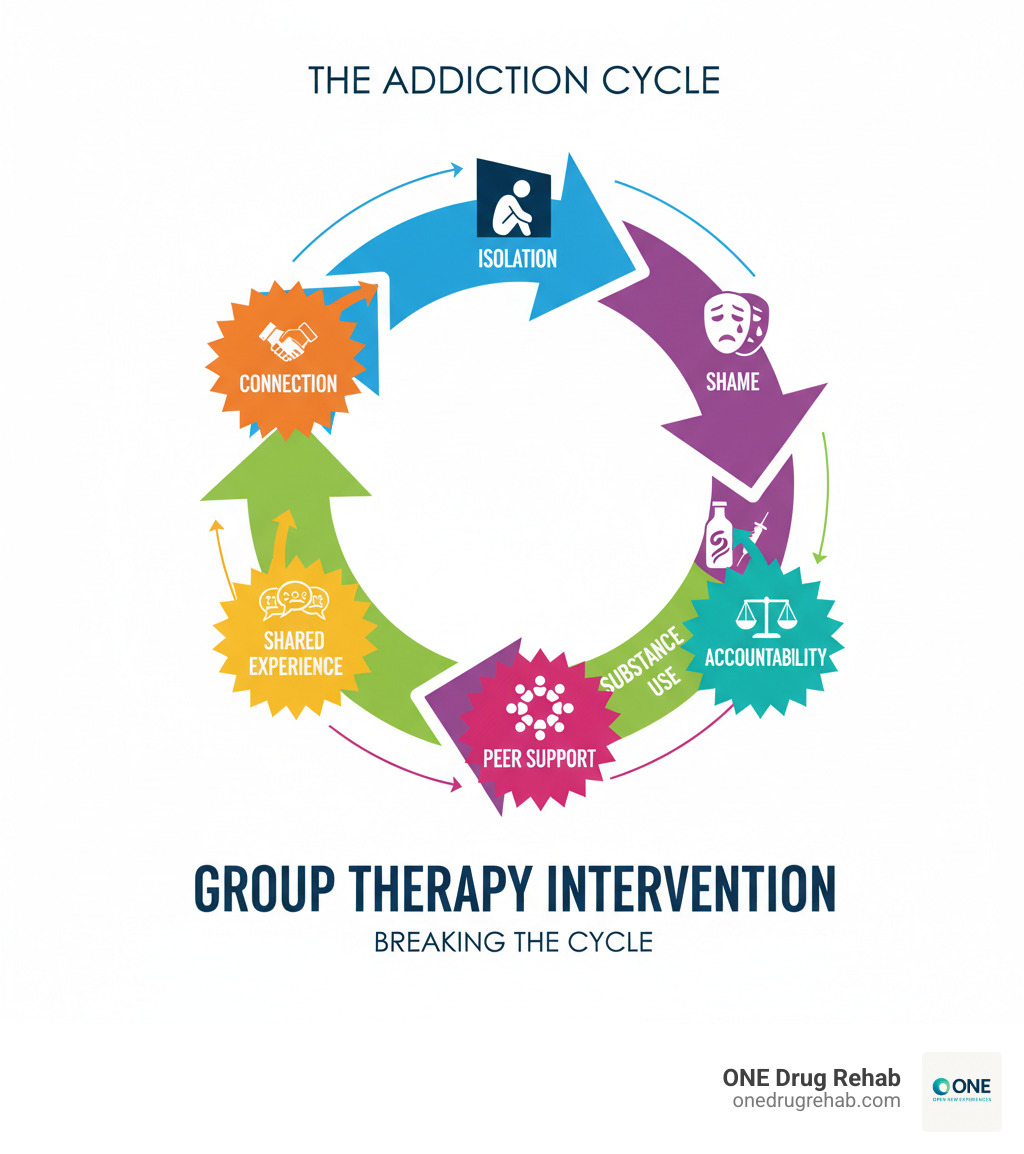
Addiction thrives in isolation, fueled by shame and secrecy. Group therapy breaks that cycle by tapping into our fundamental need to connect with others. As noted in substance abuse treatment research: “The natural propensity of human beings to congregate makes group therapy a powerful therapeutic tool for treating substance abuse, one that is as helpful as individual therapy, and sometimes more successful.”
When you sit in a room with others who understand what you’re going through, you realize you’re not alone or uniquely broken. Group therapy provides a safe space to share struggles without judgment, learn from others’ paths, and practice new skills for living sober. It offers accountability, hope, and the chance to both receive support and help others, which is a core part of the healing process.
Why Group Therapy Works: Key Benefits and Mechanisms
When you’re struggling with addiction, it can feel like you’re trapped on an island. Group therapy addiction treatment builds a bridge off that island, connecting you with others who genuinely understand. The power of group therapy lies in addressing the core drivers of addiction: isolation, shame, and a lack of healthy coping skills.
By bringing people with shared struggles together, you create a space where real healing can begin. It’s a place to rebuild your relationship not just with substances, but with yourself and others, learning that recovery works better when you don’t do it alone.

Building a Sober Community and Sense of Belonging
The loneliness of addiction is crushing, often leading people to hide their struggles in shame. Group therapy breaks that cycle. When you walk into a group and hear your own thoughts and feelings echoed by others, the experience is incredibly normalizing. The shame loses its grip.
You begin to see yourself with more compassion because it’s reflected in how group members support each other. You find that you’re not alone—you’re part of a community that truly gets it. This sense of belonging becomes a lifeline, creating bonds that can sustain you through the hardest parts of recovery.
Enhancing Accountability and Social Skills
In group therapy, you’re accountable not just to a therapist, but to peers walking the same path. Committing to sobriety in front of your group carries weight, and this positive peer pressure is a powerful motivator. It’s about mutual investment in each other’s success.
Beyond accountability, group therapy is a safe training ground for rebuilding social skills. Addiction can damage relationships and communication patterns. In the group, you practice effective communication, develop active listening skills, and learn to give and receive supportive feedback. The setting also helps you understand and practice healthy boundaries and begin rebuilding trust. These are essential life skills that help you build the sober support network needed for long-term recovery.
A Foundation for Long-Term Relapse Prevention
Recovery’s real challenge is maintaining sobriety when life gets complicated. This is where group therapy addiction treatment proves its worth. You don’t just learn about relapse prevention in theory; you learn from people who’ve faced the situations you fear. Someone shares how they handled a stressful day at work, or steerd a family party.
The group helps you develop a personalized relapse prevention plan and learn emotional regulation techniques. You can practice role-playing difficult situations, like how to respond when an old friend calls. The connections you build become a support network that extends beyond the therapy room. Research confirms this: individuals in group therapy are more committed to maintaining abstinence, building a solid foundation for whatever comes next.
A Closer Look at Group Therapy Addiction Models and Topics
Not all group therapy addiction programs are the same, which allows treatment to be custom to individual needs. Different models focus on education, skills, thought patterns, or relationships. The therapist’s role is to guide the group, whether it’s highly structured with a set curriculum or more open-ended, creating a safe and productive space for healing.

Common Approaches in Group Therapy for Substance Abuse
When you’re looking into group therapy addiction treatment options, you’ll come across several main approaches. Each has its own focus, but all aim to help you build a life free from substances.
Psychoeducational groups are like a class on addiction. These sessions teach you the facts: how addiction affects the brain, the stages of recovery, and why willpower alone isn’t enough. Understanding the science behind addiction can be incredibly freeing, as it helps you see it as a medical condition, not a moral failing.
Skills development groups are practical and hands-on. Here, you learn and practice concrete strategies for staying sober, such as managing stress, handling anger constructively, and refusing drugs. Role-playing is common, helping you build confidence for real-world situations.
Cognitive Behavioral Therapy (CBT) groups focus on the connection between your thoughts, feelings, and behaviors. You learn to identify automatic negative thoughts that trigger substance use, challenge them, and replace them with healthier, more realistic ones. CBT provides specific techniques for managing cravings and preventing relapse.
Support groups, led by a trained professional, provide a space for mutual understanding and empathy. While similar in feel to peer-led groups like AA, they offer the added benefit of clinical guidance. The primary goal is to foster a sense of community and shared experience, reminding you that you’re not alone.
Interpersonal process groups go deeper, exploring how your past and present relationship patterns might contribute to your substance use. The group itself becomes a social laboratory where you can observe your own relational habits and practice healthier ways of connecting with others in a safe, supportive setting.
For more detailed information about these evidence-based approaches, the Substance Abuse and Mental Health Services Administration (SAMHSA) offers comprehensive guidance in their Treatment Improvement Protocols. You can explore their resources at http://www.samhsa.gov/.
The Crucial Role of the Group Therapist
The leader of your group therapy addiction session is much more than a moderator. A skilled therapist acts as a teacher, guide, and safety net. Their most important job is creating a safe environment where everyone feels comfortable being honest. They establish clear rules, maintain confidentiality, and manage conflict constructively.
A good therapist also guides conversations to keep them productive, redirecting when necessary and ensuring all voices are heard. They bring clinical expertise, teaching therapeutic techniques and helping you understand your own patterns. The therapist fosters connection between members, cultivating the “we’re all in this together” atmosphere that is so vital for healing.
What Topics Are Discussed in Group Therapy for Addiction?
Discussions in group therapy addiction sessions cover the real-world challenges of recovery. While topics vary based on the group’s needs, certain themes are central to the process:
- Relapse prevention: Identifying personal triggers (people, places, feelings) and developing specific strategies to manage cravings and high-risk situations.
- Emotional regulation: Learning to identify, understand, and cope with difficult feelings in healthy ways, rather than numbing them with substances.
- Communication and boundaries: Rebuilding relationships by practicing how to express needs clearly, listen effectively, and set healthy limits with others.
- Stress management: Acquiring practical tools, from mindfulness to time management, to handle stress, a common relapse trigger.
- Co-occurring mental health issues: Addressing conditions like depression, anxiety, or PTSD that frequently accompany addiction and learning integrated coping strategies.
- Rebuilding a sober life: Exploring practical topics like finding sober hobbies, navigating work and social situations, and finding purpose and meaning in recovery.
- Family dynamics: Discussing how to repair damaged relationships and steer complex family situations as you change and grow.
The collective wisdom of the group is a powerful tool, as members learn as much from each other’s experiences as they do from the therapist.
Effectiveness and Considerations for Group Therapy
When considering treatment, you want to know: does group therapy addiction treatment actually work? The research provides a resounding yes. It is a powerful approach because it addresses the whole person. Since addiction often co-occurs with challenges like depression, anxiety, or personality disorders, the interactive group setting provides a space to work on these interconnected issues simultaneously.

How Effective is Group Therapy for Addiction Treatment?
Research consistently shows that group therapy is as effective as individual therapy for substance use disorders, and in some cases, more so. A key benefit is that participants often show a stronger commitment to maintaining abstinence.

Studies have demonstrated its effectiveness across various substance use disorders, including those involving cocaine, methamphetamine, opioids, and marijuana. Specific models like Cognitive Behavioral Therapy (CBT) groups have proven highly effective.
Furthermore, group therapy is a vital component for individuals with co-occurring psychiatric problems, such as PTSD or depression. Specialized groups like Dialectical Behavior Therapy (DBT) effectively decrease both substance use and psychiatric symptoms. Beyond its clinical power, group therapy is also more cost-effective than individual therapy, making quality treatment more accessible.
Potential Limitations and Who Might Not Be a Good Fit
While highly effective, group therapy addiction treatment isn’t a perfect fit for everyone. It’s important to consider the potential limitations. The group format means less individual attention from the therapist, and confidentiality concerns can feel more complex than in one-on-one sessions.
Groups also have a set schedule and the potential for personality conflicts, though a skilled therapist can manage these dynamics. For some, particularly those with severe social anxiety, sharing in a group can feel overwhelming at first.
Certain individuals may not be good candidates, at least not initially. This includes those experiencing active psychosis or severe psychiatric symptoms, those who are unable to abide by group rules, or those with extreme social phobia or antisocial tendencies. For these individuals, starting with individual therapy to build stability is often a better path before transitioning into a group setting.
Frequently Asked Questions about Group Therapy for Addiction
Choosing to pursue group therapy addiction treatment is a big step, and it’s natural to have questions. Here are answers to some of the most common ones.
Is group therapy covered by insurance?
Yes, many insurance plans cover group therapy for addiction, especially when it’s part of a comprehensive program like residential or intensive outpatient treatment. The Affordable Care Act (ACA) and the Mental Health Parity and Addiction Equity Act (MHPAEA) generally require insurance plans to cover substance use disorder services. However, coverage details vary by plan. Choosing an in-network provider usually lowers your out-of-pocket costs. We always recommend calling your insurance provider directly to verify your specific benefits. Many treatment centers can also help you steer this process.
How is confidentiality maintained in a group setting?
This is a valid and common concern. Confidentiality is a cornerstone of group therapy addiction treatment. From the very first session, the therapist establishes strict ground rules, and all members typically sign a confidentiality agreement. This pledge means that what is said in the group stays in the group. Therapists are also bound by legal and ethical duties to protect your privacy, with extra protections for substance use records under federal law (42 CFR Part 2). While there is an inherent risk in sharing with multiple people, breaches are taken very seriously. Most participants understand that trust is essential for healing and respect this boundary.
Can I do group therapy online?
Yes, absolutely. Virtual group therapy has become a widely available and effective option for group therapy addiction treatment. It offers significant advantages in accessibility and convenience, removing geographical barriers and saving travel time. If you have concerns about privacy, know that reputable providers use secure, HIPAA-compliant video platforms designed for healthcare. Finding online groups is easier than ever; many treatment centers and private practices offer them. Virtual therapy maintains the core benefits of peer support, accountability, and professional guidance, allowing for meaningful connection from the comfort of your own space.
Conclusion: Find the Support You Need for Lasting Sobriety
Recovery from addiction is a journey best taken with others. As we’ve explored, group therapy addiction treatment is a powerful, evidence-based approach that harnesses the healing power of connection. It breaks the cycle of isolation and shame by creating a sober community where you can learn, grow, and feel understood.
In group therapy, you build a support network, practice new coping skills, and find hope in shared experiences. The reciprocal nature of giving and receiving support is one of its most transformative aspects.
Taking the first step requires courage, but it opens the door to a life of purpose and lasting sobriety. You don’t have to do it alone.
At ONEDrugRehab.com, our directory can help you find a treatment program that fits your needs. We’re here to provide comprehensive information about facilities across the country, giving you the tools to make an informed decision.
Ready to begin? Find a suitable addiction treatment program and take that courageous first step toward the connection and healing that group therapy offers. Your journey to lasting sobriety starts today.