

Understanding National Rehab Directories: Your First Step to Recovery
A national rehab directory is a centralized online database that lists treatment facilities across the United States, helping individuals find addiction and mental health services in their area. These directories provide searchable listings of rehab centers, detox programs, and mental health facilities, often with filters for location, insurance, and specialized care.
Top National Rehab Directories to Use:
- FindTreatment.gov – Official SAMHSA resource with 24/7 confidential search
- ONE Drug Rehab Directory – Curated listings with quality verification
- SAMHSA National Directories – Comprehensive PDF/Excel databases updated annually
- State-Specific Directories – Licensed facilities approved by state agencies
When you or a loved one needs help with addiction, the search for treatment can feel overwhelming. With thousands of facilities nationwide, each with different services, insurance plans, and approaches, it’s hard to know where to even start?
That’s where national rehab directories come in. According to SAMHSA, FindTreatment.gov is “the confidential and anonymous resource for persons seeking treatment for mental and substance use disorders in the United States and its territories.” These directories centralize treatment options in one searchable place.
But not all directories are created equal. Some are static government PDFs published annually, while others are searchable websites updated weekly. Understanding how they work—and how to use them effectively—can mean finding the right care quickly instead of feeling lost.
This guide walks you through everything you need to know about national rehab directories, from understanding what they are to actually using them to find vetted, credible treatment options.
What is a National Rehab Directory and Why is it Important?
Think about finding a restaurant in a new city. You likely open an app, enter preferences, and get options in seconds. Now imagine that search is for something far more important—life-saving treatment for you or a loved one. That’s what a national rehab directory does, and why it matters so much.
The Core Purpose: Connecting People to Care
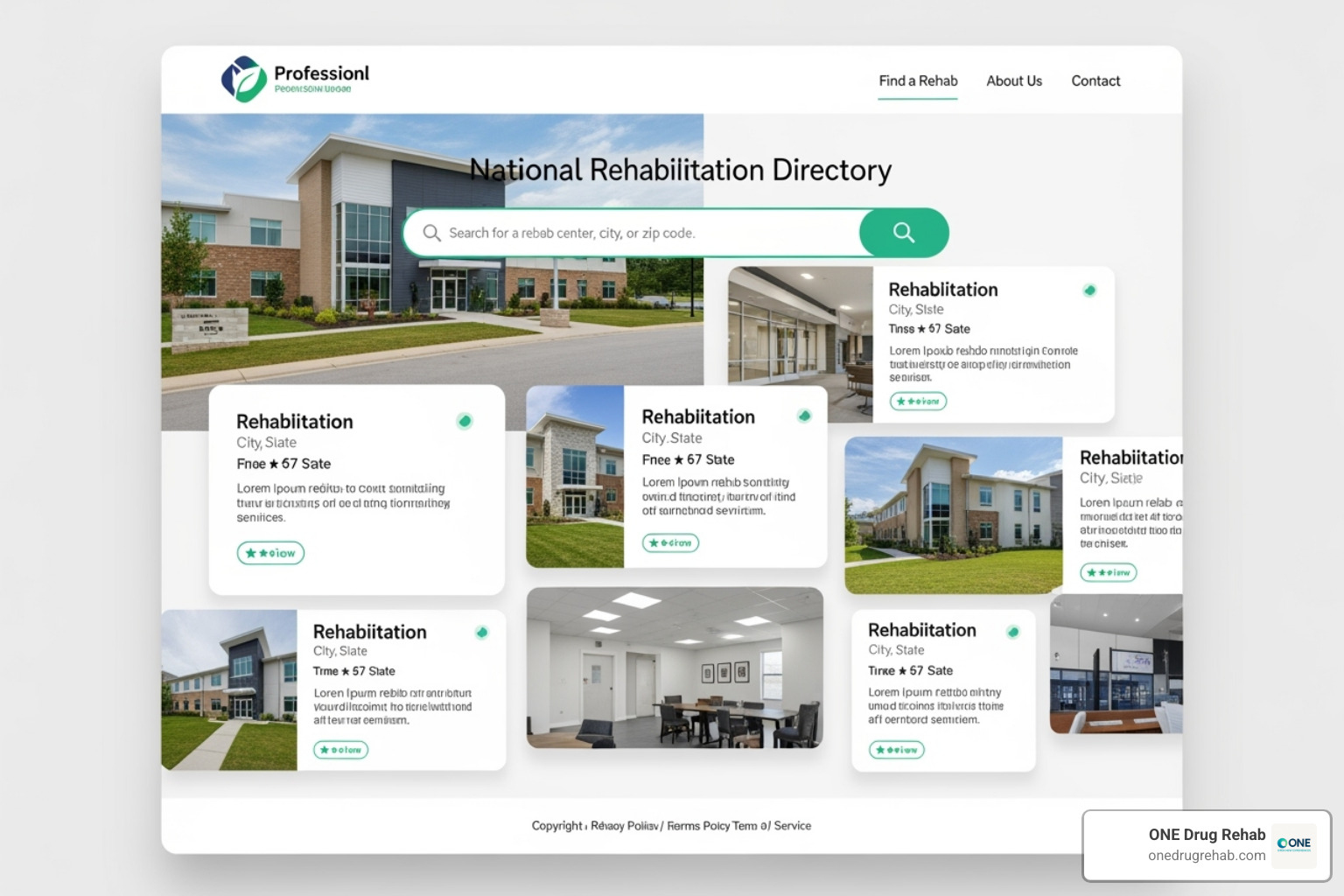
A national rehab directory exists for one essential reason: to connect people who need help with the treatment centers that can provide it. When someone is struggling with addiction or mental health challenges, every moment counts. The last thing they need is to spend days or weeks calling dozens of facilities, getting disconnected numbers, or hitting dead ends.
These directories simplify what would otherwise be an impossibly complex search. Instead of trying to piece together information from scattered sources, you can find treatment options organized in one place. You can filter by location, insurance, the type of care you need, and specialized services that matter to your situation.
This isn’t just convenient—it’s a critical public health tool. The addiction crisis in America affects millions of people, and mental health challenges impact even more. By making treatment information accessible and searchable, directories remove one of the biggest barriers to getting help: simply knowing where to start. For many people, finding a directory is truly the first step on their path to rehabilitation of substance abuse, and that first step can make all the difference.
ONE Drug Rehab’s Directory: A Trusted Resource
Here’s the thing about directories: they’re only as good as the information they contain and the intentions behind them. Some directories are outdated. Others push you toward specific facilities that pay for placement. And some are just hard to use.
That’s why ONE Drug Rehab built our national rehab directory differently. We’re a third-party resource, which means we’re not affiliated with any particular treatment center or network. We don’t get paid to push you toward one facility over another. Our goal is simply to give you accurate, up-to-date information so you can make your own informed decision.
We carefully curate our listings and focus on quality over quantity. We want you to find facilities you can trust, with information that’s actually current—not a listing that’s three years old with a phone number that doesn’t work anymore. Whether you’re looking for private treatment centers or publicly funded programs, our directory is designed to present your options clearly and without bias. This is about empowering your search, not steering it.
Substance Use and Mental Health Listings in ONE Drug Rehab’s Directory
Reality is messy. People don’t always fit into neat categories, and that’s especially true when it comes to addiction and mental health. According to SAMHSA, about half of people with a substance use disorder also experience serious mental illness. These challenges often go hand in hand.
That’s why our directory doesn’t force you to choose between searching for addiction treatment or mental health services. We integrate both. Many of the facilities listed offer specialized co-occurring disorder treatment, sometimes called dual diagnosis care. This means they can address both your addiction and mental health needs at the same time, in one coordinated treatment plan.
Some national directories keep these categories completely separate—SAMHSA, for example, publishes distinct directories for substance use facilities and mental health facilities. But we recognize the overlap and the reality that many people need both. Our integrated search makes it easier to find comprehensive care that treats the whole person, not just one part of the problem. Finding the right dual diagnosis facility can be the key to lasting recovery, and our directory is built to help you do exactly that.
How to Effectively Use a National Rehab Directory
Navigating a national rehab directory can feel like solving a puzzle, but the right strategy makes it much simpler. Our aim is to make this process as straightforward and stress-free as possible.
Step-by-Step: Finding the Right Facility
Finding the right facility begins with understanding what you’re looking for. Here’s how we recommend you approach your search:
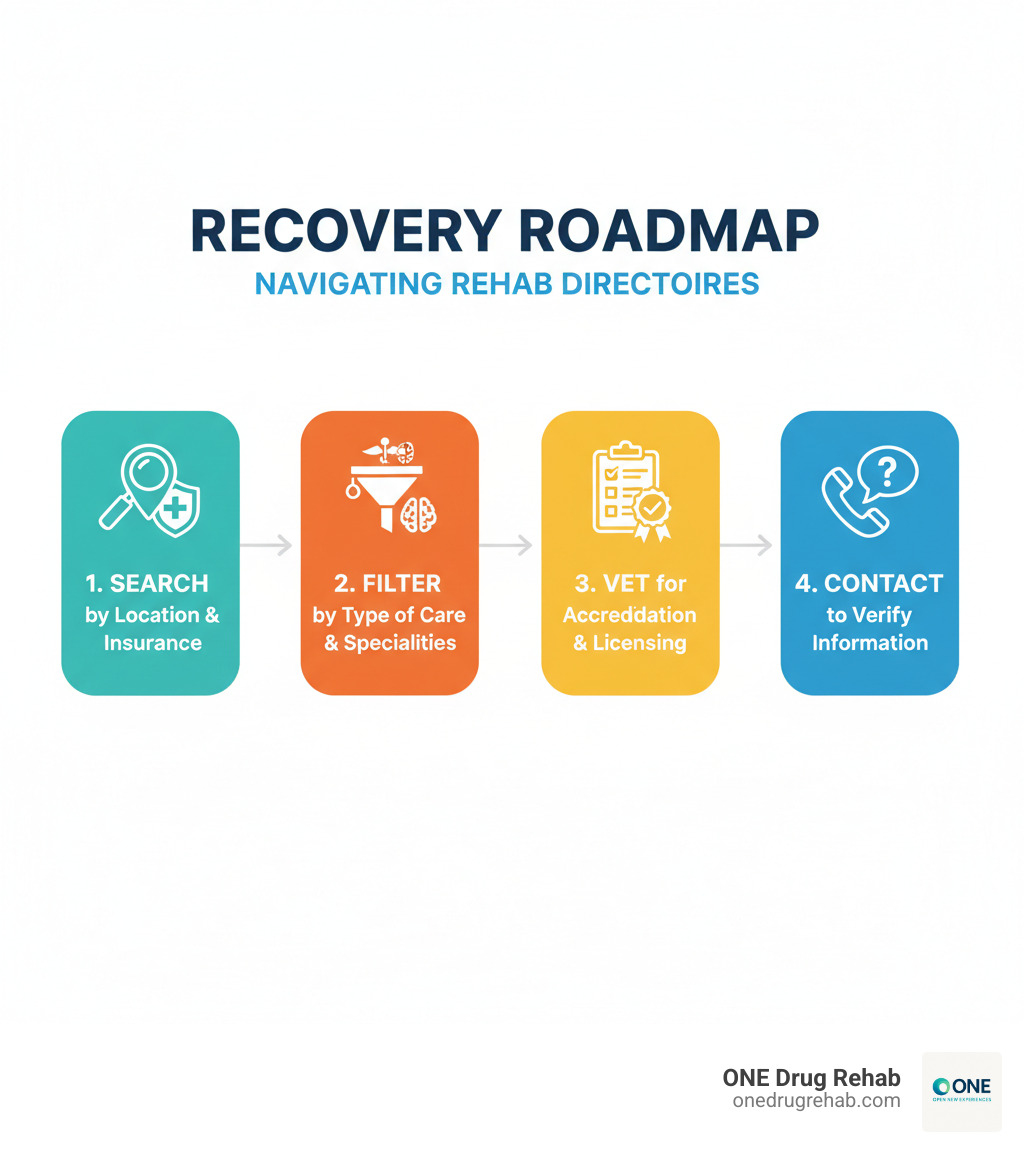
- Start with Location: Most directories allow you to search by state, city, or zip code. This is often the most practical starting point, especially if you need treatment close to home or in a specific region.
- Filter by Type of Care: Are you looking for medical detox, inpatient, or outpatient care? The research highlights various types of addiction treatment services, such as intervention, medical detox, inpatient, partial hospitalization programs (PHP), intensive outpatient (IOP), outpatient care, aftercare, transitional housing, and telehealth. Use these filters to narrow down your options.
- Consider Specialized Services: Do you need treatment for a specific substance like opioids or alcohol? Or perhaps you require a program custom for a particular age group, gender, or co-occurring mental health condition? Directories often have filters for these specific needs.
- Use Keywords: Don’t be afraid to type in specific keywords that describe your situation, such as “trauma therapy,” “LGBTQ+ friendly,” or “medication-assisted treatment.”
- Watch Instructional Videos: For a visual guide on optimizing your search experience, we offer instructional videos on using ONE Drug Rehab’s directory.
Evaluating Credibility and Vetting Your Options
This step is crucial. A listing in a national rehab directory is a good start, but it’s not the final word. We strongly advise you to vet your options thoroughly.
- Accreditation and Licensing: Look for facilities that are licensed by their state’s substance use agency or hold national accreditation from reputable bodies such as The Joint Commission, the Commission on Accreditation of Rehabilitation Facilities (CARF), or the National Committee for Quality Assurance (NCQA). Our research emphasizes that credible directories ensure listed locations meet these standards. These accreditations signify a commitment to quality and safety. You can learn more about these standards on our page about Rehab Accreditation Standards.
- Limitations of Directories: Directories are primarily informational tools. They rely on self-reported data from facilities and periodic surveys. While government resources like FindTreatment.gov update facility information annually via SAMHSA’s National Substance Use and Mental Health Services Survey (N-SUMHSS), and weekly for reported changes, services can evolve quickly.
- Verify Directly: Our strongest recommendation is to always verify information directly with the facility. Call them, ask questions, and confirm their services are current and meet your needs. This direct contact is vital. As the SAMHSA 2020 directory advises, “It is recommended to verify information with facilities directly as services can change over time.”
Navigating Payment and Insurance Information
The cost of treatment is often a major concern, but don’t let it deter you. Most national rehab directories provide filters for insurance and payment options.
- Insurance Filters: Search for facilities that accept your private health insurance, Medicare, or Medicaid. Many directories, including FindTreatment.gov, include payment options in their listings.
- Understanding Coverage: We encourage you to check your insurance coverage for treatment. Our rehab insurance verification tool can help you understand what your plan covers.
- Alternatives: If you don’t have insurance, or if your coverage is limited, don’t despair. There are options for finding rehab without insurance, including state-funded programs, sliding-scale fees, and free or low-cost rehab programs. We provide resources to help you explore these alternatives.
Protecting Your Privacy and Anonymity
Your privacy is paramount, especially when seeking sensitive health information. When using online national rehab directories, we understand you might have concerns about anonymity.
- Confidential Search: Reputable directories, like FindTreatment.gov, are designed to be confidential and anonymous resources. This means your personal information and search criteria are secure and not tracked in a way that identifies you.
- Our Commitment: At ONE Drug Rehab, we are committed to protecting your privacy. We want you to feel safe and comfortable exploring your options without fear of judgment or exposure. Our Privacy Policy outlines our dedication to keeping your search confidential.
What You’ll Find: A Look Inside ONE Drug Rehab’s Directory
When you open our national rehab directory, you’re not just seeing a simple list of treatment centers. You’re accessing a comprehensive roadmap that helps you understand what’s actually available and what might work best for your situation. We’ve organized everything so you can see the full picture of addiction and mental health care options across the country.
Levels of Care and Treatment Services
One of the most important things to understand is that treatment comes in different intensities. Where you start depends on your specific needs, and many people move through several levels as they progress in recovery.
Medical detox is where many journeys begin. This is the process of safely withdrawing from substances under close medical supervision. It’s not just about getting through the physical symptoms—doctors can prescribe FDA-approved medications to ease discomfort and prevent dangerous complications. If you’re physically dependent on alcohol or certain drugs, this medically supervised step isn’t optional—it’s essential for your safety.
From there, you might move into residential or inpatient rehab for drugs. These programs provide a structured, supportive environment where you live at the facility, typically for 30 to 90 days or longer. You’ll participate in psychotherapy, learn about addiction and recovery, and engage in complementary therapies—all while removed from the triggers and stresses of daily life. It’s an immersive experience designed to help you focus entirely on healing.
But not everyone needs to live at a facility. Outpatient programs offer flexibility while still providing substantial support. Partial Hospitalization Programs (PHP) are the most intensive outpatient option, often involving treatment several hours a day, multiple days a week. They’re ideal if you’re transitioning down from inpatient care or if you need serious structure but can’t leave home entirely. Intensive Outpatient Programs (IOP) are slightly less demanding, typically requiring nine or more hours of therapy each week. Our outpatient rehab program ultimate guide breaks down these options in detail.
Finally, there’s aftercare—and this is where many people find their footing for the long term. Recovery doesn’t end when formal treatment does. Aftercare programs offer ongoing support through peer coaching, career counseling, and referrals for continued medical and mental health services. It’s about building a sustainable life in recovery, one day at a time.
Finding Specialized Treatment Programs
Your story is yours alone, and the treatment that works for you should reflect that. Our national rehab directory lets you search for programs that address your specific circumstances, not just generic solutions.
If you’re dealing with a particular substance, you can find substance-specific treatment. Programs for alcohol addiction look different from those focused on opioid misuse or cocaine—each substance creates unique challenges, and specialized care addresses them more effectively.
Age matters, too. Treatment for a teenager struggling with addiction looks very different from care for someone in their 70s. We help you locate facilities that understand the developmental and life-stage needs of different age groups. Our inpatient rehab for seniors complete guide is a great resource if you’re looking for age-appropriate care for an older adult.
Some people feel more comfortable in gender-specific programs, where they can open up without worrying about how they’re perceived by the opposite sex. Others need LGBTQ+ affirming care—environments where staff understand the unique challenges and traumas that LGBTQ+ individuals face, and where they won’t have to explain or defend who they are.
Veterans and active duty military often carry experiences that civilians simply can’t relate to. Many facilities offer specialized programs designed specifically for service members, addressing combat trauma, military culture, and the transition back to civilian life.
And if English isn’t your first language, that shouldn’t be a barrier to getting help. We can connect you with resources like Spanish speaking rehab centers, ensuring you can communicate fully and feel truly understood.
Beyond Treatment: Linked Resources and Support
A good national rehab directory doesn’t just drop you at a facility’s doorstep and wish you luck. It connects you to the entire network of support you’ll need—before, during, and after treatment.
Sometimes you need help right now, this minute. That’s why we link to critical helplines like the National Helpline at 1-800-662-HELP (4357), which offers 24/7 treatment referrals and information in both English and Spanish. If you’re in crisis and thinking about suicide, the 988 Suicide & Crisis Lifeline is there for you—just call or text 988 for free, confidential support anytime. There’s even a Disaster Distress Helpline (1-800-985-5990) for immediate crisis counseling related to natural disasters or traumatic events.
We also believe in the power of education. Understanding what addiction is, how it works, and what recovery looks like can reduce fear and give you confidence. Many directories provide access to educational materials that explain the process and help you make informed decisions.
And don’t underestimate the value of peer support. Groups like Alcoholics Anonymous (AA) and Narcotics Anonymous (NA) have been helping people stay sober for decades. Our directory often includes information on local support groups where you can connect with others who truly understand what you’re going through. Recovery isn’t something you have to do alone.
For Providers: Getting Listed in ONE Drug Rehab’s National Rehab Directory
If you’re a treatment provider, you already know that the most important thing isn’t just having great services—it’s making sure the people who need them can actually find you. A listing in a trusted national rehab directory puts your facility directly in front of individuals and families searching for help during some of the most difficult moments of their lives.
We built our directory with that connection in mind. When someone finds your facility through our platform, it’s often because they’ve been searching, sometimes desperately, for exactly what you offer. That’s why we want to make it as easy as possible for you to get listed and stay visible.
How to add your facility to ONE Drug Rehab’s national rehab directory
Getting started with our national rehab directory is refreshingly straightforward. We know you’re busy doing the critical work of helping people heal, so we’ve designed our listing process to be as simple as possible.
Head over to our Add Listing page to begin your registration. You’ll be guided through providing the essential information about your facility—the basics like your location and contact details, but also the details that matter most to people searching for care.
We encourage you to paint a complete picture of what you offer. Tell us about your levels of care—whether you provide medical detox, residential treatment, or outpatient programs. List your specialized services, like trauma-informed care, medication-assisted treatment, or programs for specific populations. Be clear about which insurance plans you accept and what payment options are available. The more thorough you are, the better we can match people with the right fit for their needs.
To maintain the quality and trustworthiness of our directory, we do ask that facilities meet certain standards. This typically includes verification of state licensing and any relevant national accreditations from organizations like The Joint Commission or CARF. These credentials aren’t just bureaucratic checkboxes—they’re reassurances to vulnerable people that your facility meets recognized standards of care. It’s the same approach used by official directories to ensure credibility.

Keeping your listing in ONE Drug Rehab’s national rehab directory accurate
Here’s the thing about treatment facilities: they’re living, breathing operations. You hire new staff members. You add a new program for young adults. You start accepting a different insurance plan. Maybe you move to a larger building or change your phone system. These changes happen all the time, and they matter enormously to someone trying to reach you.
That’s why keeping your listing current isn’t just good practice—maintaining trust. Nothing is more frustrating for someone in crisis than calling a disconnected number or showing up expecting services that are no longer offered.
We recommend reviewing your listing information regularly, ideally on an annual basis, to ensure everything is still accurate. Think of it as your yearly check-up for your directory presence. Just as SAMHSA conducts annual surveys to update their national directories, this regular review helps catch any drift between what’s listed and what’s actually happening at your facility.
But we also know that some changes can’t wait a year. If you change your phone number, relocate, or add a significant new service, we provide channels for weekly updates. This flexibility means your listing stays current in real-time, not just once a year. Government directories like FindTreatment.gov follow this same model—combining comprehensive annual surveys with the ability to update critical information immediately when facilities report changes.
The accuracy of our national rehab directory ultimately depends on you. We’re here to provide the platform and make updating easy, but only you know when something changes at your facility. When you take the time to keep your information current, you’re not just maintaining a listing—you’re ensuring that the next person who finds you has the right information to take their next step toward recovery. That matters more than anything else we do.
Frequently Asked Questions about National Rehab Directories
You’ve made it this far, which means you’re serious about finding help—that’s a huge step. But we know you probably still have some questions rattling around in your mind. Let’s clear up the most common concerns people have when using a national rehab directory.
How much does it cost to use ONE Drug Rehab’s national rehab directory?
Here’s the simple answer: nothing. Using ONE Drug Rehab’s national rehab directory to search for treatment facilities is completely free for anyone seeking help. We firmly believe that access to life-saving information shouldn’t come with a price tag. When you or someone you love is struggling, the last thing you need is another financial barrier standing in your way.
Our entire mission revolves around connecting people to care, not profiting from their pain. You can search, filter, and explore as many facilities as you need without ever pulling out your wallet.
Now, for treatment providers looking to list their facilities, there may be fees associated with improved visibility or premium listing options. But the core directory remains a comprehensive, accessible resource for everyone who needs it.
Is the information in ONE Drug Rehab’s national rehab directory always accurate?
We’re going to be honest with you here—we work incredibly hard to keep our information current, but no directory can guarantee 100% accuracy at every single moment. Here’s why: most national rehab directories, including major government resources like FindTreatment.gov, gather their data through annual surveys such as SAMHSA’s N-SUMHSS and through self-reported updates from facilities themselves.
Treatment centers are dynamic places. Staff changes, programs evolve, insurance networks shift, and new services get added. While we update our listings regularly—and facilities can report changes weekly—there’s always a slight chance that something has changed since the last update.
This is exactly why we consistently emphasize one critical step: always verify information directly with the facility. Call them. Ask questions. Confirm that the services you need are currently available and that they accept your insurance. As the research wisely notes, “It is recommended to verify information with facilities directly as services can change over time.”
Think of our directory as your trusted starting point—a well-researched map that gets you most of the way there. But that final confirmation call? That’s your GPS recalculating to make sure you arrive at exactly the right destination.
Can I find treatment for both addiction and mental health in ONE Drug Rehab’s directory?
Yes, absolutely! In fact, this is one of the most important features of our national rehab directory. We recognize that mental health and substance use issues often go hand in hand. Research shows that roughly half of people with a substance use disorder also experience a mental health condition—what professionals call co-occurring disorders or dual diagnosis.
Our directory is specifically designed to help you find integrated treatment that addresses both challenges simultaneously. You can use our filters to search for facilities offering co-occurring disorder treatment, ensuring you don’t have to piece together separate treatments for problems that are deeply intertwined.
Why does this matter? Because treating addiction without addressing underlying depression, anxiety, trauma, or other mental health conditions—or vice versa—often leads to incomplete recovery. You deserve comprehensive care that sees you as a whole person, not just a collection of symptoms. Our directory helps you find exactly that kind of holistic support.
Conclusion
The journey to recovery doesn’t have to start with confusion or overwhelm. With a trusted national rehab directory as your guide, you have the clarity and information you need to take that crucial first step toward healing.
Throughout this guide, we’ve walked you through how these directories work, what makes them valuable, and most importantly—how to use them effectively. The process really comes down to four essential steps: Search for facilities in your area, Filter by the specific services and specialties you need, Vet potential facilities for accreditation and credibility, and Verify all information directly with the treatment centers themselves.
At ONEDrugRehab.com, we’ve built our national rehab directory to be exactly what you need when you’re searching for help—a third-party resource that presents your options clearly, without pushing you toward any particular facility. We’re here to empower your search, not to complicate it. Think of us as your unbiased research partner, providing the information you need to make the decision that’s right for you or your loved one.
Your recovery roadmap is waiting. The facilities, programs, and support systems you need are out there, and finding them starts with a single search. Whether you’re looking for medical detox, inpatient care, outpatient programs, or specialized treatment for co-occurring disorders, our directory can help you steer your options with confidence.
Don’t let another day pass feeling lost or uncertain about where to turn. Take the next step today and explore our National Rehab Directory. You deserve care that meets your unique needs, and we’re here to help you find it. Your journey to healing starts now.