

Understanding Inpatient Rehab for Seniors
Understanding inpatient rehab for seniors is a key step when navigating healthcare for older loved ones. This type of care offers focused, 24/7 support in a residential setting, helping seniors regain strength, function, and independence.
It’s designed for older adults recovering from serious health events like major surgery, stroke, or severe illness. It’s also vital for those needing specialized treatment for substance use disorders (SUD).
Why is this so important? Hospitalization itself can cause new problems for seniors, with around 50% of disability in this group starting during a hospital stay. Inactivity can lead to falls, muscle loss, and memory issues. Furthermore, nearly 1 million U.S. adults aged 65 and older struggle with an SUD, highlighting another critical need for specialized care.
This guide will walk you through what inpatient rehab for seniors offers, from its benefits and program structure to finding the right fit for your loved one.
Related content about inpatient rehab for seniors:
Why Inpatient Rehabilitation is Crucial for Seniors
Inpatient rehab for seniors is a key part of the healing journey, helping older adults regain their independence and quality of life after a significant health challenge.
Medical Conditions Necessitating Inpatient Rehab
Inpatient rehab is essential for seniors recovering from various medical events:
- Stroke Recovery: Provides immediate, focused therapy to help the brain relearn lost abilities.
- Joint Replacement: Offers steady, supervised physical therapy to ensure proper healing and movement.
- Fractures: Gives seniors a safe place to heal, manage pain, and relearn daily tasks without fear.
- Post-Surgery Weakness & Severe Infections: Helps rebuild strength and stamina lost during illness or bed rest.
Substance Use Disorders (SUD) in Seniors
Beyond physical recovery, there’s a growing need for inpatient rehab for seniors dealing with substance use disorders (SUD). Nearly 1 million U.S. adults aged 65 and older have an SUD. Seniors are particularly vulnerable due to slower metabolism and unique life stresses like loneliness or loss. Alcohol misuse is the most common issue, but marijuana and opioid use are also rising.
Specialized inpatient programs for SUD offer a safe, supervised detox and therapy custom to a senior’s physical and mental health. These age-specific programs provide a more comfortable and effective environment than mixed-age groups. You can find more information about treating substance use disorder in older adults through resources like the National Center for Biotechnology Information.
Key Benefits of Inpatient Rehab for Older Adults
Choosing inpatient rehab for seniors provides a full approach to getting well:
- 24/7 Medical Supervision: Medical professionals are always on-site to manage medications, monitor health, and respond to emergencies, reducing risks like falls or complications.
- Intensive Therapy: Patients receive several hours of focused therapy daily, leading to faster recovery of strength and function compared to other options.
- Safe and Structured Environment: A controlled setting minimizes distractions and hazards, allowing seniors to focus entirely on healing.
- Peer Support: Being with other seniors on a similar recovery journey provides motivation, encouragement, and a sense of community.
Long-term Benefits of Successful Inpatient Rehabilitation for Seniors
Successful inpatient rehab offers lasting benefits:
- Restored Independence: The primary goal is to help seniors return home and manage daily life with minimal assistance.
- Improved Quality of Life: Regaining physical function allows seniors to re-engage with hobbies, family, and social activities.
- Reduced Caregiver Burden: As a senior’s independence grows, the strain on family caregivers lessens, improving family dynamics.
Data shows these programs are highly effective, with a high percentage of seniors returning home after their stay.
Inpatient vs. Outpatient Senior Rehab Options
Understanding the difference between inpatient and outpatient rehab is key to choosing the right path.
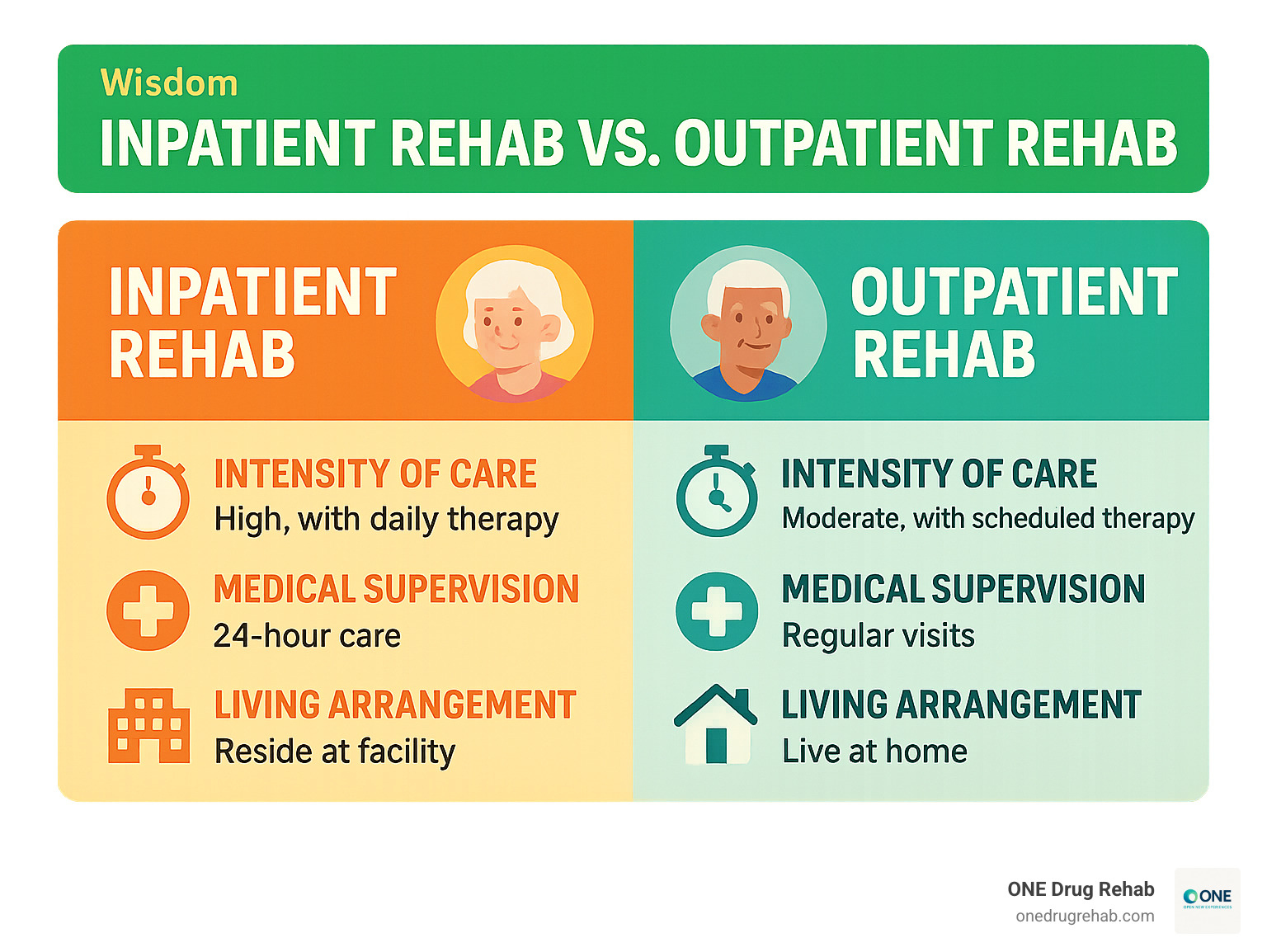
| Feature | Inpatient Rehabilitation | Outpatient Rehabilitation |
|---|---|---|
| Living Arrangement | Patient lives at the facility 24/7 | Patient lives at home and travels to appointments |
| Intensity of Therapy | Intensive, multiple hours of therapy daily (e.g., 3+ hours) | Less intensive, typically 1-3 sessions per week |
| Medical Supervision | 24/7 nursing care, physician oversight, immediate medical response | Limited medical oversight during sessions, no overnight medical care |
| Team Involvement | Full interdisciplinary team (PT, OT, SLP, nurses, doctors, social workers) | Therapists (PT, OT, SLP), possibly limited coordination with primary doctor |
| Length of Stay | Short-term, typically weeks (e.g., 2-4 weeks), but can be longer for SUD | Ongoing, weeks to months, based on progress and goals |
| Primary Goal | Rapid functional recovery, stabilization, transition to lower level of care | Gradual functional improvement, maintenance, ongoing support |
| Ideal for | Post-acute events, severe functional decline, complex medical needs, SUD | Less severe conditions, follow-up after inpatient, maintenance |
Key Differentiators:
The main differences come down to intensity and supervision. Inpatient rehab for seniors provides a highly concentrated dose of daily therapy and 24/7 medical care, which is crucial for rapid recovery after a major health event. Outpatient rehab is less intensive, with fewer weekly sessions, making it suitable for less severe conditions or as a follow-up to an inpatient stay.
The choice depends on the senior’s medical stability, the severity of their condition, and their support system at home. For more details on different approaches, see our resources on More info about Types of Addiction Treatment.
A Day in the Life: The Structure of a Senior Rehab Program
A day in inpatient rehab for seniors follows a carefully orchestrated routine designed to help seniors reclaim their independence with the support of a caring, professional team.

The Interdisciplinary Team
The strength of inpatient rehab for seniors lies in its collaborative team approach. A group of specialists works together, communicating regularly to ensure a unified care plan. This team typically includes:
- Physiatrist: A doctor specializing in physical medicine and rehabilitation who leads the team.
- Nurses: Provide 24/7 care, manage medications, and assist with daily needs.
- Physical Therapists (PT): Focus on improving mobility, strength, and balance.
- Occupational Therapists (OT): Help seniors regain skills for daily living, like dressing and cooking.
- Speech-Language Pathologists (SLP): Assist with communication, cognitive, and swallowing issues.
- Social Workers/Case Managers: Coordinate discharge planning, insurance, and connection to community resources.
Types of Therapies Commonly Offered
A variety of therapies are offered to address all aspects of recovery:
- Physical Therapy (PT): Focuses on restoring movement, strength, and balance through targeted exercises.
- Occupational Therapy (OT): Teaches skills for daily activities (e.g., dressing, bathing, preparing meals) to promote independence.
- Speech Therapy (SLP): Addresses issues with communication, cognition (memory/thinking), and swallowing.
- Recreational Therapy: Uses hobbies and leisure activities to improve mood, motivation, and overall well-being.
- Counseling for SUD: For those with substance use disorders, this therapy provides coping strategies and relapse prevention skills custom to the challenges faced by seniors.
Typical Daily Schedule
A typical day is structured to maximize recovery without causing burnout.
- Mornings: Usually dedicated to the most intensive therapy sessions, such as PT and OT, after breakfast.
- Afternoons: May include other therapies (e.g., speech therapy), group activities, and family visits.
- Evenings: Are less structured, allowing for rest, socialization, or support group meetings.
- Weekends: Therapy continues but at a less intense pace, with more time for family.
The schedule is built around providing multiple hours of therapy each day, a key component of inpatient care.
Discharge Planning
Discharge planning begins on day one to ensure a safe and successful transition home. This proactive process includes:
- Goal Setting: The team works with the senior and family to set realistic personal and medical goals.
- Home Safety Assessment: An OT may evaluate the home environment and recommend modifications like grab bars or removing fall hazards.
- Caregiver Training: Family members are taught how to assist with exercises, medications, and daily care to support ongoing recovery.
- Connecting to Community Resources: The team arranges for necessary support after discharge, such as home health care, outpatient therapy, or medical equipment.
The Path to Recovery: Admission, Support, and Key Considerations
Starting the journey of inpatient rehab for seniors involves several steps, from admission to navigating the recovery process. Understanding these steps helps ensure the best support for your loved one.

Referral and Admission Process
The admission process for inpatient rehab for seniors typically starts in one of two ways:
- From a hospital: The hospital’s discharge planner or social worker assesses the patient’s needs and coordinates the transfer to a rehab facility.
- From home: A physician’s referral is required. The doctor evaluates the senior’s condition to determine if intensive rehab is appropriate.
In either case, the rehab facility will seek pre-authorization from the insurance company. It’s wise for families to also contact the insurer directly to confirm coverage details.
Admission Criteria
To be admitted, a senior must meet specific criteria:
- Be medically stable: Acute health issues must be under control.
- Be able to participate in therapy: They must have the physical and cognitive ability to engage in several hours of therapy daily. This often means being able to tolerate at least 30-60 minutes of activity at a time.
- Have clear rehab goals: There must be a potential for significant functional improvement.
Most programs are for those aged 65+, though some accept patients starting at 55.
What to Bring for an Inpatient Stay
Packing for an inpatient stay should focus on comfort and therapy readiness. Essential items include:
- Comfortable, loose-fitting clothing suitable for exercise.
- Supportive, non-slip, closed-toe shoes.
- Personal toiletries.
- Eyeglasses and hearing aids.
- Personal mobility aids (walker, cane, etc.).
- A complete list of current medications and dosages.
- A few personal items for comfort (book, photos).
Leave valuables, like jewelry or large amounts of cash, at home.
The Role of Family Support
Family support is a critical component of a senior’s recovery. Your involvement can significantly boost their progress and morale.
- Participate actively: Attend care meetings, ask questions, and learn about the therapies.
- Communicate openly: Share observations and concerns with the rehab team.
- Offer encouragement: A positive attitude can be highly motivating. Celebrate small victories.
- Assist with planning: Provide input for discharge planning to ensure a safe transition home.
For more tips, see our guide on More info about Rehab for Families.
Potential Challenges or Considerations for Seniors Undergoing Inpatient Rehabilitation
It’s helpful to be aware of potential challenges during inpatient rehab for seniors:
- Emotional Adjustment: Leaving home for a new environment can cause sadness or anxiety.
- Physical Fatigue: Intensive therapy is demanding; balancing activity and rest is crucial.
- Co-occurring Conditions: Managing other health issues (including mental health) alongside rehab can be complex.
- Cognitive Changes: Memory or attention issues can affect participation, requiring the team to adapt their approach.
- Stigma: Seniors, especially those in addiction treatment, may feel shame. Remind them that seeking help is a sign of strength.
Working closely with the rehab team can help steer these challenges successfully.
Finding and Funding Inpatient Rehab for Seniors
Once you decide inpatient rehab for seniors is the right step, the next questions are often about finding and paying for care. Here’s how to steer these important concerns.
Accommodation and Costs
The cost of inpatient rehab for seniors varies based on the facility, length of stay, and room type. Options typically include:
- Ward rooms: Multiple beds, most budget-friendly.
- Semi-private rooms: Shared with one other person.
- Private rooms: Most privacy, highest cost.
Costs can be substantial, with monthly rates for a room in a skilled nursing facility potentially exceeding $9,700. Always ask for a detailed breakdown of costs from the facility to avoid surprises.
Insurance Coverage
Understanding insurance coverage is crucial for managing costs.
- Medicare Part A: Often covers inpatient rehab in a skilled nursing facility, typically following a qualifying hospital stay of at least three days. It covers services deemed “reasonable and necessary.”
- Private Insurance: Most plans cover mental health and substance use disorder treatment, but specifics like co-pays, deductibles, and length of stay vary. Always confirm details with the provider.
- Medicaid: This state and federal program for low-income individuals often covers rehab services, but benefits vary by state.
- Other Options: Veterans may have coverage through the VA. For those without insurance, our guide on Find Rehab Without Insurance offers helpful strategies.
How to Choose the Right Facility
Choosing the right facility is about finding the best fit for your loved one’s needs. Key factors to consider include:
- Specialization in Geriatrics: Look for programs designed for older adults, with staff trained in geriatric care. This is especially important for addiction treatment.
- Accreditation and Staffing: Check for accreditation from recognized organizations and inquire about the staff-to-patient ratio, as lower ratios often mean more personalized care.
- Therapeutic Environment: If possible, visit the facility. Assess its cleanliness, safety, and overall atmosphere.
- Family Involvement: Ask how the facility includes families in the care and discharge planning process.
- Reviews and Testimonials: Online reviews can provide insight into the experiences of other families. Learn more with our guide on More info about Rehab Facility Reviews.
How to find inpatient rehab for seniors
Several resources can help you find the right inpatient rehab for seniors:
- Online Directories: Websites like ONEDrugRehab.com allow you to search for facilities by location and specialty. Use our More info about Rehab Near Me feature to start.
- Professional Referrals: Hospital social workers, discharge planners, and your loved one’s physician are excellent sources for recommendations.
- Insurance Providers: Your insurance company can provide a list of in-network facilities to help manage costs.
Specialized programs for inpatient rehab for seniors
When searching, look for specialized programs that cater to the unique needs of older adults. These may include:
- Geriatric-Specific Programs: These are designed from the ground up for seniors, with expert staff and an adapted environment.
- Co-occurring Disorders Programs: These treat both a substance use disorder and a mental health condition (like depression) simultaneously.
- SUD Programs for Seniors: These age-specific programs address the unique factors of addiction in older adults in a supportive peer environment.
Our resource on More info about Compare Rehab Centers can help you evaluate different options.
Frequently Asked Questions about Senior Inpatient Rehab
Here are answers to some of the most common questions about inpatient rehab for seniors.
How long does inpatient rehab typically last for a senior?
The length of stay in inpatient rehab for seniors varies for each person. It depends on their specific medical condition, progress in therapy, rehab goals, and insurance coverage.
While many programs last from 28 to 90 days, some intensive stays can be less than 4 weeks. For complex issues like SUD, longer stays are often recommended for better outcomes. The care team will determine the appropriate length based on the individual’s needs and progress.
Can a senior be admitted to inpatient rehab directly from home?
Yes, a senior can be admitted to inpatient rehab for seniors directly from home, though it’s more common to be transferred from a hospital. This “direct admission” can help avoid an unnecessary hospital stay.
It requires a physician’s referral confirming that intensive rehab is medically necessary. The senior must be medically stable but have experienced a significant functional decline with clear potential for improvement through therapy.
What happens if my loved one isn’t ready to go home after rehab?
This is a common concern and a key part of discharge planning. If a senior isn’t ready to return home after inpatient rehab for seniors, the care team will help explore other options. The goal is to transition to a lower level of care that still provides necessary support.
Options may include:
- Assisted Living Facility: For those who need some help with daily tasks but not 24/7 nursing.
- Home Health Care Services: Allows the senior to return home with support from visiting nurses, therapists, and aides.
- Long-Term Care Facility (Nursing Home): For those who require constant skilled nursing care.
The team works with the family to find the safest and most supportive environment for the senior’s needs.
Conclusion
This guide has provided a comprehensive overview of inpatient rehab for seniors, from what it is and why it’s crucial, to how programs work and how to find and fund them. We’ve covered the importance of the care team, daily therapies, family support, and discharge planning.
At its core, inpatient rehab for seniors is a vital service that empowers older adults to recover from significant health challenges, including surgery, illness, and substance use disorders. It’s about restoring independence, function, and quality of life in a structured, supportive environment.
Recovery is a journey, and finding the right support is the first step. At ONE Drug Rehab, we are a comprehensive, unbiased resource dedicated to providing clear information about treatment options. We help you research facilities so you can make the best decision for your loved one.
You are now better equipped with the knowledge to move forward. Take the next step today.
Find the best inpatient rehab for seniors today