

Why Understanding How MAT Works Matters for Your Recovery
How MAT works is a question many people ask when considering treatment for opioid or alcohol addiction. Here’s the essential answer:
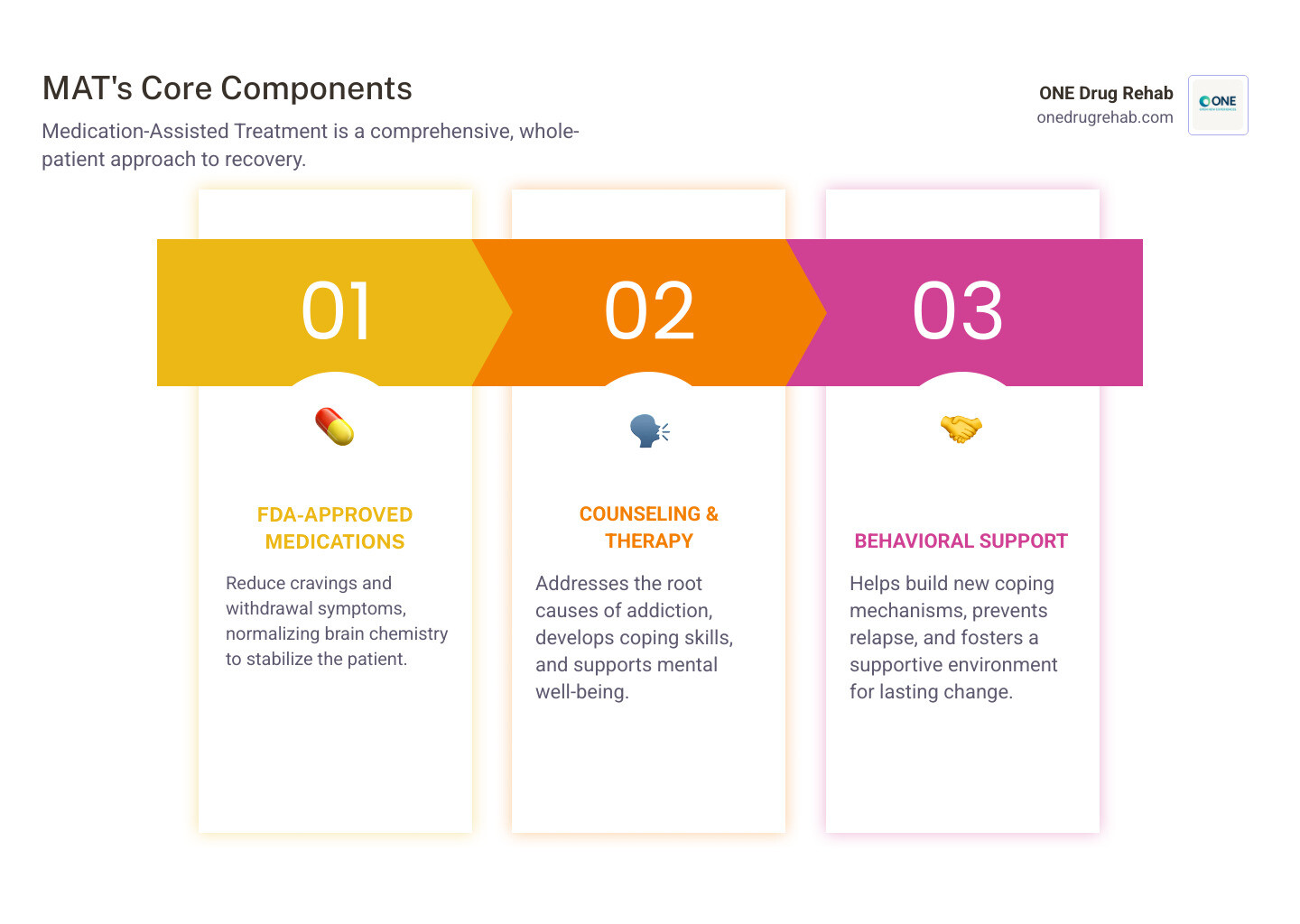
MAT combines three key components to treat substance use disorders:
- FDA-approved medications that reduce cravings and withdrawal symptoms
- Counseling and therapy that address the root causes of addiction
- Behavioral support that helps build coping skills and prevent relapse
The medications work by normalizing brain chemistry – specifically targeting the same opioid receptors that drugs like heroin or prescription painkillers affect. This stabilizes your brain so you can focus on recovery instead of constantly fighting cravings or withdrawal.
When nearly 2 million Americans were addicted to prescription opioids in 2015 and over 33,000 died from overdoses that year, the medical community recognized something had to change. Research now shows that MAT can cut overdose rates by half or more for people with Opioid Use Disorder.
But here’s what many people don’t realize: MAT isn’t just about medication. It’s a whole-patient approach that treats addiction like what it actually is – a chronic medical condition, similar to diabetes or heart disease.
The confusion around MAT often comes from outdated beliefs. Some people worry it’s “trading one drug for another.” Others assume abstinence-only treatment is the only “real” recovery. The research tells a different story: 80% of people with Opioid Use Disorder who receive residential treatment without MAT relapse within two years. That means only 1 out of 5 can maintain recovery without medication support.
Understanding how MAT works can help you or a loved one make informed decisions about treatment options that are backed by decades of clinical evidence.
What is MAT? A Whole-Patient Approach to Recovery
Medication-Assisted Treatment (MAT) is a comprehensive and evidence-based approach to treating substance use disorders, primarily opioid use disorder (OUD) and alcohol use disorder (AUD). As the Substance Abuse and Mental Health Services Administration (SAMHSA) explains, MAT involves the use of FDA-approved medications in combination with counseling and behavioral therapies. This “whole-patient” approach acknowledges that addiction is a complex disease affecting not just the body, but also the mind and spirit.
We see MAT as managing a chronic disease, much like how insulin helps someone manage diabetes or medication helps control high blood pressure. It’s about providing the tools necessary for an individual to regain stability and functionality, allowing them to engage fully in their recovery journey. MAT is not simply medication; it’s a holistic strategy designed to support lasting recovery. For more information, you can refer to SAMHSA’s overview of MAT.
The Crucial Role of Counseling and Behavioral Therapy
While medication plays a vital role in stabilizing brain chemistry and reducing physical cravings, it’s only one piece of the puzzle. The “assisted” part of Medication-Assisted Treatment emphasizes the essential role of counseling and behavioral therapies. These therapeutic components help individuals address the underlying psychological, behavioral, and social factors contributing to their addiction.
Common behavioral therapies used in conjunction with MAT include:
- Cognitive Behavioral Therapy (CBT): Helps individuals identify and change negative thought patterns and behaviors that lead to substance use.
- Group Therapy: Provides a supportive environment where individuals can share experiences, develop coping skills, and receive encouragement from peers.
- Individual Counseling: Offers a private space to explore personal issues, trauma, and develop personalized strategies for recovery.
These therapies equip individuals with crucial coping skills, improve decision-making, and help them steer triggers and high-risk situations. For many, addiction often co-occurs with other mental health conditions. Addressing these co-occurring disorders is critical for successful long-term recovery, as people with OUD are at higher risk for developing one or more primary conditions or chronic diseases. You can learn more about comprehensive mental health support in our Behavioral Health Treatment Complete Guide and explore options for Co-occurring Disorder Treatment.
MAT as Part of a Comprehensive Treatment Plan
MAT is most effective when integrated into a broader, individualized treatment plan. This means that the approach isn’t one-size-fits-all but rather custom to each person’s unique needs, circumstances, and stage of recovery.
Treatment plans often involve various levels of care, ranging from outpatient programs to more intensive inpatient or residential support. MAT can be successfully delivered across many of these settings, including partial care, intensive outpatient care, and standard outpatient care. Our goal is always to provide a seamless continuum of care that includes MAT, traditional therapy methods, and robust aftercare planning to support sustained sobriety. Explore the different Types of Addiction Treatment available to find what’s right for you. If you’re looking for flexible options, check out our resources on Drug Rehab Outpatient Programs Near Me.
How MAT Works on Brain Chemistry to Break the Cycle of Addiction
Addiction is a chronic brain disease, not a moral failing. How MAT works at a fundamental level is by targeting the brain’s chemistry, which has been altered by prolonged substance use. Opioids and alcohol hijack the brain’s reward system, leading to intense cravings and painful withdrawal symptoms when the substance is absent.
Our brains naturally produce neurotransmitters like dopamine, which are associated with pleasure and motivation. Opioids flood the brain with dopamine, creating a euphoric high, but also desensitizing the brain’s natural response. This leads to dependence, where the brain needs the substance just to feel “normal.” MAT medications work to stabilize these disrupted brain functions. They interact with opioid receptors or other neurochemical pathways to reduce the destructive cycle of craving and withdrawal, allowing the brain to begin healing and normalizing.
How MAT Works to Address Withdrawal and Cravings
One of the most immediate and profound ways how MAT works is by managing the debilitating symptoms of withdrawal and significantly reducing cravings. When someone dependent on opioids or alcohol stops using, their body goes into withdrawal, which can be agonizing and, in some cases, life-threatening. This intense discomfort is a major driver of relapse.
MAT medications stabilize brain chemistry, effectively taking individuals out of this relentless cycle of cravings and withdrawal. By alleviating these physical burdens, MAT allows patients to:
- Focus on treatment: Instead of battling severe physical symptoms, they can engage more meaningfully in counseling and behavioral therapies.
- Prevent relapse: Reduced cravings make it easier to resist the urge to use again.
- Stabilize their lives: Individuals can begin to regain control, manage daily responsibilities, and work towards long-term recovery goals.
This stabilization is crucial for building a foundation for recovery. For those needing support during the initial phase, our Outpatient Detox Programs can provide a safe and medically supervised environment.
How MAT Works Differently for Opioids vs. Alcohol
While the overarching goal of MAT is similar for both opioid and alcohol use disorders – to reduce cravings, withdrawal, and relapse – the specific medications and their mechanisms of action differ because they target distinct neurochemical pathways.
- Opioid Use Disorder (OUD): Medications for OUD (MOUD) primarily interact with the brain’s opioid receptors. They either partially activate these receptors (like buprenorphine), fully activate them in a controlled manner (like methadone), or block them entirely (like naltrexone) to prevent the effects of illicit opioids.
- Alcohol Use Disorder (AUD): Medications for AUD (MAUD) work through different pathways. Some reduce the pleasurable effects of alcohol (naltrexone), others reduce cravings after detoxification (acamprosate), and one creates an unpleasant physical reaction when alcohol is consumed (disulfiram).
This targeted approach ensures that the treatment is optimized for the specific substance use disorder, maximizing effectiveness. The National Institute on Drug Abuse (NIDA) provides extensive research on MAT effectiveness, highlighting these differences.
A Closer Look at FDA-Approved MAT Medications
The medications used in MAT are rigorously tested and approved by the U.S. Food and Drug Administration (FDA) for their safety and efficacy in treating substance use disorders. They are not simply a substitute for illicit drugs; rather, they are pharmacologically active compounds designed to restore balance to the brain and body.
These medications are part of a medical treatment plan and require medical supervision. Like any medication, they may have potential side effects, which your healthcare provider will discuss with you. The goal is to find the right medication and dosage that allows you to feel normal, experience minimal side effects or withdrawal symptoms, and control cravings.
Here’s a list of the primary FDA-approved medications used in MAT:
- For Opioid Use Disorder (OUD):
- Methadone
- Buprenorphine (often combined with naloxone as Suboxone(R))
- Naltrexone
- For Alcohol Use Disorder (AUD):
- Naltrexone
- Acamprosate
- Disulfiram
Medications for Opioid Use Disorder (OUD)
These medications work by interacting with the opioid receptors in your brain, but each does so in a distinct way.
| Medication | Mechanism of Action | Form |
|---|---|---|
| Methadone | Full opioid agonist. It binds to and fully activates opioid receptors, preventing withdrawal and reducing cravings. | Liquid, powder, or diskettes, typically dispensed daily at a clinic. |
| Buprenorphine (Suboxone(R), Sublocade(R)) | Partial opioid agonist. It binds to and partially activates opioid receptors, reducing cravings and withdrawal symptoms without producing the same high as full agonists. | Oral tablet, sublingual film, or monthly injection. |
| Naltrexone (Vivitrol(R)) | Opioid antagonist. It blocks the effects of opioids, preventing the euphoric high and reducing cravings. | Daily oral pill or monthly injection. |
What is MAT? A Whole-Patient Approach to Recovery
Medication-Assisted Treatment (MAT) is a comprehensive and evidence-based approach to treating substance use disorders, primarily opioid use disorder (OUD) and alcohol use disorder (AUD). As the Substance Abuse and Mental Health Services Administration (SAMHSA) explains, MAT involves the use of FDA-approved medications in combination with counseling and behavioral therapies. This “whole-patient” approach acknowledges that addiction is a complex disease affecting not just the body, but also the mind and spirit.
We see MAT as managing a chronic disease, much like how insulin helps someone manage diabetes or medication helps control high blood pressure. It’s about providing the tools necessary for an individual to regain stability and functionality, allowing them to engage fully in their recovery journey. MAT is not simply medication; it’s a holistic strategy designed to support lasting recovery. For more information, you can refer to SAMHSA’s overview of MAT.
The Crucial Role of Counseling and Behavioral Therapy
While medication plays a vital role in stabilizing brain chemistry and reducing physical cravings, it’s only one piece of the puzzle. The “assisted” part of Medication-Assisted Treatment emphasizes the essential role of counseling and behavioral therapies. These therapeutic components help individuals address the underlying psychological, behavioral, and social factors contributing to their addiction.
Common behavioral therapies used in conjunction with MAT include:
- Cognitive Behavioral Therapy (CBT): Helps individuals identify and change negative thought patterns and behaviors that lead to substance use.
- Group Therapy: Provides a supportive environment where individuals can share experiences, develop coping skills, and receive encouragement from peers.
- Individual Counseling: Offers a private space to explore personal issues, trauma, and develop personalized strategies for recovery.
- Eye Movement Desensitization Reprogramming (EMDR): Often used to process traumatic experiences that may contribute to addiction.
- Acceptance and Commitment Therapy (ACT): Helps individuals accept difficult thoughts and feelings while committing to actions aligned with their values.
These therapies equip individuals with crucial coping skills, improve decision-making, and help them steer triggers and high-risk situations. For many, addiction often co-occurs with other mental health conditions. In fact, people with OUD are at higher risk for developing one or more primary conditions or chronic diseases. Addressing these co-occurring disorders is critical for successful long-term recovery. You can learn more about comprehensive mental health support in our Behavioral Health Treatment Complete Guide and explore options for Co-occurring Disorder Treatment.
MAT as Part of a Comprehensive Treatment Plan
MAT is most effective when integrated into a broader, individualized treatment plan. This means that the approach isn’t one-size-fits-all but rather custom to each person’s unique needs, circumstances, and stage of recovery.
Treatment plans often involve various levels of care, ranging from outpatient programs to more intensive inpatient or residential support. MAT can be successfully delivered across many of these settings, including partial care, intensive outpatient care, and standard outpatient care. It’s also important to consider aftercare services, psychiatric support, and ongoing behavioral health services to ensure sustained recovery. Our goal is always to provide a seamless continuum of care that includes MAT, traditional therapy methods, and robust aftercare planning to support sustained sobriety. Explore the different Types of Addiction Treatment available to find what’s right for you. If you’re looking for flexible options, check out our resources on Drug Rehab Outpatient Programs Near Me.
How MAT Works on Brain Chemistry to Break the Cycle of Addiction
Addiction is a chronic brain disease, not a moral failing. How MAT works at a fundamental level is by targeting the brain’s chemistry, which has been altered by prolonged substance use. Opioids and alcohol hijack the brain’s reward system, leading to intense cravings and painful withdrawal symptoms when the substance is absent.
Our brains naturally produce neurotransmitters like dopamine, which are associated with pleasure and motivation. Opioids flood the brain with dopamine, creating a euphoric high, but also desensitizing the brain’s natural response. This leads to dependence, where the brain needs the substance just to feel “normal.” MAT medications work to stabilize these disrupted brain functions by interacting with opioid receptors or other neurochemical pathways to reduce the destructive cycle of craving and withdrawal, allowing the brain to begin healing and normalizing. The American Society of Addiction Medicine (ASAM) states that the goal is for the patient to feel normal, have little to no side effects or withdrawal symptoms, and have controlled cravings.
How MAT Works to Address Withdrawal and Cravings
One of the most immediate and profound ways how MAT works is by managing the debilitating symptoms of withdrawal and significantly reducing cravings. When someone dependent on opioids or alcohol stops using, their body goes into withdrawal, which can be agonizing and, in some cases, life-threatening. This intense discomfort is a major driver of relapse.
MAT medications stabilize brain chemistry, effectively taking individuals out of this relentless cycle of cravings and withdrawal. This stabilization can last for years after the last drug use, taking clients out of that cycle. By alleviating these physical burdens, MAT allows patients to:
- Focus on treatment: Instead of battling severe physical symptoms, they can engage more meaningfully in counseling and behavioral therapies.
- Prevent relapse: Reduced cravings make it easier to resist the urge to use again.
- Stabilize their lives: Individuals can begin to regain control, manage daily responsibilities, and work towards long-term recovery goals.
This stabilization is crucial for building a foundation for recovery. For those needing support during the initial phase, our Outpatient Detox Programs can provide a safe and medically supervised environment.
How MAT Works Differently for Opioids vs. Alcohol
While the overarching goal of MAT is similar for both opioid and alcohol use disorders – to reduce cravings, withdrawal, and relapse – the specific medications and their mechanisms of action differ because they target distinct neurochemical pathways.
- Opioid Use Disorder (OUD): Medications for OUD (MOUD) primarily interact with the brain’s opioid receptors. They either partially activate these receptors (like buprenorphine), fully activate them in a controlled manner (like methadone), or block them entirely (like naltrexone) to prevent the effects of illicit opioids.
- Alcohol Use Disorder (AUD): Medications for AUD (MAUD) work through different pathways. Some reduce the pleasurable effects of alcohol (naltrexone), others reduce cravings after detoxification (acamprosate), and one creates an unpleasant physical reaction when alcohol is consumed (disulfiram).
This targeted approach ensures that the treatment is optimized for the specific substance use disorder, maximizing effectiveness. The National Institute on Drug Abuse (NIDA) provides extensive research on MAT effectiveness.
A Closer Look at FDA-Approved MAT Medications
The medications used in MAT are rigorously tested and approved by the U.S. Food and Drug Administration (FDA) for their safety and efficacy in treating substance use disorders. They are not simply a substitute for illicit drugs; rather, they are pharmacologically active compounds designed to restore balance to the brain and body.
These medications are part of a medical treatment plan and require medical supervision. Like any medication, they may have potential side effects, which your healthcare provider will discuss with you. The goal, as defined by the American Society of Addiction Medicine, is for the patient to feel normal, experience minimal side effects or withdrawal symptoms, and control cravings.
Here’s a list of the primary FDA-approved medications used in MAT:
- For Opioid Use Disorder (OUD):
- Methadone
- Buprenorphine (often combined with naloxone as Suboxone(R))
- Naltrexone
- For Alcohol Use Disorder (AUD):
- Naltrexone
- Acamprosate
- Disulfiram
Medications for Opioid Use Disorder (OUD)
These medications work by interacting with the opioid receptors in your brain, but each does so in a distinct way. Understanding the differences in how MAT works with each medication can help clarify their roles.
| Medication | Mechanism of Action | Form |
|---|---|---|
| Methadone | Full opioid agonist. It binds to and fully activates opioid receptors, preventing withdrawal and reducing cravings. | Liquid, powder, or diskettes, typically dispensed daily at a clinic. |
| Buprenorphine (Suboxone(R), Sublocade(R)) | Partial opioid agonist. It binds to and partially activates opioid receptors, reducing cravings and withdrawal symptoms without producing the same high as full agonists. | Oral tablet, sublingual film, or monthly injection. |
| Naltrexone (Vivitrol(R)) | Opioid antagonist. It blocks the effects of opioids, preventing the euphoric high and reducing cravings. | Daily oral pill or monthly injection. |