

What Behavioral Health Treatment Really Means
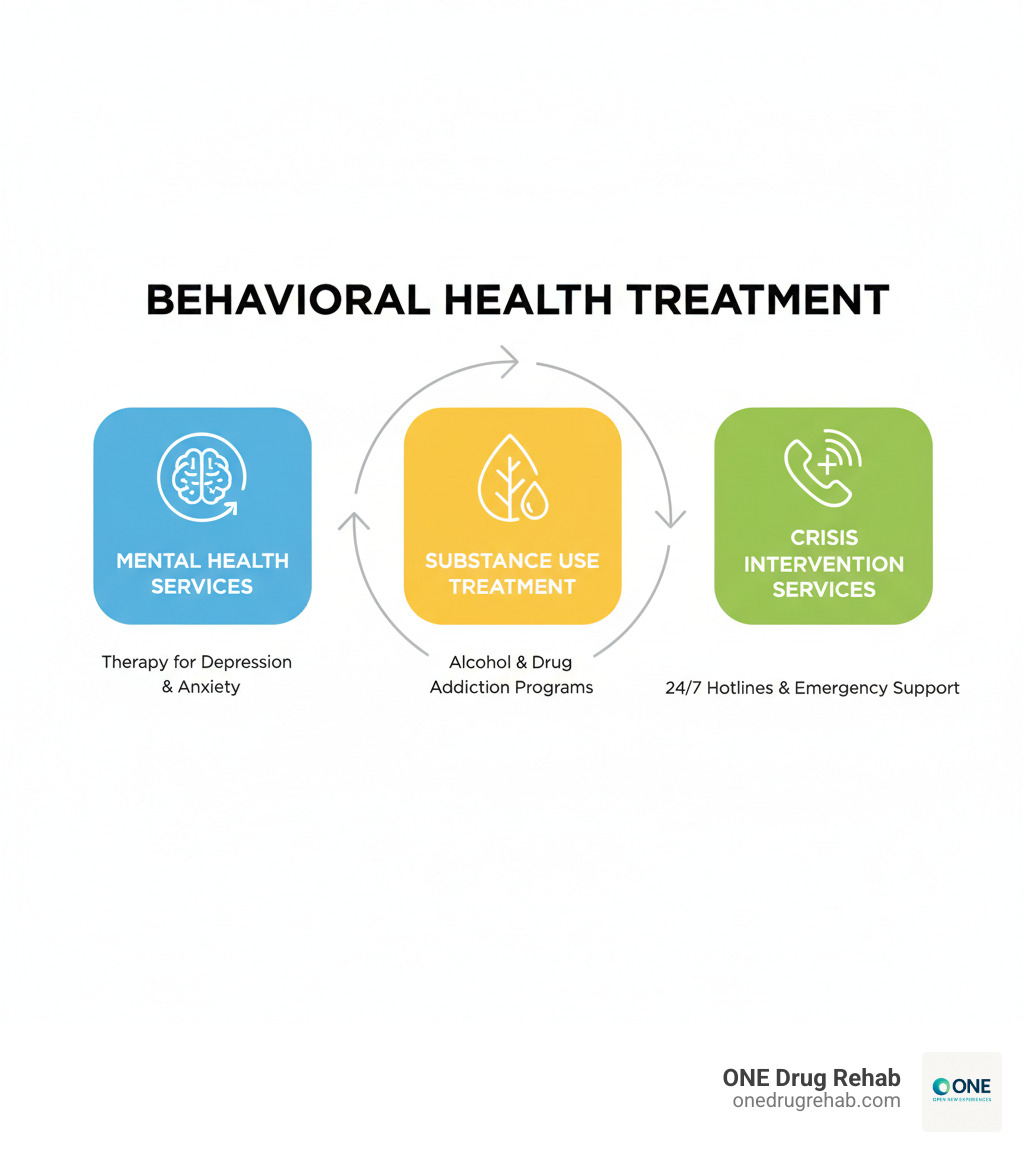
Behavioral health treatment encompasses the prevention, diagnosis, and treatment of mental health conditions, substance use disorders, and life stressors that affect your overall well-being. Here’s a quick overview:
Quick Answer for Behavioral Health Treatment:
- Mental Health Services: Therapy for depression, anxiety, PTSD, and other conditions
- Substance Use Treatment: Programs for alcohol and drug addiction recovery
- Crisis Support: Immediate help through hotlines like the 988 Suicide & Crisis Lifeline
- Multiple Levels of Care: From outpatient therapy to residential treatment
- Various Payment Options: Insurance, Medicaid, Medicare, and sliding-scale fees
The statistics are stark: one in five adults—21 percent of U.S. adults—had a mental health condition in 2020. Among youth, 17 percent experienced a major depressive episode that same year.
However, a troubling treatment gap exists: less than half of adults and youth with mental health conditions received treatment. For substance use disorders, the gap is even wider, with less than 10 percent receiving care.
Understanding your options is the first step toward recovery. Behavioral health treatment isn’t one-size-fits-all; it includes everything from weekly therapy to intensive residential programs. Fortunately, treatment works, and with more options available than ever—from traditional talk therapy to telehealth—help is within reach.
Understanding Behavioral Health and Its Widespread Impact
Behavioral health treatment addresses issues that connect our mental and emotional well-being to our physical health, relationships, and daily functioning. It’s an umbrella term covering conditions like depression, anxiety disorders, substance use disorders, and eating disorders.
These conditions are not isolated. Depression can make simple tasks feel overwhelming, while anxiety disorders can turn everyday situations into sources of intense fear. Substance use disorders often arise from attempts to cope with physical or emotional pain, and eating disorders reflect complex struggles with food and body image.
People with behavioral health conditions also face a greater risk of developing chronic diseases like heart disease and diabetes. During mental health crises, stress hormones can flood the system, disrupting sleep and leading to unhealthy coping mechanisms. What begins as emotional distress can quickly become a full-body health concern.
The impact extends to social and economic well-being. Unstable employment and housing insecurity can result when symptoms make it difficult to maintain daily responsibilities. Statistics show that individuals with untreated conditions are more likely to experience involvement with the criminal justice system, often due to poor decision-making or self-medication.
The economic burden is significant, stemming from lost productivity, increased healthcare costs, and disability claims. Communities feel the strain through higher demand for social services and reduced economic growth.
However, behavioral health treatment works. With the right care at the right time, these negative outcomes are preventable. Recovery is not just possible—it’s probable with proper support. Seeking help is an investment in personal and community well-being.
A Guide to Behavioral Health Treatment Options

Finding the right behavioral health treatment means creating a plan that fits your specific needs, circumstances, and goals. Treatment typically involves two main pillars: psychotherapy (talk therapy) and medication management, delivered across various levels of care.
Types of Therapy and Counseling
Talk therapy is the foundation of most treatment plans, providing a safe space to explore thoughts and emotions with a professional.
- Cognitive Behavioral Therapy (CBT) is a practical, goal-oriented approach that helps you identify and challenge negative thought patterns.
- Dialectical Behavior Therapy (DBT) teaches core skills like mindfulness, distress tolerance, emotion regulation, and interpersonal effectiveness. It is particularly helpful for intense emotions, trauma, and substance use disorders.
- Family therapy involves loved ones in the healing process, helping them learn to support your recovery while addressing the family system’s needs.
- Group therapy offers a powerful sense of community, allowing members to share coping strategies and realize they are not alone in their struggles.
- Holistic therapies address the whole person—mind, body, and spirit. Examples include Holistic Somatic Therapy, which helps release trauma stored in the body, and Sound Healing Therapy, which uses vibrations to promote relaxation.
Levels of Care for Treatment
Behavioral health treatment is delivered at different intensities to match individual needs.
- Inpatient treatment offers the highest level of care, with 24/7 medical supervision and intensive therapy in a facility. Our Inpatient Rehab for Drugs guide explains this option.
- Residential programs are similar but longer-term, focusing on building life skills in a structured environment.
- Outpatient treatment allows you to live at home while attending therapy. Our Outpatient Rehab Programs Near Me Guide can help you find local options.
- Partial Hospitalization Programs (PHP) and Intensive Outpatient Programs (IOP) are step-down options. PHPs involve treatment for 6-8 hours a day, while IOPs require fewer hours per week. Our IOP Drug Program guide details this popular choice.
| Level of Care | Time Commitment | Living Situation | Best For |
|---|---|---|---|
| Inpatient | 24/7 for 30-90 days | Live at facility | Severe symptoms, safety concerns, failed outpatient attempts |
| Residential | 24/7 for 3-12 months | Live at facility | Long-term recovery, life skills building, stable environment needed |
| PHP | 6-8 hours/day, 5-7 days/week | Live at home | Need intensive support but have stable housing |
| IOP | 3-4 hours/day, 3-4 days/week | Live at home | Motivated for recovery, have support system, work/school commitments |
Medication and Medical Interventions
When appropriate, medication can be a life-changing part of treatment. Medication-Assisted Treatment (MAT) combines behavioral therapies with medications to normalize brain chemistry and reduce cravings, especially for opioid use disorders.
Antidepressants, anti-anxiety medications, and mood stabilizers can also be effective for various conditions. For opioid addiction, medications like buprenorphine and methadone can be game-changers, available through specialized practitioners and certified programs.
For severe, treatment-resistant depression, options like Electroconvulsive Therapy (ECT) and Transcranial Magnetic Stimulation (TMS) may be considered. Both have strong safety records and can be highly effective.
The goal is to find the right combination of therapies and support to help you build the life you want.
Navigating the System: Costs, Access, and Barriers

Figuring out how to pay for behavioral health treatment can be overwhelming. The system is a complex web of insurance companies, government programs, and private pay options. Understanding how it works is crucial for accessing care.
How Behavioral Health Care is Financed
Multiple avenues exist for funding treatment, though each has its own rules.
- Private health insurance is a common source of coverage. Mental health parity laws require these plans to cover behavioral health equally with physical health, but high deductibles and network limitations can still be an issue.
- Medicaid is the largest public payer of behavioral health care, serving as a lifeline for millions with limited income. Our guide to Medicaid Approved Rehab Centers can help you find facilities that accept this coverage.
- Medicare primarily serves people 65 and older and some younger individuals with disabilities, covering a wide range of inpatient, outpatient, and prescription drug services.
- State and federal funding, such as grants from the Substance Abuse and Mental Health Services Administration (SAMHSA), supports programs for those who might otherwise have no options.
- Self-payment is an option for those without adequate insurance. Many providers offer sliding-scale fees based on income. Our resources on Addiction Treatment Without Insurance and Rehab Cost Comparison can help you explore options.
Public payers like Medicare and Medicaid fund the majority of mental health and substance use treatment, highlighting their critical role in accessibility.
Common Barriers to Receiving Care
Despite available funding, many people struggle to get quality behavioral health treatment due to several major obstacles.
- Provider Shortage: The U.S. needs an additional 7,400 mental health providers to meet current demand, a shortage that disproportionately affects rural communities.
- Long Wait Times: This shortage leads to long waits for care, which can be dangerous during a crisis.
- High Costs: Even with insurance, co-pays, deductibles, and out-of-network fees can be prohibitive. Many community-based support services are not covered.
- Social Stigma: Fear of judgment from friends, family, or employers prevents many people from seeking help.
- Geographic Limitations: Rural areas often have fewer providers, longer travel distances, and limited access to specialized services.
- Racial Disparities: There are striking racial disparities in access to behavioral health services, with systemic inequities leading to lower quality or culturally incongruent care.
These barriers help explain why so many individuals with behavioral and mental health conditions do not receive the care they need.
The Evolving Landscape of Behavioral Health
The world of behavioral health treatment is being reimagined, with technology and new policies breaking down old barriers to care. Just a few years ago, therapy often required long drives; today, you can connect with a therapist from home.
The Role of Technology and Telehealth
Virtual visits have become a cornerstone of modern mental health care. Telehealth offers flexibility for those with busy schedules, mobility issues, or social anxiety that makes leaving home difficult.
Mental health apps can supplement professional treatment by helping you track moods, practice coping exercises, or manage medication. They function like a wellness coach in your pocket. Providers also use remote monitoring to track patient progress between appointments, allowing for early intervention if problems arise. Digital tools have proven powerful in changing health behaviors, as shown in research like the Effect of Text Messaging and Behavioral Interventions on COVID-19 Vaccination.
Key Policy and Legislative Efforts
Lawmakers have made significant strides in improving access to care. The Mental Health Parity and Addiction Equity Act (MHPAEA) of 2008 mandated that insurance companies cover mental health care equally with physical health care.
The Affordable Care Act went further, making mental health and substance use services essential health benefits and expanding access for millions through Medicaid. The 21st Century Cures Act of 2016 focused on innovation and getting help to people faster.
Most recently, the creation of the 988 Suicide & Crisis Lifeline provides a simple, easy-to-remember number for 24/7 support. Anyone can dial or text 988 to connect with a trained counselor.
Specialized and Equitable Care
There is a growing recognition that a one-size-fits-all approach is ineffective. While striking racial disparities in access persist, current efforts focus on creating culturally competent care and training a more diverse provider workforce.
Specialized programs are also expanding:
- Youth programs are receiving more attention to address the high rates of depression among young people.
- Senior care is being custom to the unique challenges of aging, such as grief and chronic illness. Our Inpatient Rehab for Seniors Complete Guide explores these options.
- LGBTQ+ affirming care ensures a safe and supportive environment for treatment.
- Couples programs, like those in our Inpatient Rehab Couples Complete Guide, recognize that healing can happen together.
The goal is to provide the right treatment for each person’s unique circumstances.
How to Find Behavioral Health Treatment and Resources

Taking the first step to find behavioral health treatment can be daunting, but you don’t have to do it alone. Many resources are available to guide you.
Finding the Right Behavioral Health Treatment Provider
- Start with your primary care physician. They know your medical history, can rule out physical causes for your symptoms, and can refer you to trusted mental health professionals.
- Use online resources. Reputable online directories allow you to search for treatment facilities across the country, filtering by location, services offered, and payment options to find exactly what you need.
- Contact your insurance provider. They can give you a list of in-network providers and help you understand your benefits, which is crucial for managing costs. Our Rehab Cost Comparison guide can help you prepare financially.
- Call a national helpline. For immediate, confidential support, the 988 Suicide & Crisis Lifeline is available 24/7. SAMHSA’s National Helpline at 1-800-662-HELP (4357) provides treatment referrals. For urgent assistance, our 24 Hour Rehab Hotline can connect you with help.
- Ask for recommendations. Trusted friends, family, or other healthcare professionals can often provide valuable referrals.
Understanding Different Levels of Behavioral Health Treatment
Treatment exists on a spectrum, from crisis intervention to long-term support. The right level depends on the intensity of support you need.
- Crisis and emergency services (calling 911 or 988, or going to an ER) are for immediate danger or severe distress.
- Inpatient or residential treatment provides 24/7 structured care in a facility, necessary for severe crises or intensive substance use treatment. See our guides on Inpatient vs. Outpatient Rehab Programs: Success Rates and Inpatient Rehab for Drugs.
- Partial hospitalization (PHP) and intensive outpatient (IOP) programs offer structured therapy with more flexibility. Our IOP Drug Program guide explains this option.
- Regular outpatient therapy involves scheduled appointments while you maintain your daily routine. Explore options with our Outpatient Rehab Programs Near Me Guide.
- Aftercare and recovery support, such as ongoing therapy or Holistic Education Programs, are vital for long-term well-being.
State and Local Support Systems
Your state and local community often provide the most accessible and affordable treatment options.
- State departments of mental health oversee services and often have provider search tools.
- County mental health boards coordinate local services and crisis lines.
- NAMI local chapters offer peer support groups and educational programs for individuals and families.
- Community-based clinics are accessible entry points for outpatient care, often with sliding-scale fees.
Help exists at every level. The key is finding the right combination of support for your unique situation.
Frequently Asked Questions about Behavioral Health Treatment
It’s normal to have questions when considering behavioral health treatment. Asking them is an important step toward getting help. Here are answers to some common concerns.
What is the difference between behavioral health and mental health?
While closely related, these terms have distinct meanings. Mental health refers specifically to your emotional, psychological, and social well-being—how you think, feel, and interact with the world. Conditions like depression, anxiety, and PTSD fall under this category.
Behavioral health is a broader term. It includes all aspects of mental health but also considers how your behaviors and habits impact your overall wellness. This includes substance use disorders, eating disorders, and gambling addiction. Essentially, all mental health issues are behavioral health issues, but the reverse is not always true.
How do I know which type of treatment is right for me?
There is no single answer, as the best treatment depends entirely on your unique situation. The most effective approach is to start with a comprehensive assessment from a primary care doctor or a mental health professional. They can help you understand your diagnosis and recommend appropriate options.
Key factors that influence the right treatment plan include:
- The nature and severity of your symptoms.
- Whether you are dealing with co-occurring disorders (e.g., depression and a substance use disorder).
- Your personal circumstances, such as your support system, work or school commitments, and ability to take time away from responsibilities.
The best treatment plans are collaborative. You should work with your provider as a team, ensuring you have a voice in your care. Don’t hesitate to ask questions about different therapies, medications, or levels of care.
Can I be forced to go to rehab?
The vast majority of behavioral health treatment is voluntary. Your willingness to engage in treatment is one of the strongest predictors of a successful outcome.
However, in rare and specific circumstances, treatment can be mandated. Court-ordered treatment may occur if a person’s legal issues are linked to substance use or mental health. Our guide on Court Ordered Inpatient Rehab explains this process. In severe mental health crises where an individual poses an immediate danger to themselves or others, some states permit temporary involuntary commitment for stabilization, a process that is heavily regulated.
For most people, seeking help is a choice. If you have concerns, speaking with a healthcare provider can help clarify your rights and the voluntary options available to you.
Conclusion
Taking the first step toward behavioral health treatment is a courageous act. We’ve explored behavioral health care, from understanding what it means to navigating the system and finding the right provider.
Here’s the most important thing to remember: recovery is absolutely possible. People find their way to healthier, happier lives every day through the right combination of support and determination.
The landscape of behavioral health treatment offers more options than ever, from traditional therapy to telehealth, and from residential programs to flexible outpatient care like an IOP Drug Program. The key is finding the fit that’s right for your unique situation.
We know the system can feel overwhelming, but you are not alone. Resources like the 988 Suicide & Crisis Lifeline, SAMHSA’s National Helpline, and our own guides at ONE Drug Rehab are here to help you.
As a third-party, non-affiliated resource, ONE Drug Rehab exists to empower you with clear, honest information. We believe that when you understand your options, you can make the best decision for your recovery journey.
Recovery is an ongoing process of growth and healing. What matters is that you’re taking steps forward, seeking support, and believing in your ability to create positive change.
Ready to explore your options? Explore our guide to holistic treatment programs to learn more about comprehensive approaches that address your mind, body, and spirit.