

Outpatient Alcohol Rehab Programs: 1 Essential Guide
Why Outpatient Alcohol Rehab Programs Are Changing Recovery
Outpatient alcohol rehab programs offer a flexible path to recovery, allowing you to get help while maintaining your daily life. Unlike inpatient treatment, these programs let you live at home, continue working, and stay connected with family while receiving professional addiction care.
Outpatient care comes in several forms, from intensive Partial Hospitalization Programs (PHP) and Intensive Outpatient Programs (IOP) to less frequent Standard Outpatient Treatment and Continuing Care Groups like AA/NA.
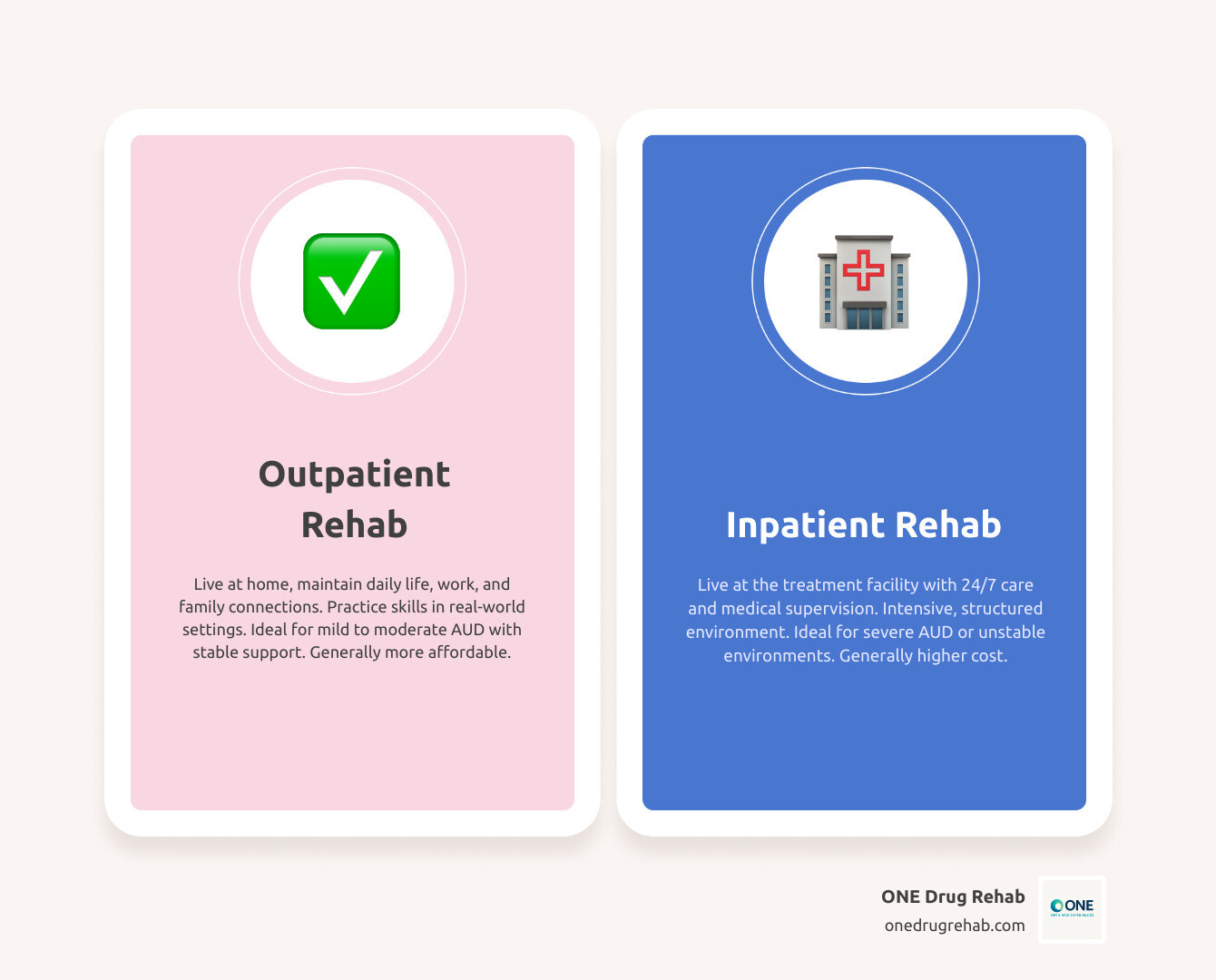
These programs are ideal for individuals with mild to moderate alcohol use disorders who have a stable home and a strong support system. They are generally more affordable than inpatient care and allow you to apply recovery skills in real-world situations immediately. The key difference is that outpatient clients return home each day, making it a practical choice for those with work or family commitments.
Research shows that for the right candidates, outpatient treatment can be as effective as inpatient care. The goal is to find a program that matches your specific needs.
Key outpatient alcohol rehab programs vocabulary:
Understanding Outpatient Alcohol Rehab: What It Is and How It Differs
While many picture addiction recovery as a full-time residential stay, outpatient alcohol rehab programs offer a flexible and popular alternative. This approach allows you to pursue sobriety without putting your life on hold, integrating recovery into your real world.

Imagine attending therapy and building a support network while still living at home, working, and caring for your family. Outpatient rehab lets you immediately apply new coping skills to daily challenges with professional guidance, helping you practice sobriety in the environment where you’ll live it.
Defining Outpatient Alcohol Rehabilitation
Outpatient alcohol rehabilitation is a structured treatment program where you attend scheduled sessions at a center but return home afterward. It provides comprehensive care for the physical, psychological, and social aspects of alcohol use disorder (AUD) through a mix of individual and group therapy, addiction education, and relapse prevention training. Support groups like Alcoholics Anonymous (AA) are often integrated, adding a crucial layer of peer support for long-term sobriety.
Outpatient vs. Inpatient: A Clear Comparison
Understanding the differences between inpatient and outpatient rehab is key to choosing the right path. The main distinction is the level of medical monitoring and the living situation.
| Feature | Inpatient Treatment | Outpatient Treatment |
|---|---|---|
| Living Arrangements | Reside at the treatment facility 24/7 | Live at home, attend sessions at the facility |
| Level of Care | Intensive, 24-hour medical and emotional support | Flexible, part-time, allows daily life maintenance |
| Cost | Generally higher (includes room, board, 24/7 care) | Generally lower (no room/board, less intensive staffing) |
| Ideal Candidate | Severe AUD, high withdrawal risk, unstable home, co-occurring mental health disorders needing close monitoring | Mild to moderate AUD, stable home, strong support system, motivated, work/school commitments |
| Daily Structure | Highly structured, scheduled therapies, activities, meals | Structured sessions, but patient manages time outside of treatment |
| Medical Supervision | Constant, on-site medical staff for detox and health issues | Scheduled medical check-ups; emergency care not immediately on-site; outpatient detox only for mild cases |
Inpatient programs offer an immersive, controlled environment essential for those with severe AUD, high risk of dangerous withdrawal symptoms (which can be life-threatening), or a need to escape triggering environments. Outpatient alcohol rehab programs provide flexibility, making them a great fit for those with a stable, supportive home who can manage their sobriety while navigating daily life. Neither is inherently better; they serve different needs. Our goal is to help you find the right fit for you.
The Spectrum of Care: Types of Outpatient Programs
Outpatient alcohol rehab programs are not a one-size-fits-all solution; they exist on a spectrum of care. This allows you to find a program that matches your support needs and lets you transition to less intensive care as you progress in your recovery.
Partial Hospitalization Programs (PHP)
Partial Hospitalization Programs (PHP) offer the most intensive outpatient care, providing a level of support similar to inpatient rehab while allowing you to sleep at home. Clients typically attend treatment at a center for 4 to 6 hours a day, 5 to 7 days a week. PHPs provide a highly structured environment with a wide range of medical and therapy services. This level of care is an excellent “step-down” option for those leaving an inpatient program or for those who need intensive treatment but have a stable home environment.
Intensive Outpatient Programs (IOP)
For those who need strong support but more flexibility than a PHP, an Intensive Outpatient Program (IOP) is often a perfect fit. This moderate level of care balances structured therapy with daily life. IOPs typically require attendance for about 3 to 4 hours per session, 3 to 5 days a week. Group therapy is a cornerstone of IOPs, helping you connect with peers and share experiences. You’ll also focus on skill-building to cope with triggers and manage stress. IOPs are designed for people who need more than standard weekly therapy but must maintain work, school, or family duties. You can find More info about treatment types on our site, and NIDA research on treatment programs confirms their effectiveness.
Standard Outpatient & Continuing Care
Standard Outpatient Programs (OPs) offer the most flexibility and are the least intensive form of structured care. Ideal for those with a milder alcohol use disorder or as a step-down from a more intensive program, OPs usually involve just 1 to 2 sessions per week. These may include individual counseling, group therapy, or educational classes.
Recovery is a lifelong journey that extends beyond formal treatment. Continuing care is vital for maintaining sobriety and often involves joining support groups like Alcoholics Anonymous (AA) or Narcotics Anonymous (NA). Regular contact with a counselor, practicing relapse prevention strategies, and being part of a sober community are all key components of this long-term phase.
The Outpatient Experience: What to Expect and Who It’s For
Choosing outpatient rehab means integrating recovery into your existing life, allowing you to build and apply new coping skills in your daily routine.

Outpatient alcohol rehab programs focus on individualized care. Your treatment plan is built around your specific needs, including the severity of your drinking, any co-occurring mental health conditions, and your recovery goals. This personalized approach helps you build coping mechanisms for real-life triggers, like work stress or family events. The community integration in group therapy is also powerful, creating connections that can support your sobriety long after treatment ends.
The Benefits of Choosing an Outpatient Program
The primary benefit of outpatient alcohol rehab programs is flexibility. You can get help without pausing your career or family responsibilities. This structure also leads to a lower cost than inpatient treatment, as it doesn’t include room and board.
A key advantage is the immediate application of skills. You can practice a new coping strategy learned in therapy on the same day, then discuss the results in your next session. This real-time feedback loop solidifies learning. Outpatient care also offers privacy and confidentiality, as you can seek treatment without explaining a prolonged absence. Finally, it encourages strong family involvement, creating a supportive home environment. Learn more with our More info about family programs.
Is Outpatient Rehab the Right Fit for You?
Outpatient rehab is highly effective for some but not all. It’s crucial to be honest about your situation.
You are likely a good candidate if you have a mild to moderate alcohol use disorder, a strong support system, stable housing, and high motivation for recovery. Self-discipline is key, as you are not in a 24/7 supervised environment.
Conversely, outpatient rehab is generally not suitable if you have a severe alcohol use disorder, face a high withdrawal risk, or live in an unstable or triggering environment. Alcohol withdrawal can be dangerous, with conditions like delirium tremens requiring constant medical monitoring that outpatient programs cannot provide. In these cases, inpatient care is the safer choice. A professional assessment from an addiction specialist is the best way to determine the appropriate level of care for your safety and success.
A Look Inside: Therapies and Treatments in Outpatient Alcohol Rehab Programs
Outpatient alcohol rehab programs use a mix of evidence-based therapies to provide concrete tools for sobriety.
- Cognitive Behavioral Therapy (CBT) helps you identify and change negative thought patterns that lead to drinking.
- Dialectical Behavior Therapy (DBT) is useful for co-occurring mental health issues, teaching skills in mindfulness, distress tolerance, and emotional regulation.
- Motivational Interviewing helps you explore and strengthen your own reasons for wanting to change.
Treatment typically includes both group and individual therapy. Group sessions offer peer support, while individual therapy allows for a deep dive into personal challenges. Medication-Assisted Treatment (MAT) may also be used, combining counseling with FDA-approved medications like Naltrexone (reduces cravings) and Acamprosate (helps restore brain chemistry). For more details, see the SAMHSA information on medications used in addiction treatment.
Navigating Your Options: How to Choose and Pay for Treatment
Choosing the right outpatient alcohol rehab program is a significant decision, but with the right information, you can find a program that fits your personal needs, goals, and budget.

This process involves researching options, understanding the financial side, and verifying insurance coverage. Our goal is to empower you to select a program with confidence.
How to Choose the Right Outpatient Alcohol Rehab Program
When selecting an outpatient alcohol rehab program, several factors are key. Look for facilities with accreditation from bodies like CARF International and proper licensing from your state’s health authority. This ensures they meet high standards for quality and safety.
Evaluate the credentials of the clinical team; licensed and certified doctors, therapists, and counselors are essential. Consider the program’s treatment philosophy (e.g., 12-step, holistic) and ensure the program schedule fits your life. To help, ONEDrugRehab.com lets you compare rehab centers near you side-by-side. Finally, read reviews from past patients to get a feel for the client experience. The right program should feel supportive and aligned with your personal path.
Understanding Costs and Insurance Coverage
The cost of outpatient alcohol rehab programs varies based on intensity (PHP and IOP are typically more expensive), location, and services offered. While this can be a concern, it’s an investment in your health.
Fortunately, insurance coverage often helps significantly. Most private insurance plans cover substance use disorder treatment, though the amount depends on your specific plan. Public programs like Medicaid and Medicare also provide coverage, and the Affordable Care Act (ACA) mandates that most health plans cover mental health and substance use services.
Always verify your benefits with your insurance provider before starting treatment; a rehab’s admissions team can often assist with this. If cost is still a barrier, ask about payment plans, sliding scales, or state-funded grants. Don’t let finances stop you from getting help. Our guide on Finding rehab without insurance offers more tips.
Frequently Asked Questions about Outpatient Alcohol Rehab Programs
Taking steps toward recovery is a big deal, and it’s natural to have questions. Here are answers to common inquiries about outpatient alcohol rehab programs to give you clarity.
How long does outpatient alcohol rehab last?
There is no single timeline for outpatient alcohol rehab programs; the duration is unique to each person. It depends on factors like the severity of the alcohol use disorder, your progress in treatment, and any co-occurring mental health conditions. Typically, programs run for 3 to 6 months, but treatment can extend for a year or more for those who need ongoing support. The flexibility of outpatient care allows the intensity to be adjusted as you become more stable in your sobriety, ensuring you receive support for as long as it’s beneficial.
Can I do detox on an outpatient basis?
Outpatient alcohol detox is possible for some, but it carries significant risks and is not suitable for everyone. It may be an option for individuals with mild alcohol withdrawal symptoms and a strong, stable home support system. This process involves daily check-ins at a clinic for medical monitoring and medication.
However, alcohol withdrawal can be unpredictable and severe. The primary risks are the potential for life-threatening symptoms like Delirium Tremens (DTs) and the lack of 24/7 medical supervision available in an inpatient setting. Because of these dangers, inpatient detox is the safer and more recommended option for anyone with a moderate to severe alcohol use disorder or a history of complicated withdrawal. A thorough medical assessment is essential before attempting any form of detox; your safety is the top priority.
What happens after I complete one of the outpatient alcohol rehab programs?
Completing a program is a major achievement, but recovery is a lifelong journey. What comes next is aftercare planning, which is vital for maintaining long-term sobriety.
Aftercare typically includes:
- Continuing Care Groups: Transitioning to support groups like Alcoholics Anonymous (AA) or other peer-led programs provides community and accountability.
- Alumni Programs: Many treatment centers offer alumni networks for continued support, mentorship, and sober social events.
- Ongoing Therapy: You may continue with individual or group therapy sessions on a less frequent basis to manage life’s challenges.
- Relapse Prevention: You will continue to use and refine your personalized relapse prevention plan to cope with triggers and cravings.
The ultimate goal of aftercare is to build a robust support network and a toolkit of coping strategies, empowering you to live a fulfilling life free from alcohol.
Conclusion: Taking the Next Step in Your Recovery Journey
We’ve explored how outpatient alcohol rehab programs offer a flexible, effective path to sobriety. For the right person, they empower you to heal while staying connected to your job, family, and daily life. This balance is a game-changer for building a sustainable, sober future.
However, we can’t overstate the importance of a professional assessment. This step is key to determining if an outpatient setting is the best and safest fit for your unique needs. Every recovery journey is personal, and expert advice ensures you start on the right track.
Recovery is not just a dream—it’s an achievable and rewarding journey. If you’re ready to explore your options, a non-affiliated directory like ONE Drug Rehab can be a fantastic resource. It allows you to research programs without pressure, helping you find one that resonates with your goals.
Ready to take that brave next step? Start your search for the right program today.