

Rehab with private rooms: Luxury Recovery 2025
Why Private Rooms Transform the Recovery Experience
Rehab with private rooms offers a sanctuary for healing, combining personal space with professional addiction treatment. During one of life’s most challenging journeys, having a quiet, comfortable space of your own can make all the difference.
Quick Answer for Private Room Rehab:
- Who needs them: Executives, professionals, trauma survivors, those with anxiety
- Key benefits: Improved privacy, reduced distractions, better focus on therapy
- Cost: Typically $1,000-3,000+ extra per stay at luxury facilities
- Availability: Most common in executive and luxury rehab centers
- Insurance: May cover basic treatment; private room upgrades often out-of-pocket
Research shows that privacy in rehab can be a critical factor in the substance abuse treatment process. For many, sharing a room with strangers during such a vulnerable time creates additional stress. This is especially true for individuals with trauma, social anxiety, or those who need quiet time for reflection.
Private rooms aren’t just about luxury; they’re about creating an optimal environment for recovery. Whether you’re an executive needing discretion, someone with co-occurring mental health conditions, or a person who recharges through solitude, your own space can significantly impact treatment success. The best facilities balance private accommodations with the peer support and community connection proven to increase recovery rates.
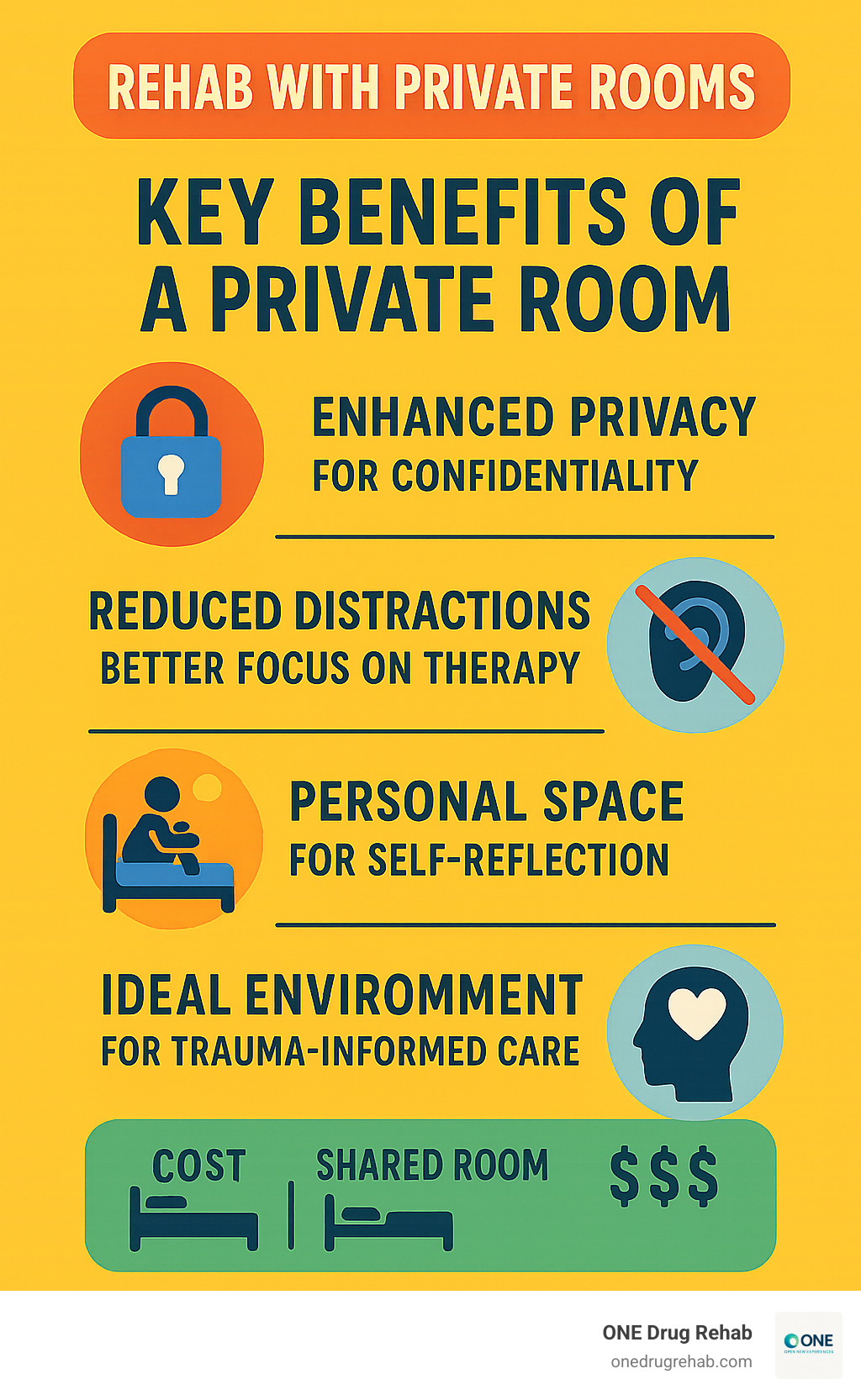
Important rehab with private rooms terms:
The Unmistakable Benefits of Privacy in Recovery
When you enter addiction treatment, you’re already feeling vulnerable. Sharing that journey with a stranger can add unnecessary stress. This is why rehab with private rooms can be a game-changer, creating the right conditions for healing.
Privacy offers several key advantages:
- Confidentiality and Discretion: You don’t have to worry about personal struggles being overheard. This is crucial for public figures, executives, or anyone who values their privacy.
- Reduced Distractions: Shared rooms can be chaotic. A quiet sanctuary allows you to concentrate on therapy and process difficult emotions without interruption.
- Emotional Safety: Recovery requires deep self-reflection. Your own space allows you to journal, meditate, or cry without feeling watched or judged. It becomes your healing cocoon.
- Support for Co-occurring Disorders: For those with depression, anxiety, or trauma, privacy is even more critical. Trauma-informed care recognizes that a sense of safety and control is essential for healing to begin.
Think of your private room as a personalized space for healing—a place that feels more like home and less like an institution.
More info about Types of Addiction Treatment
Why Solitude is a Powerful Tool for Healing
While connection is vital in recovery, solitude can be just as powerful. In our always-on world, being alone with our thoughts has become a therapeutic tool.

With a private room, solitude becomes your ally. It allows for deeper focus during therapy, leading to breakthrough moments. You can process messy emotions authentically without putting on a brave face for a roommate. This privacy reduces the subtle performance pressure to appear “strong,” which can slow progress. Your room becomes a sanctuary where you can retreat, integrate lessons from therapy, and recharge.
Who Benefits Most from a Private Room?
While anyone can appreciate their own space, rehab with private rooms is essential for certain individuals.
- Executives and professionals often need discretion for career reasons and a quiet space to handle occasional work responsibilities.
- High-profile individuals require privacy to engage fully in treatment without worrying about their journey becoming public.
- Those with severe or social anxiety find that a private room reduces the stress of constant social interaction, helping them engage better with treatment.
- Individuals with PTSD or trauma benefit from the sense of safety and control that a private room provides, which is crucial for effective trauma-informed care.
- Anyone needing discretion for personal reasons—be it family dynamics or legal situations—finds that privacy supports their well-being and treatment success.
The bottom line is that for many, privacy isn’t a luxury; it’s fundamental to the hard work of recovery.
Discretion and privacy are basic rights
Private vs. Shared Rooms: A Comparative Guide
Choosing between a private and shared room is a significant decision that impacts your recovery experience. While rehab with private rooms offers clear benefits, it’s important to understand the trade-offs. The best choice depends on your personal needs, preferences, and budget.
Key differences include cost, privacy levels, peer interaction, and amenities. Shared rooms offer natural social bonding, while private rooms require more intentional effort to connect with others during group activities. Private accommodations also typically feature upgraded furnishings and more personal space.
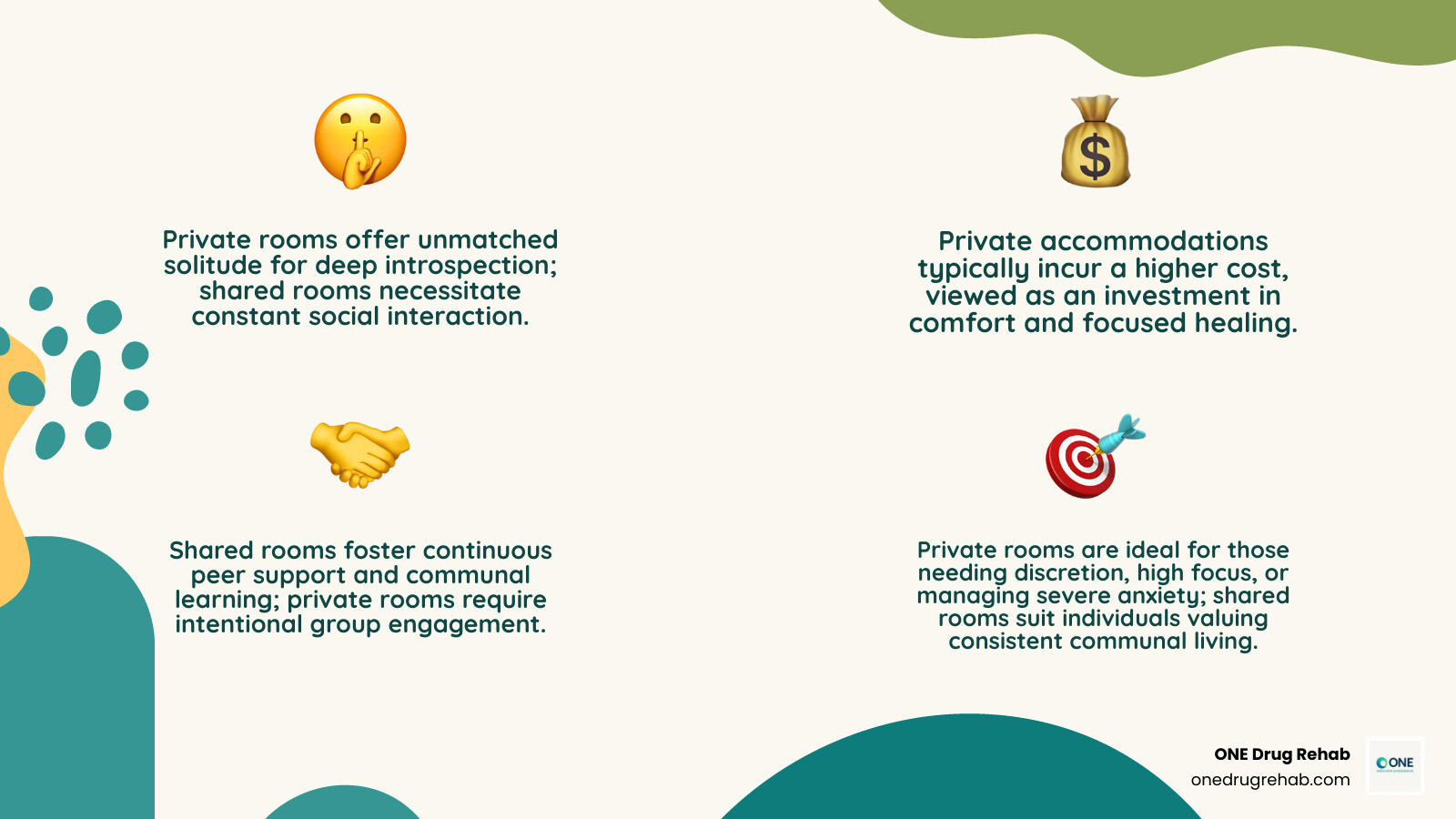
While a private room offers peace, it requires you to actively seek out the social connections that support long-term recovery. Facilities are designed to ensure this, with group therapy, communal dining, and activities providing ample opportunity for peer support.
The Cost and Value of Rehab with Private Rooms
Cost is a primary concern when considering a rehab with private rooms. While privacy has a higher price tag, it’s best viewed as an investment in your well-being.
Private rooms are more expensive because costs aren’t split. The facilities offering them are often more upscale, with better amenities and more personalized care, adding an extra $1,000-$3,000+ to the stay. Insurance coverage for this upgrade varies. While the Affordable Care Act mandates coverage for substance abuse treatment, the private room fee is often an out-of-pocket expense. It’s crucial to verify your specific coverage with the facility’s admissions team.
Private pay options, including payment plans or financing, are usually available. When considering the cost, weigh it against the devastating financial and personal toll of active addiction. Investing more upfront for the right healing environment can be the most cost-effective choice for achieving lasting sobriety.
The Critical Role of Peer Support
Even when choosing a rehab with private rooms, peer support remains crucial for lasting sobriety.

Building connections with others who understand your struggle reduces isolation and creates a powerful sense of belonging. Shared experiences in group settings provide unique insights and coping strategies. Research shows that connecting with peers in treatment increases recovery success rates. These relationships often become lifelong accountability partnerships.
Quality facilities understand the need to balance privacy with community. They create numerous opportunities for connection through:
- Group therapy and 12-step meetings
- Communal dining
- Facility activities like fitness and art therapy
- Structured social time in common areas
Your private room serves as a sanctuary for reflection, while shared spaces help you build the support network essential for long-term recovery.
Connecting with others can increase recovery success
How to Find Your Ideal Rehab with Private Rooms
Searching for the perfect rehab with private rooms can feel overwhelming, but a clear approach makes it manageable. The goal is to find a safe, comfortable, and supportive environment for this important chapter of your life.

Start by defining your priorities, such as location, therapy types, and budget. Begin your research by looking for executive or luxury treatment centers, as they most commonly offer private accommodations. Use trusted directories like ONEDrugRehab.com to compare facilities and read patient reviews. Finally, call the admissions departments of your shortlisted facilities to ask specific questions and get a feel for their program.
Key Factors to Consider in Your Search
While a private room is important, the overall quality of care is paramount. Look for these key indicators:
- Accreditation: Ensure the facility is accredited by respected organizations like CARF. This signifies high standards for patient safety and quality care.
- Staff Credentials: The treatment team should include licensed medical doctors and experienced therapists. Reputable facilities will be transparent about their staff’s qualifications.
- Treatment Modalities: Look for evidence-based approaches like CBT and DBT, as well as holistic therapies that address mind, body, and spirit.
- Location and Environment: A tranquil setting away from daily triggers can provide the mental space needed for deep healing.
- Aftercare Programs: Recovery is a long-term process. Robust aftercare support, including alumni programs and ongoing counseling, is crucial for sustained sobriety.
Questions to Ask an Admissions Advisor
When you speak with an admissions advisor, you are interviewing them to see if their facility is the right partner for your recovery. Be prepared with questions:
- Private Room Availability & Cost: Is a private room available now? What is the exact additional cost, and what’s included?
- Policies on Electronics: What are the rules for phones, laptops, and internet access, especially if you need to maintain work or family connections?
- Room Amenities: Does the room include a private bathroom, workspace, or other specific features?
- Peer Connection: How does the facility facilitate peer support and community for guests in private rooms?
A helpful admissions advisor will welcome your questions. If they seem rushed or evasive, it may reflect the facility’s overall approach to patient care.
What Defines a High-Quality Private Room Experience?
When seeking a rehab with private rooms, you’re looking for more than just a place to sleep. You’re seeking an environment that promotes healing by making you feel safe, comfortable, and cared for. The physical environment profoundly affects your mental state, and every detail matters during recovery.
A top-tier experience combines luxury amenities with holistic care, treating the whole person—mind, body, and spirit. The atmosphere should feel more like a wellness retreat than a clinical facility, with professional staff providing expert medical care alongside world-class hospitality. From chef-prepared meals that nourish the body to a therapeutic setting designed for calm, this integrated wellness approach creates an environment where healing feels natural.
Essential Amenities in a Top-Tier Private Rehab
The details of your private space are incredibly important when you’re feeling vulnerable. Key amenities include:
- Private Ensuite Bathroom: This is the foundation of true privacy, allowing you to maintain personal routines without interruption.
- High-Quality Bedding and Furnishings: Good sleep is crucial for recovery. A comfortable, well-decorated space creates a peaceful environment for the mind and body to rest and heal.
- Desk or Workspace: This is invaluable for journaling, reflection, or handling necessary professional communications.
- In-Room Entertainment: Healthy entertainment options like HDTVs support the need to decompress after intense therapy sessions.
- Housekeeping Services: A clean, organized space contributes to mental clarity and a sense of well-being.
- Scenic Views: Connecting with nature, even from your window, can have a profound and positive impact on your mood.

Beyond the Room: Facility-Wide Features
While your room is a personal haven, the broader facility features complete the healing experience.
- Fitness Centers and Yoga Studios: Exercise is essential for rebuilding your relationship with your body, releasing endorphins, and reducing cravings.
- Swimming Pools and Spa Services: These amenities offer relaxation and low-impact exercise, helping you reconnect with the pleasure of self-care.
- Common Lounges and Entertainment Areas: These spaces strike a balance between privacy and community, offering opportunities for light-hearted connection or quiet conversation.
- Outdoor Recreational Areas: Access to gardens, courtyards, and fresh air provides space for walking, meditation, and informal peer support.
- Chef-Designed Meals and Dining Areas: Sharing delicious, thoughtfully prepared meals helps rebuild healthy habits and creates natural opportunities for community bonding.
These comprehensive amenities work together to support every aspect of your journey toward lasting recovery.
More info about Rehab for Families
Frequently Asked Questions about Rehabs with Private Rooms
When considering a rehab with private rooms, it’s natural to have questions. Based on our experience helping thousands of people, these are the most common concerns.
Are private rooms covered by insurance?
Sometimes, but it’s complicated. Insurance verification is essential. While the Affordable Care Act requires marketplace plans to cover substance use disorder treatment, private rooms are often considered a “preferred accommodation” upgrade. This means your insurance may cover the core treatment, but you’ll likely pay for the private room out-of-pocket.
PPO plans tend to offer more flexibility than HMOs. The best approach is to have the rehab facility’s admissions team verify your benefits, as they can get the clearest answers about your specific coverage.
Can I still connect with peers if I have a private room?
Absolutely. This is a common worry, but having a private room does not mean you’ll be isolated. Quality rehab with private rooms facilities are designed to foster community.
You will participate in all group therapy sessions, 12-step meetings, and other structured activities where deep connections are formed. Communal dining and facility-wide activities like fitness or art therapy provide natural, relaxed opportunities to build friendships. A private room gives you the best of both worlds: a sanctuary to retreat to when you need it and ample opportunity for social connection when you’re ready.
How much more expensive is a rehab with private rooms?
Privacy does cost more. Luxury and executive rehabs, where private rooms are common, operate on a higher pricing tier than standard or state-funded facilities.
Typically, a private room adds $1,000 to $3,000+ to the total cost of your stay. This premium covers not just privacy but often better amenities and more personalized attention. Many facilities offer financing options or payment plans to make this investment more manageable.
When weighing the cost, consider the alternative: the enormous financial and personal price of continued addiction. If a private room improves your ability to engage in treatment and achieve lasting sobriety, it may be the most valuable investment you can make.
Your Path to a Peaceful Recovery Starts Here
Your environment plays a critical role in healing. As we’ve explored, rehab with private rooms can transform the treatment experience by providing the quiet, comfort, and space needed to focus on recovery.
The benefits are clear, from the confidentiality required by professionals to the emotional safety needed by trauma survivors. A private room is not just a luxury; it’s a tool that creates the optimal conditions for your unique healing journey. While the investment may be higher, you are investing in your peace of mind, your ability to engage with therapy, and your long-term sobriety.
Feeling safe and comfortable in your environment makes you more receptive to treatment and better able to build a foundation for lasting recovery. Taking the first step can be daunting, but you don’t have to do it alone. At ONEDrugRehab.com, we provide unbiased resources to help you research and compare facilities without any pressure.
Your recovery matters. You deserve an environment where you can heal with dignity and comfort. The right setting is out there waiting for you.
Find the right treatment for you today