

Free Alcohol Rehab 2025: Find Hope & Healing
Why Cost Shouldn’t Be a Barrier to Recovery
Free alcohol rehab programs exist across the United States, offering hope to millions who need treatment but can’t afford it. According to SAMHSA’s 2018 national survey, 45% of treatment facilities provide free or minimal payment options for those who cannot pay.
Quick Answer: Where to Find Free Alcohol Rehab
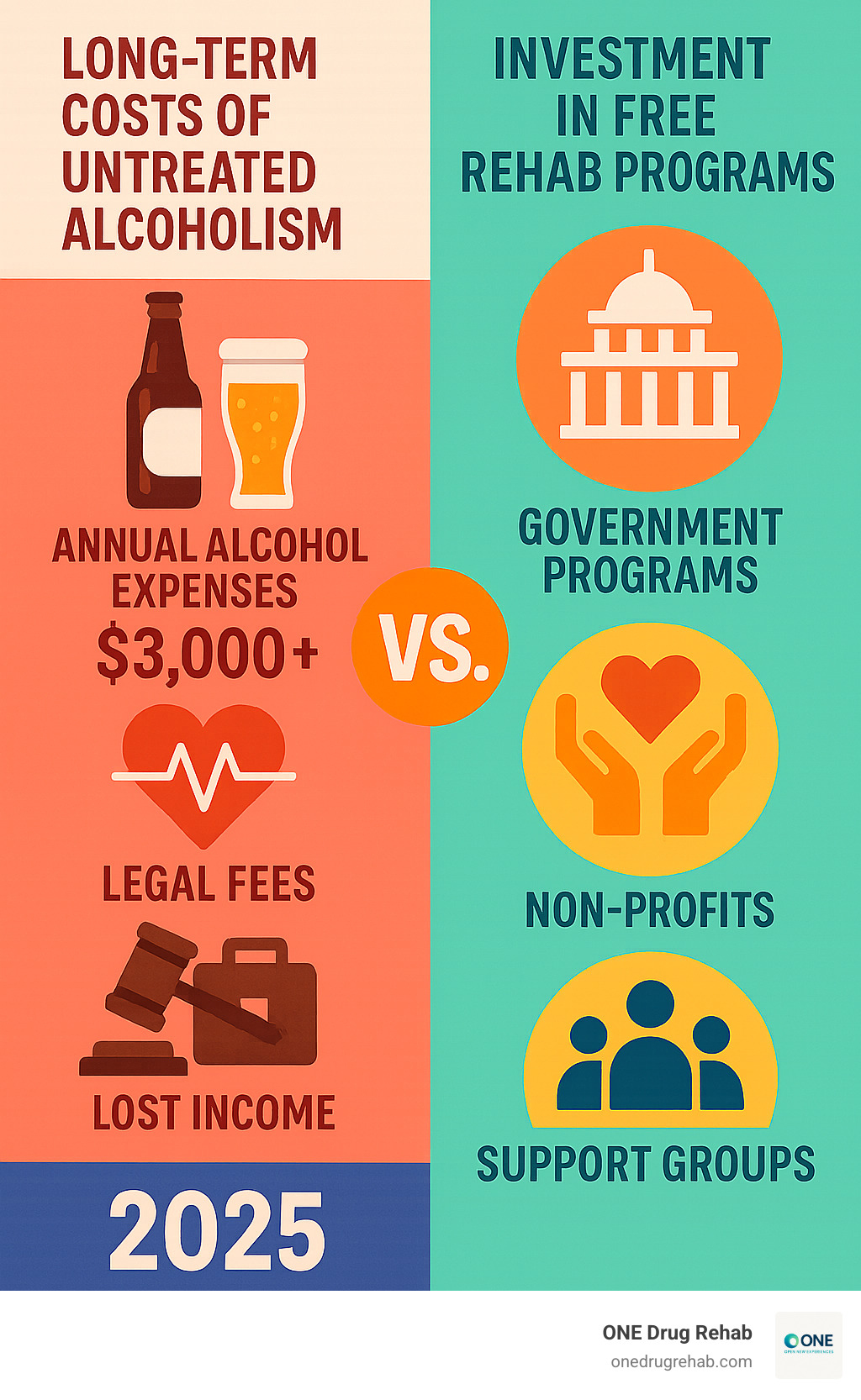
- Government-funded programs – State and federally funded centers requiring proof of income and residency
- Non-profit organizations – Mission-driven facilities like The Salvation Army and Shatterproof
- Faith-based programs – Religious organizations offering treatment (no specific beliefs required)
- Support groups – Free peer support through AA, SMART Recovery, and online communities
- Veterans programs – VA benefits for military personnel and families
The financial impact of untreated alcohol addiction is staggering. An individual drinking a 12-pack daily spends over $3,000 annually on alcohol alone – not counting legal issues, lost productivity, or health problems. Meanwhile, outpatient detox ranges from $1,000 to $1,500 total, and many effective support groups are completely free.
More than 35% of people will experience a mental health or addiction problem at some point. Yet only 10.3% of those with substance use disorders receive treatment. The barrier isn’t always willingness – it’s often cost.
Recovery is possible regardless of your financial situation. From state-funded residential programs to free online support communities, multiple pathways exist to help you or your loved one find sobriety.
Basic free alcohol rehab terms:
Understanding Your Options for Free Alcohol Rehab
Finding free alcohol rehab might feel overwhelming at first, but you have more options than you might think. These programs exist because communities, governments, and organizations understand that addiction doesn’t discriminate based on income – and neither should treatment.
The key is knowing where to look. Free treatment comes through several main channels: government funding that supports state-run programs, non-profit organizations driven by their mission to help, faith-based programs that blend spiritual support with recovery, and strong community support networks that keep people connected throughout their journey.

State-Funded and Government-Funded Programs
Government-funded programs form the foundation of accessible addiction treatment across the country. These facilities receive money from federal mental health block grants plus state and local budgets, specifically to serve people who can’t afford private treatment.
Getting into these programs usually requires meeting specific criteria. You’ll need to show proof of income that demonstrates financial need – typically falling below certain income thresholds. Residency status matters too, as most programs serve residents of their specific state to ensure local resources help local people.
Lack of insurance is often a key requirement. These programs primarily exist for uninsured or underinsured individuals. If you do have some insurance coverage, staff can help you understand how to use those benefits or guide you toward other options that might work better.
Some state-funded programs give priority to certain groups who face higher risks. Pregnant women, people who inject drugs, and veterans often move to the front of waiting lists because their situations require immediate attention.
Finding these programs is easier than you might expect. The Behavioral Health Treatment Services Locator provides a confidential, anonymous way to search for treatment facilities in your area. This SAMHSA tool is completely free and helps you locate state-funded options near you.
Non-Profit and Charity-Based Rehab
Non-profit organizations bring something special to free alcohol rehab – they’re driven by mission, not money. These groups either run their own treatment centers or provide funding to facilities that offer free or reduced-cost care.
The Salvation Army stands out as one of the most recognized providers through their “Harbor Light” rehabilitation facilities. Their programs often include a work component where residents contribute to the community while receiving treatment. This approach addresses spiritual, emotional, and physical healing all at once.
Organizations like Shatterproof work differently – they advocate for better treatment access and help connect people to evidence-based programs. While they might not run treatment centers directly, they’re invaluable for removing barriers and providing resources.
Many non-profits also offer scholarship programs that can cover part or all of treatment costs. These scholarships make expensive private programs suddenly affordable. It’s worth calling treatment centers directly to ask about scholarship opportunities, as many partner with non-profits or have their own funding available.
Free Faith-Based Recovery Programs
For many people, spirituality becomes a powerful part of recovery. Faith-based programs integrate spiritual guidance with addiction treatment, often in community living settings where residents support each other’s journeys.
These programs focus on spiritual guidance and moral growth alongside addiction recovery. While they’re rooted in religious principles, many don’t require you to follow specific religious beliefs. Instead, they emphasize finding a “higher power” for guidance and strength.
Work-based programs are common in faith-based settings. Residents often contribute to the community through various jobs while receiving treatment. This approach builds structure, purpose, and practical skills alongside recovery.
Community living creates strong bonds between residents. People eat together, participate in group activities, and provide mutual support. This environment can be especially helpful for those who lack strong support systems at home.
It’s important to know that no religious adherence is typically required. While these programs incorporate spiritual elements, they’re generally open to people of different faiths or those exploring spirituality for the first time.
One thing to clarify upfront: many faith-based programs don’t provide medical detox services. If you need medical supervision during withdrawal, you might need to complete detox elsewhere before entering a faith-based residential program.
How to Find and Qualify for No-Cost Treatment
The journey to finding free alcohol rehab doesn’t have to feel overwhelming. Yes, there might be some paperwork, and you might encounter waiting lists, but thousands of people successfully steer this process every year. Think of it as your first step toward recovery – and like any important journey, it’s worth taking the time to do it right.

Most free programs operate on a first-come, first-served basis, though certain groups get priority access. The application process typically involves proving your financial need and completing an assessment to determine the right level of care for you. Don’t let the paperwork discourage you – most facilities have staff specifically trained to help you through this process.
Who Qualifies for Free Alcohol Rehab Services?
The good news is that if you’re reading this and worried about affording treatment, you probably qualify for some form of assistance. Free alcohol rehab programs are specifically designed for people who can’t access treatment any other way.
Low-income individuals make up the largest group served by these programs. If you’re struggling to pay rent, buy groceries, or cover basic needs, you’re likely eligible. Most programs use federal poverty guidelines as their benchmark, but each facility sets its own specific income limits.
Uninsured persons are another primary focus. Without health insurance, even basic outpatient treatment can cost thousands of dollars. State-funded programs recognize this gap and work to fill it.
Veterans have some of the best access to free treatment services. The U.S. Department of Veterans Affairs – Mental Health resources provides comprehensive addiction treatment for veterans, active military personnel, and their families. This includes everything from detox to long-term residential care.
Pregnant women receive priority access at most facilities because untreated addiction poses serious risks to both mother and baby. Many programs have dedicated tracks specifically for expectant mothers.
Teens struggling with alcohol also get priority placement. Early intervention can make a huge difference in long-term outcomes, so most states prioritize young people for treatment.
Trauma survivors often qualify for specialized programs that address both addiction and underlying trauma. These integrated approaches recognize that healing requires treating the whole person, not just the addiction.
When you apply, be prepared to provide documentation of your income, proof of residency, and information about your insurance status. Having these documents ready can speed up the process significantly.
Practical Steps to Find a Program Near You
Finding the right program takes a bit of detective work, but you don’t have to do it alone. There are several reliable resources designed specifically to help people in your situation.
Start with the SAMHSA National Helpline at 1-800-662-4357. This free, confidential service operates 24/7 and can connect you with local treatment options. Their staff speaks multiple languages and can provide referrals to state-funded facilities in your area.
Your state health agency is another goldmine of information. Every state has a Single State Agency for Substance Use Services that coordinates addiction treatment. These agencies maintain lists of all state-funded programs and can tell you exactly what’s available in your area.
The 2-1-1 hotline is an often-overlooked resource that can be incredibly helpful. Just dial 2-1-1 from any phone, and you’ll be connected to local specialists who know about all kinds of community services, including free addiction treatment options.
Don’t forget to check with local faith-based organizations, even if you’re not particularly religious. Many churches and religious groups offer or know about free programs in the community. They’re often happy to help regardless of your beliefs.
For a comprehensive search, you can use online directories like Search for rehab centers near you. While we don’t endorse specific providers, these tools can help you research multiple options and compare what’s available in your area.
Persistence pays off. If the first program you contact has a waiting list, ask them about other options. Most facilities maintain relationships with other providers and can point you toward alternatives while you wait for an opening.
The Critical Role of Free Support Groups in Recovery
While formal rehab programs are crucial for initial treatment, the journey to lasting sobriety often relies heavily on ongoing support. This is where free support groups shine. They provide a vital community, shared experiences, and a roadmap for long-term sobriety and relapse prevention. We liken addiction to other chronic diseases like asthma, type II diabetes, and hypertension, which also have relapse rates ranging from 40-60%. Just as managing a chronic illness requires ongoing care, so does addiction recovery.
Traditional 12-Step Programs like AA
When we think of support groups for alcohol addiction, Alcoholics Anonymous (AA) is often the first that comes to mind. Founded in 1935, AA is a global fellowship that provides free peer support for individuals struggling with alcoholism.
Key aspects of AA include:
- The 12 Steps: A set of guiding principles that outline a course of action for recovery from addiction.
- Sponsorship: Members often work with a sponsor, a more experienced member who provides guidance and support.
- The 12 Traditions: Principles that guide the group’s functioning and ensure its unity and purpose.
- Anonymity: A cornerstone of AA, ensuring privacy and encouraging members to focus on principles rather than personalities.
AA meetings are free, widely available, and offer a powerful sense of community and understanding. AA provides peer support and spiritual guidance, but it does not offer medical detox or clinical treatment services. To find a meeting near you, visit Find an A.A. meeting.
Secular Alternatives to 12-Step Groups
While 12-Step programs work wonders for many, they aren’t the only path. For those who prefer a non-spiritual or science-based approach, several excellent secular alternatives offer free alcohol rehab support:
- SMART Recovery: Stands for Self-Management and Recovery Training. This program focuses on self-empowerment and uses cognitive behavioral therapy (CBT) and rational emotive behavior therapy (REBT) principles to help individuals gain control over their addictive behaviors.
- LifeRing Secular Recovery: Emphasizes personal responsibility and self-help. Their motto is “Sobriety, Secularity, Self-Help.” Members develop their “Personal Recovery Program” (PRP).
- Secular Organization for Sobriety (SOS): Also known as Save Our Selves, SOS is a network of non-12-step groups that promote sobriety through personal responsibility and rational thinking.
- HAMS Harm Reduction: (Harm Reduction, Abstinence, and Moderation Support) is a free, peer-led support and information group for people who want to change their drinking habits. It offers a range of options from safer drinking to abstinence.
These alternatives provide valuable support, diverse perspectives, and a choice for individuals seeking recovery on their own terms.
Online and Family Support Communities
In today’s connected world, support is often just a click away. Online and virtual support groups have become invaluable resources, especially for individuals in rural areas or those with mobility challenges.
Benefits of online groups include:
- Accessibility: Meetings can be attended from anywhere with an internet connection.
- Anonymity: The virtual format can offer an added layer of privacy, making it easier for some to open up.
- Variety: A wider range of specialized groups might be available online than locally.
Beyond individual support, addiction impacts entire families. Groups like Al-Anon provide invaluable support for family members and friends affected by someone else’s drinking. They emphasize that alcoholism is a family disease and offer tools for coping, healing, and setting healthy boundaries. Finding support for your loved ones is crucial, and you can explore resources for Support for families of addicts.
What If I Don’t Qualify? Exploring Low-Cost Alternatives
Sometimes, despite your best efforts, you might not qualify for free alcohol rehab programs. Maybe your income is just above the threshold, or you have basic insurance that doesn’t cover much. Here’s the thing – this doesn’t mean treatment is out of reach. There are many low-cost alternatives that can make recovery affordable and accessible.
Think of it this way: the cost of continuing to drink often exceeds the cost of getting help. Between lost wages, health problems, legal issues, and the daily expense of alcohol itself, untreated addiction is expensive. Let’s explore your options for affordable care.
Using Health Insurance to Cover Rehab
Your health insurance might cover more than you think. Thanks to the Affordable Care Act (ACA), mental health and substance use disorder services are considered essential health benefits. This means insurance companies must treat addiction like any other medical condition.
If you have Medicare or Medicaid, you’re in luck. These government programs provide solid coverage for addiction treatment, with Medicaid being especially helpful for low-income individuals. Coverage varies slightly by state, but both programs recognize addiction as a legitimate medical condition requiring treatment.
Here’s what you need to do: call your insurance company directly. Don’t guess about your coverage – get the facts. Ask specific questions about what’s covered for detox, inpatient treatment, outpatient programs, therapy sessions, and any medications you might need. Find out your co-pays, deductibles, and if there are limits on how long you can stay in treatment.
In-network versus out-of-network makes a huge difference in your costs. In-network providers have contracts with your insurance company, which means lower costs for you. Out-of-network treatment can still be partially covered, but you’ll pay significantly more out of pocket.
Many treatment centers can help you verify your insurance benefits before you start treatment. This takes the guesswork out of the process and helps you plan financially.
Understanding the Costs of Different Treatment Levels
Treatment costs vary widely depending on what type of program you choose and how long you stay. Here’s a realistic look at what you might expect to pay without insurance:
| Type of Treatment | Duration | Average Cost (Without Insurance) |
|---|---|---|
| Medical Detox | 3-7 days | $1,000 – $1,500 |
| Inpatient Rehab (30-day) | 30 days | $6,000 – $20,000 |
| Outpatient Programs | 3 months | Around $5,000 |
Outpatient detox is often the most affordable starting point, especially if you don’t need 24/7 medical supervision. Inpatient rehab costs more because you’re getting room, board, and round-the-clock care. Outpatient programs fall somewhere in the middle and can be a great option if you have a stable home environment.
The wide price ranges reflect different factors. Basic programs focus on essential medical care and group therapy. Programs with more amenities might include private rooms, specialized therapies, or holistic treatments like yoga or art therapy. You can get excellent care at any price point – it’s about finding what works for your budget and needs.
To better understand what each type of treatment involves, you can Learn about different types of addiction treatment.
Finding Low-Cost Alternatives to Free Alcohol Rehab
When free alcohol rehab isn’t available and insurance doesn’t cover everything, several strategies can help you access affordable care.
Sliding scale fees are your friend. About 20-25% of treatment centers adjust their prices based on your income and ability to pay. Non-profit centers and community health centers are especially likely to offer this option. Don’t be shy about asking – the worst they can say is no.
Payment plans are another option. Some private treatment centers offer financing, letting you pay for treatment over time. Yes, you’ll take on debt, but consider it an investment in your future. The long-term costs of untreated addiction – lost jobs, health problems, legal troubles – often far exceed the cost of getting help now.
Scholarship programs exist at many treatment centers and through non-profit organizations. These might require an application and meeting certain criteria, but they can significantly reduce your costs. Some facilities set aside a portion of their beds specifically for scholarship recipients.
Community health centers receive government funding and often provide integrated care that includes addiction treatment. They typically offer services on a sliding scale and understand the financial challenges their patients face.
Don’t overlook clinical trials or research studies. Participating in addiction treatment research can sometimes provide access to free or low-cost care while contributing to scientific advancement. It’s worth checking with local universities or medical centers to see what might be available.
Seeking treatment is a sign of strength, not weakness. These financial options exist because communities recognize that addiction affects everyone, regardless of income. Your recovery matters, and there are people and programs ready to help make it affordable.
Frequently Asked Questions about Free Alcohol Rehab
We know you have questions, and we’re here to answer them directly and clearly. These are the questions we hear most often about free alcohol rehab, and honestly, they’re all great questions that deserve honest answers.
What is typically included in a free rehab program?
When people ask about free alcohol rehab, they often wonder if “free” means “bare bones.” The truth is, while you won’t find spa-like amenities, most free programs cover the essentials that actually matter for your recovery.
Basic accommodation is provided if it’s a residential program. You’ll likely share a room, but you’ll have a safe, clean place to focus on getting better. Group counseling forms the backbone of most programs – and honestly, this is where a lot of the real healing happens. There’s something powerful about sitting with others who truly understand your struggle.
You’ll also receive individual therapy sessions with trained counselors. These one-on-one meetings help you work through personal issues that may have contributed to your drinking. Many programs include detox services, especially state-funded facilities that have medical staff to safely guide you through withdrawal.
Educational workshops teach practical skills like recognizing triggers, managing stress, and building healthy routines. Perhaps most importantly, good programs focus heavily on aftercare planning – helping you figure out what happens after you leave treatment. This might include connecting you with local support groups, outpatient counseling, or sober living arrangements.
The focus is on providing evidence-based care that works, not fancy extras that don’t impact your sobriety.
Are there long waiting lists for state-funded rehab?
This is probably the most frustrating reality about free alcohol rehab – yes, waiting lists exist. The demand for these programs far exceeds the available spots, and waiting times can range from a few weeks to several months.
We won’t sugarcoat it: this can feel devastating when you’re ready to get help. Research on treatment wait times shows how challenging these delays can be for people seeking treatment.
But here’s what we want you to remember – persistence matters. Stay in regular contact with facilities you’ve applied to. Openings do occur, sometimes unexpectedly. While you wait, don’t just sit idle. Join free support groups, call addiction helplines, or explore outpatient counseling options. Many people use this waiting period to build momentum for their recovery journey.
The wait is hard, but it doesn’t mean you have to wait to start healing.
Is free rehab as effective as private rehab?
This question gets to the heart of what really matters in recovery. The honest answer? Quality varies, but cost doesn’t determine effectiveness.
Many free and state-funded programs use the same evidence-based practices you’d find in expensive private facilities – things like Cognitive Behavioral Therapy, Motivational Interviewing, and Medication-Assisted Treatment. These aren’t lesser treatments; they’re the gold standard approaches proven to work.
What matters most is finding a program with qualified staff credentials. Look for licensed therapists, certified addiction counselors, and medical professionals. A well-structured program with clear goals and solid aftercare planning can be incredibly effective, regardless of price.
Here’s the real secret: your motivation is the biggest factor. We’ve seen people achieve lasting sobriety in basic programs because they were committed to change. We’ve also seen people struggle in luxury facilities because they weren’t ready to do the work.
The most expensive rehab in the world won’t help someone who isn’t ready to get sober. But a motivated person can find success in a well-run free program. Focus on finding a program that feels like a good fit for you, has trained staff, and uses proven treatment methods.
Recovery is possible at any price point – what matters is taking that first step.
Conclusion: Your First Step Towards a Sober Future
We’ve walked through this journey together, exploring the landscape of free alcohol rehab and affordable treatment options across America. The message we want you to take away is crystal clear: your financial situation doesn’t define your recovery potential.
Whether it’s through state-funded residential programs, compassionate non-profit organizations, faith-based communities that welcome everyone, or the powerful peer support found in free groups like AA and SMART Recovery – the pathways to sobriety are real and accessible. We’ve shown you exactly where to look, how to qualify, and what you can expect along the way.
Recovery is absolutely possible, regardless of what’s in your bank account. Every person we’ve met who found lasting sobriety started with that same first brave step – reaching out for help. That courage you’re feeling right now? That’s your strength showing up.
The ONEDrugRehab directory exists to empower you with information. We’re not here to sell you on any particular program or facility. Instead, we want to be your trusted research companion, helping you explore options and make informed decisions about your recovery journey.
Your sober future isn’t just a dream – it’s a destination you can reach. The programs are there. The support is waiting. The only question left is: are you ready to take that first step?
Don’t wait another day. Start exploring your options now, and remember that asking for help is actually a sign of incredible strength. You’ve got this.

If you need more guidance on finding treatment without insurance coverage, we’ve created a comprehensive resource just for that: Find rehab options even without insurance.