

Employer Health Insurance: 2024 Essential Guide
Understanding Your Workplace Health Coverage Options
Employer-sponsored health insurance is a group health plan offered by companies to their employees. A key benefit is cost-sharing, where employers often cover a significant portion of the monthly premium, making it more affordable than individual plans.
Key Facts About Employer Health Insurance:
- Coverage: Covers 154 million non-elderly Americans in 2024.
- Cost Sharing: Employers pay an average of 84% of single coverage premiums and 75% of family coverage premiums.
- Average Premiums: $8,951 for single coverage, $25,572 for family coverage in 2024.
- Common Plan Types: PPO (48%), High-Deductible Plans (27%), HMO, POS.
- Eligibility: Most plans available for companies with 2+ employees.
Understanding your workplace health benefits is crucial, especially when seeking treatment for addiction or mental health. Nearly half of all workers struggle with some form of substance abuse, making employer-sponsored coverage a critical pathway to care.
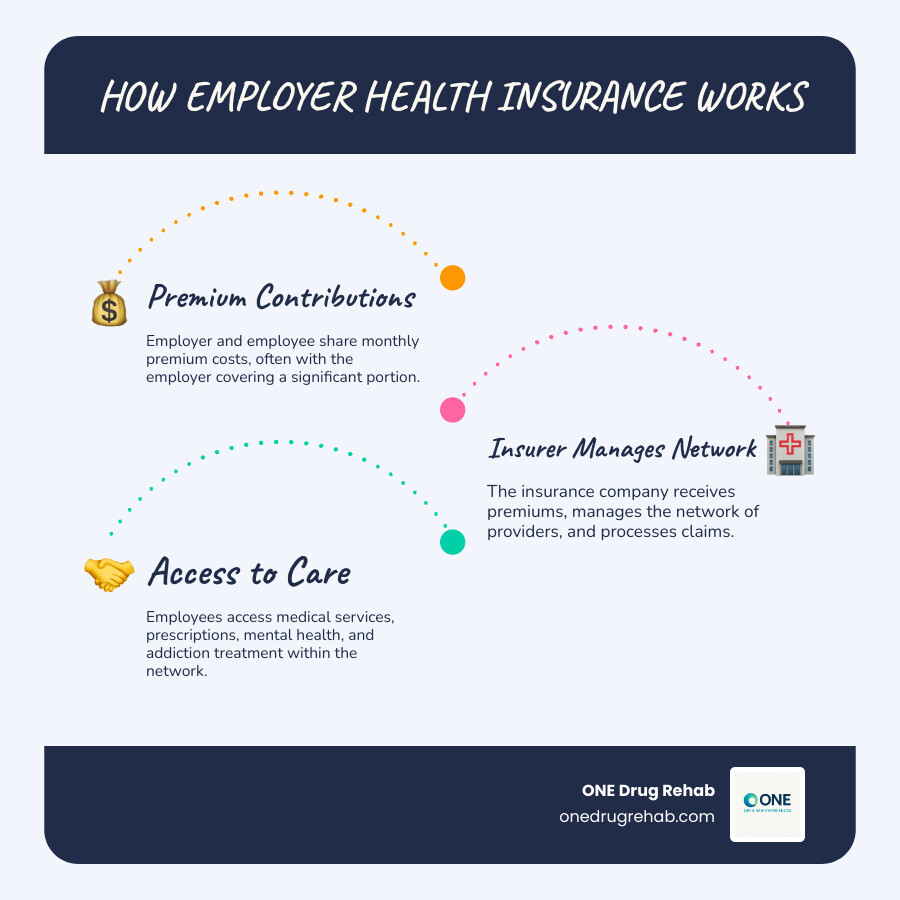
The system works through premium sharing between you and your employer. Your company negotiates with insurance providers to secure group rates, then deducts your portion from your paycheck. In return, you get access to a network of doctors, hospitals, and treatment facilities at reduced costs.
Unlike individual insurance plans, employer coverage typically doesn’t require medical exams or health questionnaires for basic coverage. This makes it easier for people with pre-existing conditions—including those in recovery—to get comprehensive health benefits.
What is employer health insurance and how does it work?
At its core, employer health insurance is a form of group coverage that an organization provides to its employees. By pooling many employees together, the employer can negotiate lower rates and more comprehensive benefits from insurance carriers than an individual could typically secure on their own. This creates a powerful safety net for employees and their families.
The mechanism is fairly straightforward. Your employer contracts with an insurance company, and as an employee, you enroll in one of the available plans. A significant advantage is premium sharing, where your employer typically covers a substantial portion of the monthly premium, and your share is usually deducted directly from your paycheck. This makes healthcare significantly more affordable than purchasing a plan on the open market.
Once enrolled, you gain access to a specific network of doctors, hospitals, and other healthcare providers. The type of plan you have (like a PPO or HMO) will dictate how you access this network. Beyond premiums, you’ll encounter other cost-sharing elements:
- Deductibles: The amount you must pay for covered services before your insurance plan starts to pay. For example, the average deductible for single coverage in 2024 was $1,787.
- Copayments (Copays): A fixed amount you pay for a covered service, like a $25 fee for a doctor’s visit.
- Coinsurance: A percentage of the cost of a covered service you pay after meeting your deductible.
- Out-of-pocket maximums: The most you’ll have to pay for covered services in a plan year. Once you hit this limit, your insurance plan pays 100% of your covered healthcare costs for the rest of the year.
The Importance of Health Benefits in Today’s Workforce
A strong benefits package is more than just a perk; it’s a cornerstone of a healthy, productive, and loyal workforce. For employers, offering robust health benefits is a powerful tool for employee retention and attracting top talent. According to a 2023 Blue Cross study, nearly half (49%) of employees would choose health benefits over a raise, underscoring their value.
From an employee’s perspective, employer health insurance provides immense financial security and peace of mind. Knowing that a significant portion of medical expenses will be covered can alleviate a tremendous amount of stress. Moreover, these plans promote preventative care, as easier access to doctors and screenings encourages early treatment and leads to better long-term health outcomes. For more comprehensive data on employer health benefits, you can explore the 2024 Employer Health Benefits Survey from KFF.
What’s Typically Covered by Employer Health Plans?

Employer health insurance plans are designed to be comprehensive, covering a wide range of medical needs to keep you and your family healthy.
Core Medical and Preventative Services
Most plans cover essential medical services, including hospital stays, doctor visits, prescription drugs, and emergency care. They also typically include preventive care like check-ups and screenings, as well as maternity and newborn care. This core coverage acts as a financial safety net for both routine health needs and unexpected medical events.
Extended Health and Wellness Benefits
Beyond the basics, many employer health insurance plans offer an array of extended health and wellness benefits. These often include:
- Dental and Vision Care: For routine check-ups, cleanings, glasses, and contacts.
- Paramedical Services: Such as chiropractic care, physiotherapy, and massage therapy.
- Medical Equipment: Coverage for items like crutches or wheelchairs.
- Wellness Programs: Initiatives to support a healthy lifestyle, like gym memberships or smoking cessation programs.
Mental Health and Substance Abuse Coverage
A critical component of modern health plans is coverage for mental health and substance abuse. Thanks to laws like the Affordable Care Act (ACA) in the U.S., these are considered Essential Health Benefits, meaning they must be covered similarly to physical health conditions. This includes services like:
- Therapy and counseling
- Psychiatric care
- Inpatient and outpatient rehab for substance use disorders
Many employers also offer Employee Assistance Programs (EAPs), which provide confidential support for a range of personal and work-related challenges. Your employer health insurance can be a powerful ally in accessing addiction treatment, often covering a significant portion of the costs for different levels of care. To learn more about the types of addiction treatment available, explore our resources on Understanding Types of Addiction Treatment. For details on how insurance can help, see our guide on addiction treatment coverage.
The Legal Landscape: Is Employer Health Insurance Mandatory?

A common question is whether employers are legally required to offer health insurance. The answer varies by country and company size.
Requirements in the United States
In the United States, the Affordable Care Act (ACA) mandates that Applicable Large Employers (ALEs)—those with 50 or more full-time equivalent employees—must offer affordable, minimum-value health coverage to their full-time staff and their dependents. Failure to do so can result in significant penalties. While not all employers are required to offer insurance, it remains a common practice for attracting and retaining talent. In fact, a recent study showed that around 86% of U.S. private-sector employees worked for businesses that offered health insurance between 2020 and 2022.
Requirements in Canada
In Canada, the healthcare system is publicly funded, providing all residents with access to essential medical services through provincial plans. Consequently, employer health insurance is not mandatory but is offered as a supplementary benefit. These private plans typically cover services not included in provincial healthcare, such as prescription drugs, dental, and vision care. While not legally required, many Canadian employers offer these benefits to remain competitive and support their employees’ overall well-being. Employers are, however, required to contribute to government programs like the Canada Pension Plan (CPP) and Employment Insurance (EI).
Understanding the Costs and Trends of Employer Health Insurance

Understanding the financial aspects of employer health insurance is key. Let’s break down how costs are shared and the current trends in premiums and deductibles.
How Costs Are Shared
A major advantage of employer-sponsored plans is cost-sharing. Employers typically cover a significant portion of the monthly premium, often between 50% and 100%. For example, in 2024, the average annual premium for family coverage was approximately $25,572, with employees contributing around $6,296 of that total. For single coverage, the average premium was about $8,951, with employees paying about $1,368. This employer contribution makes health insurance much more affordable than purchasing it individually. The exact split can vary, often depending on the size of the company.
Trends in Premiums and Deductibles
Healthcare costs, including premiums and deductibles, have been steadily increasing. Between 2023 and 2024, average premiums for single and family plans rose by 6% and 7% respectively, outpacing wage growth and inflation. Deductibles have also seen a significant rise, with the average for single coverage in 2024 reaching $1,787. This trend has led to the growing popularity of High-Deductible Health Plans (HDHPs), which now cover about 27% of workers. While HDHPs have lower monthly premiums, they require employees to pay more out-of-pocket before insurance coverage begins. For a deeper dive into these trends, we suggest checking out the Summary of Findings from the 2024 KFF Survey.
Challenges for Employers
Employers face several challenges in providing health benefits. Cost sustainability is a primary concern, as healthcare expenses often rise faster than inflation. Many companies worry about their ability to afford these benefits in the long term. Additionally, the administrative burden of managing complex plans, ensuring compliance with regulations like the ACA in the U.S., and handling enrollment can be significant, especially for smaller businesses. Despite these problems, most employers remain committed to offering health insurance, recognizing it as a crucial tool for attracting and retaining talent. For more on this, see the Commonwealth Fund’s Issue Brief.
Navigating Your Coverage: From Enrollment to Job Changes

Understanding your employer health insurance is just the first step. Knowing how to enroll, what happens if your life circumstances change, and how it compares to other options is equally important. We’ll guide you through these crucial aspects to empower you to make informed decisions about your healthcare.
Comparing employer health insurance to individual plans
It’s helpful to view employer health insurance as one lane on the highway of healthcare coverage, with individual plans being another. While both aim to provide health coverage, their structures and benefits can differ significantly.
- Cost: With employer plans, your company typically pays a large portion of the premium. For individual plans, you’re responsible for the full cost, though you might qualify for government subsidies.
- Choice: Employer plans offer a limited selection chosen by your company. The individual marketplace provides a wider variety of plans to choose from.
- Convenience: Enrollment is usually straightforward through your HR department, with premiums deducted directly from your paycheck.
The main advantage of employer-sponsored insurance is the significant cost-sharing, making it a more affordable option for most people.
What Happens When You Leave Your Job?
When you leave a job, you have several options to maintain health coverage. The most well-known is COBRA (Consolidated Omnibus Budget Reconciliation Act), which allows you to continue your former employer’s health plan for up to 18 months. However, you’ll be responsible for paying the full premium, which can be expensive. Losing your job also qualifies you for a Special Enrollment Period on the Health Insurance Marketplace (healthcare.gov), where you can shop for a new plan and may be eligible for subsidies. If your spouse has employer-sponsored insurance, you can often be added to their plan. Finally, depending on your income, you might qualify for Medicaid. It’s important to explore these options promptly, as there are deadlines for enrollment. For families navigating these transitions, especially during a time of recovery, we offer resources on Support for Families in Addiction Recovery.
Frequently Asked Questions about Workplace Health Plans
Navigating employer health insurance can be confusing. Here are answers to some frequently asked questions to help you understand your options.
What is the minimum company size to offer group health insurance?
While rules can vary, many insurance carriers offer group health plans to businesses with as few as two employees. In the U.S., the Small Business Health Options Program (SHOP) Marketplace is designed specifically for small businesses. In Canada, programs like the Chambers of Commerce Group Insurance Plan also cater to small companies. This makes it possible for even very small businesses to provide health benefits.
What are the most common types of health plans?
The most common types of health plans offered by employers include:
- PPO (Preferred Provider Organization): Offers flexibility to see in-network and out-of-network doctors without a referral, though out-of-network care costs more.
- HMO (Health Maintenance Organization): Usually requires you to use doctors within its network and get a referral from a primary care physician (PCP) to see a specialist.
- HDHP (High-Deductible Health Plan): Features lower premiums but higher deductibles. Often paired with a Health Savings Account (HSA) for tax-free medical spending.
- POS (Point of Service): A mix of HMO and PPO, allowing you to choose between in-network and out-of-network care at different cost levels, often requiring a PCP referral.
How do I find out if a specific treatment, like rehab, is covered?
Figuring out coverage for specific treatments like rehab is crucial. Here’s how to do it:
- Review Your Plan Documents: Start with your Summary of Benefits and Coverage (SBC). Look for sections on “mental health” or “substance use disorder services.”
- Call Your Insurance Provider: The number is on your insurance card. Ask directly about coverage for inpatient or outpatient rehab, and inquire about deductibles, copays, and any pre-authorization requirements.
- Contact the Treatment Facility: Reputable rehab centers have admissions staff who can verify your insurance benefits for you and explain any out-of-pocket costs.
Most employer-sponsored plans are required to cover addiction treatment as an essential health benefit. Don’t let uncertainty stop you from seeking help. For guidance on selecting a treatment center, explore our resources on How to Compare Rehab Centers. We provide unbiased information to help you find the right fit for your needs.
Conclusion
Understanding your employer health insurance is a key step toward managing your healthcare. From the basics of how plans work to the specifics of coverage and costs, being informed empowers you to make the best choices for yourself and your family.
Workplace benefits provide crucial financial security and peace of mind when you need healthcare most. Whether you’re dealing with a routine check-up, managing a chronic condition, or facing something as serious as addiction, your workplace benefits can be the bridge between needing help and actually getting it.
The beauty of understanding your coverage is that it puts you in the driver’s seat. You’re no longer guessing about what’s covered or worried about surprise bills. Instead, you can make informed decisions about your health and your family’s well-being. That’s real employee empowerment right there.
We know that addiction touches many families, and the path to recovery can feel overwhelming – especially when you’re worried about costs. The good news is that most employer health insurance plans now cover addiction treatment as an essential health benefit. Don’t let uncertainty about coverage stop you from seeking the help you need.
If you’re facing challenges with addiction and need to understand your options, we encourage you to explore our resources on Navigating Rehab Costs Without Insurance. At ONEDrugRehab.com, we’re here as your third-party, non-affiliated resource to help you research treatment options without any pressure or bias. We believe everyone deserves access to quality information when making these important decisions.
Taking control of your health starts with understanding what resources are available to you. Your workplace benefits are often more comprehensive than you might think, and they’re there when you need them most. We’re proud to be part of your journey toward better health and recovery, one informed decision at a time.