

The Rise of Digital Recovery: An Introduction to Online Addiction Help
Addiction help online connects you with licensed therapists, support groups, and treatment resources through secure video calls, phone sessions, text messaging, and specialized apps—all from the privacy of your own home.
Quick Access to Online Addiction Support:
- Telehealth Therapy: Individual or group sessions via video, phone, or messaging with licensed counselors
- Virtual Support Groups: Peer-led meetings and recovery communities accessible 24/7
- Treatment Directories: Government resources like SAMHSA’s FindTreatment.gov to locate providers
- Crisis Helplines: Immediate support through 988 Lifeline, Crisis Text Line, and SAMHSA National Helpline (1-800-662-4357)
- Family Resources: Virtual coaching, workshops, and programs for loved ones affected by addiction
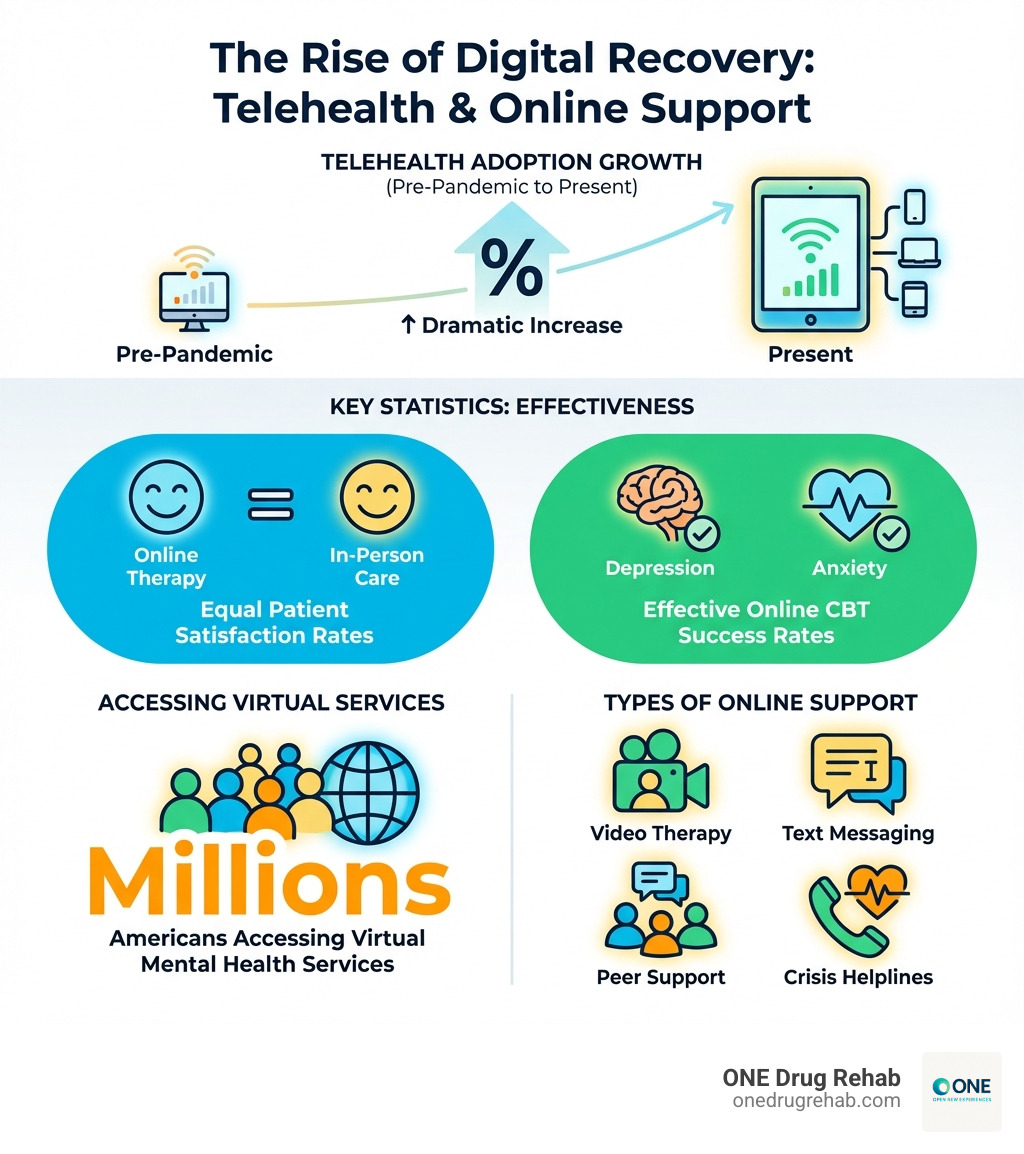
The digital age has transformed addiction treatment, allowing millions of Americans to seek professional, confidential support from home. Over 3 million people have already used online therapy platforms for mental health and addiction issues.
The research is clear: online therapy can be as effective as in-person treatment for conditions like depression, anxiety, and trauma. Patient satisfaction is comparable, and success depends more on session attendance than location.
This guide covers how virtual treatment works, how to find qualified providers, what to expect in sessions, and how to handle costs and insurance. We also cover the limitations of online treatment and when in-person care is necessary.
Understanding your online options is a crucial first step toward recovery for yourself or a loved one.
Relevant articles related to addiction help online:
What is Online Addiction Treatment and How Does It Work?
Online addiction treatment, also known as telehealth or teletherapy, uses digital technology to provide remote therapeutic services. This allows you to access care from anywhere with an internet connection, breaking down geographical barriers and making treatment more convenient. Instead of traveling to an office, sessions take place via video calls, phone calls, or text messages.

Defining Telehealth for Addiction
Telehealth, when applied to addiction, refers to delivering professional counseling and support services through digital means. These remote sessions allow individuals to engage in talk-based therapy and receive guidance from licensed professionals without being physically present in a clinic.
You connect with a therapist or support group using a smartphone, computer, or tablet. These talk-based sessions focus on your experiences and recovery goals, similar to traditional therapy. Session frequency is agreed upon with your provider, and payment models range from per-session fees to monthly subscriptions.
Providers use HIPAA-compliant platforms to ensure your privacy and the confidentiality of your health information. This digital approach is revolutionizing Behavioral Health Treatment by making it more flexible. To learn more about therapeutic approaches, explore our guide on Addiction Therapy Methods.
Different Types of Online Addiction Therapy and Support
Online addiction help offers various modalities to suit individual needs, similar to in-person treatment:
- Individual Therapy: One-on-one sessions with a licensed therapist to explore your addiction, triggers, and develop personalized coping strategies.
- Group Therapy: Online group sessions bring together individuals with similar struggles, providing a sense of community and shared learning. Our Group Therapy Addiction Complete Guide offers more insights.
- Couples Counseling and Family Programs: Addiction impacts the entire family. Online counseling can help families heal communication breakdowns and repair trust. Specialized virtual programs may also be available for children, adolescents, and caregivers. We also offer resources like an Inpatient Rehab for Mothers Guide and an Addiction Treatment Teens Complete Guide.
- Specialized Programs: Some online services offer programs for specific demographics, such as Spanish-language sessions or healthy relationships series.
These diverse options help individuals and their loved ones find the right support for navigating addiction and recovery.
Peer Support and Self-Help in the Digital Space
Beyond professional therapy, online platforms are a hub for peer support and self-help, which are invaluable for fostering community and reducing isolation.
- Online Forums and Recovery Communities: These digital spaces allow individuals to connect with peers, share experiences, ask questions, and receive support.
- Virtual Support Meetings: Many peer-support models have moved online. These virtual meetings, often based on principles like Cognitive Behavioral Therapy (CBT), offer a structured, peer-led environment to overcome addictive behaviors. They are often free and confidential, turning screens into supportive virtual meeting rooms. For a deeper dive into online peer support, check out our 12 Step Groups Online Guide.
These digital avenues for peer support complement professional treatment by offering continuous and accessible resources for maintaining sobriety.
The Pros and Cons of Seeking Addiction Help Online
When considering addiction help online, it’s important to weigh both the advantages and potential limitations. While virtual treatment has opened doors for many, it’s not a one-size-fits-all solution.
| Benefit | Drawback |
|---|---|
| Convenience and Accessibility | Technology Requirements & Internet Stability |
| Improved Privacy and Anonymity | Potential for Reduced Emotional Connection |
| Reduced Stigma | Difficulty Picking Up Nonverbal Cues |
| Wider Selection of Therapists | Not Suitable for Severe Cases |
| Comfort of Home Environment | Unsuitable for Medical Detox |
| Flexible Scheduling | Risk of Isolation |
The Major Benefits of Virtual Treatment
One of the most significant advantages of seeking addiction help online is the convenience and accessibility it offers.
- Convenience: Sessions eliminate travel time and costs, fitting easily into your schedule from any location with an internet connection. This flexibility is ideal for busy individuals or those in remote areas.
- Accessibility: Virtual treatment removes geographical barriers, giving you access to a wider range of therapists and specialized programs, which is especially helpful for those in rural areas or with mobility issues.
- Improved Privacy and Anonymity: The discreet nature of online therapy reduces the stigma of being seen entering a clinic. You can receive treatment privately, and some platforms even allow aliases for added confidentiality.
- Reduced Stigma: Receiving care from home can make addiction treatment feel more normalized, making it easier for individuals to take the first step towards recovery.
- Wider Selection of Therapists: Online platforms connect you with therapists from various locations, increasing your chances of finding a specialist who matches your needs.
- Comfort of Home: Being in a familiar environment can help you feel more at ease and open during sessions. The comfort of home, including the presence of pets, can create a more relaxed therapeutic setting, a concept also explored in our Pet-Friendly Inpatient Rehab guide.
- Flexible Scheduling: Many online providers offer evening and weekend hours, making it easier to find appointments that work with your schedule.
These benefits create a welcoming entry point for many seeking support on their recovery journey.
Potential Drawbacks and Limitations
While the advantages of addiction help online are numerous, it’s important to acknowledge its limitations. Virtual care is not suitable for everyone or every situation.
- Technology Requirements: Reliable internet and a suitable device are essential. Technical issues can disrupt sessions and hinder therapy.
- Lack of Non-Verbal Cues: Therapists may miss subtle non-verbal cues like body language over video, which can sometimes impact the therapeutic connection.
- Reduced Emotional Connection: For some, the physical distance of online therapy can make it challenging to build the same rapport they might experience in person.
- Challenges with Written Communication: Nuances can be lost in text-based communication, leading to misunderstandings. Also, therapist response times for messages may be limited to once or twice per business day.
- Not Suitable for Severe Cases: Online therapy is not for severe psychiatric crises, including suicidal thoughts, or for severe substance use disorders that require medical intervention. These conditions require a higher level of care, such as an inpatient program.
- Unsuitable for Medical Detox: If you require detox from substances with dangerous withdrawal symptoms like alcohol or benzodiazepines, medical supervision is crucial. Online therapy cannot provide this. For more on this topic, see our guide on Benzo Withdrawal Treatment.
- Risk of Isolation: Relying solely on virtual interactions without real-world engagement might contribute to feelings of isolation for some individuals.
- Privacy at Home: Finding a private, quiet space for sessions can be difficult in a busy household, which may impact confidentiality and focus.
Finding and Starting Your Journey with Addiction Help Online
Starting your search for addiction help online can feel overwhelming, but it can be a manageable process. Our goal at ONE Drug Rehab is to provide a non-affiliated resource to help you research treatment options and find the best fit.

How to Find a Licensed and Qualified Online Provider
Finding a licensed and qualified online provider is paramount to effective treatment. Due diligence is just as essential in the virtual space as it is for in-person care.
- Verifying Credentials: Always confirm your provider is licensed. You can check their status and ensure their license is active through state licensing board directories.
- Using Reputable Directories: Government resources like SAMHSA’s FindTreatment.gov are invaluable. This confidential, anonymous resource helps you search for treatment facilities for mental and substance use disorders across the U.S. Its information is updated annually, ensuring reliability.
- Therapist Specializations: Look for therapists who specialize in addiction and any co-occurring mental health disorders you may be facing, such as anxiety or depression. Finding a provider skilled in Co-occurring Disorder Treatment is crucial for those with dual diagnoses.
- Reading Reviews and Testimonials: While not the only factor, client reviews can offer insights into a therapist’s approach and effectiveness. Look for patterns in feedback regarding communication and support.
By taking these steps, you can confidently select a provider who is qualified and a good match for your needs.
What to Expect During Your Online Therapy Sessions
Understanding the typical flow of sessions can ease any anxieties about starting addiction help online.
- Initial Assessment: Your journey begins with an assessment to discuss your background, addiction history, and goals. This helps the therapist create a treatment plan. Some platforms use virtual assistants to guide you through this initial process.
- Setting Recovery Goals: You and your therapist will establish clear, achievable recovery goals, such as developing coping mechanisms or improving relationships.
- Session Frequency and Communication Methods: Sessions typically occur weekly or bi-weekly. Communication methods can include:
- Live Video Sessions: These are most similar to in-person therapy.
- Phone Sessions: An audio-only option for those who prefer it.
- Text-Based Messaging: Some platforms offer messaging with your therapist between live sessions, though responses may not be immediate.
- Building Rapport: A strong therapeutic relationship is vital. While it might feel different through a screen, many people establish deep connections with their online therapists. Be open, honest, and give the process time.
For a broader understanding of the recovery process, our How Rehab Works Ultimate Guide can provide valuable context.
How to know if addiction help online is the right fit for you
Determining if addiction help online is right for you involves assessing your situation, addiction severity, and personal preferences.
- Severity of Addiction: This is the most critical factor. Online therapy is best for mild to moderate substance use disorders. It is not for severe cases requiring medical detox or for those in a mental health crisis. Severe addiction or complex co-occurring conditions require a higher level of care, like inpatient treatment.
- Personal Motivation: Online therapy requires self-discipline. You must actively engage in sessions and be proactive in your recovery. High motivation is key to success.
- Comfort with Technology: A basic comfort level with technology and stable internet is essential, as technical difficulties can disrupt your progress.
- Need for Structure: Consider if you need the highly structured environment of a residential program. Online therapy offers less supervision than an inpatient setting, so assess what level of structure you need to succeed. For a comparison, see our article on How Do Residential and Outpatient Rehab Programs Compare?.
- Privacy and Environment: You need a private, quiet space for sessions to maintain confidentiality and focus.
Honestly assessing these aspects will help you decide if online addiction help online aligns with your goals. Many providers offer initial consultations to help you explore your options. Our guide on Getting Sober Help is another good starting point.
Navigating Confidentiality, Costs, and Crisis Support
When seeking addiction help online, practical considerations like privacy, payment, and crisis support are just as important as the therapy itself. Understanding these aspects will help you move forward with confidence.
Are Online Addiction Treatment Services Confidential?
Confidentiality is a cornerstone of addiction treatment, and reputable online services prioritize it.
- HIPAA Compliance: The Health Insurance Portability and Accountability Act (HIPAA) requires providers to use secure, encrypted platforms to protect your health information. Reputable online services are HIPAA compliant to ensure your data and sessions are private.
- Secure Video Platforms and Data Encryption: Legitimate online therapy services use end-to-end encryption for video calls and secure servers for storing data. This digital security can be reassuring if you’re concerned about privacy.
- Informed Consent and Privacy Policies: Before starting, your provider should give you clear informed consent documents and privacy policies. These outline how your information is used and protected, and any limits to confidentiality (like risk of harm). Read these documents carefully. You can also review general guidelines on our Privacy Policy page.
- Group Session Confidentiality: In online group therapy, participants are required to maintain confidentiality and not share information discussed in the group. Often, only first names are used to protect anonymity.
While services offer robust security, it’s also crucial for you to be in a private space during sessions to prevent being overheard.
How to Pay for Online Treatment and Use Insurance
The cost of addiction help online varies, but many options can make it affordable.
- Subscription Costs vs. Per-Session Fees: Platforms may use a subscription model (e.g., a weekly or monthly fee for sessions and messaging) or charge per session. Costs on some platforms can range from $65 to $90 per week.
- Sliding Scale Options: Some therapists offer a sliding scale fee, adjusting costs based on your income. Don’t hesitate to ask about this.
- Insurance Coverage: Many insurance companies now cover telehealth services. Verify your benefits directly with your provider or use the online service’s verification tool. Our Rehab Insurance Verification service can help you understand your coverage. Medicare and Medicaid may also cover telehealth.
- HSA/FSA Funds: Many online addiction treatment services are approved expenses for Health Savings Accounts (HSA) and Flexible Spending Accounts (FSA), allowing you to use pre-tax dollars.
- Understanding the Full Cost: To get a complete picture of potential expenses, refer to our comprehensive guide on Drug Rehab Cost.
Don’t let financial concerns stop you from seeking help. Many providers will work with you to find a payment solution.
Resources for Immediate Crisis Support
While addiction help online offers incredible support, it is not designed for immediate crisis intervention. If you or someone you know is in an emergency, use traditional emergency channels.
- Emergency Situations: For medical emergencies, overdose, or severe psychological distress, call 911 or go to the nearest emergency room. Online therapy is not equipped to handle life-threatening situations.
- Overdose Risk: If you suspect an opioid overdose, administer naloxone if available and seek immediate medical attention. Stay with the person until help arrives.
- Suicidal Thoughts: If you are experiencing suicidal thoughts, reach out for immediate support.
- 988 Suicide & Crisis Lifeline: Call or text 988 for free and confidential support, 24/7.
- Crisis Text Line: Text “HOME” to 741741 to connect with a crisis counselor.
- SAMHSA National Helpline: For treatment referral and information, call 1-800-662-HELP (4357).
- Disaster Distress Helpline: For crisis counseling related to disasters, call 1-800-985-5990.
- Poison Control: For poison-related emergencies, call 1-800-222-1222.
- Other Helplines: Additional resources like Boys Town National Hotline (1-800-448-3000), NAMI Helpline (1-800-950-6264), and National Runaway Safeline (1-800-RUNAWAY) provide specialized support.
These resources are available 24/7 to provide immediate assistance. For a comprehensive list of emergency contacts, see our 24 Hour Rehab Hotline page. Your safety is the top priority.
Frequently Asked Questions about Online Addiction Support
We understand you might have more questions about addiction help online. Here are some common inquiries we often hear:
How effective is online therapy compared to in-person treatment?
Research shows online therapy is often as effective as in-person treatment for many mental health disorders, with similar patient satisfaction rates. Success depends on consistent attendance and engagement. Studies show online cognitive behavioral therapy (CBT) is as effective as in-person CBT for conditions like depression and panic disorders, highlighting the potential of virtual care for addiction support.
Can I get prescribed medication through an online platform?
This depends on the provider. Some online platforms have psychiatrists or medical doctors who can prescribe medication. However, most therapists and counselors cannot. If you need medication, seek a provider with licensed medical staff and clarify this service before starting treatment.
What if I don’t connect with my assigned online therapist?
A strong therapeutic relationship is vital. If you don’t connect with your therapist, it’s normal to request a change. Reputable online platforms have a simple process for switching therapists to ensure you find a good fit, which is crucial for your success in addiction help online.
Your Path to Recovery Starts with a Single Step
Online addiction help makes recovery more accessible and private than ever. By understanding the types of support, finding a qualified provider, and preparing for treatment, you can confidently take the first step. The most important thing is to reach out. Resources like ONEDrugRehab.com provide a non-affiliated directory to help you research and compare treatment options to find the best fit for your unique situation.
Take the first step in your recovery journey today.