
Understanding Adolescent Addiction Treatment Options
Addiction treatment for teens requires specialized approaches that address the unique developmental, psychological, and social needs of adolescents. Unlike adult treatment programs, teen-focused care must account for ongoing brain development, family dynamics, educational needs, and the specific challenges facing young people today.
Main Treatment Options for Teens:
- Medical Detox – Medically supervised withdrawal management
- Inpatient/Residential – 24/7 care in structured facility (30-180+ days)
- Outpatient Programs – PHP, IOP, and standard outpatient (live at home)
- Therapeutic Approaches – CBT, DBT, family therapy, holistic methods
- Specialized Programs – Dual diagnosis, trauma-informed, faith-based options
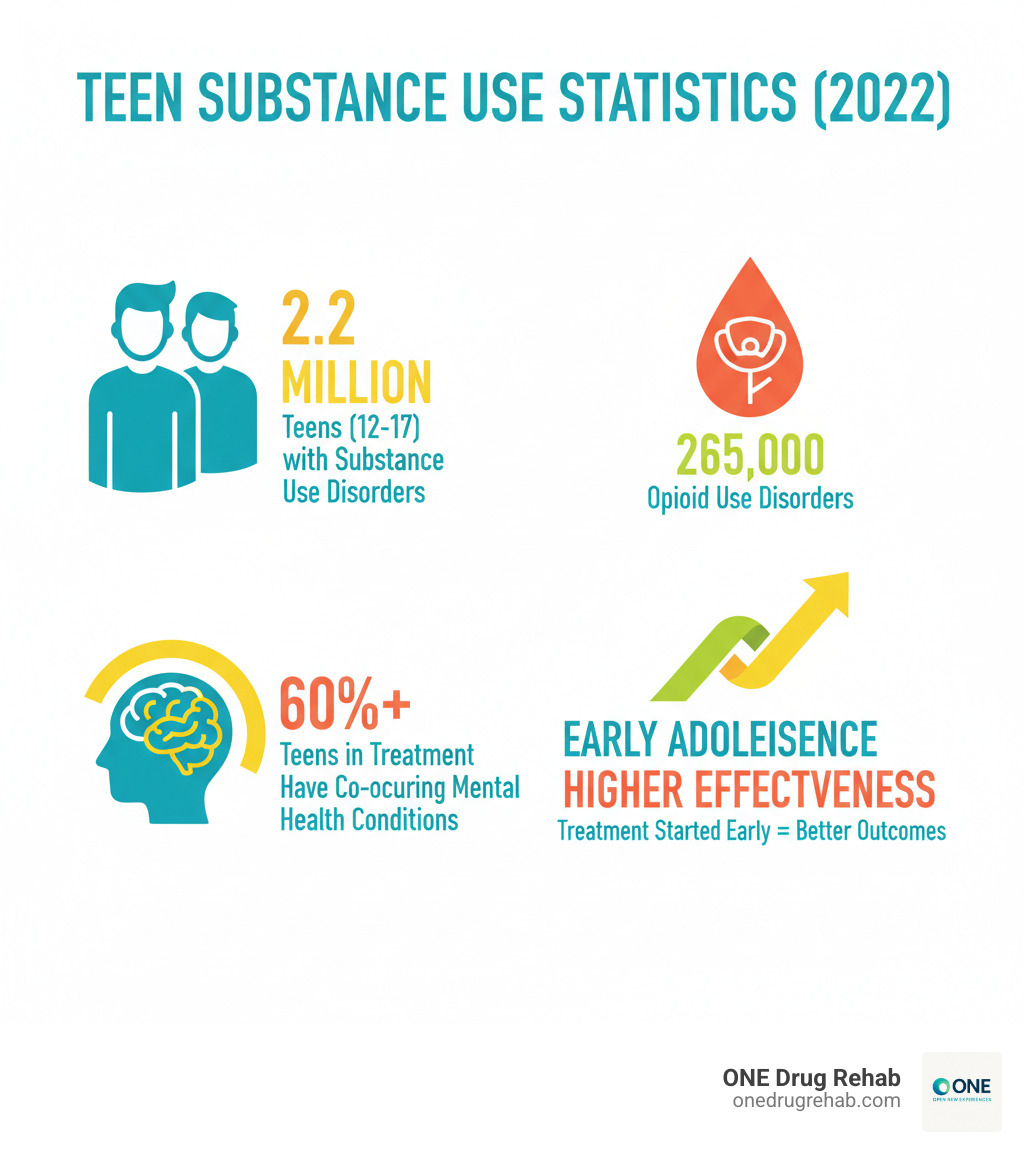
The statistics paint a concerning picture. In 2022, an estimated 2.2 million people between ages 12 and 17 had a substance use disorder, with 265,000 having an opioid use disorder specifically. Even more troubling, research shows that over 60% of adolescents in substance use treatment programs also meet criteria for another mental illness.
But here’s the important part: treatment works. The developing teenage brain that makes adolescents more vulnerable to addiction also makes them more responsive to treatment and recovery interventions.
Why teen-specific treatment matters:
Teen addiction isn’t just “adult addiction in a smaller package.” Adolescents face unique pressures – peer influence, academic stress, identity formation, and family dynamics. Their brains won’t fully develop impulse control until their mid-twenties. This means they need treatment approaches designed specifically for their developmental stage.
The good news? When teens receive appropriate, specialized care, they often show remarkable resilience and capacity for change. Early intervention can literally alter the trajectory of a young person’s entire life.
Recognizing the Need for Help: Signs, Risks, and When to Act
As a parent, few moments are more heart-wrenching than realizing your teenager might be struggling with substance use. That gut feeling when something just isn’t right. The sleepless nights wondering if you’re overreacting or if you should have acted sooner.
You’re not alone in this struggle, and your instincts matter.

The challenge many parents face is distinguishing between typical teenage behavior and signs of a developing substance use problem. Teenagers naturally push boundaries, test independence, and sometimes make poor choices. But when does “normal” teen behavior cross the line into something more serious?
Understanding the difference can literally save your child’s life. Addiction treatment for teens works best when it starts early, before substance use becomes deeply entrenched. The teenage years are actually a window of opportunity – while adolescent brains are more vulnerable to addiction, they’re also more responsive to treatment and change.
Common Signs and Symptoms of Teen Substance Use
Every teenager is different, but certain patterns tend to emerge when substance use becomes problematic. Think of these as red flags rather than definitive proof – but when you see multiple signs appearing together, it’s time to pay closer attention.
Behavioral changes often appear first. Your once-social teenager might suddenly have an entirely new friend group, especially kids you don’t know or who seem to encourage risky behavior. School performance typically suffers – grades drop, teachers report problems, or your teen starts skipping classes altogether.
You might notice increased secretiveness about where they’re going, who they’re with, or what they’re doing. They become evasive about simple questions and spend more time isolated in their room. Hobbies and activities they once loved – sports, music, art – suddenly hold no interest.
Physical signs can be harder to miss once you know what to look for. Changes in appearance like neglecting hygiene, sudden weight loss or gain, or consistently bloodshot eyes. You might smell alcohol, marijuana, or unfamiliar chemical odors on their clothes or breath. Sleep patterns often shift dramatically – either sleeping far too much or hardly at all.
Perhaps most concerning are the paraphernalia – small pipes, rolling papers, tiny baggies, or unusual containers hidden in their room or backpack.
Emotional and psychological changes can be the most painful to witness as a parent. Severe mood swings that go beyond typical teenage moodiness. Your child might become aggressive, paranoid, or defensive when asked simple questions. Depression, anxiety, or even mentions of suicide should always be taken seriously.
The key is recognizing patterns. One bad grade or one moody week doesn’t signal addiction. But when several of these signs appear together and persist over time, professional help may be needed. The evidence is clear that early use increases risk of developing lifelong substance use disorders.
Underlying Causes and Risk Factors
Here’s something many parents don’t realize: teenagers rarely start using substances “just for fun.” Most often, they’re trying to cope with something difficult in their lives.
Peer pressure remains a powerful force, especially in today’s social media world where substance use can seem glamorous or normal. But it’s often not the whole story.
Family dynamics play a huge role. Teens from homes with high conflict, inconsistent rules, or parental substance use face higher risks. Sometimes even well-meaning families create pressure – academic expectations that feel impossible to meet can drive teens to seek escape.
Mental health conditions are perhaps the biggest factor parents overlook. Research shows that over 60% of teens in substance use treatment also have another mental health condition. Your teenager might be using alcohol or drugs to quiet anxiety, numb depression, or cope with ADHD symptoms.
Trauma – whether from abuse, neglect, accidents, or other difficult experiences – significantly increases addiction risk. Substances can temporarily ease emotional pain, creating a dangerous cycle.
For teens struggling with underlying anxiety or depression, specialized treatment approaches can make all the difference. Resources like Holistic Anxiety Treatment and Holistic Depression Treatment address both the substance use and the root causes.
The teenage brain is still developing, particularly the areas responsible for impulse control and decision-making. This biological reality makes teens more vulnerable to addiction but also more capable of recovery when they receive appropriate help.
When Is It Time for Professional Help or Rehab?
This is the question that keeps parents awake at night: Is my teenager’s substance use serious enough for professional treatment?
Trust your instincts, but also look for specific warning signs that indicate addiction treatment for teens may be necessary.
Inability to stop is a clear indicator. Your teen might promise to quit, genuinely want to stop, but find themselves unable to follow through. They continue using despite negative consequences that would typically motivate change.
Escalating use is another red flag. What started as occasional weekend drinking becomes daily use. Experimentation with “softer” substances progresses to harder drugs. The amounts needed to achieve the same effect keep increasing.
Negative consequences pile up – failing grades, legal troubles, damaged relationships, health problems – but substance use continues anyway. This is particularly concerning because healthy teenagers typically adjust their behavior when it causes problems.
Safety becomes an issue when teens drive under the influence, pass out from drinking, or use substances in dangerous situations. With fentanyl contaminating many street drugs, even “experimenting” can be life-threatening.
Withdrawal symptoms – physical discomfort, mood changes, or anxiety when not using – suggest physical dependence has developed.
If your teen shows signs of co-occurring mental health issues alongside substance use – severe depression, anxiety, or mentions of suicide – immediate professional help is crucial.
Sometimes direct conversation isn’t enough, and families consider staging an intervention. This can help teens understand how their substance use affects others and that help is available. While voluntary treatment typically works better, parents of minors do have legal options for involuntary treatment when a child’s life is at risk.
The bottom line? If you’re questioning whether your teen needs help, that question itself suggests it’s time to seek professional assessment. Understanding How Does Rehab Work? can help you feel more prepared for this important conversation.
Remember – seeking help isn’t giving up on your teenager. It’s fighting for their future.
A Guide to Addiction Treatment for Teens: Programs and Levels of Care
Finding the right addiction treatment for teens means navigating a continuum of care, from initial assessment to ongoing support. The goal is to match the teen’s unique needs with the most appropriate program.

A comprehensive assessment process is always the first step. Treatment professionals evaluate the teen’s substance use history, mental health status, family dynamics, and developmental stage. This helps determine the ideal level of care for their specific situation.
We firmly believe that specialized adolescent treatment centers are far more effective than general rehab facilities. Why? Because they’re designed specifically for the developing teenage brain and the unique challenges young people face. Teen treatment focuses on their interests, goals, and communication styles. It addresses concerns like social pressures, peer relationships, independence, family conflicts, and academic stress.
The sessions are often shorter and more interactive, conversations are more down-to-earth, and the entire environment is custom to their age group. This isn’t just adult treatment in a smaller package—it’s a completely different approach that recognizes where teens are in their development.
Medical Detoxification
For some teens, especially those with severe physical dependence on substances like alcohol or opioids, medical detoxification is the crucial first step in addiction treatment for teens. This is the process of safely clearing substances from the body while managing uncomfortable or potentially dangerous withdrawal symptoms.
Detox should always occur under medical supervision. Healthcare professionals can administer medications to ease withdrawal symptoms, monitor vital signs, and ensure the teen’s safety and comfort throughout the process.
Detox isn’t a treatment for addiction itself—it’s a necessary precursor to entering a formal addiction program. Think of it as clearing the slate so the real therapeutic work can begin. Once physically stabilized, teens can focus on learning new coping skills and addressing the underlying causes of their substance use.
For less severe cases where teens can safely detox while living at home, Outpatient Detox Programs might be an appropriate option.
Inpatient and Residential Programs
When a teen’s substance use disorder is severe, or their home environment isn’t conducive to recovery, inpatient or residential programs offer the highest level of structured care. These programs provide 24/7 supervision and support in a therapeutic environment, completely removing the teen from triggers and negative influences.
Inpatient rehab is often recommended for teens who are having suicidal thoughts, have severe substance use patterns, are actively withdrawing from substances (after detox), lack support at home, or need an environment completely free from distractions and temptations.
These facilities provide a safe, structured setting where teens live on-site for the duration of their treatment. Programs can range from 30 days to several months, with some long-term residential options extending 12-18 months. Research from NIDA suggests that programs under 90 days may have limited effectiveness, with longer durations typically yielding better outcomes.
The good news is that family involvement remains a priority. Family members can often visit regularly, and many programs include education for families on coping strategies and support techniques. Family therapy is typically provided to improve communication and rebuild trust.
For a deeper understanding of this option, check out our guide on Inpatient Rehab for Drugs and How do Residential and Outpatient Rehab Programs Compare?.
Outpatient Programs (PHP, IOP, General)
Outpatient programs offer a flexible alternative to residential care, allowing teens to live at home while attending therapy and continuing with school or work. These programs vary significantly in intensity, offering different levels of support based on the teen’s specific needs and circumstances.
Partial Hospitalization Programs (PHP) provide the most intensive outpatient care, typically involving 6-8 hours of treatment per day, 5-7 days per week. This level is ideal for teens who need significant support but can safely return home each evening.
Intensive Outpatient Programs (IOP) offer a step-down approach, usually requiring 3-4 hours of treatment, 3-4 days per week. This works well for teens who are transitioning from residential care or those who need substantial support while maintaining their daily routines.
Standard outpatient care provides the most flexibility, with individual therapy sessions, group meetings, and family counseling scheduled around school and other commitments. This level works best for teens with strong family support and less severe substance use issues.
The beauty of outpatient care is that teens can immediately practice what they’re learning in real-world situations. They face the same triggers and pressures they’ll encounter in recovery, but with professional support to guide them through challenges.
For more detailed information about these options, explore our Outpatient Rehab Programs Guide and learn specifically about IOP Drug Program approaches.
Each level of care serves a vital purpose in the recovery journey. The key is matching the teen’s current needs with the right intensity of support, knowing that these needs may change as they progress in their recovery.