

Why Holistic Depression Treatment is Gaining Ground in Mental Health
Holistic depression treatment looks at the whole person—mind, body, spirit—and works alongside conventional care. Instead of focusing only on symptoms, it considers lifestyle, stress, and connection, helping many people build a fuller path to recovery.
Quick Guide to Holistic Depression Treatment:
- Mind-Body Practices: Meditation, yoga, tai chi, and deep breathing
- Nutrition: Omega-3s, B-vitamins, and anti-inflammatory foods
- Lifestyle Changes: Regular exercise, better sleep, stress management
- Natural Supplements: St. John’s Wort, SAMe, 5-HTP (with medical guidance)
- Bodywork: Massage therapy, acupuncture, reflexology
- Integration: Works best alongside conventional therapy and medication
About half of people with depression and anxiety now use some form of holistic therapy. More than 16 million American adults experience depression each year. Research shows mindfulness meditation can improve symptoms in eight weeks, and 150 minutes of moderate exercise weekly can significantly reduce anxiety and depression.
Combining conventional treatment with holistic approaches often produces the best outcomes.
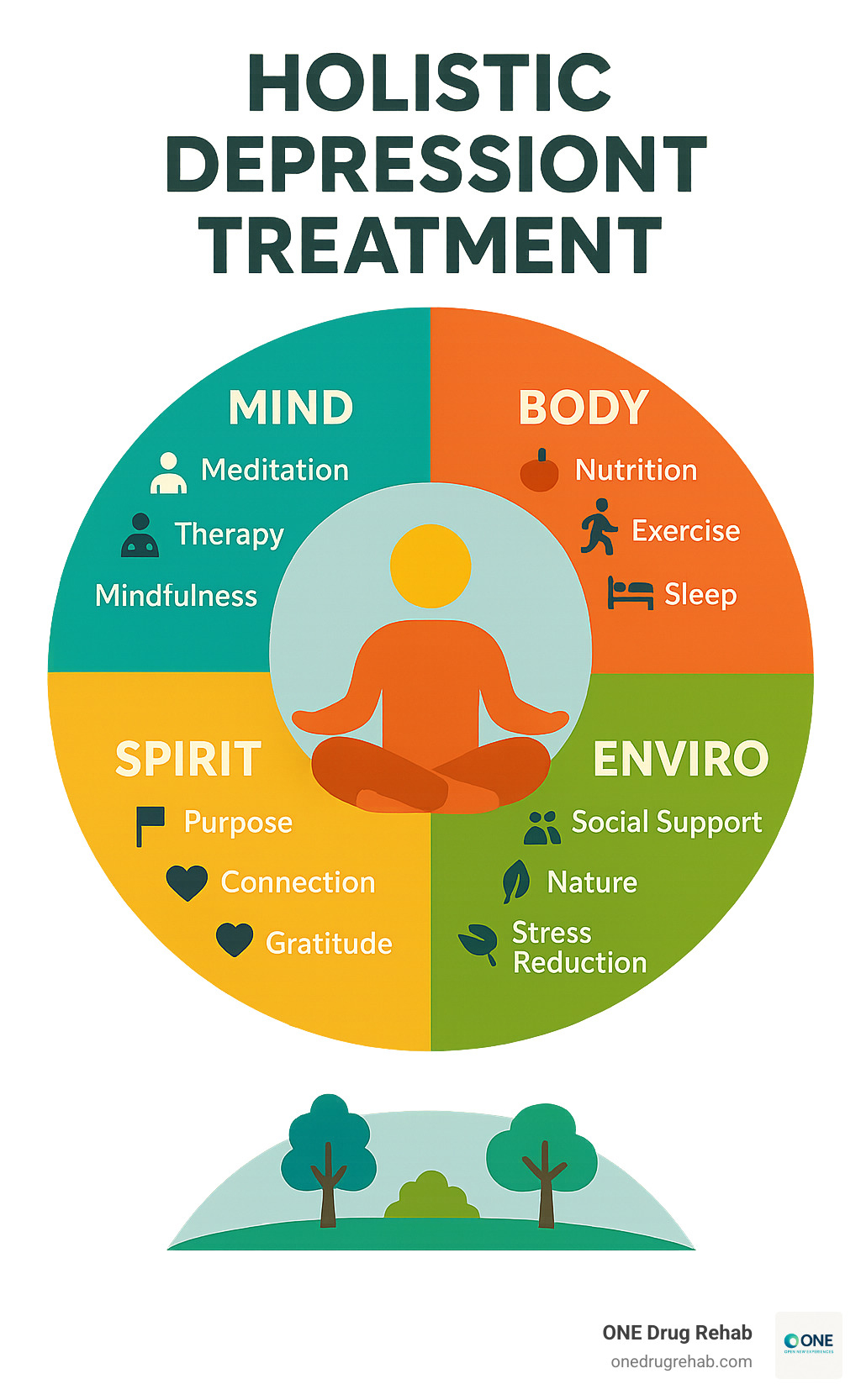
Key holistic depression treatment vocabulary:
Understanding the Holistic Approach to Depression
Holistic depression treatment sees you as a whole person and explores why symptoms arise—looking at sleep, stress, nutrition, movement, relationships, and purpose. The aim is personalized care that empowers you with tools you can use for life.
This is not anti-medicine. Holistic strategies typically complement therapy and, when needed, medication.
What Are Holistic Therapies?
- Mind-body practices: Meditation, yoga, breathwork
- Nutritional strategies: Omega-3s, B-vitamins, balanced meals
- Lifestyle changes: Exercise, sleep routines, social connection
- Herbal support: St. John’s Wort, SAMe (with professional guidance)
- Bodywork: Massage, acupuncture, reflexology
Integrating Holistic and Conventional Approaches
Psychotherapy and medications can form a strong foundation. Holistic practices can improve results by reducing stress, improving sleep, and supporting brain health. Never stop medication without medical supervision; build a coordinated plan with your provider.
Mind-Body Practices: Connecting Mental and Physical Health

Mind-body practices calm the nervous system and support mood-regulating neurotransmitters. They can reduce cortisol and help your brain become more flexible and resilient.
Meditation and Mindfulness for Mood Regulation
Mindfulness teaches you to notice thoughts without judgment. In as little as eight weeks, structured practice can improve depression and anxiety. Simple breathwork—like 5 counts in and 5 out—can quickly shift your body into a calmer state.
The Role of Yoga, Tai Chi, and Qigong
Gentle movement paired with breath lowers stress, eases tension, and builds presence. These practices are also a manageable way to add physical activity.
Bodywork Therapies
- Massage therapy can lift mood by increasing serotonin and dopamine.
- Reflexology promotes relaxation through focused touch on feet/hands/ears.
- Acupuncture may complement care for depression.
The Role of Nutrition and Lifestyle in Holistic Depression Treatment

Nutrition, movement, sleep, and gut health are pillars of holistic depression care. Aim for steady energy, less inflammation, and consistent routines.
The Anti-Depression Diet: Foods That Fight Back
- Omega-3s: Salmon, sardines, flax, walnuts
- B-vitamins (B12, B6): Support neurotransmitters
- Magnesium: Leafy greens, nuts, seeds, whole grains
- Probiotics: Yogurt, kefir, kimchi, sauerkraut
Limit ultra-processed foods, added sugars, excess caffeine, and alcohol.
The Power of Exercise: A Natural Antidepressant
About 150 minutes/week of moderate activity can reduce depression and anxiety and, for some, be comparable to medication. Choose activities you enjoy and keep it consistent.
A Guide to Herbal Remedies and Supplements
St. John’s Wort, SAMe, and 5-HTP can help some people but may interact with medications (including antidepressants and birth control). Always consult your clinician before starting any supplement.
Mind-Body Practices: Connecting Mental and Physical Health

Mind and body constantly influence each other. Practices that activate the parasympathetic nervous system lower stress hormones and support healthier mood chemistry.
Meditation and Mindfulness for Mood Regulation
Short, regular sessions help interrupt rumination and calm the nervous system. Guided imagery and slow, even breathing are accessible tools for daily relief.
The Role of Yoga, Tai Chi, and Qigong
These movement disciplines blend breath, focus, and gentle activity to reduce tension and increase energy. They also make exercise more approachable. If you’re curious about how movement practices support recovery, see our addiction treatment blog.
Bodywork Therapies
Massage can ease stress and lift mood; reflexology promotes deep relaxation; and acupuncture has emerging evidence as a supportive option. Together, these can help your body relax—making mental healing easier.
The Role of Nutrition and Lifestyle in Holistic Depression Treatment
Daily habits profoundly shape mood. Holistic care prioritizes whole foods, movement, restorative sleep, and gut health to calm inflammation and stabilize energy.
The Anti-Depression Diet: Foods That Fight Back
- Omega-3s (EPA/DHA): Fatty fish, flax, chia, walnuts
- B-vitamins (B12, B6) and Folate: Crucial for serotonin and dopamine
- Magnesium: Leafy greens, nuts, seeds, whole grains, dark chocolate
- Probiotics: Fermented foods or supplements
Limit refined sugars, ultra-processed foods, and excess caffeine. Alcohol can worsen depression and disrupt sleep. Some people report sensitivity to artificial sweeteners; if relevant, discuss with your clinician.
The Power of Exercise
About 150 minutes/week of moderate activity significantly reduces symptoms. Even short daily walks help build momentum and self-efficacy.
Herbal Remedies and Supplements
St. John’s Wort (interacts with many meds), SAMe (possible nausea, anxiety), and 5-HTP (risk of serotonin syndrome with antidepressants) require medical guidance. Because supplements aren’t regulated like prescriptions, choose reputable brands and coordinate with your healthcare provider.
Why Holistic Depression Treatment is Gaining Ground in Mental Health
Holistic depression treatment supports mind, body, and spirit while complementing therapy and, when needed, medication.
Quick Guide to Holistic Depression Treatment:
- Mind-Body Practices: Meditation, yoga, tai chi, and deep breathing
- Nutrition: Omega-3s, B-vitamins, and anti-inflammatory foods
- Lifestyle Changes: Regular exercise, better sleep, stress management
- Natural Supplements: St. John’s Wort, SAMe, 5-HTP (with medical guidance)
- Bodywork: Massage therapy, acupuncture, reflexology
- Integration: Works best alongside conventional therapy and medication
Many people blend holistic tools with standard care. Eight-week mindfulness programs and 150 minutes of weekly exercise can meaningfully improve symptoms.
Key holistic depression treatment vocabulary:
Understanding the Holistic Approach to Depression
Holistic care asks why symptoms occur and addresses root contributors—sleep, nutrition, stress, movement, connection, and purpose—while working with evidence-based treatments.
What Are Holistic Therapies?
- Mind-body practices (meditation, breathwork, yoga)
- Nutritional strategies (omega-3s, B-vitamins, balanced meals)
- Lifestyle changes (exercise, sleep, social support)
- Herbal support (with clinical guidance)
- Bodywork (massage, acupuncture, reflexology)
Integrating Holistic and Conventional Approaches
Therapy and medication can stabilize symptoms; holistic tools improve resilience, routine, and self-care. Never stop medication without your prescriber’s guidance.
Mind-Body Practices: Connecting Mental and Physical Health
Our minds and bodies interact constantly. Practices that promote calm and presence can lower cortisol and support serotonin and dopamine balance.
Meditation and Mindfulness for Mood Regulation
Eight-week mindfulness programs often reduce rumination and improve symptoms. Guided imagery and paced breathing are easy daily tools.
The Role of Yoga, Tai Chi, and Qigong
Gentle movement with breath reduces tension and increases energy. These practices also help you engage in consistent, approachable exercise. If you’re interested in more on wellness and recovery, explore our addiction treatment blog.
Bodywork Therapies
Massage supports relaxation and mood; reflexology can relieve stress; acupuncture may help as a complementary option. These hands-on methods help the body unwind so the mind can follow.
The Role of Nutrition and Lifestyle in Holistic Depression Treatment
Daily choices around food, movement, sleep, and connection meaningfully affect mood. Holistic plans target inflammation, gut health, and steady energy.
The Anti-Depression Diet: Foods That Fight Back
- Omega-3s: Fatty fish, flax, chia, walnuts (1,000–3,000 mg EPA/DHA/day may be considered with guidance)
- B-vitamins and Folate: Crucial for neurotransmitter synthesis
- Magnesium: Leafy greens, nuts, seeds, whole grains
- Probiotics: Fermented foods or supplements
Limit added sugars, ultra-processed foods, excess caffeine, and alcohol. Some individuals report issues with artificial sweeteners or wheat—discuss with your clinician.
The Power of Exercise
About 150 minutes/week of moderate activity can significantly reduce depression and anxiety. Small, consistent steps are effective.
Herbal Remedies and Supplements
St. John’s Wort (significant drug interactions), SAMe (possible GI and sleep effects), and 5-HTP (risk of serotonin syndrome with antidepressants) require professional oversight. Use vetted brands; coordinate with your healthcare team.
Natural Remedies for Depression Are They Your Path to Sunshine?
Why Holistic Depression Treatment is Gaining Ground in Mental Health
Holistic depression treatment addresses mind-body-spirit and integrates with therapy and medication when appropriate. Many people find adding mindfulness and movement to treatment plans improves outcomes.
Quick Guide to Holistic Depression Treatment:
- Mind-Body Practices: Meditation, yoga, tai chi, and deep breathing
- Nutrition: Omega-3s, B-vitamins, and anti-inflammatory foods
- Lifestyle Changes: Regular exercise, better sleep, stress management
- Natural Supplements: St. John’s Wort, SAMe, 5-HTP (with medical guidance)
- Bodywork: Massage therapy, acupuncture, reflexology
- Integration: Works best alongside conventional therapy and medication
Combining approaches is often more effective than relying on a single method.
Key holistic depression treatment vocabulary:
Understanding the Holistic Approach to Depression
Holistic care personalizes treatment, addressing root causes while complementing conventional therapies. It explores how sleep, diet, stress, movement, and relationships shape mood.
What Are Holistic Therapies?
Mind-body practices (meditation, yoga), nutrition and supplements (omega-3s, B-vitamins), lifestyle changes (exercise, sleep), herbal support (with guidance), and bodywork (massage, acupuncture, reflexology).
Integrating Holistic and Conventional Approaches
Use the best of both worlds: therapy and medication when needed, plus daily practices that build resilience. Never stop prescribed meds without medical advice.
Mind-Body Practices: Connecting Mental and Physical Health
Mind-body practices can reduce stress and support neuroplasticity, helping the brain re-pattern reactions to stress.
Meditation and Mindfulness for Mood Regulation
Brief, consistent practice reduces rumination and improves emotional regulation. Guided imagery and slow breathing help calm the body.
The Role of Yoga, Tai Chi, and Qigong
These “meditation in motion” practices combine gentle movement with breath and focus to lower cortisol and increase energy. For more on wellness in recovery, visit our addiction treatment blog.
Bodywork Therapies
Massage fosters relaxation and mood balance; reflexology can reduce stress; acupuncture shows promise as a complementary option.
The Role of Nutrition and Lifestyle in Holistic Depression Treatment
Your daily habits are powerful levers for mood. Focus on whole foods, movement, sleep, and connection to support mental health.
The Anti-Depression Diet: Foods That Fight Back
- Omega-3s (EPA/DHA)
- B-vitamins (B12, B6) and folate
- Magnesium-rich foods
- Probiotics from fermented foods
Limit ultra-processed foods, added sugars, excess caffeine, and alcohol. Some people report sensitivity to artificial sweeteners or wheat.
The Power of Exercise: A Natural Antidepressant
About 150 minutes/week of moderate activity can rival medication for some people. Choose enjoyable activities and build consistency.
A Guide to Herbal Remedies and Supplements for Holistic Depression Treatment
St. John’s Wort (major interactions), SAMe (possible nausea, insomnia), and 5-HTP (risk with antidepressants) require medical guidance. Quality varies—use reputable, third-party-tested brands and inform your clinician.
Natural Remedies for Depression Are They Your Path to Sunshine?
Why Holistic Depression Treatment is Gaining Ground in Mental Health
Holistic depression treatment complements conventional care by addressing lifestyle, nutrition, stress, and connection—key drivers of mental health.
Quick Guide to Holistic Depression Treatment:
- Mind-Body Practices: Meditation, yoga, tai chi, and deep breathing
- Nutrition: Omega-3s, B-vitamins, and anti-inflammatory foods
- Lifestyle Changes: Regular exercise, better sleep, stress management
- Natural Supplements: St. John’s Wort, SAMe, 5-HTP (with medical guidance)
- Bodywork: Massage therapy, acupuncture, reflexology
- Integration: Works best alongside conventional therapy and medication
Combined approaches often yield stronger, longer-lasting results.
Understanding the Holistic Approach to Depression
Holistic treatment personalizes care, targeting root causes while integrating evidence-based therapy and, when appropriate, medication.
What Are Holistic Therapies?
Mind-body practices, nutrition and supplements, lifestyle changes, herbal support, and bodywork.
Integrating Holistic and Conventional Approaches
Build a coordinated plan with your providers. Keep medications as prescribed unless your clinician directs otherwise.
Mind-Body Practices: Connecting Mental and Physical Health
Mind-body tools can help rebalance stress responses and support mood chemistry.
Meditation and Mindfulness for Mood Regulation
Eight-week programs commonly reduce symptoms. Daily breathwork and guided imagery are practical entry points.
The Role of Yoga, Tai Chi, and Qigong
These practices weave gentle movement with breath to reduce tension and improve energy. For more on wellness and recovery, see our addiction treatment blog.
Bodywork Therapies
Massage, reflexology, and acupuncture can complement care by easing physical tension and promoting relaxation.
The Role of Nutrition and Lifestyle in Holistic Depression Treatment
Simple, consistent habits—whole foods, movement, sleep hygiene—are core to holistic care.
The Anti-Depression Diet: Foods That Fight Back
- Omega-3s (EPA/DHA)
- B-vitamins and folate
- Magnesium-rich foods
- Probiotics
Limit added sugars, ultra-processed foods, excess caffeine, and alcohol.
The Power of Exercise: A Natural Antidepressant
About 150 minutes/week of moderate activity can significantly reduce symptoms and build confidence and resilience.
A Guide to Herbal Remedies and Supplements for Holistic Depression Treatment
St. John’s Wort (drug interactions), SAMe (possible GI/sleep effects), 5-HTP (risk with antidepressants), and omega-3s may help under medical guidance. Choose reputable brands and coordinate with your clinician.
Natural Remedies for Depression Are They Your Path to Sunshine?
Why Holistic Depression Treatment is Gaining Ground in Mental Health
Holistic depression treatment addresses mind, body, and spirit while integrating with therapy and medication. Many people benefit from combining mindfulness, movement, nutrition, and sleep upgrades with standard care.
Quick Guide to Holistic Depression Treatment:
- Mind-Body Practices: Meditation, yoga, tai chi, and deep breathing
- Nutrition: Omega-3s, B-vitamins, and anti-inflammatory foods
- Lifestyle Changes: Regular exercise, better sleep, stress management
- Natural Supplements: St. John’s Wort, SAMe, 5-HTP (with medical guidance)
- Bodywork: Massage therapy, acupuncture, reflexology
- Integration: Works best alongside conventional therapy and medication
Key holistic depression treatment vocabulary:
Understanding the Holistic Approach to Depression
Holistic approaches look beyond symptom relief to address underlying contributors, while complementing evidence-based care.
What Are Holistic Therapies?
Mind-body practices (meditation, yoga), nutrition and supplements (omega-3s, B-vitamins), lifestyle changes (exercise, sleep, social connection), herbal support, and bodywork (massage, acupuncture).
Integrating Holistic and Conventional Approaches
Blend psychotherapy and, when needed, medication with daily wellness practices. Never change prescriptions without consulting your clinician.
Mind-Body Practices: Connecting Mental and Physical Health
Mind-body tools help quiet the stress response and support healthier mood patterns.
Meditation and Mindfulness for Mood Regulation
Consistent practice improves attention and reduces rumination. Breathwork and guided imagery are simple starting points.
The Role of Yoga, Tai Chi, and Qigong
These gentle practices unite movement and breath to lower stress and build energy. Learn more about well-being in recovery on our addiction treatment blog.
Bodywork Therapies
Massage, reflexology, and acupuncture can assist relaxation and complement other treatments.
The Role of Nutrition and Lifestyle in Holistic Depression Treatment
Lifestyle shifts are powerful: eat whole foods, move regularly, sleep well, and tend to gut health.
The Anti-Depression Diet: Foods That Fight Back
- Omega-3s, B-vitamins, folate, magnesium, probiotics
- Limit ultra-processed foods, added sugars, excess caffeine, and alcohol
Some people are sensitive to artificial sweeteners or wheat—consider discussing with your clinician.
The Power of Exercise: A Natural Antidepressant
About 150 minutes/week of moderate activity can meaningfully reduce symptoms and boost self-efficacy.
A Guide to Herbal Remedies and Supplements for Holistic Depression Treatment
Use St. John’s Wort, SAMe, or 5-HTP only with medical guidance due to interactions and side effects. Choose third-party-tested brands and tell your doctor about all supplements.