

Holistic Fitness Programs: Your 4-Pillar Guide to Thrive
Why Holistic Fitness Programs Are Changing Lives
Holistic fitness programs go beyond traditional workouts by treating your mind, body, and spirit as one connected system. Instead of just building muscle or burning calories, these programs focus on your complete well-being by integrating physical health, mental wellness, spiritual connection, nutrition, and community support.
The fitness world has evolved beyond the “no pain, no gain” mentality. People want to feel strong and resilient in all areas of life, not just physically fit. While traditional fitness often isolates muscle groups and focuses on metrics, holistic fitness recognizes that physical health is directly linked to your mental state, emotional balance, and life satisfaction.
The concept isn’t new, with roots in ancient traditions like yoga and Tai Chi, but it gained modern popularity as people sought more balanced approaches to wellness.
For those in recovery, this whole-person approach is especially powerful. Many treatment centers incorporate holistic fitness to help rebuild the mind-body connection, provide healthy stress management tools, and create supportive communities—all essential for lasting recovery.
What is Holistic Fitness and Why Does It Matter?
Holistic fitness programs focus on your whole self, viewing you as a connected system where everything affects everything else. This concept has roots in ancient traditions like yoga and Tai Chi, which understood that true wellness requires harmony between mind, body, and spirit.
The power of this approach lies in the mind-body connection. Stress at work can cause physical tension, while poor nutrition can tank your mood. Holistic fitness works with these connections, not against them. It’s about building whole-person health from the inside out and addressing root causes of fatigue or stress, rather than just chasing aesthetic goals.

What to Expect from Holistic Fitness Programs
Holistic programs are highly personalized, considering your sleep, stress, and life events alongside fitness goals. The focus shifts from performance to feeling, encouraging you to notice your energy and mood. You’ll experience an integration of practices, like blending strength training with meditation, and a serious emphasis on recovery to prevent burnout. A surprising benefit is the community support; strong social bonds improve well-being, and these programs foster a welcoming environment.
Traditional Fitness vs. Holistic Fitness
The key difference is the focus. Traditional fitness prioritizes metrics like calories burned or weight lifted, often isolating muscle groups. Holistic fitness prioritizes overall well-being, using integrated movement and paying attention to energy levels, sleep, and emotional balance.
While traditional fitness might push through pain, a holistic approach encourages listening to your body, recognizing that the mind-body-spirit connection is vital. It’s not that one is right and the other is wrong, but if traditional methods have left you feeling disconnected, a holistic program may be what you need.
The Core Pillars of a Balanced Routine
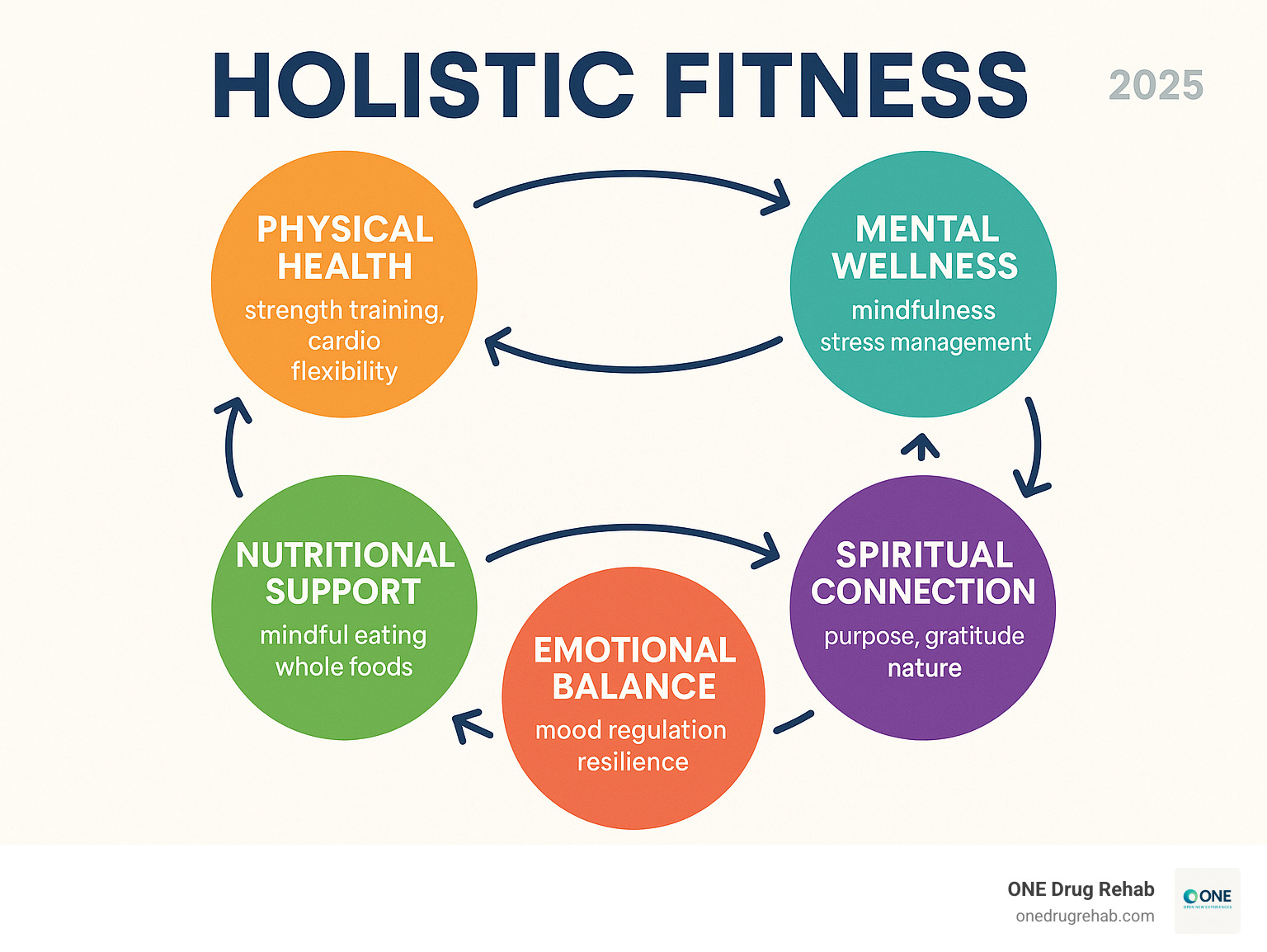
Holistic fitness programs build health on a foundation of interconnected pillars. True wellness comes from balancing your physical health, mental and emotional well-being, spiritual connection, and nutrition. When you strengthen one area, you support all the others.

The Physical Pillar: Building a Strong and Resilient Body
This pillar focuses on building a body that feels strong and moves well. It includes strength training for bone density and metabolism, cardiovascular health for endurance, and flexibility and mobility to prevent injury. Functional fitness—movements that mirror real life—improves coordination, while rest and recovery are crucial for muscle repair and nervous system health.
The Mental and Emotional Pillar: Cultivating Inner Strength
Your mind and emotions are deeply connected to your physical health; stress and anxiety can hinder physical health. This pillar involves mindfulness and meditation to reduce stress, and developing stress management tools like physical activity. It also focuses on emotional regulation through practices like journaling and building mental resilience to cope with life’s challenges.
The Spiritual Pillar: Nurturing Your Inner Self
This pillar is about finding deeper connection and purpose, not necessarily religion. It can involve a connection to nature through outdoor activities, gratitude practices to foster a positive outlook, and aligning your actions with your purpose and values. Mindful movement like yoga or Tai Chi deepens your connection to the present moment.
The Nutritional Pillar: Fueling Your Entire Being
What you eat impacts your energy, mood, and recovery. This pillar emphasizes mindful eating—paying attention to how you eat—and a diet based on whole foods like lean proteins, fruits, vegetables, and healthy fats. Proper hydration is essential, as is understanding the gut-brain connection, where nourishing your gut can positively affect your mental well-being.
Building Your Personal Holistic Fitness Program
Creating your own holistic fitness programs is about progress, not perfection. The foundation is consistency over intensity—focus on small, sustainable changes. Most importantly, listen to your body. Your energy levels and mood are your best guides for when to push and when to rest.

Integrating Physical, Mental, and Recovery Practices
Weave together movement, mindfulness, and recovery into a weekly rhythm. Each day can serve a different purpose while contributing to your overall well-being.
- Monday: Strength Training + 10-min Meditation
- Tuesday: Vinyasa Yoga Class
- Wednesday: HIIT Cardio + Mindful Cooldown
- Thursday: Active Recovery (Nature Walk)
- Friday: Strength Training + Yin Yoga
- Saturday: Fun Activity (Hiking, Dancing)
- Sunday: Rest & Meal Prep
Notice how active recovery and even meal prep are treated as intentional parts of the plan.
Examples of Hybrid Workouts
Holistic fitness often blends practices to maximize time and address multiple wellness aspects at once.
- Yoga and strength training builds muscle, then improves flexibility and focus with yoga flows.
- HIIT and mindfulness pushes your cardio system, then uses a mindful cooldown to calm your nervous system.
- Trail running and meditation combines physical exertion with the restorative power of nature and mental stillness.
- Dance and breathwork brings joy and emotional release into your conditioning.
Tracking Progress Beyond the Scale
Holistic success is measured by more than numbers. Track your progress by:
- Journaling your thoughts and feelings to notice patterns.
- Monitoring improvements in sleep quality.
- Tracking your energy levels throughout the day.
- Noting positive shifts in your mood and focus.
- Celebrating non-scale victories, like playing with your kids without getting winded or carrying groceries without pain. These are real improvements in your quality of life.
The Long-Term Advantages of a Holistic Lifestyle
Adopting holistic fitness programs is about changing your entire approach to living, building sustainable habits for the long term. Instead of quick fixes, this approach helps you develop patterns that stick, leading to better stress management and more energy. Comprehensive wellness approaches are linked to chronic disease prevention and a dramatically improved quality of life.

Improved Mental and Emotional Resilience
A holistic approach builds the ability to handle life’s challenges. The mind-body connection you develop becomes a powerful tool against stress. Mental resilience is strengthened through the mind-body connection, helping you stay centered. Through increased self-awareness and mindfulness, you learn to manage emotions without being overwhelmed, achieving emotional balance. This toolkit of healthy responses is crucial for thriving, especially for families facing difficult circumstances. More info about Rehab for Families shows how these principles support healing.
Fostering Strong Social Connections
A surprising benefit of holistic fitness programs is the deep community bonds they create. Group classes and workout partners build genuine relationships and a supportive community that provides accountability and care. This sense of belonging is powerful; strong social bonds improve well-being by boosting immunity, lowering stress, and fostering optimism. This community becomes a vital support system during tough times.
Frequently Asked Questions about Holistic Fitness
How is holistic fitness different from just doing yoga and going to the gym?
The difference is the intention. While doing yoga and going to the gym are great, they are often treated as separate activities. Holistic fitness programs integrate practices with a clear purpose. It’s about connecting the “why” (e.g., mental clarity, emotional balance) with the “what” (the exercises). Each part of your routine is chosen to serve your whole self—mind, body, and spirit—creating a unified, mindful journey rather than a checklist of workouts.
Can I build a holistic fitness program on my own?
Yes. Start with honest self-reflection on your physical, mental, and nutritional health to see where you want to grow. Then, start small and be intentional. Add a 5-minute meditation after your workout, incorporate a weekly nature walk, or focus on one nutritional change. The key is to build a sustainable and enjoyable routine that is uniquely yours and to stay consistent.
What role does holistic fitness play in recovery?
Holistic fitness is vital in recovery because it helps heal the whole person. Addiction often creates a disconnect between mind and body, and these programs help rebuild that connection through mindful movement. They provide healthy coping mechanisms for stress and cravings, such as exercise and meditation. Crucially, they foster supportive communities that combat the isolation of recovery. By addressing the body, mind, and spirit, holistic fitness lays a strong foundation for sustainable, long-term recovery. Find out more about different types of addiction treatment that use these approaches.
Conclusion
Your journey with holistic fitness programs is a shift toward viewing yourself as a whole person, where physical strength, emotional balance, and nutritional choices all work together. This approach empowers you through genuine self-care that listens to your body’s needs, whether that’s an intense workout or a quiet walk in nature.
It’s a path to complete well-being, building resilience from the inside out. For those navigating recovery, this holistic approach is transformative, helping to rebuild the mind-body connection and offering healthy coping strategies.
ONEDrugRehab.com provides resources for finding treatment centers that use these comprehensive approaches. You don’t have to steer this journey alone.
Ready to take the first step? Start small, be patient, and remember that every positive choice is an investment in your well-being. Explore Types of Addiction Treatment to find pathways to holistic healing. Your whole self—mind, body, and spirit—deserves complete care.