
Why Holistic Treatment Services Are Changing Addiction Recovery
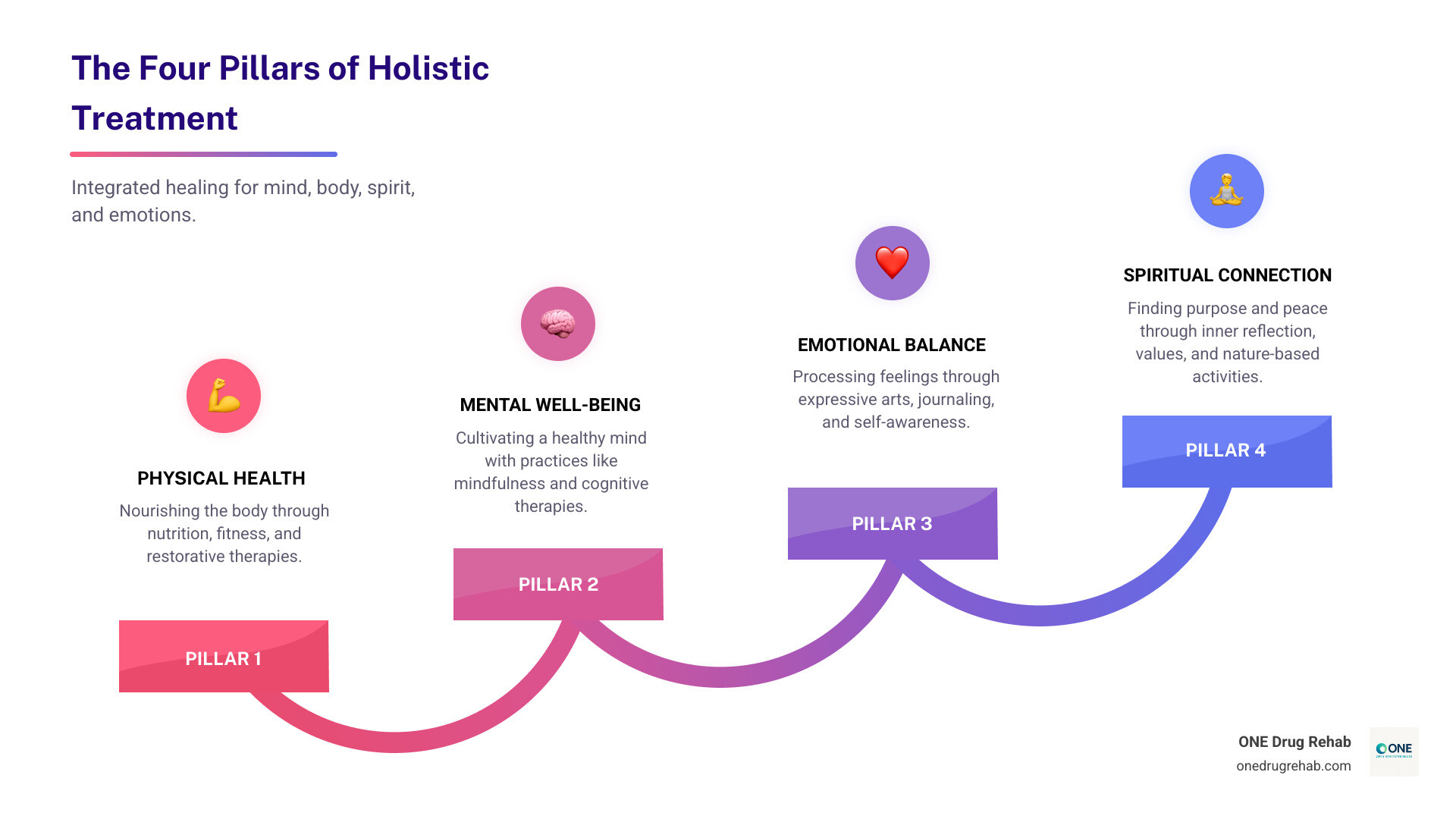
Holistic treatment services offer a comprehensive, whole-person approach to addiction recovery, treating the mind, body, and spirit. These services integrate traditional evidence-based treatments with complementary therapies like yoga, meditation, and art therapy to support lasting wellness.
Key holistic treatment services include:
- Mind-body practices: Yoga, meditation, breathwork, mindfulness
- Creative therapies: Art therapy, music therapy, journaling
- Wellness therapies: Massage, acupuncture, biofeedback
- Foundational support: Nutritional counseling, fitness programs, life skills training
- Spiritual practices: Prayer, spiritual counseling, nature-based activities
The philosophy behind holistic care recognizes that addiction affects every aspect of a person’s life. With millions of Americans in recovery and traditional program completion rates below 43%, many centers now accept holistic approaches. These methods address underlying causes like trauma, chronic stress, and co-occurring mental health conditions.
Addiction research notes that many people use substances to cope with pain or trauma. By treating these root causes, holistic services can improve treatment retention, reduce relapse risk, and help individuals build sustainable recovery skills.
Unlike symptom-focused care, holistic treatment acknowledges that physical health, emotional well-being, and spiritual connection are all interconnected. When one area is out of balance, it affects the others, which is why comprehensive healing requires attention to the whole person.
Holistic treatment services terms made easy:
Understanding the Holistic Approach: More Than Just Symptoms
The term “holistic” comes from the ancient Greek word “holos”, meaning “whole, entire, complete.” This captures the core idea: you can’t understand a part of something without seeing the whole picture.
Holistic treatment services apply this wisdom by looking at you as a complete person—with a body that feels, a mind that thinks, and a spirit that seeks meaning. Instead of only treating symptoms, this approach investigates the root causes of addiction.
This isn’t a new trend. For millennia, traditional healing systems like Ancient Chinese medicine, Ayurveda, and Native American traditions focused on treating root causes. They understood that our bodies have incredible innate healing powers. When we remove obstacles and provide what the body truly needs, profound recovery can occur.
For example, instead of just giving pain medicine for recurring headaches, a holistic approach would investigate potential causes like dehydration, stress, or poor sleep. Holistic traditions in wellness have always chosen this comprehensive path.
Here’s how traditional and holistic approaches often differ:
| Traditional Treatment (Symptom-Focused) | Holistic Treatment (Whole-Person Focused) |
|---|---|
| Focuses on specific symptoms or behaviors | Considers physical, mental, emotional, spiritual, and social aspects |
| Often targets immediate problem resolution | Aims for comprehensive, lasting well-being |
| May primarily use medication or talk therapy | Integrates a wide range of complementary therapies |
| Can be disease-centric | Is patient-centric |
| May be prescriptive | Encourages patient autonomy and self-findy |
The Core Principles of Holistic Healing
What makes holistic treatment services different? It begins with a few core principles:
- You are a person, not a disease. Your treatment plan should be as unique as your personal story and experiences.
- Mind-body-spirit balance is key. Stress in your mind can cause tension in your body and a feeling of disconnection in your spirit. Holistic care addresses these interconnections.
- Addressing underlying causes leads to real healing. Instead of just focusing on stopping substance use, this approach asks, “What pain was this person trying to soothe?”
- Unconditional positive regard means you are treated with respect and dignity, free from judgment.
- Lifestyle changes and self-care education provide you with lasting tools. You learn how to eat, move, and create routines that support long-term recovery. A holistic approach to recovery means changing your life, not just stopping substance use.
How Holistic Therapy Complements Traditional Treatment
Holistic treatment services do not replace proven medical treatments like detox, counseling, or prescribed medications. Instead, they work alongside these treatments to make them more effective.
Think of integrated therapy as building a stronger support structure for your recovery. Traditional treatments like medical detox and individual counseling are the foundation. You can learn more about them in our guide on Types of Addiction Treatment.
Holistic therapies add to this foundation by focusing on overall well-being. For example, while cognitive behavioral therapy (CBT) teaches you valuable coping skills, meditation can calm your nervous system, making it easier to apply those skills. Enhancing traditional methods like CBT with practices that help you feel more centered makes everything work better together.
This approach is not a replacement for evidence-based care but a powerful improvement. It’s like having a whole team working on your recovery, helping you heal completely and build a life you love.
A Spectrum of Healing: Common Holistic Therapies at ONE Drug Rehab
Recovery is a personal journey, which is why holistic treatment services offer a wide variety of healing approaches. These non-medical methods are often experiential, meaning you learn by doing and feeling. They are powerful tools for building coping skills, managing stress, and uncovering emotions that may be too complex for words alone.

Mind-Body Practices for Inner Balance
Our minds and bodies are deeply connected. Mind-body practices help them work together in harmony.
- Yoga combines movement, breathing, and meditation. Yoga for better mental health is shown to improve mood, boost self-esteem, and quiet negative thought patterns. A 2018 study found it significantly reduced stress in people with opioid use disorder.
- Meditation can be highly effective, with research on meditation’s benefits showing it can be as helpful as antidepressants for some. It aids sleep, decision-making, and pain management.
- Breathwork is a simple yet powerful tool. Specific breathing techniques can naturally calm your nervous system during moments of anxiety or cravings.
- Mindfulness teaches you to observe your thoughts and feelings without getting swept away, allowing you to become a calm observer of your inner world.
Our Holistic Fitness Programs can help you incorporate movement into your healing.
Creative and Expressive Therapies
When words aren’t enough, creative therapies provide a way to express complex emotions.
- Art therapy allows you to communicate through painting, drawing, or sculpture. Art therapy as a form of treatment is recognized for its ability to help process trauma and emotions non-verbally.
- Music therapy uses the universal power of music for healing. Whether listening, singing, or playing, it can be a bridge to your emotions. Music as a proven stress reliever is backed by science.
- Journaling offers a private space for honest reflection, helping to organize thoughts and reveal new insights.
Restorative Wellness Therapies
These therapies focus on physical restoration, which positively impacts emotional and mental well-being.
- Massage therapy is more than a luxury; it’s a therapeutic tool that releases physical tension, improves circulation, and promotes deep relaxation.
- Biofeedback uses electronic monitoring to teach you to control bodily functions like heart rate and muscle tension, empowering you to manage your physical responses to stress.
These approaches are often part of comprehensive Holistic Treatment Programs.
Foundational Wellness Therapies
Lasting recovery requires a strong foundation for daily life.
- Nutritional therapy addresses the physical toll of addiction, correcting deficiencies and teaching you how to nourish your body for better physical and mental health.
- Fitness and recreational therapy brings joy back to movement, serving as a natural mood booster and helping to establish healthy routines.
- Life skills development provides practical tools for managing money, setting boundaries, and solving problems, helping you build a life you want to live.
- Sleep hygiene is crucial, as quality sleep is when the body and brain perform their deepest healing. Learning healthy sleep habits can be transformative.
Holistic Education Programs offer structured learning to support your journey.
The Benefits and Effectiveness of a Holistic Treatment Plan
Choosing holistic treatment services means starting on a journey toward complete change, not just sobriety. This comprehensive approach creates lasting changes that go far beyond stopping substance use.

While traditional treatment completion rates are around 43%, holistic treatment services often see higher satisfaction and retention. When people feel cared for as whole human beings, they are more engaged in their recovery. Key benefits include reduced relapse risk, increased self-awareness, improved physical health, and a renewed sense of purpose.
Addressing the Whole Person for Long-Term Success
The power of holistic care is its focus on healing root causes, not just treating symptoms. It equips you with practical tools for life.
- Stress management becomes second nature through techniques like breathwork and meditation, which rewire your brain’s response to pressure.
- Emotional intelligence grows as you explore feelings through creative therapies, preventing them from building up and triggering a relapse.
- Physical rejuvenation occurs as nutritional therapy repairs damage, fitness rebuilds strength, and better sleep restores energy.
- Spiritual reconnection helps you find meaning and purpose, whether through meditation, nature, or reconnecting with your personal values.
Statistics on treatment completion rates show that comprehensive care improves outcomes. For more on this, see our article on Addiction Recovery Success Rates.
How Holistic Approaches Support Co-Occurring Disorders
Holistic treatment services are particularly effective for those with co-occurring disorders like anxiety, depression, or PTSD alongside addiction. Treating these issues separately is often ineffective.
Dual diagnosis treatment is improved by a holistic approach that integrates care for the mind, body, and spirit. When one area improves, they all improve. Research confirms that treating co-occurring disorders leads to better outcomes when both conditions are addressed together.
- Using yoga for stress in opioid use disorder has shown promising results, with studies finding that yoga can significantly lower stress levels.
- Using art therapy for trauma provides a way to process difficult experiences when words are not enough, bridging the gap between inner experience and outer healing.
This approach builds a toolkit of skills for life, offering hope for comprehensive healing that addresses every part of who you are.
Finding the Right Fit: How to Choose a Holistic Treatment Center
Choosing the right treatment center is a critical step. Finding a facility that offers quality holistic treatment services can make all the difference in your recovery.
When researching, prioritize these key factors:
- Licensing and Accreditation: Ensure the center is licensed by the state and accredited by reputable organizations. This confirms they meet high standards for safety and care.
- Qualified Practitioners: Check the credentials of the staff. Are yoga instructors, art therapists, and nutritionists properly certified and experienced in their fields?
- Integration with Evidence-Based Care: The best holistic services work with traditional treatments, not against them. Look for centers that combine clinical therapies like counseling with wellness practices like meditation.
- Individualized Treatment Plans: Your recovery is unique, and your treatment plan should be too. A quality center will assess your physical, mental, and spiritual needs to create a personalized program.
- A Continuum of Care: Recovery is a lifelong journey. A strong center offers aftercare planning, alumni programs, and connections to community resources to support your long-term success.
Don’t hesitate to ask questions when contacting potential centers. Here are some to consider:
- What specific holistic therapies do you offer, and how do they integrate with traditional treatment?
- What qualifications do your holistic therapy providers have?
- How do you create individualized treatment plans?
- What kind of ongoing support do you provide after treatment ends?
- Are you licensed and accredited?
- How do you measure the effectiveness of your holistic therapies?
- Can you share success stories or references?
- What are the costs, and do you work with insurance?
For additional insights, you might find Rehab Facility Reviews helpful. You’re looking for a place where you feel safe, respected, and empowered. Trust your instincts—the right fit is out there.
Frequently Asked Questions about Holistic Treatment Services
It’s natural to have questions about an approach that may feel different from traditional addiction treatment. Here are answers to some of the most common concerns.
Are holistic therapies covered by insurance?
Insurance coverage for holistic therapies varies widely. The good news is that core components of a treatment program, like detox and therapy, are typically covered. The challenge lies with complementary therapies.
Some therapies, like biofeedback, prescribed massage, and nutritional counseling, have a better chance of being covered. Acupuncture coverage is also becoming more common. Often, treatment centers bundle holistic services into the overall daily programming that is covered by insurance.
The key is to ask. Have the admissions team at any center you consider verify your specific benefits. Ask directly about coverage for complementary therapies and what is required for reimbursement. As research continues to prove their effectiveness, insurance coverage for holistic approaches is slowly expanding.
How effective are holistic therapies for severe addiction?
This is a critical point: holistic treatment services work best as part of a comprehensive plan, not as a standalone cure. For severe addiction, a foundation of evidence-based care—medical supervision, behavioral therapy, and possibly medication—is essential.
Holistic approaches shine by filling the gaps traditional treatment might miss. While a therapist helps you understand triggers, yoga can teach your nervous system to calm down. While you process trauma in counseling, art therapy can give voice to feelings that have no words.
Research shows that integrating holistic therapies leads to better outcomes, including higher program completion rates and stronger coping skills. For severe addiction, this comprehensive healing can be the difference between short-term sobriety and lasting recovery.
Who is a good candidate for holistic treatment?
The beauty of holistic treatment services is that they can benefit almost anyone open to a more complete approach to healing.
You might be an ideal candidate if you:
- Feel something was missing from previous treatment attempts.
- Have co-occurring disorders like anxiety, depression, or PTSD, as holistic care addresses these interconnected issues simultaneously.
- Have struggled with traditional methods alone and need tools to manage stress or trauma held in the body.
- Want more than just sobriety and aim to build a life that feels meaningful, healthy, and fulfilling.
The most important qualification is simply being open to exploring new ways of healing that honor your whole self—mind, body, and spirit.
Conclusion: Your Path to Whole-Person Recovery
We’ve explored how holistic treatment services are changing addiction recovery by returning to an ancient truth: we are whole human beings who deserve comprehensive care. By combining time-tested practices like yoga with modern therapies and proven medical treatments, a powerful path to healing emerges.
The change goes far beyond sobriety. The real magic is in developing emotional intelligence, gaining effective coping skills, and refinding a sense of purpose. For those with co-occurring disorders like anxiety or depression, this integrated approach can be life-changing. Your healing becomes whole-person healing.
Taking the first step toward recovery is one of the most courageous things you can do. When you’re ready, look for licensed centers with qualified practitioners who create individualized plans. Ask questions—you deserve answers and a program that feels right for you.
Recovery isn’t just about stopping something harmful; it’s about starting something wonderful. Holistic treatment services provide the tools to build a life where you feel empowered, healthy, and at peace.
At ONEDrugRehab.com, we are honored to provide honest, unbiased information to help you make the best choice for your unique situation. Finding the right fit is essential.
Ready to take the next step? Explore different types of addiction treatment in our directory. Your path to complete wellness—mind, body, and spirit—is waiting.