

Somatic Experiencing Therapy: Unlock Healing 2025
Understanding Trauma’s Impact on the Body and Mind
Somatic experiencing therapy is a body-oriented approach to healing trauma. Unlike traditional talk therapy, it focuses on physical sensations to help the nervous system release trapped survival energy and restore a sense of safety. This method addresses trauma symptoms like PTSD and anxiety, chronic stress, and related physical issues such as unexplained pain or digestive problems.
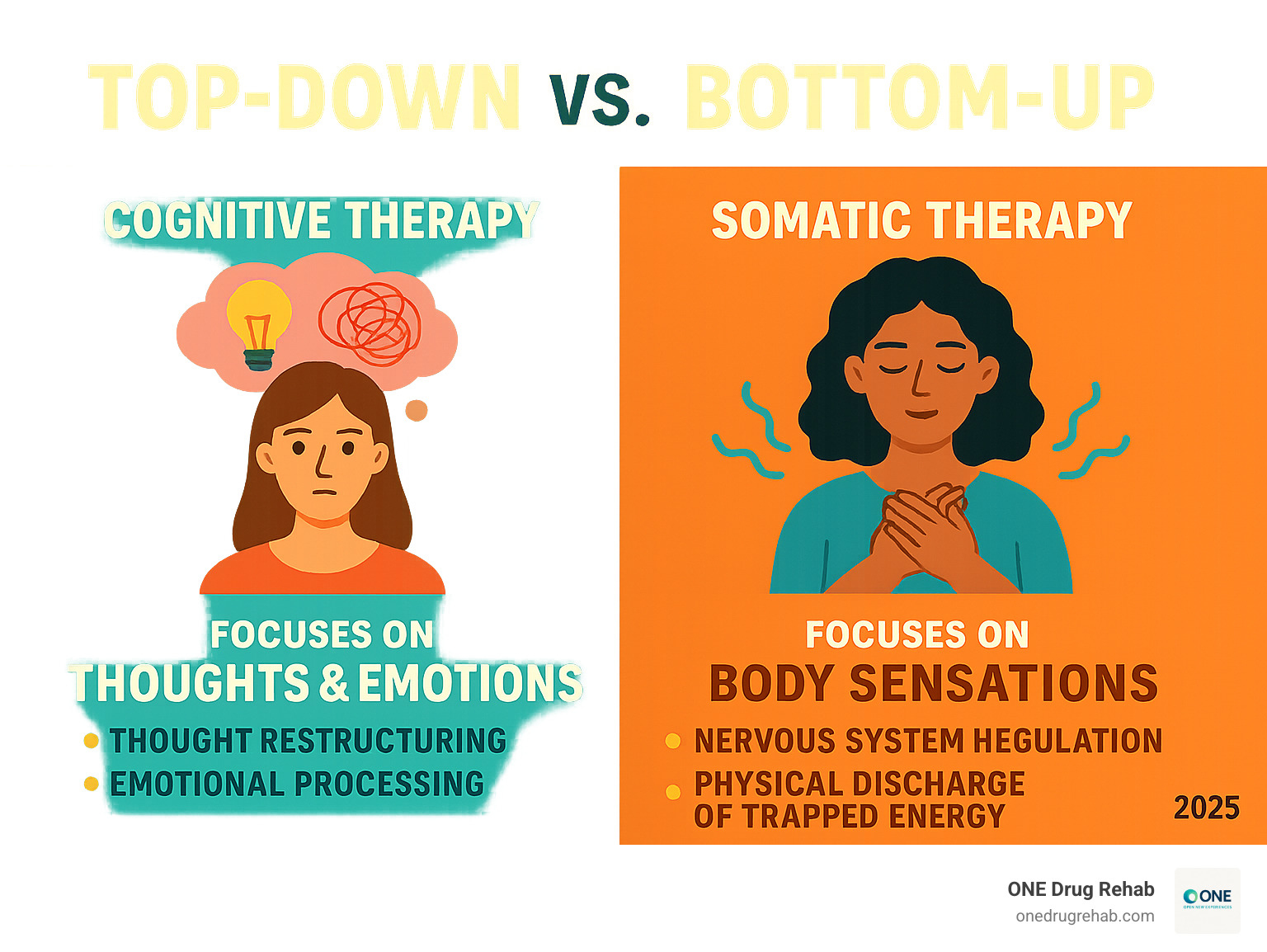
As trauma expert Dr. Peter Levine said: “Trauma is a fact of life. It does not have to be a life sentence.” His work highlights a core insight: trauma lives in the body, not just the mind. When we face overwhelming events, our nervous system can get stuck in survival mode. Somatic experiencing uses a “bottom-up” approach, starting with the body’s innate wisdom to heal, rather than a “top-down” cognitive approach. The therapy was inspired by observing how wild animals naturally discharge stress and avoid trauma, a capacity humans can learn to recover.
Relevant articles related to somatic experiencing therapy:
The Origins and Guiding Principles of Somatic Experiencing

Somatic experiencing therapy was developed by Dr. Peter A. Levine, who drew from fields like neuroscience, biology, and psychology. His breakthrough came from observing animals in the wild. He noted that after a life-threatening event, animals discharge the intense survival energy through shaking and trembling, then return to a calm state, naturally avoiding trauma’s lasting effects.
Dr. Levine realized that humans often suppress these natural fight, flight, or freeze responses. This causes survival energy to become trapped in the nervous system, leading to trauma symptoms. His influential book, “Waking the Tiger: Healing Trauma,” explains this concept. The goal of SE is not to analyze the traumatic event, but to help the body complete its natural defensive responses.
This is why you can’t just “think” your way out of trauma. Trauma is stored in the body as procedural or body memory—automatic physical responses that exist below conscious thought. As explained in Psychology Today, cognitive approaches alone often fail because they don’t address these deeply ingrained physical patterns.
SE’s core principle is renegotiating, not reliving. The therapy gently guides you to create new bodily experiences of safety and strength, which contradict the old patterns of helplessness. By working with the “felt sense”—your awareness of internal sensations—you build resilience and restore wholeness without being re-traumatized.
How Somatic Experiencing Therapy Works in Practice

An SE session focuses on creating a “safe container” where your nervous system can begin to relax and self-regulate. Instead of analyzing the traumatic story, the therapist guides you to notice your body’s present-moment sensations, such as tightness, warmth, or tingling. This body-first approach helps you reconnect with your body’s innate intelligence in a gentle, supportive way.
Key Techniques: Titration, Pendulation, and Resourcing
SE uses three core techniques to work with traumatic energy safely:
-
Titration: This involves processing traumatic energy in small, manageable amounts to avoid overwhelm. By focusing on subtle sensations, you gradually build your nervous system’s capacity to handle stress. You can see a helpful explanation of this process here: Titration.
-
Pendulation: This technique helps your nervous system remember its natural rhythm of shifting between states of activation (stress) and calm. The therapist guides you to move your attention between a sensation of distress and a place in your body that feels neutral or pleasant. This rhythmic movement, like a Hoberman’s Sphere, prevents you from getting stuck in overwhelming feelings.
-
Resourcing: Before addressing difficult sensations, you and your therapist identify your internal and external resources. These are sources of strength, safety, and calm—like a positive memory, a supportive person, or a feeling of groundedness. These resources act as anchors, reminding your nervous system that it has the capacity for resilience.
The Role of Body Awareness and Discharge
The goal of SE is to develop your “felt sense”—your awareness of internal bodily signals (interoception) and your body’s position in space (proprioception). Using tools like the SIBAM model (Sensation, Image, Behavior, Affect, Meaning), you learn to track how experiences manifest in your body.
This awareness often leads to a natural discharge of trapped energy. This can manifest as involuntary shaking, trembling, deep breaths, yawning, or tears. These are not signs of distress but are indications that your nervous system is completing the self-protective responses that were interrupted during the trauma. As research on somatic experiencing in trauma therapy highlights, this discharge is a crucial step in allowing the nervous system to return to a regulated, peaceful state.
Applications and Benefits of Somatic Experiencing

Somatic experiencing offers a path to healing by addressing trauma symptoms at their root in the nervous system. Instead of just managing symptoms, it helps release the trapped survival energy that causes them. Clients often report significant relief from chronic stress, improved emotional regulation, and a greater capacity for resilience in the face of life’s challenges. Many describe feeling a greater sense of aliveness and connection to themselves and others.
SE has shown promise in helping with a wide range of issues, including:
- Post-Traumatic Stress Disorder (PTSD) and complex trauma
- Anxiety disorders and panic attacks
- Depression and complicated grief
- Chronic pain and other physical symptoms with no clear medical cause
- Addiction and substance use disorders (as part of a comprehensive plan)
- Attachment and developmental trauma
The Scientific Basis of Somatic Experiencing Therapy
SE is grounded in neurobiology, particularly Polyvagal Theory, which explains how our autonomic nervous system shifts between states of safety, danger (fight-or-flight), and life-threat (shutdown). Trauma can cause the nervous system to become stuck in these survival states. SE helps restore its natural flexibility.
Emerging research supports its effectiveness. For example, a randomized controlled trial found that SE produced a large and significant improvement in PTSD symptoms. Other studies have shown similar positive effects on depression symptoms. While more large-scale research is needed, the evidence indicates that SE helps clients reorganize their nervous systems in profound ways. For those interested in a variety of healing methods, you can explore holistic and evidence-based types of addiction treatment.
Who Can Benefit from Somatic Experiencing Therapy?
SE is beneficial for anyone whose nervous system has been overwhelmed, whether from a single incident or chronic stress. This includes survivors of accidents, natural disasters, or abuse. It is also helpful for those with complex and developmental trauma from childhood neglect or emotional abuse. First responders and veterans can use SE to process the cumulative stress of their work. Additionally, individuals with unexplained physical symptoms like chronic pain, digestive issues, or headaches may find relief by addressing the stored trauma in their bodies. For families navigating these challenges, there is help for families dealing with trauma.
Finding a Qualified Practitioner and What to Expect
Finding the right practitioner is a key step in the healing process. Somatic Experiencing Practitioners (SEPs) complete a rigorous, multi-year training. You can learn more about the curriculum at the official SE Professional Training website. SEPs come from many fields – mental-health clinicians, bodyworkers, medical professionals – but the most important factor is that you feel safe and comfortable with the person you choose.
To understand what makes SE unique, consider the following:
| Aspect | Description |
|---|---|
| Unique Approach | Body-oriented, neurobiological method that works with the nervous system’s innate healing capacity rather than focusing only on talking about trauma |
| Primary Focus | Restoring self-regulation by releasing trapped survival energy and helping the nervous system return to balance |
| Key Techniques | Titration, Pendulation, Resourcing, and tracking bodily sensations |
Challenges and Considerations
- Research: More large-scale studies are still needed, though early results are promising.
- Availability: Certified SEPs are growing in number, and many now offer secure online sessions when in-person work is not possible.
- Medical Care: SE is a complementary therapy – it does not replace necessary medical or psychiatric treatment.
- Insurance: Coverage varies; check with both your insurer and the practitioner.
- Touch: Some SEPs use consensual, therapeutic touch. This is always optional and discussed in advance.
A practitioner who respects your pace and boundaries will help your nervous system feel supported enough to heal.
How Somatic Experiencing Therapy Works in Practice
When you enter a somatic experiencing therapy session, you may notice it feels quieter and more body-focused than traditional talk therapy. The therapist pays attention to how you sit, breathe, and hold yourself – signs that reveal how your nervous system is doing in this very moment.

The goal is simple: help the “stuck” survival energy complete its cycle so your system can regulate itself again. To do that, SE relies on three core tools:
Key Techniques (in brief)
- Titration – processing sensations in tiny, manageable pieces so you never feel overwhelmed. (Video explainer: Titration)
- Pendulation – moving attention between tension and comfort so your body remembers it can return to safety. (Hoberman’s Sphere illustrates this rhythm.)
- Resourcing – building an inner library of memories, images, or body sensations that feel strong, steady, or pleasant. These anchors keep the process grounded.
As you track sensations together, natural discharge responses (a sigh, a yawn, a gentle tremor) may emerge. These are signs that your nervous system is finally finishing what it couldn’t complete during the original stressor. Research shows this body-led completion is key to lasting relief.
Sessions are paced by your body’s readiness, helping you leave feeling more centered rather than stirred up.
Applications and Benefits of Somatic Experiencing

By working directly with the autonomic nervous system, somatic experiencing therapy can help reduce or resolve:
- Post-Traumatic Stress Disorder (PTSD) and complex trauma
- Anxiety, panic, and chronic stress
- Depression and complicated grief
- Unexplained pain, headaches, or digestive issues
- Addiction and substance misuse (as part of a broader plan)
- Early attachment and developmental trauma
The Scientific Basis (snapshot)
Research grounded in Polyvagal Theory shows that SE can effectively move the nervous system out of chronic fight-flight or freeze states. A randomized controlled trial reported a large reduction in PTSD symptoms (Cohen’s d = 1.26), and similar gains for depression have been documented. While more studies are under way, initial evidence – plus consistent client reports of improved emotional regulation and resilience – makes SE a promising body-based option. For additional integrative approaches, you can also explore holistic and evidence-based types of addiction treatment.
Who Can Benefit?
Anyone whose nervous system has been overwhelmed – from single events like accidents to long-term stress such as childhood neglect, frontline work, or ongoing discrimination – may find relief with SE. Families supporting loved ones can find guidance here: Help for families dealing with trauma.
Finding a Qualified Practitioner and What to Expect
When you’re ready to explore somatic experiencing therapy, look for the following:
- Certified Somatic Experiencing Practitioner (SEP) credentials
- A practitioner background (mental health, medical, or bodywork) that matches your needs
- A first meeting that leaves your body feeling safe, not pressured
The global SEP community now exceeds 9,000 practitioners, and many offer secure video sessions if none are available nearby.
| Aspect | SE’s Unique Approach |
|---|---|
| Primary Focus | Body sensations and nervous-system regulation |
| Core Techniques | Titration, Pendulation, Resourcing |
| Session Style | Minimal re-hashing of the trauma story; emphasis on present-moment body awareness |
| Healing Philosophy | Renegotiation instead of re-traumatization |
Challenges and Considerations
- Evidence base: Growing, but still smaller than for some long-established therapies.
- Access: Rural areas may have fewer SEPs; online sessions can bridge the gap.
- Insurance: Coverage depends on provider and license type.
- Complementary care: SE works best alongside appropriate medical or psychiatric treatment.
- Touch use: Always optional, discussed in advance, and limited to safe, non-intimate areas.
Choosing to heal through the body takes courage. With the right support, SE offers a gentle route to reclaiming a sense of safety and aliveness.