
Inpatient Trauma Treatment Center: Ultimate 2025 Healing
Understanding Trauma and the Path to Healing
An inpatient trauma treatment center provides 24/7 care in a safe, structured environment where individuals can heal from traumatic experiences through evidence-based therapies and comprehensive support. These specialized facilities offer intensive treatment programs that address both trauma symptoms and any co-occurring mental health or substance use disorders.
Key features of inpatient trauma treatment centers:
- 24/7 medical and emotional support from trained professionals
- Safe, trigger-free environment removed from daily stressors
- Evidence-based therapies like EMDR, CBT, and somatic experiencing
- Multidisciplinary treatment teams including psychiatrists, therapists, and counselors
- Integrated care for co-occurring disorders like PTSD, depression, or addiction
- Structured daily programming with individual and group therapy sessions
Trauma touches far more lives than many people realize. As many as 70% of Americans have experienced a traumatic incident at some point in their lives. While most people show remarkable resilience, about 5% will eventually develop a trauma-related disorder like PTSD.
Traumatic experiences can include car accidents, physical or sexual assault, sudden loss of loved ones, natural disasters, or witnessing violence. These events can leave lasting marks on both the mind and body, affecting how we think, feel, and relate to others.
When trauma goes untreated, it can lead to serious long-term problems including substance abuse, relationship conflicts, career difficulties, and physical health issues. But here’s the important part: healing is absolutely possible. Modern trauma treatment has advanced significantly, and specialized inpatient centers offer hope for those ready to begin their recovery journey.
Must-know inpatient trauma treatment center terms:
Recognizing the Need for Help: Symptoms and Long-Term Risks
When trauma strikes, it can fundamentally change how your brain works, like an alarm system stuck in the “on” position, constantly alerting you to danger even when you’re safe.
Trauma’s impact goes far beyond what happened in that moment. It can rewire your nervous system, affecting how you sleep, think, and relate to others. Symptoms may not appear immediately, sometimes emerging weeks or months later as confusing feelings and reactions.
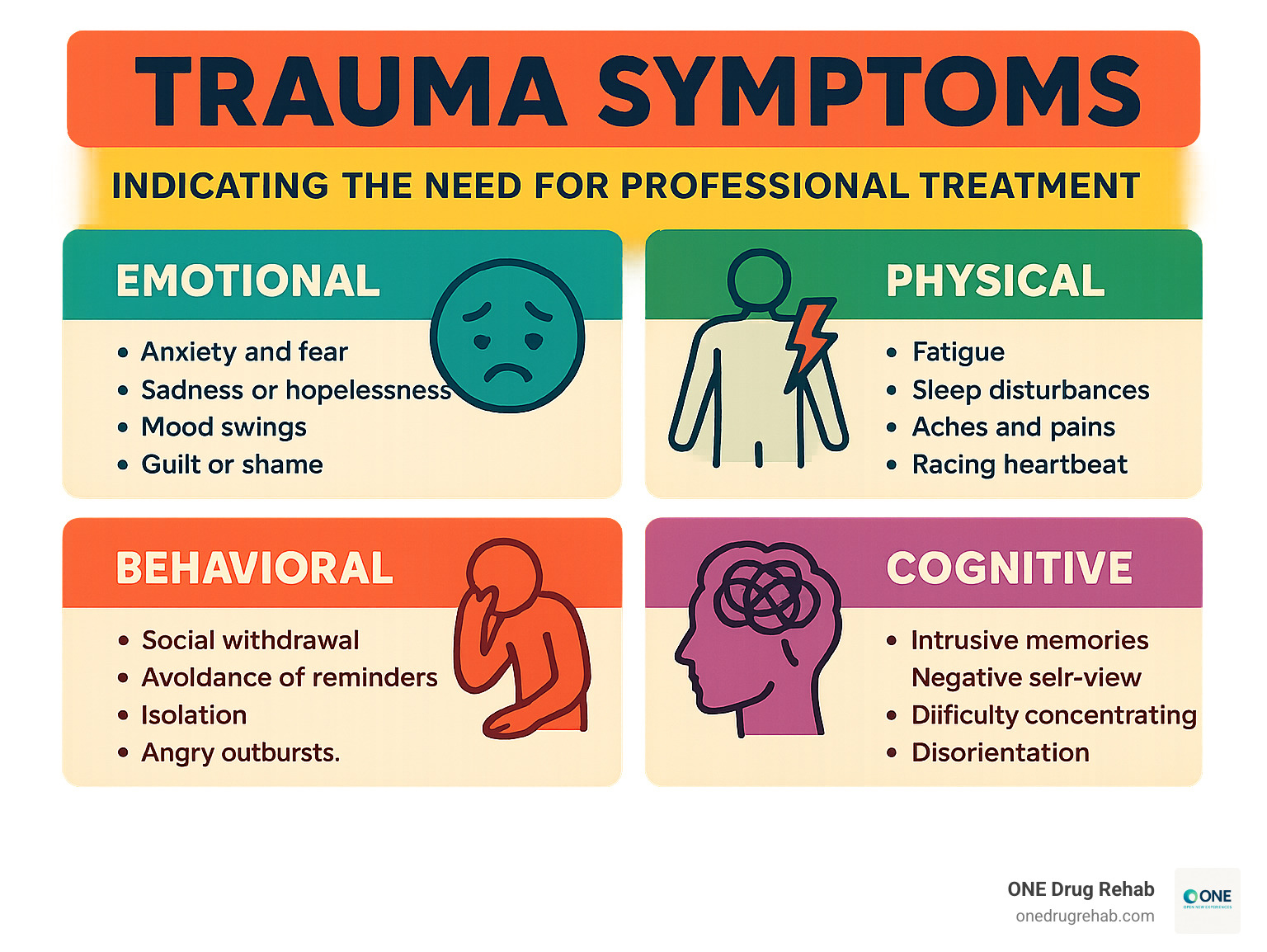
The signs that trauma is affecting your life can show up in four main ways:
- Emotional symptoms: Persistent anxiety, fear, overwhelming sadness, guilt, or shame. Some people feel emotionally numb, as if disconnected from their own lives.
- Physical symptoms: Chronic fatigue, unexplained aches, headaches, and digestive issues. Sleep disturbances like insomnia or nightmares are also frequent.
- Behavioral changes: Avoiding reminders of the trauma, leading to social withdrawal. Some may turn to substances to cope.
- Cognitive difficulties: Trouble concentrating, memory problems, and a racing mind. Intrusive thoughts or flashbacks are common signs that professional support is needed.
When these symptoms persist for more than a month and interfere with daily life, you might be dealing with Post-traumatic stress disorder (PTSD) symptoms. PTSD can develop after events like car accidents, physical or sexual assault, sudden loss of loved ones, or natural disasters.
The long-term effects of untreated trauma can be devastating. It can create a ripple effect, leading to:
- Relationship conflicts: Trust issues and emotional reactivity can strain connections with loved ones.
- Career issues: Concentration problems, anxiety, or avoidance can interfere with work performance.
- Physical health problems: Chronic stress can lead to heart problems, digestive disorders, and a weakened immune system.
The Link Between Trauma and Co-Occurring Disorders
It’s incredibly common for trauma to occur alongside other mental health conditions, especially addiction. Many people self-medicate the pain and anxiety with substances. While this may offer temporary relief, it ultimately worsens both the trauma symptoms and overall well-being.
The connection between trauma and addiction is staggering. Among people with substance use disorders, between 26% and 52% also have PTSD. Going the other direction, 36% to 52% of people with PTSD also struggle with addiction. For those who’ve survived violent or abusive situations, up to three-quarters report problems with alcohol.
Besides substance use disorders, many trauma survivors also develop depression, characterized by persistent sadness, and anxiety disorders that make daily life overwhelming. Eating disorders or obsessive-compulsive behaviors can also emerge as coping mechanisms.
This is why integrated treatment is so important. An inpatient trauma treatment center that only addresses trauma while ignoring co-occurring addiction or depression is treating only part of the problem. Lasting healing requires treating the whole person, as these issues are intertwined. The most effective approach combines therapy, medication when appropriate, and comprehensive support to heal all conditions together.
For more information on various treatment approaches, you can explore More on different types of addiction treatment.
The Immersive Approach: What is an Inpatient Trauma Treatment Center?

Imagine a place where healing isn’t rushed and you’re surrounded by people who understand trauma. That’s what an inpatient trauma treatment center offers. Unlike hourly therapy, you live at the facility, focusing completely on getting better. It’s like hitting the pause button on life to put all your energy into healing.
The key feature is 24/7 medical and emotional support. This constant safety net is crucial when dealing with trauma. These facilities create a therapeutic milieu—an environment where everything is designed for healing. A major advantage is the removal from triggers. In this safe and structured environment, you can focus entirely on getting better without the stressors of daily life.
Key Benefits of an Inpatient Trauma Treatment Center
Choosing an inpatient trauma treatment center offers unique advantages that can make a significant difference in recovery.
- Comprehensive care treats the whole person, addressing trauma alongside any co-occurring issues like depression or addiction for long-term success.
- A multidisciplinary team of experts—psychiatrists, therapists, and counselors—collaborates on and coordinates your care.
- Peer support comes from living with others who understand your struggles, providing a powerful source of strength and hope.
- Crisis stabilization offers immediate safety and professional intervention if you’re feeling overwhelmed, allowing you to stabilize before deeper work.
- An intensive therapy schedule with daily sessions accelerates recovery compared to weekly outpatient appointments.
| Feature | Inpatient Trauma Treatment | Outpatient Trauma Treatment |
|---|---|---|
| Environment | 24/7 residential care away from daily triggers | Scheduled sessions while living at home |
| Support Level | Constant access to medical staff and immediate crisis help | Limited to scheduled appointments and emergency contacts |
| Therapy Intensity | Multiple daily sessions with comprehensive programming | Typically 1-3 sessions per week |
| Focus | Deep, immersive healing in a protected setting | Skill-building while managing daily life |
| Best For | Severe symptoms, co-occurring disorders, unsafe home situations | Moderate symptoms, stable home environments |
Core Therapies and Treatment Modalities
Quality centers use a trauma-informed care philosophy, meaning all staff understand how trauma affects people and adjust their approach to create a safe environment. Therapies are evidence-based practices—scientifically proven methods that have helped thousands of people heal.
Common therapies include:
- Eye Movement Desensitization and Reprocessing (EMDR): Uses bilateral stimulation (like eye movements) while you focus on traumatic memories to help your brain reprocess the trauma and reduce its emotional impact.
- Cognitive Behavioral Therapy (CBT): Helps you identify and change negative thought patterns related to trauma, teaching you to develop more balanced, realistic thinking.
- Dialectical Behavior Therapy (DBT): Teaches practical skills like mindfulness and distress tolerance to manage the intense emotions that often accompany trauma.
- Somatic Experiencing: Focuses on the body’s response to trauma, helping to gently release the physical tension and “stuck” energy associated with traumatic events.
- Group therapy: Connects you with others who have similar experiences, reducing isolation and fostering a sense of community.
- Family therapy: Involves loved ones in the healing process, helping to repair relationships and build a stronger support system for recovery.
Many centers also offer holistic therapies like yoga, art, and meditation. These approaches help you reconnect with your body and express feelings non-verbally, complementing traditional therapies.
The combination of all these approaches, delivered by caring professionals in a safe environment, is what makes inpatient trauma treatment so powerful for lasting recovery.
Choosing Your Sanctuary: How to Select the Right Facility

Finding the right inpatient trauma treatment center feels overwhelming when you’re already struggling with trauma symptoms. But this choice matters deeply – you’re not just picking a place to stay, you’re choosing where your healing journey will begin.
Think of this process as finding your sanctuary. The right facility will feel safe from the moment you walk through the doors. You’ll sense that the staff truly understands trauma and knows how to create an environment where healing can happen.
Individualized treatment plans should be the foundation of any quality center. Your trauma story is unique, and your treatment should reflect that. A good facility will spend time understanding your specific experiences, symptoms, and any other mental health or addiction issues you’re facing. They’ll build a treatment plan around you, not try to fit you into their standard program.
The staff qualifications and expertise make all the difference in your recovery. Look for centers with licensed psychiatrists, psychologists, and therapists who specialize in trauma work. These professionals should be trained in evidence-based trauma therapies and understand how to create safety for people who’ve lost their sense of security. When you speak with staff members, notice whether they listen with genuine compassion and speak about trauma in ways that feel respectful and hopeful.
Many centers offer specialized programs that can be incredibly helpful depending on your background. Veterans and first responders often benefit from programs designed specifically for their experiences with combat trauma or occupational stress. Women’s programs can provide extra safety and understanding for those who’ve experienced sexual trauma or domestic violence. Some facilities also offer programs custom for specific age groups or cultural backgrounds.
Aftercare planning reveals whether a center truly cares about your long-term success. Recovery doesn’t end when you leave the facility – in many ways, that’s when the real work begins. Quality centers will start planning your aftercare from day one, connecting you with outpatient therapists, support groups, and other resources in your home community.
Essential Credentials for a Quality Inpatient Trauma Treatment Center
Before you trust any facility with your healing, verify their credentials. These aren’t just fancy certificates on the wall – they’re proof that the center meets strict standards for safety and quality care.
Accreditation and licensing should be your first checkpoint. The Joint Commission accreditation is considered the gold standard in healthcare. When a facility earns this accreditation, it means they’ve passed rigorous inspections covering everything from patient safety to staff training. The Joint Commission’s Gold Seal of Approval gives you confidence that the center operates at the highest professional standards.
State licensing boards provide another layer of protection. Every inpatient trauma treatment center must be licensed by the state where it operates. This licensing ensures the facility meets local regulations and maintains proper oversight.
LegitScript certification is particularly important if you’re researching centers online. This certification helps verify that treatment facilities are legitimate and operating legally – unfortunately, not all advertised treatment centers meet professional standards.
Verifying credentials is easier than you might think. Most accredited facilities proudly display their certifications on their websites. You can also check directly with accrediting organizations or state licensing boards to confirm a facility’s status.
Questions to Ask a Potential Treatment Center
Don’t feel shy about asking detailed questions when you contact potential centers. A quality inpatient trauma treatment center will welcome your questions and provide clear, honest answers. If a facility seems evasive or unwilling to discuss their approach, that’s a red flag.
What is your approach to trauma? should be your first question. Listen for answers that mention trauma-informed care, evidence-based treatments, and individualized planning. They should be able to explain how they help people feel safe and how they address the complex ways trauma affects both mind and body.
What therapies do you use? helps you understand their treatment toolkit. Quality centers should offer multiple evidence-based approaches like EMDR, CBT, DBT, and somatic therapies. They should explain how these different therapies work together in your treatment plan.
What is the staff-to-patient ratio? affects how much individual attention you’ll receive. While ratios vary, you want assurance that you won’t get lost in a crowd and that staff can provide adequate support when you need it.
How is family involved? matters because trauma affects entire family systems. Ask about family therapy sessions, educational programs for loved ones, and visitation policies. Some families need healing together, while others might need boundaries during initial treatment.
What are the payment options? shouldn’t be an awkward conversation – quality centers understand that cost concerns are real and will work with you to explore insurance coverage and payment plans. If insurance coverage is limited, you might need to explore Find rehab without insurance options.
Choosing the right facility is an investment in your future. Take your time, trust your instincts, and don’t settle for anything less than a place where you feel truly supported in your healing journey.
Frequently Asked Questions about Inpatient Trauma Treatment
How long does inpatient trauma treatment last?
One of the most common questions people ask when considering an inpatient trauma treatment center is about the length of stay. The truth is, there’s no universal answer because every person’s healing journey is unique.
The duration of your treatment will depend on several factors: the severity of your trauma, whether you have co-occurring mental health conditions or substance use disorders, your personal progress, and how your body and mind respond to therapy. Think of it like physical rehabilitation after a serious injury – some people need weeks, others need months to fully heal.
Most programs offer flexible timeframes to meet individual needs. Typical stays often range from 30 to 90 days, which provides enough time for stabilization and initial healing work. However, many people benefit from longer programs lasting six months to a year or more, especially when dealing with complex trauma or multiple co-occurring disorders.
Research consistently shows that longer treatment periods lead to better long-term outcomes. Studies indicate that people who stay in treatment for nine months or longer have significantly higher success rates in maintaining their recovery.
When you first arrive at an inpatient trauma treatment center, the clinical team will conduct a comprehensive assessment to understand your specific situation. This isn’t a one-time decision – your treatment team will regularly evaluate your progress and adjust your length of stay as needed. The goal is always to provide you with enough time to build a solid foundation for lasting recovery.
Can PTSD come back after treatment?
This is one of the most honest questions people ask, and it deserves an honest answer. Yes, PTSD symptoms can return after treatment, but this doesn’t mean your treatment failed or that you’re broken. It simply means that recovery is an ongoing process, not a one-time fix.
Recovery from PTSD is more like managing a chronic condition than finding a cure. Think of it like physical fitness – you don’t go to the gym for three months and expect to stay in shape for life without any maintenance. Your mental health works similarly.
Life has a way of throwing unexpected challenges at us. Major stressors like job loss, relationship changes, health problems, or even positive changes like marriage or moving can sometimes trigger old trauma responses. This is completely normal and doesn’t erase the progress you’ve made.
The good news is that the coping skills you learn in treatment become part of you forever. Even if symptoms resurface, you’ll have tools to manage them more effectively than before. Many people find that periodic “maintenance sessions” with a therapist help them stay on track and address new challenges as they arise.
If symptoms do return, it’s important to reach out for support quickly. Early intervention can prevent a full relapse and help you get back on solid ground faster. Seeking additional help isn’t a sign of failure – it’s a sign of wisdom and self-care.
How do I start the process of seeking help?
Taking the first step toward healing can feel overwhelming, but you don’t have to figure it all out alone. Many people spend months or even years thinking about getting help before they actually make the call. If you’re reading this, you’ve already taken an important step by seeking information.
The journey begins with acknowledging that you deserve to feel better. Trauma isn’t your fault, but healing is your choice. You don’t have to wait until things get worse or until you hit “rock bottom” to seek help. In fact, the sooner you reach out, the easier your path to recovery often becomes.
Start by talking to someone you trust – a friend, family member, doctor, or spiritual advisor. Sometimes just saying the words out loud can provide relief and help you see your options more clearly. If you’re not ready to talk to someone you know, that’s okay too.
SAMHSA’s National Helpline offers free, confidential support 24/7 at 1-800-662-HELP. The caring professionals who answer these calls understand what you’re going through and can provide information about treatment options in your area without any pressure or judgment.
When you’re ready, seek a professional assessment from a mental health provider who specializes in trauma. This comprehensive evaluation will help determine the best level of care for your specific situation, whether that’s an inpatient trauma treatment center or another type of treatment.
Asking for help takes tremendous courage. You’re not weak for needing support – you’re strong for recognizing that you deserve to heal and taking steps to make it happen.
Taking the First Step Towards Lasting Recovery

Right now, you might feel like you’re standing at the edge of a cliff, looking down into darkness. That’s trauma talking. But here’s what we want you to know: healing is absolutely possible. You’re not broken beyond repair, and you’re certainly not alone in this struggle.
Thousands of people have walked this same path before you. They’ve felt the same overwhelming fear, the same crushing weight of memories that won’t stay quiet. And they’ve found their way to the other side. Modern trauma treatment has come so far that we now understand exactly how trauma rewires the brain – and more importantly, how to help it heal.
Recovery is a journey, not a destination. Some days will feel like major victories. Others might feel like you’re moving backward. That’s completely normal and expected. What matters is that you keep moving forward, one small step at a time.
Think of recovery as learning a new language – the language of healing. You’ll find healthier coping skills that actually work, unlike the survival mechanisms that might have helped you get through the worst times but aren’t serving you now. You’ll learn to build a support system of people who truly understand what you’re going through.
An inpatient trauma treatment center provides something you simply can’t get anywhere else: a complete break from the world that holds your triggers. Imagine waking up each day knowing you’re safe, surrounded by professionals who specialize in exactly what you’re experiencing. No judgment, no pressure to “get over it” – just dedicated, expert care focused entirely on your healing.
The importance of professional guidance can’t be overstated here. Trauma therapy isn’t something you can DIY your way through (though we admire the courage it takes to even consider it). These specialized centers offer intensive, integrated care from teams of experts who’ve dedicated their careers to understanding trauma’s complex effects on both mind and body.
At ONE Drug Rehab, we understand that choosing treatment feels overwhelming when you’re already struggling just to get through each day. That’s why we exist as a third-party resource – we’re not affiliated with any specific facility, so we can provide you with honest, general information about your options without any hidden agenda.
We’re here to help you research and compare different treatment approaches so you can make the choice that feels right for you. No pressure, no sales pitches – just the information you need to take that brave first step toward reclaiming your life.
If you’re reading this and recognizing yourself in these words, please know that you deserve a life free from the overwhelming burden of untreated trauma. You deserve to sleep peacefully, to feel safe in your own skin, and to experience joy without waiting for the other shoe to drop.
Your healing journey starts with a single decision: choosing to believe that things can get better. From there, everything else becomes possible.
Compare rehab centers to find your safe haven