
Understanding the Rehabilitation Journey
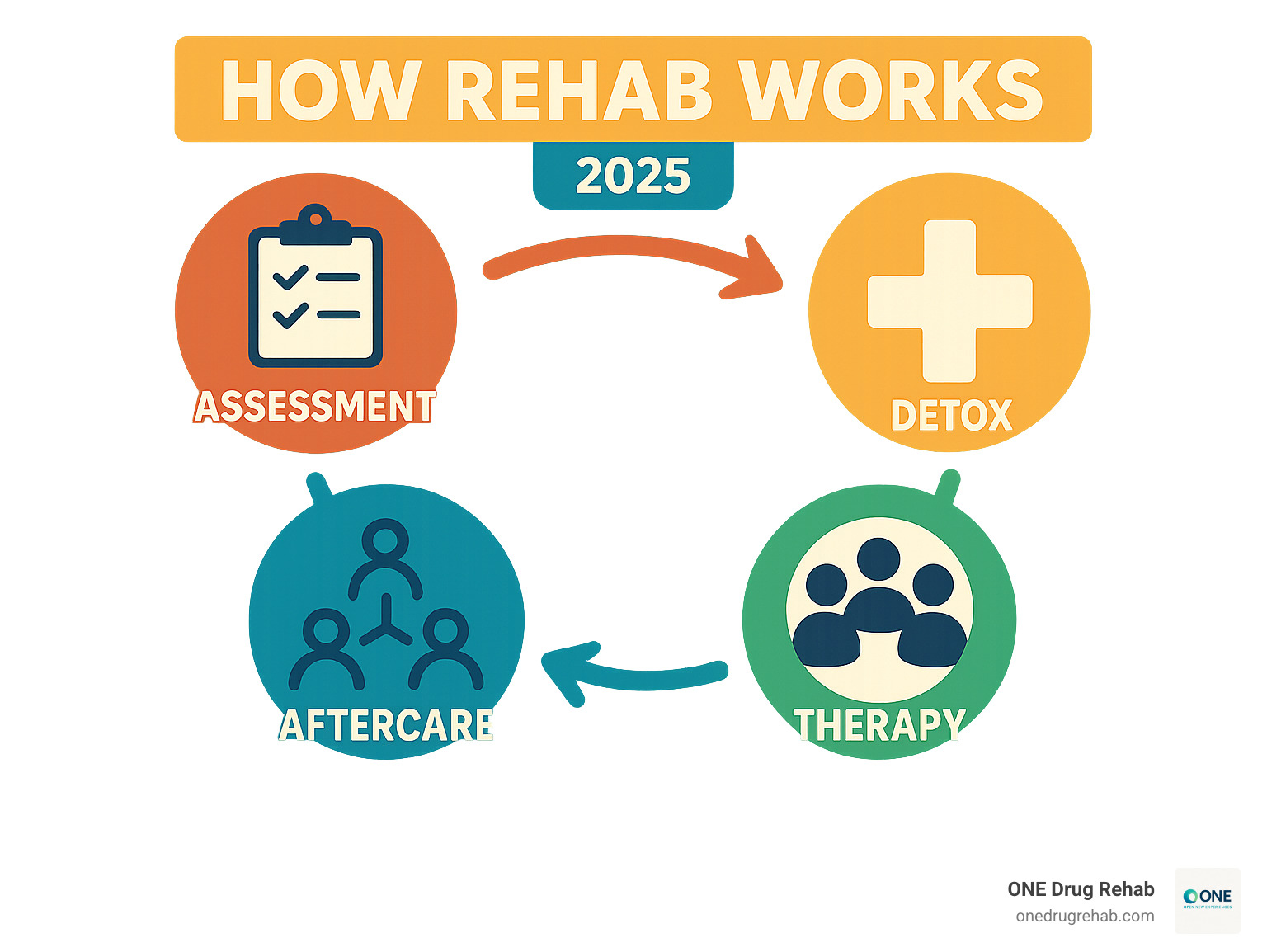
When you’re wondering how does rehab work, you’re asking about a structured process designed to help people overcome addiction. Here’s the quick answer:
How Rehab Works – 4 Main Stages:
- Assessment & Intake – Medical and psychological evaluation to create a personalized treatment plan
- Detoxification – Safely clearing substances from the body under medical supervision
- Therapy & Treatment – Individual, group, and family counseling to address underlying causes
- Aftercare & Support – Ongoing services to maintain long-term sobriety
In 2023, over 48 million people needed substance use treatment, but many don’t understand the process. This uncertainty can be overwhelming when you or a loved one needs help.
Rehab isn’t just about stopping drug or alcohol use; it’s a comprehensive approach to healing the mental, physical, and social aspects of addiction. It combines medical support, therapy, and skill-building to help people develop healthy coping mechanisms for lasting recovery.
The journey is unique for everyone. Some need intensive inpatient care, while others benefit from flexible outpatient programs. The key is finding the right level of care for your specific needs.
Recovery is possible. With proper treatment and support, people can overcome addiction to build healthier, more fulfilling lives.
Easy how does rehab work glossary:
The First Steps: Intake, Assessment, and Detoxification

Walking into a treatment facility for the first time can be overwhelming, but you’ll be met by compassionate professionals. The first phase of how rehab works is about understanding your unique situation and safely managing physical dependence on substances. This initial step creates a personalized roadmap for your recovery.
Intake and Assessment
Your recovery begins with a comprehensive evaluation by addiction treatment professionals. This includes a medical evaluation of your physical health, a psychological assessment of your mental health history (like anxiety or trauma), and a review of your social history, including your support system and living situation.
Confidentiality is paramount. Everything you share is protected, creating a safe space for honesty. This openness helps the team identify any co-occurring disorders that need to be treated alongside the addiction.
The goal is a custom plan. As research shows, effective treatment should match your unique needs. Your patient input is vital, as your goals and preferences shape the treatment approach. The team will also handle practical matters like insurance verification so you can focus on getting better.
Detoxification: Safely Managing Withdrawal
For many, the next step is detoxification, where medical supervision is critical. It’s the process of clearing substances from your body while managing the often uncomfortable and sometimes dangerous withdrawal symptoms.
Professional detox is vital because withdrawal can be dangerous. Alcohol and benzodiazepine withdrawal may cause life-threatening seizures, while severe opioid withdrawal discomfort can lead to relapse.
In medically supervised detox, teams monitor you 24/7, tracking vital signs and ensuring your safety and comfort. They can provide medication to ease severe withdrawal symptoms.
This is often where Medication-Assisted Treatment (MAT) is used. MAT combines FDA-approved medications with counseling and therapy. SAMHSA’s guidance on medication-assisted treatment supports this approach as safe and effective, especially for opioid and alcohol use disorders.
Detox addresses physical dependence, but it’s just the foundation. It clears the path so the real work of recovery—addressing the underlying emotional and psychological patterns—can begin.
The Core of Treatment: Therapy and Daily Life in Rehab

After detox, you move into the transformative stage of intensive therapy and structured daily life. This is where how rehab works becomes clear, as you address the underlying thoughts, emotions, and behaviors that fuel addiction.
Therapy and Counseling: The Heart of How Rehab Works
Therapy is your toolkit for recovery. You’ll use various therapies to build a strong foundation, each helping you understand your addiction and develop healthy coping skills.
- Individual therapy offers a private space with a therapist to explore the roots of your addiction, identify triggers, and develop personal strategies for sobriety.
- Group therapy is a lifeline, connecting you with peers who understand your journey. Sharing struggles and victories in a supportive group fosters a sense of community and strengthens your own recovery.
- Family therapy addresses how addiction impacts loved ones. It helps rebuild trust, improve communication, and teaches family members how to provide healthy support.
Therapeutic approaches are designed to rewire your thinking. Cognitive Behavioral Therapy (CBT) helps you recognize and replace harmful thought patterns with healthier ones. For example, CBT teaches you to reframe a thought like “I can’t handle this” into something more empowering. Other methods like Dialectical Behavior Therapy (DBT) teach skills for managing intense emotions, while Motivational Interviewing helps you find your own reasons for change. Many programs also include peer support for mentorship and hope.
A Typical Day in Residential Rehab
A key advantage of residential rehab is its structured environment. A predictable routine provides comfort and healing after the chaos of addiction. Each day is designed to keep you engaged in building healthy new habits.
Days often start with a healthy breakfast and mindfulness practices like meditation or yoga. These activities help you begin the day with intention and learn new ways to manage stress.
The core of the day is therapy sessions. This includes individual counseling for personal challenges and group sessions on topics like trauma or anger management. These are skill-building workshops for practicing new coping mechanisms.
Afternoon activities may include educational workshops and recreational activities like art therapy or sports, which help you refind healthy ways to enjoy yourself. Evening support groups, such as 12-step meetings, help you process the day and connect with others.
Before bed, journaling and reflection can help process insights. This structured approach builds the skills and confidence needed for a fulfilling, substance-free life.
Choosing Your Path: Types of Rehab Programs
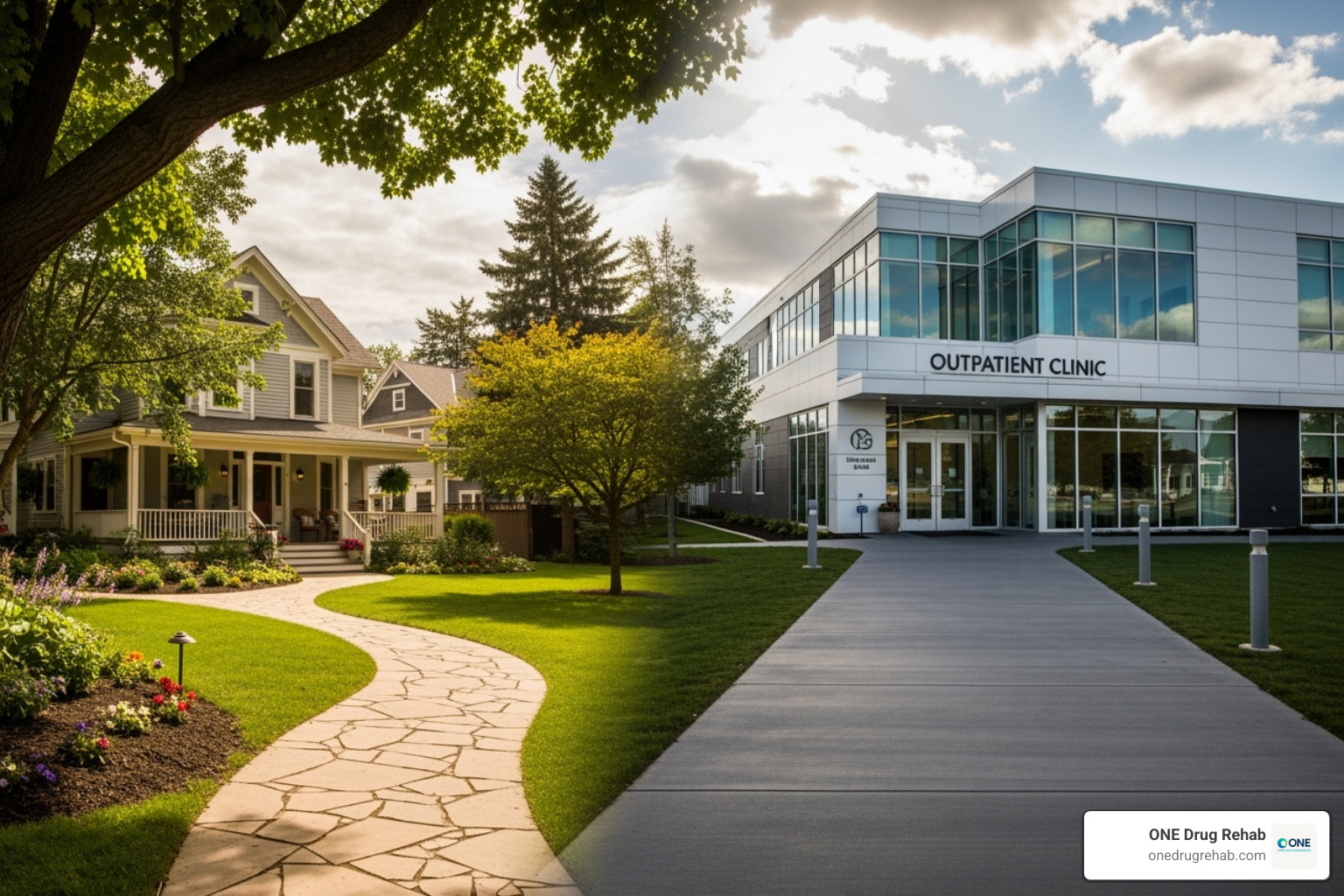
An empowering aspect of how does rehab work is that you have choices. Finding the program that fits your unique situation, addiction severity, and personal preferences is key to your success.
Inpatient vs. Outpatient Rehab
The biggest decision is choosing between the 24/7 support of inpatient rehab and the flexibility of outpatient treatment.
Inpatient rehab involves living at the facility, providing 24/7 medical supervision and a structured, trigger-free environment. It’s ideal for severe addictions, previous relapse, or co-occurring disorders needing close monitoring. Learn more about Inpatient Rehab for Drugs to see if this option is right for you.
Outpatient rehab allows you to live at home and attend scheduled therapy. This flexibility is ideal for those with work, school, or family commitments. Programs vary in intensity and can be highly effective when matched to the right person. Explore Outpatient Alcohol Rehab Programs for more details.
| Factor | Inpatient Rehab | Outpatient Rehab |
|---|---|---|
| Structure | Highly structured, 24/7 supervision | Flexible, allows living at home |
| Cost | Generally higher (includes room & board) | Generally lower (no living expenses at facility) |
| Intensity | High (full-time therapeutic engagement) | Varies (standard, IOP, PHP) |
| Ideal Candidate | Severe addiction, co-occurring disorders, relapse history | Mild-to-moderate addiction, strong home support, work/school commitments |
| Flexibility | Low (removed from daily life) | High (maintains daily responsibilities) |
Being honest about the level of support you need is crucial. Inpatient care provides a focused healing environment, while outpatient treatment fits those with strong home support and daily responsibilities.
Specialized Programs
Many facilities offer specialized programs to improve your chances of success:
- Co-occurring Disorder Treatment is essential for those with both addiction and mental health issues like depression or anxiety. These dual diagnosis programs treat both conditions at once, as they are often deeply connected.
- Holistic Treatment Programs take a whole-person approach, combining traditional therapy with alternative treatments like yoga, meditation, and nutritional counseling.
- Gender-specific rehab creates a safe space for men or women to address issues that may be difficult to discuss in mixed groups.
- The choice between twelve-step programs and non-12-step programs depends on personal preference. Twelve-step programs often involve spiritual principles and peer support, while non-12-step programs typically focus on science-based approaches and self-empowerment.
Finding the right fit for your needs is one of the most important steps you can take.
Life After Rehab: Ensuring Long-Term Success
Graduating from rehab is a huge accomplishment, but it’s the first chapter, not the whole story. Understanding how does rehab work means recognizing that recovery is an ongoing journey. Transitioning back to daily life can be overwhelming, but you’ll have new tools and a fresh perspective. This continuum of care is crucial, as the skills learned in rehab require consistent effort to maintain.
The Crucial Role of Aftercare
Aftercare is the bridge from intensive treatment to independent living. Key components include:
- Sober living homes offer a structured, substance-free residence to practice new skills with accountability and peer support.
- Alumni programs create lasting communities for connection through meetings, events, and mentorship.
- Ongoing therapy, both individual and group, remains a cornerstone for navigating life’s challenges without substances.
- Support groups like 12-step meetings help in building a sober community with people who understand your struggles and celebrate your victories.
The goal is to create a new social network that supports your recovery, replacing old relationships with healthy new ones.
Measuring Success and Treatment Effectiveness
Defining whether rehab “works” goes beyond a simple yes or no. Addiction Recovery Success Rates reveal a story that’s deeper than just counting sober days. True success includes:
- Reduced substance use is a primary goal, but recovery is much more.
- Improved mental and physical health is a key benefit, with many people reporting better sleep, less anxiety, and more energy.
- Stable employment and educational pursuits show a return to a productive life and restored self-worth.
- Healthy relationships are a meaningful measure of success, as healing damaged connections with loved ones is incredibly rewarding.
Research shows that longer treatment durations lead to better recovery outcomes. Rushing the process rarely leads to lasting change.
Relapse doesn’t equal failure. It’s often part of the learning process. What matters is returning to treatment and strengthening your recovery plan. Success is about building a life you’re proud of, where you can handle challenges and feel hopeful about the future.
Frequently Asked Questions about How Rehab Works
Understanding how does rehab work can feel overwhelming. Getting clear answers helps make this important decision more manageable. Here are some common questions.
How long does a typical rehab program last?
Program length varies based on addiction severity, substances used, and co-occurring conditions. Common timeframes are 30, 60, or 90 days. 30-day programs are a good start for stabilization, 60-day programs allow more time for therapy, and 90-day programs provide a solid foundation for long-term sobriety.
Research from the National Institute on Drug Abuse shows that longer treatment is often more effective. Residential treatment is just the beginning; ongoing aftercare is key to building a strong foundation for recovery.
Can rehab treat co-occurring mental health conditions?
Yes, treating co-occurring mental health conditions is a vital part of modern rehab. It’s common for people to have both an addiction and issues like depression or anxiety, which is known as a “dual diagnosis.”
Treating both conditions together is crucial because they often fuel each other. For example, substance use to cope with depression can worsen the depression, creating a vicious cycle. Treating only one issue is rarely effective long-term.
Effective dual diagnosis treatment addresses both substance use and mental health needs simultaneously through integrated therapies and medical care. This approach leads to better outcomes and sustained sobriety. You can find more info about Co-occurring Disorder Treatment to learn about specific approaches.
How do I find the right rehab program for my needs?
Choosing the right rehab is a major decision, but clear steps can help you find the right fit.
- Start with a professional assessment. An addiction specialist can evaluate your situation and recommend the best level of care.
- Consider your circumstances. Inpatient programs offer intensive support for severe addiction, while outpatient programs provide flexibility for those with strong home support.
- Think about program philosophy. Decide if you prefer a 12-step, non-12-step, or holistic approach.
- Factor in practical considerations. Think about location, insurance coverage, and payment options.
- Do your research. Look for licensed, accredited facilities and read Rehab Facility Reviews for insights.
Finding the right program is about finding the right fit for you. Don’t be afraid to ask questions to feel confident in your decision.
Finding Your Path to Recovery
We hope this guide has clarified how does rehab work, from the first call to the ongoing recovery journey. It’s more than just stopping substance use; it’s about refinding yourself, healing relationships, and building a life you value.
Rehab is a personalized journey. The right fit for one person may not be right for you. Whether you need intensive inpatient care or flexible outpatient sessions, there are options designed to meet you where you are.
Hope and healing are possible. Even if it doesn’t feel that way now, countless stories show that with the right support, treatment, and commitment, people get their lives back. They rebuild careers, repair families, and find joy.
Taking the first step is the most important one. Admitting you need help and researching options is when everything starts to change. You don’t have to have it all figured out; you just have to be willing to try.
At ONEDrugRehab.com, we understand that navigating treatment options is overwhelming. As a third-party, non-affiliated resource, we help you explore what’s available without pressure or bias, providing the information you need to make the best decision.
Recovery is about creating a life so good that substances become irrelevant. You are not alone. Effective treatments and qualified professionals are ready to help.
Ready to take that crucial first step? Find the right treatment program for you and start exploring your options today. Your new life is waiting.