
Why Recovery Support Is More Accessible Than Ever
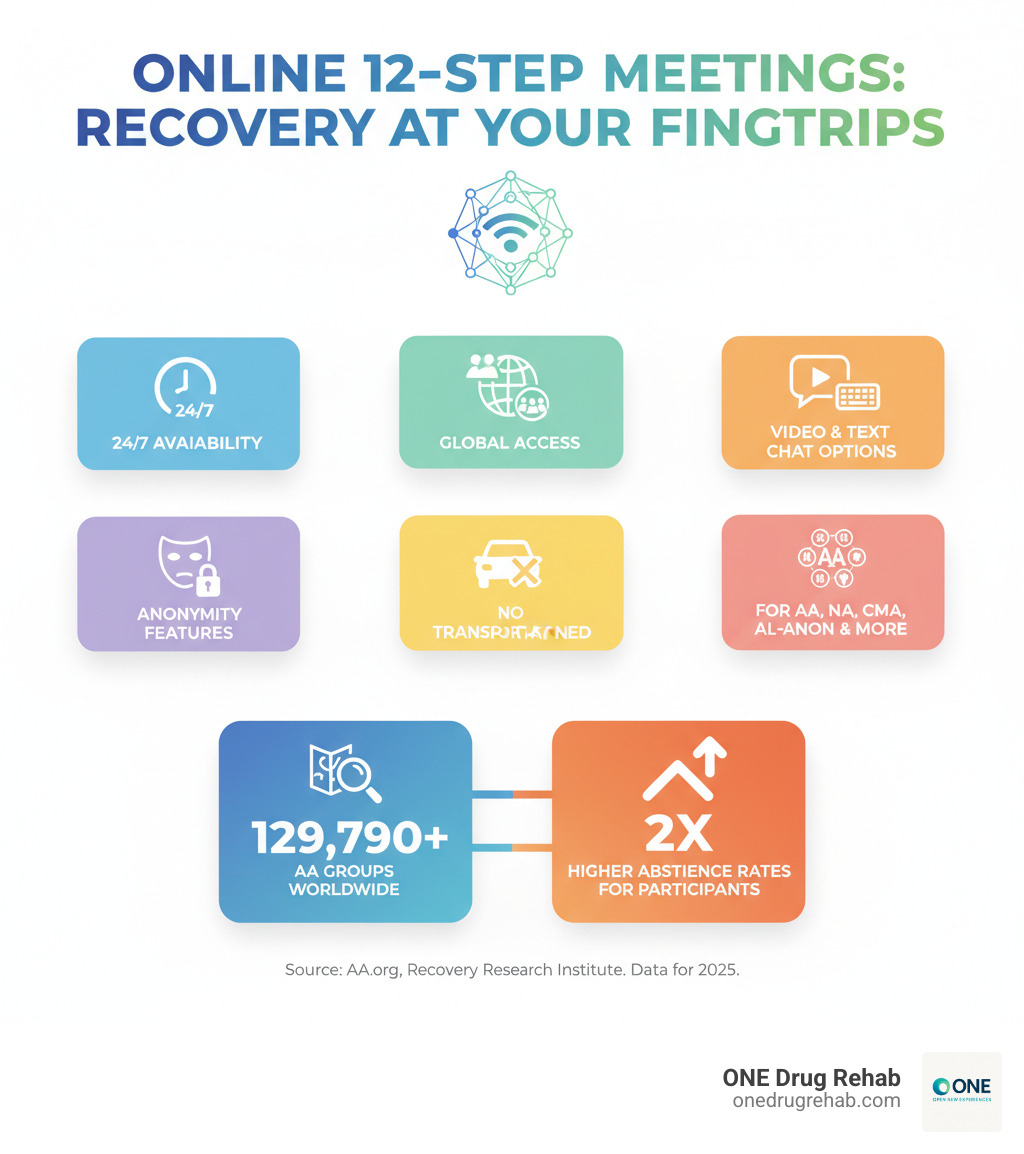
12 step groups online have transformed how millions access recovery support, bringing meetings directly to your home 24/7. Here’s what you need to know:
Quick Answer: Where to Find Online 12-Step Meetings
- Alcoholics Anonymous (AA): AA Online Intergroup – chat, video, email, and phone meetings worldwide
- Narcotics Anonymous (NA): Virtual NA – daily meetings across all time zones
- Crystal Meth Anonymous (CMA): Search the CMA meeting directory for online/hybrid options
- Al-Anon Family Groups: Virtual meetings for families affected by addiction
- Specialized platforms: StepChat, 12 Step Online, In The Rooms, and Miracles In Progress forums
- Meeting formats: Zoom video, text chat rooms, email groups, and telephone meetings
- Availability: 24/7 support with scheduled meetings throughout every day
Addiction is often called a disease of isolation, but the digital age provides a powerful antidote. The shift to online recovery support is about more than convenience; it’s a lifeline for those who can’t access in-person meetings due to location, mobility, work schedules, or social anxiety.
Virtual meetings remove traditional barriers like transportation and offer privacy, allowing you to attend a meeting at 3 AM in your pajamas if needed. With an estimated 129,790 AA groups worldwide, fellowships have acceptd technology to ensure no one has to face addiction alone.
Research shows that people who attend 12-Step programs are about twice as likely to maintain abstinence following treatment. Now, those same evidence-based peer support groups are available with just an internet connection.
This guide walks you through how the 12 Steps work in digital spaces, where to find meetings, how groups maintain anonymity, and what to do if you need proof of attendance. Whether you’re seeking help for yourself or a loved one, understanding how to access online 12-step groups can be the first step toward lasting recovery.
Understanding the 12-Step Model in a Virtual World
The 12 Steps have guided millions toward recovery since 1939, offering a spiritual—but not religious—framework for breaking free from addiction. When we talk about 12 step groups online, we’re talking about these same time-tested principles, just applied through screens instead of church basements. The core message hasn’t changed: admitting powerlessness, seeking help from something greater than ourselves, making amends, and carrying the message of hope to others.

Originally outlined in the book Alcoholics Anonymous, these steps guide you through self-reflection, spiritual growth, and service. In a virtual setting, members still share their experience, strength, and hope—just through webcams and chat boxes. Many find the digital format makes sharing easier, as being in your own space can reduce pressure.
Whether you’re attending meetings in person or online, understanding these principles is essential. For a deeper look at how this recovery model works, check out our guide on What is a 12-Step Program?. And to understand how these groups maintain unity and function, explore Understanding the 12 Traditions.
The Core Principles of the 12 Steps
The 12 Steps provide a roadmap for recovery. You can read the complete, official text directly from AA’s website: The official Twelve Steps of AA.
- Steps 1-3: Surrender. These steps focus on admitting powerlessness over addiction, believing in a Higher Power (of your own understanding), and making a decision to turn your will and life over to that power.
- Steps 4-9: Inventory and Amends. This is a process of self-examination and healing relationships. It involves making a moral inventory, admitting wrongs, and making direct amends to people you’ve harmed, where appropriate.
- Steps 10-12: Maintenance and Service. These steps center on long-term recovery. They encourage ongoing self-inventory, improving your spiritual connection, and carrying the message of recovery to others who are still struggling.
These principles work the same whether you’re in a church basement or a Zoom room. They’re the roadmap to a new way of living.
How Sponsorship Works Online
A sponsor is someone who has worked the steps and can guide you through them. In online recovery, this relationship is just as vital.
You can find a sponsor by listening to people share in online meetings and connecting with someone who resonates with you. Many groups also maintain lists of available sponsors. Once connected, communication is easy through:
- Text messages for quick check-ins.
- Phone calls for more personal connection.
- Video calls for deeper, face-to-face conversations.
- Email or secure messaging for sharing written step work.
Building trust remotely requires consistency and honesty. The advantage of online sponsorship is that you aren’t limited by geography; you can find the perfect sponsor regardless of where they live. For a complete look at this essential relationship, explore our resource on The Role of Sponsorship in 12-Step Programs.
Benefits and Challenges of Online Meetings
The shift to 12 step groups online has opened doors for millions, but like any tool, virtual meetings have both benefits and drawbacks. Understanding both sides helps you make informed choices about your recovery path.
Here’s how online and in-person meetings stack up:
| Feature | Online 12-Step Meetings | In-Person 12-Step Meetings |
|---|---|---|
| Accessibility | High (from anywhere with internet, 24/7) | Moderate (requires travel, limited by geography/schedule) |
| Anonymity | High (can use aliases, turn off video, virtual backgrounds) | Moderate (risk of being seen by acquaintances) |
| Variety | Very High (global selection of meetings, specific topics/demographics) | Moderate (limited by local offerings) |
| Social Cues | Low (miss body language, non-verbal communication) | High (full sensory experience, easier to read room) |
| Tech Issues | Possible (internet, software, device problems) | Low (physical presence, no tech required) |
| Community Feel | Can be strong, but often requires more effort to foster | Often immediate and tangible |
| Comfort | High (from home, pajamas at 3 AM!) | Moderate (leaving home, social interaction) |
The core of what makes 12-Step programs work—peer support, shared experience, and accountability—translates beautifully online. For more on why these groups are so effective, check out our page on the Benefits of 12-Step Groups.
The Advantages of Virtual Recovery
Addiction is a disease of isolation, and virtual meetings are powerful medicine. They bring connection directly to you, wherever you are.
- Accessibility: If you live in a rural area, have mobility issues, or face scheduling conflicts, online meetings are the solution. You can join from anywhere with an internet connection.
- 24/7 Availability: The internet doesn’t sleep, and neither do recovery meetings. When a craving hits at 2 AM, you can find support right then on platforms like StepChat.
- Global Community: You can join a meeting with people from around the world, reinforcing that you are not alone in this struggle. The Online Intergroup of Alcoholics Anonymous lists meetings in multiple formats worldwide.
- Reduced Social Pressure: For those anxious about physical meetings, online formats allow you to join with your camera off and listen without speaking, easing into participation at your own pace.
- Improved Anonymity: Use a first name or alias, keep your camera off, or use a virtual background. These options make it easier to protect your privacy.
- Staggering Variety: You can find meetings for specific demographics, topics, or fellowships that may not be available locally.
Potential Drawbacks and How to Overcome Them
Virtual recovery is powerful, but it’s not without challenges. Knowing what to expect helps you steer them.
- Technical Difficulties: A frozen screen or bad audio can be frustrating. Fix: Test your equipment beforehand and have a backup plan, like a phone number to dial into the meeting.
- Lack of Physical Connection: Screens can’t fully replicate the warmth of an in-person gathering. Fix: Turn on your camera when comfortable, participate in fellowship time, and consider supplementing with occasional in-person meetings.
- Home Distractions: Kids, pets, and chores can pull your focus. Fix: Find a quiet space, use headphones, and ask your household not to disturb you. Treat the time as sacred.
- Privacy Concerns: Legitimate groups take privacy seriously, but it’s wise to be cautious. Fix: Use an alias, keep your camera off until you trust the group, and be mindful of what you share.
- “Zoom Fatigue”: Staring at a screen can be draining. Fix: Mix up formats with text-based or telephone meetings, and take breaks from screens between sessions.
- Finding Your Home Group: With endless options, finding the right fit can be overwhelming. Fix: Try several different meetings. Each group has its own personality. Keep searching until you find one that feels like home.
How to Find and Join the Right 12-Step Groups Online
The internet has made finding support straightforward, but the sheer number of 12 step groups online can feel overwhelming. The key is knowing the different formats and where to look.
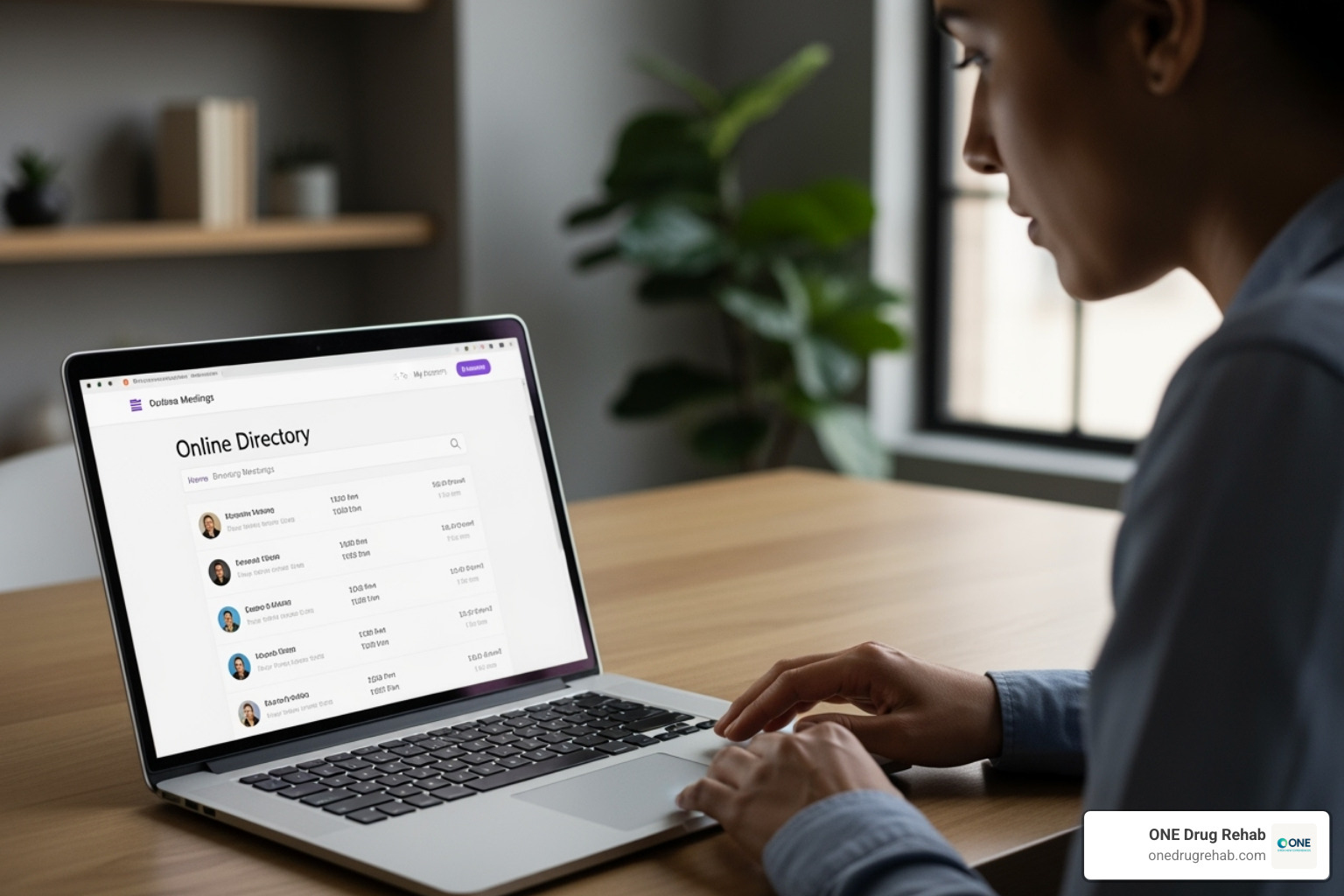
Online meetings come in several formats:
- Video Conferencing (Zoom, Google Meet): Offers face-to-face connection, allowing you to see expressions and feel more present.
- Text-Based Chat Rooms: Provides real-time connection with a high degree of anonymity. You type your shares and read others’ responses.
- Email Groups: A slower-paced conversation where you can reflect on shares and respond when you’re ready. The e-AA Group hosts an Email Recovery Meeting.
- Telephone Meetings: Requires no internet, just a phone. This simple format is highly accessible and focuses purely on voice connection.
In your first meeting, there’s no pressure to share. It’s perfectly fine to listen and get a feel for the group’s etiquette. For a comprehensive guide, check out our resource on Finding a 12-Step Meeting Online.
Finding Specific 12-Step Groups Online
Whatever you’re facing, there’s likely a specialized online fellowship waiting to welcome you.
- Alcoholics Anonymous (AA): The original 12-Step fellowship. Find a huge variety of meetings (video, chat, phone, email) through the Online Intergroup of Alcoholics Anonymous. Other resources include AA Online for text chat and the e-AA Group for email meetings. Learn more on our Alcoholics Anonymous (AA) page.
- Narcotics Anonymous (NA): Follows the same 12-Step model for drug addiction. Virtual NA is a global hub for finding meetings, and many regional sites like CTNA.org also list virtual options. Explore more on our Narcotics Anonymous (NA) page.
- Crystal Meth Anonymous (CMA): Offers focused support for methamphetamine addiction. Their website has tools to find online and hybrid meetings.
- Al-Anon and others: Support for families is crucial. Al-Anon provides support for those affected by someone else’s drinking. Fellowships like Adult Children of Alcoholics (ACA) and Codependents Anonymous (CODA) also have strong online communities.
Platforms like StepChat, 12 Step Online, In The Rooms, and Miracles In Progress (MIP) serve as central hubs, hosting meetings for dozens of different fellowships. Most directories let you filter by day, time, meeting type, and language, making it easy to find a group that fits your needs.
Choosing a Meeting Format That Works for You
Your recovery journey is unique, and the right format may change over time. Don’t be afraid to mix and match.
- Video meetings are great for face-to-face connection and building community.
- Text chat offers higher anonymity and can feel less intimidating for newcomers.
- Email meetings allow for deeper reflection without real-time pressure.
- Telephone meetings provide simplicity and accessibility, perfect for those with limited tech access.
The goal isn’t to find the one “perfect” format, but to find what keeps you connected to your recovery program right now.
Navigating Anonymity, Technology, and Other Practicalities
Anonymity is the heart of every 12-Step program. In the digital world, protecting your identity requires a few extra considerations. At ONE Drug Rehab, we want you to feel secure as you explore 12 step groups online.

Online meetings give you control over your visibility. You can protect your privacy by:
- Using an alias or just your first name.
- Turning off your video to participate by audio only.
- Using virtual or blurred backgrounds to hide your surroundings.
Legitimate groups also take steps to ensure safety. Many use password-protected meetings or waiting rooms where a host admits each person, preventing random intrusions. The group chairperson also plays a key role in maintaining a safe environment by removing anyone who is disruptive.
How Online Groups Maintain Confidentiality
What happens in a meeting stays in a meeting. This tradition of anonymity is the spiritual foundation of 12-Step programs and is taken very seriously online.
Groups establish their own guidelines through a group conscience, which typically includes strict rules against recording sessions, taking screenshots, or discussing what others have shared outside the meeting. This creates a safe space for vulnerability.
Meetings are often designated as closed (for those with a desire to stop using) or open (for anyone interested in the program), which helps manage who has access to more personal shares. It is a universal understanding that sessions are never recorded, allowing members to speak freely without fear. Facilitators also discourage gossip and crosstalk (commenting on another’s share) to respect personal boundaries.
Dealing with Proof of Attendance for Court
If you need to provide proof of attendance for legal or professional reasons, it is possible with online meetings, but it requires planning.
Many online groups and platforms like StepChat offer digital verification. However, you must communicate with your court officer or licensing board beforehand to confirm they accept online attendance and to understand their specific requirements. Ask if they need a particular format, a signature from the chair, or other specific information.
Once you know the requirements, look for meetings that explicitly advertise attendance confirmation. These groups will have a system in place to verify your presence. Being proactive ensures your commitment to recovery also satisfies any external obligations.
Alternatives and Immediate Support Resources
12 step groups online are powerful, but they are not the only path to recovery. The best program is the one you will stick with. If the spiritual emphasis of the 12 Steps doesn’t resonate with you, there are excellent secular and alternative options available.
- SMART Recovery: A secular, science-based program using cognitive-behavioral tools for self-empowerment. Learn more on our SMART Recovery page.
- LifeRing Secular Recovery: Focuses on personal responsibility with the motto “Personal Sobriety Works.” Find online meetings at LifeRing.
- Women for Sobriety (WFS): A program designed around women’s unique experiences in recovery. They offer online meetings at Women for Sobriety.
- Other Alternatives: Moderation Management (MM) is for those seeking to reduce drinking rather than quit, while SOS (Secular Organizations for Sobriety) offers another self-empowerment framework. Refuge Recovery uses Buddhist-inspired mindfulness practices for healing.
For a comprehensive look at these different philosophies, check out our page on Alternatives to 12-Step Programs.
Support groups are most effective as part of a comprehensive recovery plan. If you are dealing with severe addiction or co-occurring mental health issues, professional treatment is often necessary. These groups provide vital ongoing support, but they are not a substitute for medical care.
If you need help right now, you have options.
- The SAMHSA National Helpline (1-800-662-4357) provides free, confidential treatment referrals and information 24/7.
- Crisis text lines offer anonymous support if you are in a mental health crisis and prefer texting to talking.
- Many platforms like StepChat keep 24/7 chat rooms open, so you can find immediate human connection any time of day or night.
At ONEDrugRehab.com, we are your research partner. We provide unbiased information to help you explore all your options. Whether you choose 12 step groups online, an alternative program, or professional treatment, we’re here to help you understand what’s available. Your recovery is yours to shape.
Conclusion
The digital age has transformed addiction recovery, making 12 step groups online an accessible lifeline. We’ve explored how the 12 Steps work in virtual spaces, allowing people to find support from the safety of their own homes.
We’ve seen the benefits of virtual recovery—accessibility, 24/7 availability, and anonymity—and how to steer challenges like tech issues. With formats ranging from video to text chat, there’s a group that can work for you. Finding the right fellowship is easier than ever with online directories for AA, NA, CMA, and more.
The path to recovery is personal. If the 12-Step model isn’t a fit, many alternatives like SMART Recovery exist. The most important step is simply to start.
Your digital path to recovery starts now. At ONEDrugRehab.com, we are here to help you explore the vast array of options available. To learn more about different approaches to healing, we invite you to Explore different types of addiction treatment.