

Why a Thoughtful Rehab Center Search Matters
A rehab center search is the critical first step toward recovery. While the number of options can feel overwhelming, this guide will help you find the right fit.
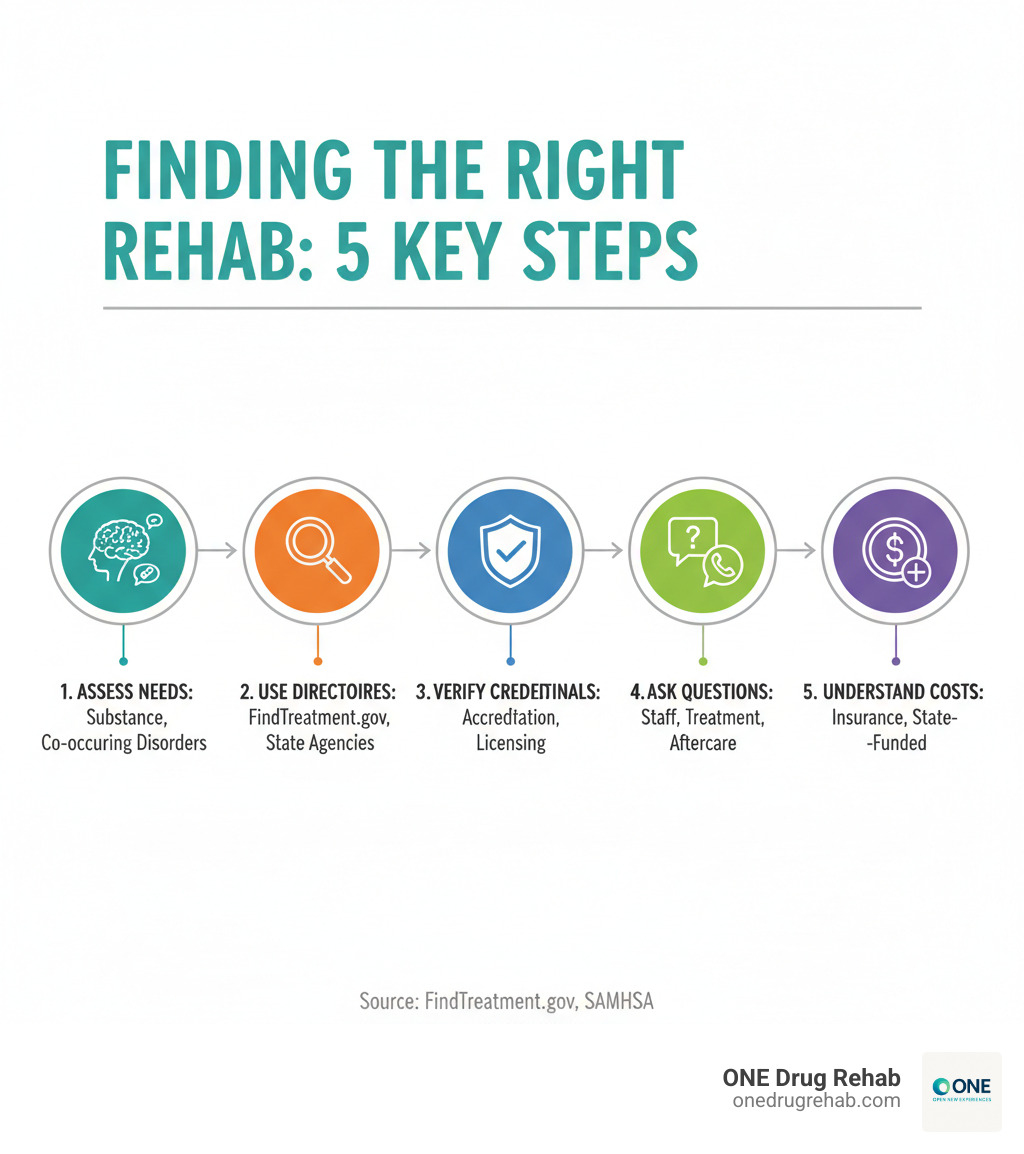
Quick Guide to Finding the Right Rehab Center:
- Identify your specific needs – substance type, co-occurring disorders, demographics
- Use trusted directories – FindTreatment.gov, state agencies, verified databases
- Verify credentials – check for licensing, accreditation (Joint Commission, CARF)
- Ask key questions – staff qualifications, treatment approaches, aftercare plans
- Understand costs – insurance coverage, state-funded options, payment assistance
According to SAMHSA, millions of Americans need substance use treatment, but a significant treatment gap exists. This is often about the difficulty of finding the right help. Fortunately, resources like the government’s confidential FindTreatment.gov and state-funded programs can help you find a facility that matches your needs.
Recognizing when help is needed is the first step. Signs include:
- Inability to control substance use
- Neglecting responsibilities at work, school, or home
- Continued use despite negative health consequences
- Experiencing withdrawal symptoms
- Developing a tolerance to the substance
This guide will walk you through your search, from assessing your needs to vetting facilities and navigating costs. You’ll learn how to find trustworthy, accredited centers that offer personalized care.
Understanding Your Needs Before You Search
Starting a rehab center search without knowing what you need is like asking a pharmacist for “medicine” without naming your ailment. The more specific you are, the better your chances of finding effective treatment. This means taking an honest look at the unique circumstances of the addiction.

Addiction isn’t one-size-fits-all, and neither is recovery. The type of substance, co-occurring mental health issues, age, background, and trauma history all matter. Personalized care is essential for this reason. For example, someone with an opioid addiction needs a different program than a teenager struggling with alcohol. Our Behavioral Health Treatment Complete Guide explores how these integrated, personalized approaches work.
Identifying the Specific Substance and Co-Occurring Disorders
The substance being used shapes the treatment plan.
- Alcoholism often requires medically supervised detox, as withdrawal can be life-threatening.
- Opioid addiction responds well to medication-assisted treatment (MAT) alongside counseling.
- Stimulant abuse (cocaine, meth) treatment relies heavily on behavioral therapies, as there are no FDA-approved withdrawal medications.
Many people with addiction also have co-occurring mental health conditions like depression, anxiety, or PTSD. This is called a dual diagnosis. Treating the addiction without addressing the underlying mental health issue, or vice versa, is rarely successful. Integrated treatment addresses both simultaneously. SAMHSA’s Mental Health resources provide more information on these connections.
Considering Specialized Programs
After identifying the substance and any co-occurring disorders, consider specialized programs that address the whole person.
- Age-specific programs: Teens and seniors have different needs. See our Addiction Treatment for Teens Complete Guide and Inpatient Rehab for Seniors Complete Guide.
- Veterans programs: These address combat trauma, military culture, and other service-related issues. The Veterans Crisis Line is a key resource.
- LGBTQ+ affirming care: This provides a safe, understanding environment that addresses factors like minority stress.
- Gender-specific treatment: Some people focus better in a single-gender setting. Our Inpatient Rehab for Men Guide explores this.
The more specific you are about what’s needed, the more effective your rehab center search will be. You’re not just looking for any center; you’re looking for the right one.
How to Conduct an Effective Rehab Center Search
With your needs identified, the next step is an effective rehab center search. This means gathering reliable information and knowing where to look.

It’s crucial to know the difference between a treatment locator and a referral service. A locator, like SAMHSA’s FindTreatment.gov, is a neutral, unbiased directory. A referral service may receive compensation for placements, creating a potential conflict of interest. At ONEDrugRehab.com, we empower you with unbiased information to make your own choice.
Watch for red flags like high-pressure sales tactics or “guaranteed cures.” Reputable facilities are transparent. Also, ensure any potential center is accredited by The Joint Commission or CARF and licensed by the state. These credentials guarantee a standard of care and safety.
Exploring Different Types of Treatment Programs
Addiction treatment exists on a spectrum. Understanding these options will help narrow your rehab center search.
- Inpatient/Residential Treatment: 24/7 supervised care in a distraction-free facility. Best for severe addiction or unstable home environments.
- Partial Hospitalization (PHP): Intensive day treatment (5-7 days/week) while living at home or in sober living.
- Intensive Outpatient (IOP): Fewer hours than PHP (e.g., 3-5 days/week), allowing for work or school commitments.
- Outpatient Care: The least intensive option, with weekly therapy sessions to support ongoing recovery.
Our Inpatient vs Outpatient Alcohol Rehab Success Rates guide offers more insight.
Medical detox is a critical first step for substances like alcohol and opioids, where withdrawal can be dangerous. It should always be done under medical supervision.
Treatment philosophies also vary. Holistic approaches treat the whole person with therapies like yoga and nutrition; see our Rehab Centers With Holistic Treatment guide. Many programs use 12-Step models (like AA), while others offer Non 12-Step Inpatient Rehab alternatives focusing on therapies like CBT. Our Types of Addiction Treatment guide covers the full range.
How to Conduct a Reliable Rehab Center Search
To get reliable results, be strategic.
- Use trusted directories: Start with FindTreatment.gov, SAMHSA’s confidential resource.
- Check state agency databases: Your state’s substance abuse agency lists licensed facilities. Find yours via the State Agencies page.
- Read reviews critically: Look for patterns in feedback, but be skeptical of extreme reviews.
- Ask for professional referrals: Your doctor or therapist can provide trusted recommendations.
Finding Specialized Treatment in Your Rehab Center Search
For specific needs, your rehab center search must be targeted.
- Opioid Use Disorder: Medication-assisted treatment (MAT) is highly effective. Use the OTP Directory for methadone programs or the Buprenorphine Practitioner Locator for office-based options.
- Alcohol Use Disorder: Look for specialized Alcoholism Rehabilitation Programs that understand the unique challenges.
- Co-occurring Disorders: Use search filters for “dual diagnosis treatment” to find programs that can treat substance use and mental health issues concurrently.
Vetting Your Options: How to Choose the Best Fit
Once your rehab center search yields a shortlist, it’s time to vet your options to find the right place for lasting recovery. Think of this as an interview where you’re the one hiring.

Focus on three key areas:
- Staff Credentials: Are therapists licensed and experienced in addiction medicine? A diverse, qualified team is a sign of comprehensive care.
- Treatment Philosophy: Does the center use evidence-based practices like Cognitive Behavioral Therapy (CBT) or Dialectical Behavior Therapy (DBT)? These scientifically-proven methods are crucial. Our Drug Rehab Success Rate Guide explains what to look for.
- Aftercare Planning: Recovery is a long-term process. A quality center plans for success after discharge with robust aftercare and family involvement.
Key Questions to Ask a Rehab Center Before Enrolling
Don’t be shy about asking direct questions. A reputable center will be transparent. If they are evasive, that’s a red flag.
- What is the staff-to-patient ratio? (Lower is often better).
- Can you provide a sample daily schedule?
- What specific, evidence-based therapies are used?
- What are your staff’s credentials and experience?
- How is family involved in treatment?
- What does your aftercare program include?
- What is your policy on relapse?
- How do you handle medical emergencies?
These questions help you understand how the facility operates. For more on the process, see our guide on How Does Rehab Work?.
Understanding Support Services and Aftercare
What happens after treatment is critical for long-term success. Look for a center with a strong aftercare strategy.
- Family Support Programs: Addiction affects the whole family. Programs that educate and counsel loved ones are vital.
- Alumni Groups: Peer support from others who have completed the program provides an invaluable sense of community and accountability.
- Sober Living/Transitional Housing: These structured, drug-free environments bridge the gap between rehab and independent living.
- Ongoing Therapy: Continuing with individual or group therapy helps manage challenges as they arise in daily life.
- 12-Step Groups: For many, groups like AA and NA are a cornerstone of lifelong recovery. Find meetings with our 12 Step Groups Near Me resource.
Finally, ensure the facility respects patient rights and privacy (HIPAA) and has clear ethical guidelines. Your dignity and confidentiality are non-negotiable.
Navigating the Cost of Rehab
The cost of treatment is a major concern in any rehab center search, but don’t let it be a barrier. More payment options exist than most people realize.
Rehab costs vary widely based on the type of program (inpatient vs. outpatient), amenities, and length of stay. Always get a clear, upfront breakdown of all potential expenses to avoid hidden fees. Our Rehab Cost Comparison guide can help you understand typical price points.
The assumption that only the wealthy can afford rehab is outdated. Between insurance, state funding, and other payment solutions, treatment is accessible at every income level.
Using Insurance for Treatment
Thanks to the Affordable Care Act and mental health parity laws, most insurance plans must cover substance use disorder treatment.
The first step is to verify your benefits. Our Rehab Insurance Verification service can help you understand your coverage. Key terms to know include:
- In-network vs. out-of-network: In-network facilities have pre-negotiated rates with your insurer, lowering your costs.
- Deductible, co-pays, and out-of-pocket maximum: These details determine how much you will pay.
- Pre-authorization: Your plan may require approval before treatment begins.
The Affordable Care Act expanded access to millions. If you have government-sponsored insurance, look into Medicaid Approved Rehab Centers or Tricare Rehab Coverage for military families.
Finding Treatment Without Insurance
If you’re uninsured or underinsured, there are still viable options. Our guide on Addiction Treatment Without Insurance explores these pathways.
- State-funded programs: These programs use federal and state money to provide low-cost or free treatment. Eligibility varies by state but is typically based on residency, income, and insurance status.
- Sliding scale fees: Many non-profits and community health centers adjust their costs based on your income and ability to pay.
- Payment plans: Some private facilities allow you to pay for treatment over time.
- Free options: For those with alcohol use disorder, exploring Free Alcohol Rehab through state or charitable programs can be a lifeline.
Don’t let financial concerns stop you from getting help. With persistence, treatment is more accessible than you might think.
Frequently Asked Questions about Rehab Center Searches
A rehab center search can bring up many questions. Here are answers to some of the most common ones.
How can I find accredited or licensed rehab centers?
Finding a verified facility is key to ensuring quality care.
- Accreditation: Look for credentials from national organizations like The Joint Commission or CARF on a facility’s website. This signifies they meet high standards for quality and safety.
- State Licensing: Every center must be licensed by its state. You can verify this through your state’s health or substance abuse agency.
- SAMHSA Treatment Locator: This government tool is the easiest way to conduct your rehab center search, as it allows you to filter for licensed and accredited facilities.
How do I know if a rehab center is a good fit for my specific needs?
A “good fit” aligns with your unique circumstances.
- Specialization: Ensure the center treats your specific substance use disorder and any co-occurring mental health conditions (dual diagnosis).
- Treatment Modalities: Ask if they use evidence-based therapies like CBT or DBT.
- Demographics: Consider if a specialized program for your age, gender, or profession would be beneficial.
- Philosophy: The center’s overall approach should feel patient-centered and focused on long-term recovery.
What is the difference between a treatment locator and a referral service?
This is a crucial distinction for getting unbiased information during your rehab center search.
- A treatment locator (like SAMHSA’s FindTreatment.gov) is a neutral public directory. It provides a list of facilities based on your criteria without endorsing any specific one. It’s an informational tool to empower your choice.
- A referral service acts as a matchmaker and often receives compensation from a network of centers for placements. This financial arrangement can create a conflict of interest, as their recommendations may be biased. Always ask if a service is compensated and verify their suggestions independently.
Conclusion: Your Path to Recovery Starts Here
Simply by looking for help, you’ve taken the most courageous and important step. The journey to recovery begins with an informed rehab center search.
This guide has shown you how to assess your needs, use trusted resources, vet facilities, and steer costs. Finding effective, personalized care isn’t about luck; it’s about diligent research and asking the right questions.
Recovery is a process, but with the right treatment center—one that offers evidence-based, compassionate care for your specific needs—a healthier future is within reach.
At ONEDrugRehab.com, our purpose is to provide a comprehensive, unbiased directory to help you compare options and find resources. We believe transparent information leads to better decisions and better outcomes. You don’t have to do this alone. The right help is out there, and you now have the tools to find it.
Begin your confidential search for a treatment center today. Your path to recovery starts now.