

What Makes Holistic Treatment Different for Addiction Recovery
Rehab centers with holistic treatment approach addiction recovery by addressing the whole person—mind, body, and spirit—rather than focusing solely on stopping substance use. This comprehensive philosophy recognizes that addiction is not just a physical disease but a complex condition with deep roots in a person’s emotional, psychological, and even spiritual health. Here’s what sets these programs apart:
Key Features of Holistic Rehab Centers:
- Mind-focused therapies: These go beyond standard talk therapy. Modalities like meditation and mindfulness teach individuals to observe their thoughts and cravings without judgment, creating a crucial pause between impulse and action. Art and music therapy provide non-verbal outlets for processing complex emotions related to trauma and addiction. These are used alongside traditional counseling to build a robust set of mental coping skills.
- Body-centered practices: Addiction ravages the body, depleting it of essential nutrients and disrupting its natural rhythms. Holistic centers address this with targeted nutrition counseling to repair organ damage and restore brain chemistry. Practices like yoga and tai chi help reconnect the mind and body, reduce stress, and release physical tension where trauma is often stored. Acupuncture can alleviate withdrawal symptoms and chronic pain, while fitness programs rebuild strength and boost mood-enhancing endorphins.
- Spiritual components: This element is often misunderstood. In a holistic context, “spiritual” does not necessarily mean religious. It refers to the process of connecting with one’s inner self, values, and sense of purpose. Activities may include journaling, nature therapy, or community work to help individuals address feelings of emotional emptiness and find meaning outside of substance use.
- Integrated care: A hallmark of quality holistic treatment is the seamless integration of these complementary therapies with evidence-based clinical practices like Cognitive Behavioral Therapy (CBT) and medical supervision. The goal is not to replace proven methods but to improve them, creating a synergistic effect where healing in one area supports progress in another.
- Root cause focus: Instead of just managing the symptom (substance use), holistic treatment aims to unearth and heal the underlying reasons for the addiction. This could be unresolved childhood trauma, chronic anxiety, depression, social isolation, or biochemical imbalances. By addressing these core issues, the foundation for a lasting recovery becomes much stronger.
Traditional rehab programs, which have helped countless individuals, typically use a more structured, symptom-focused approach centered around 12-step models and group therapy. Holistic centers expand this framework by treating what many practitioners call the “whole patient.” They operate on the principle that addiction affects many aspects of a person’s health, including physical, mental, emotional, and spiritual well-being, and that all these areas must be nurtured for true healing to occur.
This approach aligns with broader trends in healthcare. Research shows that more than 30 percent of American adults have used some form of complementary or alternative medicine. This growing acceptance reflects a collective desire for care that is more personalized and comprehensive. Studies suggest these approaches can significantly improve common addiction-related symptoms like anxiety, depression, and chronic pain when combined with traditional treatment methods, leading to better overall outcomes.
The philosophy behind holistic treatment centers is simple but powerful: since addiction impacts every part of your life, recovery should heal every part too. This means addressing not just the physical dependency, but also the emotional trauma, nutritional deficiencies, and spiritual disconnection that often fuel addictive behaviors. It’s a shift from asking “How do we stop the addiction?” to “What does this person need to become whole again?”
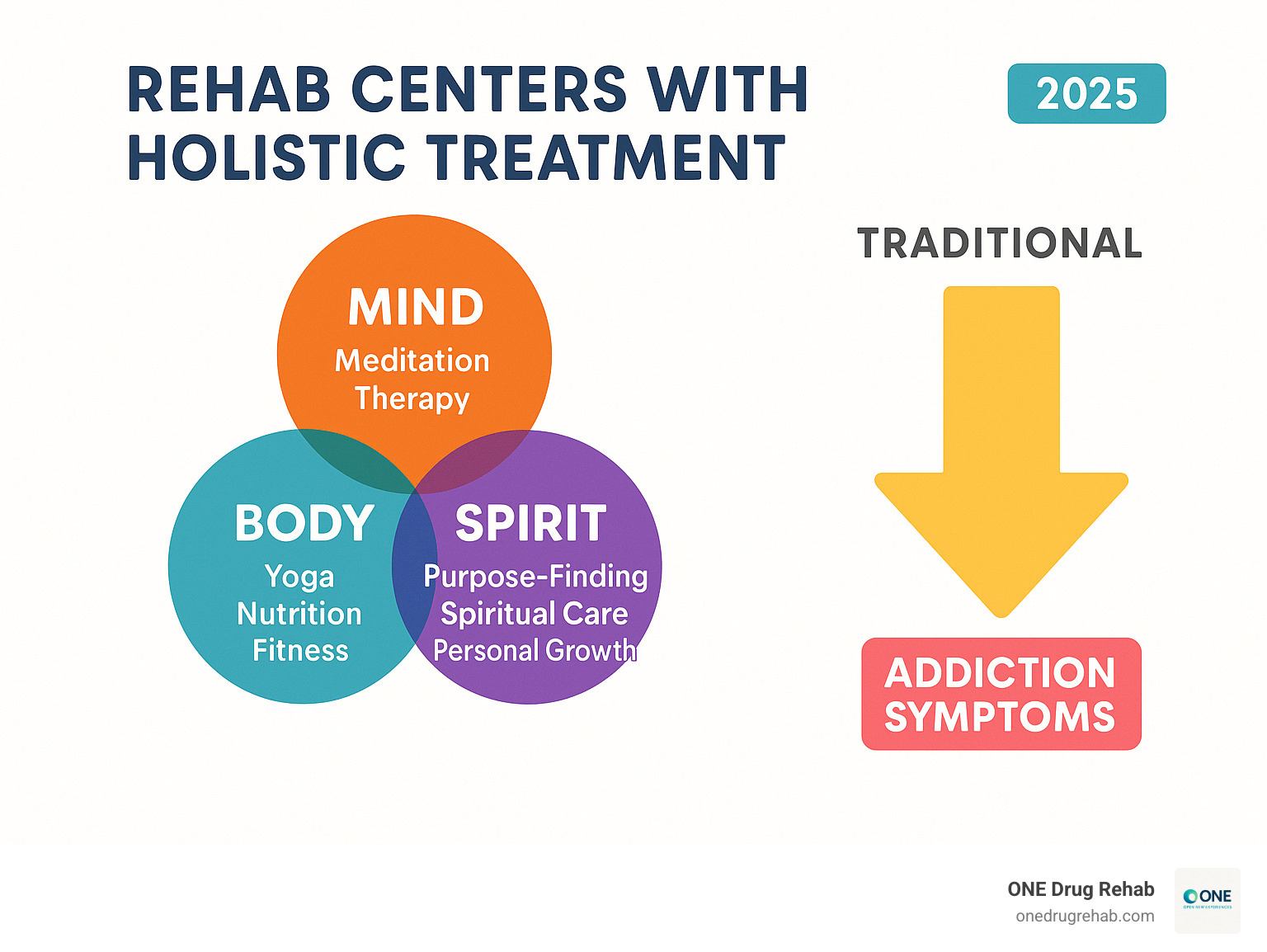
Rehab centers with holistic treatment basics:
Understanding Holistic Treatment for Addiction
Holistic treatment for addiction is built on a simple but powerful idea: addiction doesn’t happen in a vacuum. It’s not just about the substances someone uses—it’s about the why behind that use. This approach recognizes that addiction touches every part of a person’s life, from their physical health and brain chemistry to their emotional well-being and sense of purpose. It seeks to heal the entire system, not just patch a single part.
Think of it this way: if a person is dealing with unresolved trauma, chronic anxiety, or severe nutritional deficiencies, simply removing the substance won’t heal those underlying wounds. The pain remains, making relapse a constant threat. Rehab centers with holistic treatment dig deeper, asking questions like, “What pain is this substance masking?” and “What does your whole self need to heal and thrive?”
This philosophy treats root causes rather than just symptoms. Instead of focusing solely on stopping drug or alcohol use, holistic programs work to understand and address the complex web of factors that contribute to addiction. This might include past trauma, co-occurring mental health conditions like depression, physical imbalances, or a profound sense of spiritual emptiness and disconnection.
Individualized care is at the heart of this approach. Rather than a one-size-fits-all program, holistic treatment recognizes that every person’s journey to addiction is unique—and so their path to recovery must be too. This creates space for personal growth and empowers individuals to become active participants in their healing, rather than passive recipients of treatment. This sense of agency is critical for building self-esteem and confidence in one’s ability to maintain sobriety.
The goal isn’t just sobriety—it’s overall well-being and resilience. When someone addresses all aspects of their health and life circumstances, they are not just abstaining from substances; they are building a new life that is fundamentally stronger and more fulfilling, reducing the risk of future relapse.
For more detailed information, you can explore our page on holistic treatment programs.
Holistic vs. Traditional Rehab: A Core Difference
Both holistic and traditional rehab programs share the ultimate goal: to help people achieve lasting sobriety. However, they take different paths to get there, and understanding these differences can help you choose the right fit.
Traditional treatment programs typically follow a more structured, clinical approach. They often center around the 12-step model, focus heavily on symptom management, and use established, evidence-based protocols that have helped millions of people recover. These programs are incredibly effective and provide the stability, clear guidelines, and peer support structure that many people need to begin their recovery journey.
Holistic treatment programs take a broader, more integrative view. They believe that treating the whole person—not just the addiction—leads to deeper, more sustainable healing. Instead of focusing primarily on the addiction itself, they look at the underlying issues and imbalances in a person’s life that may have contributed to substance use in the first place. The environment itself is often part of the therapy, with many centers located in serene, natural settings that promote peace and reflection.
Here’s how these approaches typically differ:
| Feature | Holistic Treatment | Traditional Treatment |
|---|---|---|
| Primary Focus | Whole person healing – mind, body, and spirit | Addiction and symptom management |
| Treatment Philosophy | Address underlying issues and root causes | Follow structured, proven protocols |
| Therapy Approach | Varied therapies including alternative and complementary methods (yoga, art, nutrition) | Primarily 12-step model, group therapy, and psychoeducation |
| Patient Role | Empowerment and active participation in co-creating the healing plan | Structured guidance through established steps and program rules |
| Environment | Often serene, comfortable, and nature-focused to reduce stress | Can be more clinical or hospital-like, focused on function and safety |
Neither approach is inherently better than the other. The best choice depends on the individual. Some people thrive with the clear structure and peer-driven model of traditional programs, while others find the personalized, expansive approach of holistic treatment more effective for addressing their specific needs, especially if co-occurring disorders or trauma are present.
The Role of Mind, Body, and Spirit in Recovery
Holistic rehab centers recognize a fundamental truth: everything in our bodies and minds is connected. When addiction takes hold, it creates a cascade of negative effects, impacting our physical health, mental state, and sense of purpose all at once. Healing, therefore, must also be interconnected.
The Body: The physical toll of addiction is immense. Substance abuse depletes vital nutrients, disrupts sleep patterns, and creates significant biochemical imbalances, particularly in the brain’s reward system. Holistic programs address this directly. Nutritional therapy helps replenish what was lost and repair the body. Physical fitness, from gentle yoga to more vigorous exercise, helps restore strength, regulate sleep, and naturally boost mood-stabilizing neurotransmitters like dopamine and serotonin. Therapies like massage or acupuncture can release stored physical tension and manage chronic pain, reducing the need for medication.
The Mind: The mind is where the psychological battle is fought. Addiction often co-occurs with anxiety, depression, or trauma, creating a vicious cycle of self-medication. Holistic centers integrate therapies designed to calm and retrain the mind. Research from Harvard Health shows that mindfulness meditation may ease anxiety and mental stress, and practices like these teach individuals to observe cravings and difficult emotions without being controlled by them. This is combined with powerful, evidence-based therapies like CBT to restructure negative thought patterns and DBT to build emotional regulation skills.
The Spirit: This is the component that addresses the existential void that addiction often fills. The “spirit” refers to a person’s core identity, values, and sense of meaning and connection. Many people describe feeling empty or disconnected from themselves and the world before they started using substances. Finding purpose is a crucial part of recovery. Holistic programs facilitate this through practices like guided journaling, meditation, time spent in nature, or engaging in activities that foster gratitude and self-compassion. Rebuilding this spiritual connection—whether it’s religious, secular, or personal—gives a person a reason to stay sober that is more powerful than the substance itself.
When physical fitness, mental health support, and spiritual exploration work in concert, they create a powerful, comprehensive healing environment. This interconnected approach helps people not just stop using substances, but build a life they actually want to live—one that feels fulfilling and meaningful enough that substances lose their appeal.