
Why Understanding Drug Rehab Cost Matters
Drug rehab cost is a primary concern when considering treatment. If you or a loved one is struggling with addiction, financial worries shouldn’t prevent recovery. However, rehab costs vary significantly, and understanding the factors involved is crucial.
Here’s a general breakdown of drug rehab costs:
- Outpatient detox: $1,000 to $1,500
- Inpatient detox: $1,500 to $5,000 (5-10 days)
- 30-day inpatient program: $6,000 to $20,000+
- 60-90 day inpatient program: $12,000 to $60,000+
- Outpatient program (3 months): $5,000 to $10,000
- Aftercare programs: $1,000 to $2,000 per month
The cost of addiction extends far beyond treatment fees. Research shows addiction costs the US over $740 billion annually in lost productivity, healthcare, and crime. For individuals, the financial burden of maintaining an addiction—including substance costs, legal issues, and job loss—often surpasses the price of rehab.
Many people feel stuck, wondering if they can afford private rehab or if their insurance will cover it. The truth is, addiction treatment is an investment in your health and future. This guide will break down what influences rehab costs, what different programs include, and how to find options that fit your budget.
What Determines the Drug Rehab Cost?
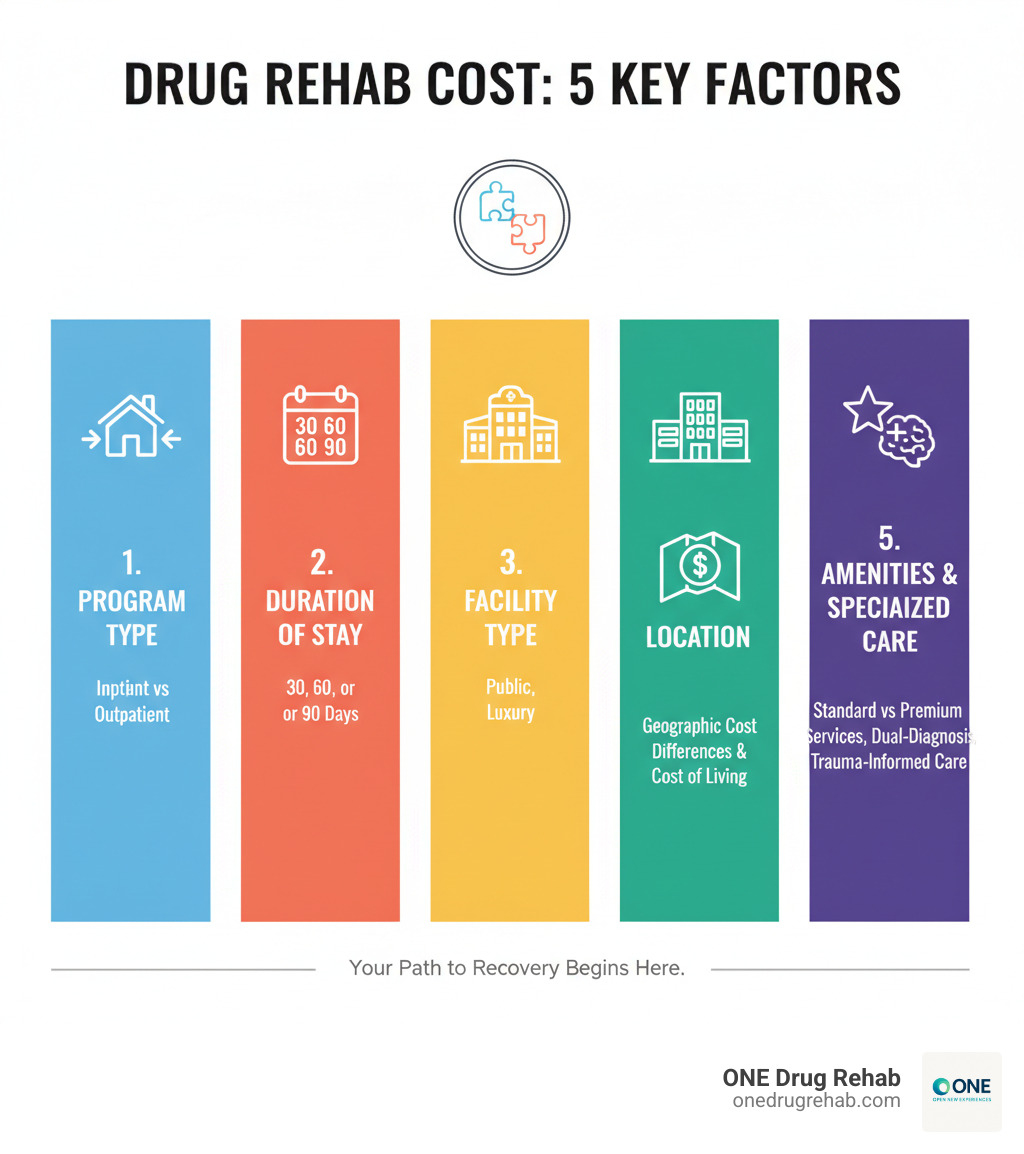
There is no single answer to “How much does rehab cost?” because the price depends on several key factors. The main factors that shape drug rehab cost include:
- Program Type: Inpatient residential care versus outpatient treatment.
- Duration of Stay: Common options are 30, 60, or 90 days.
- Facility Type: Public, private, or premium luxury rehabs.
- Location: Costs vary by region and cost of living.
- Amenities and Specialized Care: Services range from basic to premium.
- Staff Expertise and Level of Care: The qualifications of the team and intensity of treatment.
Let’s break down each of these factors so you can understand what you’re paying for.
Program Type: Inpatient vs. Outpatient Care
The biggest factor affecting drug rehab cost is whether you choose inpatient or outpatient care.
Inpatient rehab (residential treatment) means you live at the facility 24/7, receiving round-the-clock medical supervision, housing, meals, and a structured schedule. This immersive environment is ideal for severe addiction or those without a stable home. Due to the comprehensive nature of the care, it is the more expensive option.
Outpatient rehab allows you to live at home while attending scheduled treatment sessions. This model works well for those with mild to moderate addiction and a strong support system. Since it doesn’t include room and board, it costs significantly less. More intensive options like Intensive Outpatient Programs (IOP) and Partial Hospitalization Programs (PHP) offer more frequent sessions, bridging the gap between standard outpatient and residential care.
| Feature | Inpatient Rehab (Residential) | Outpatient Rehab |
|---|---|---|
| Cost Range | Higher ($6,000-$20,000+ for 30 days) | Lower ($5,000-$10,000 for 3 months) |
| Intensity | High—24/7 supervision and immersive environment | Moderate to High (IOP/PHP)—scheduled sessions |
| Living Arr. | Live at the facility | Live at home |
| Support | Constant medical and therapeutic support | Scheduled sessions with less immediate supervision |
| Best For | Severe addiction, unstable home environment, co-occurring mental health issues | Milder addiction, strong home support, work or family commitments |
Program Duration: 30, 60, and 90-Day Stays
Longer stays in treatment cost more, but research shows they lead to better outcomes and lower relapse rates.
- 30-day programs are a common starting point, offering enough time for detox, stabilization, and initial therapy. The drug rehab cost for a 30-day inpatient program typically ranges from $6,000 to $20,000.
- 60-day programs allow for deeper therapeutic work and skill-building after the initial stabilization period.
- 90-day programs are often considered the gold standard, providing ample time to address root causes, develop healthy coping mechanisms, and build a strong foundation for sobriety. A 60- or 90-day program can cost between $12,000 and $60,000. Studies show that completing a 90-day program significantly reduces relapse rates.
If you’re considering a longer program, our guide on 90 Day Rehab Cost breaks down what to expect.
Facility Type: Public vs. Private and Premium Options
The type of facility you choose greatly impacts the drug rehab cost.
- State-funded or public programs are free or low-cost, making them accessible for those with financial constraints. However, they often have long waitlists and offer more standardized care.
- Private rehab facilities are paid for out-of-pocket or with private insurance. They offer immediate admission, more personalized care with better staff-to-patient ratios, and a wider range of therapies. A 30-day stay typically costs between $10,000 and $30,000.
- Premium or luxury rehab centers provide highly individualized treatment in upscale settings with amenities like private rooms, gourmet meals, and spa services. These can cost from $30,000 to $80,000 or more per month.
For a detailed look at how different facility types compare, check out our Drug Rehab Cost Comparison.
Location, Amenities, and Specialized Care
Where a facility is and what it offers also affects the final drug rehab cost.
Location plays a significant role. Facilities in major cities or states with a high cost of living (like California or New York) are generally more expensive than those in rural areas.
Amenities can range from basic necessities to premium offerings like private rooms, chef-prepared meals, pools, yoga, and massage therapy. These are part of a holistic approach to healing but increase the overall cost.
Specialized care for co-occurring mental health disorders (dual-diagnosis), trauma-informed care, or gender-specific programs adds to the price. These services require staff with specific expertise. Medication-Assisted Treatment (MAT), which combines medications with counseling, is another specialized service that can affect the cost.
A Breakdown of Typical Rehab Program Costs
Understanding the drug rehab cost is easier when you break it down by each phase of recovery. A treatment plan often includes several components: detoxification, inpatient or outpatient care, and aftercare. One of the first steps you should take is to check what your insurance will cover, as this can dramatically reduce your out-of-pocket expenses.
The Average Cost of Detox Programs
Medical detox is the first step for many, providing a safe, supervised withdrawal from substances like alcohol, opioids, or benzodiazepines. Abruptly stopping can be dangerous, and professional monitoring is crucial.
During medical detox, healthcare professionals manage withdrawal symptoms with medication and ensure your safety. This constant supervision is a primary cost driver.
- Inpatient detox typically costs $1,500 to $5,000 for a 5- to 10-day stay. This includes 24/7 medical care, lodging, meals, and medication. It is often essential for alcohol or benzodiazepine withdrawal.
- Outpatient detox is a less expensive option, costing $1,000 to $1,500. It’s suitable for those with milder dependencies and strong home support, involving regular medical check-ins without 24/7 supervision.
The cost can also vary based on the substance, as some withdrawal syndromes require more intensive medical intervention.
Inpatient Drug Rehab Cost Ranges
Inpatient or residential treatment is the most immersive and typically most expensive option. It removes you from triggers and provides a supportive environment focused entirely on healing.
- A 30-day inpatient program is a common starting point, with costs ranging from $6,000 to $20,000. This is often enough time for detox and initial therapy.
- 60- or 90-day programs allow for deeper therapeutic work and lead to better long-term outcomes. These extended programs typically cost between $12,000 and $60,000.
This investment covers room and board, 24/7 medical and therapeutic care, integrated medical detox, individual and group therapy sessions, family counseling, nutritious meals, and recreational activities like fitness or art therapy.
Outpatient Drug Rehab Cost and Aftercare
Outpatient programs offer professional treatment while allowing you to live at home and maintain daily responsibilities. This flexibility makes them a more affordable and practical choice for many.
A standard three-month outpatient program typically costs between $5,000 and $10,000. This includes scheduled individual and group counseling sessions several times a week. More intensive programs (IOPs) involve more frequent sessions at a higher cost.
Recovery is an ongoing process, and aftercare is a critical investment in long-term sobriety. Aftercare programs provide continued support through therapy and support groups, typically costing $1,000 to $2,000 per month.
Some individuals transition from inpatient care to sober living homes, which provide a supportive, substance-free environment to practice recovery skills. These have their own costs but can be an invaluable bridge to independent living.
How to Pay for Rehab: Insurance, Financing, and Affordable Options
Figuring out how to pay for treatment can be stressful, but many resources are available to make the drug rehab cost manageable. Let’s explore your options so you can focus on getting well.

Using Health Insurance for Treatment
Health insurance is the most common way to cover rehab costs. Thanks to the Affordable Care Act, addiction treatment is considered an essential health benefit, meaning most insurance plans must provide coverage. You can review federal requirements for mental health and substance use coverage on HealthCare.gov.
- Private insurance (HMO, PPO), Medicaid, Medicare, and military insurance (TRICARE) all typically offer some level of coverage for addiction treatment. If you have Employer Health Insurance, your plan likely includes these benefits.
- Understanding your policy is key. Look for terms like deductible (what you pay first), copayment (a fixed fee), coinsurance (a percentage of the cost), and whether a facility is in-network (cheaper) or out-of-network.
To understand your coverage, call your insurance provider or use our Rehab Insurance Verification tool. For a deeper dive, read our guide: Does Insurance Cover Rehab?
Private Payment and Financing Options
If you don’t have insurance or if it doesn’t cover the full cost, several financing options can help make the drug rehab cost affordable.
- Payment Plans: Many facilities allow you to pay the cost over several months or years.
- Medical Loans: These are personal loans specifically for healthcare expenses, often with reasonable interest rates.
- Crowdfunding: Platforms like GoFundMe can help you raise funds from your social network.
- Savings or Credit: Using personal savings is an investment in your future. Credit cards are an option, but be mindful of interest rates.
When speaking with a facility, ask about payment plans, recommended lenders, sliding scale fees based on income, and any available scholarships or grants. For more ideas, see our guide on How to Afford Rehab.
Are There Free or Low-Cost Rehab Programs?
Yes. Cost should never be the sole reason for not getting help. Free and low-cost options are available and save lives.
- Nonprofit organizations like the Salvation Army offer free or low-cost programs.
- State-funded programs provide affordable treatment for residents, though they may have waitlists.
- Medicaid and Medicare can cover most or all of the cost at approved facilities. You can search for Medicaid Approved Rehab Centers online.
- Sliding scale fees adjust the cost based on your income.
- Scholarships and grants are offered by some treatment centers to help cover costs.
- Support groups like Alcoholics Anonymous (AA) and Narcotics Anonymous (NA) offer free, invaluable peer support.
Don’t let cost stop you. Explore all your options. You can use our directory to Find affordable treatment via ONE Drug Rehab’s directory and connect with facilities that offer financial assistance.
The True Cost: Is Rehab a Worthwhile Investment?
When considering the drug rehab cost, it’s important to look beyond the immediate price tag. The real question is not “How much does rehab cost?” but “What is the cost of not getting help?”
Untreated addiction affects every aspect of life—health, relationships, career, and finances. When you weigh the price of rehab against the devastating toll of addiction, treatment becomes one of the most valuable investments you can make.

Calculating the Long-Term Financial Cost of Addiction
The price of maintaining an addiction goes far beyond the cost of substances. A heroin addiction can cost over $54,000 annually, while even a heavy drinking habit can exceed $4,500 per year. But that’s just the start.
Consider these additional costs:
- Lost Productivity and Job Loss: Addiction leads to poor performance and termination, resulting in months or years of lost income.
- Legal Fees: A single DUI can cost thousands in fines and legal fees. Arrests for drug-related offenses add to the financial burden.
- Healthcare Expenses: Emergency room visits, overdoses, and treatment for chronic conditions like liver or heart disease create a cycle of medical debt.
On a larger scale, addiction costs the United States over $740 billion annually in lost productivity, healthcare, and crime-related expenses. When you add it all up, the cost of active addiction dwarfs even the most expensive rehab program.
The Return on Investment: Health, Career, and Future
The drug rehab cost is a short-term expense with lifelong benefits. The return on this investment is immeasurable.
- Improved Health: Your body and mind begin to heal, reducing the need for costly medical care related to substance abuse. Your quality of life improves dramatically.
- Rebuilt Relationships: Treatment provides the tools to repair trust and reconnect with loved ones, creating a vital support network for long-term sobriety.
- Career and Financial Stability: Sobriety brings focus and reliability, opening doors to new job opportunities and steady income. You can start saving and building a secure future.
Most importantly, investing in rehab means breaking the cycle of addiction. It prevents future financial, legal, and health crises, giving you the chance to live a life of purpose and hope. The peace of mind and restored relationships that come with sobriety are priceless. When viewed this way, rehab isn’t an expense—it’s the best investment you’ll ever make.
Frequently Asked Questions about Rehab Costs
When it comes to drug rehab cost, you need straightforward answers. Here are the questions we hear most often.
What is typically included in the price of an inpatient rehab program?
An inpatient program’s price is a comprehensive package. It generally includes:
- Room and board (lodging and meals)
- Medical detox with 24/7 supervision
- Individual and group therapy sessions
- Aftercare planning to support long-term recovery
- Recreational activities like yoga, fitness, or art therapy
- 24/7 access to medical and clinical staff
Why are some rehab centers so much more expensive than others?
The wide variation in drug rehab cost is due to several factors:
- Amenities: Luxury facilities with private rooms, gourmet meals, and spa services cost more than standard centers with basic amenities.
- Location: A center in a high-cost-of-living area like Malibu or New York City will be more expensive than one in a rural setting.
- Staff-to-Patient Ratio: A lower ratio means more personalized attention but requires more staff, increasing costs.
- Specialized Therapies: Programs offering advanced treatments like EMDR for trauma or comprehensive dual-diagnosis care charge more for that expertise.
- Reputation: Well-established centers with high success rates and renowned experts often command higher prices.
How can I find out if my insurance will cover rehab?
Verifying your insurance coverage is a critical step that can save you thousands. Here’s how:
- Call your insurance provider. Use the member services number on your card and ask about your mental health and substance use disorder benefits. Inquire about deductibles, copayments, and in-network vs. out-of-network facilities.
- Use an online verification form. Many rehabs and directories offer free tools to verify your benefits on your behalf. This saves you time and helps you understand your options.
- Ask the rehab’s admissions team. They are experts at navigating insurance and can give you a clear picture of your out-of-pocket costs for their specific facility.
You can use our Rehab Insurance Verification tool to get started right away.
Conclusion: Taking the Next Step Towards Recovery
We’ve covered a lot about drug rehab cost, from program types and durations to payment options. The most important takeaway is that while costs vary, affordable options exist for every budget. Insurance, payment plans, and state-funded programs can all make treatment accessible.
The true cost of addiction—in terms of health, relationships, and opportunities—is far greater than the investment in getting well. Every dollar spent on treatment is a step toward reclaiming your life.
If you’re worried about the cost, know that it should not be a barrier. Resources are available, and help is within reach.
Recovery is possible. We encourage you to take the next brave step. Explore the ONE Drug Rehab directory to Find a provider that fits your needs and budget. Reach out, ask questions, and let an admissions team guide you through your options.
Your future is worth the investment. We’re here to help you find the way forward.