
30 day outpatient rehab: Your 2025 Guide to Hope
Your Guide to 30-Day Outpatient Rehab
Understanding your addiction treatment options is key. A 30 day outpatient rehab program offers a unique path to recovery.
Here’s a quick look:
- Definition: An addiction treatment program where you attend therapy during the day and return home each evening.
- Duration: About one month.
- Ideal for: Individuals with mild to moderate substance use concerns, a stable home life, and daily responsibilities like work or family.
- Key Advantage: Lets you live at home and practice new coping skills in real-world settings.
Facing substance use challenges can be overwhelming. Many seek help without putting their life on hold. A 30 day outpatient rehab program offers a flexible and effective solution.
This program allows you to focus on recovery during the day while returning home at night, balancing treatment with commitments. It’s about building new habits and understanding triggers in your everyday environment. This guide will cover what these programs offer, who they help most, and how to find the right fit for your journey to lasting recovery.
What to Expect from a 30-Day Outpatient Rehab Program
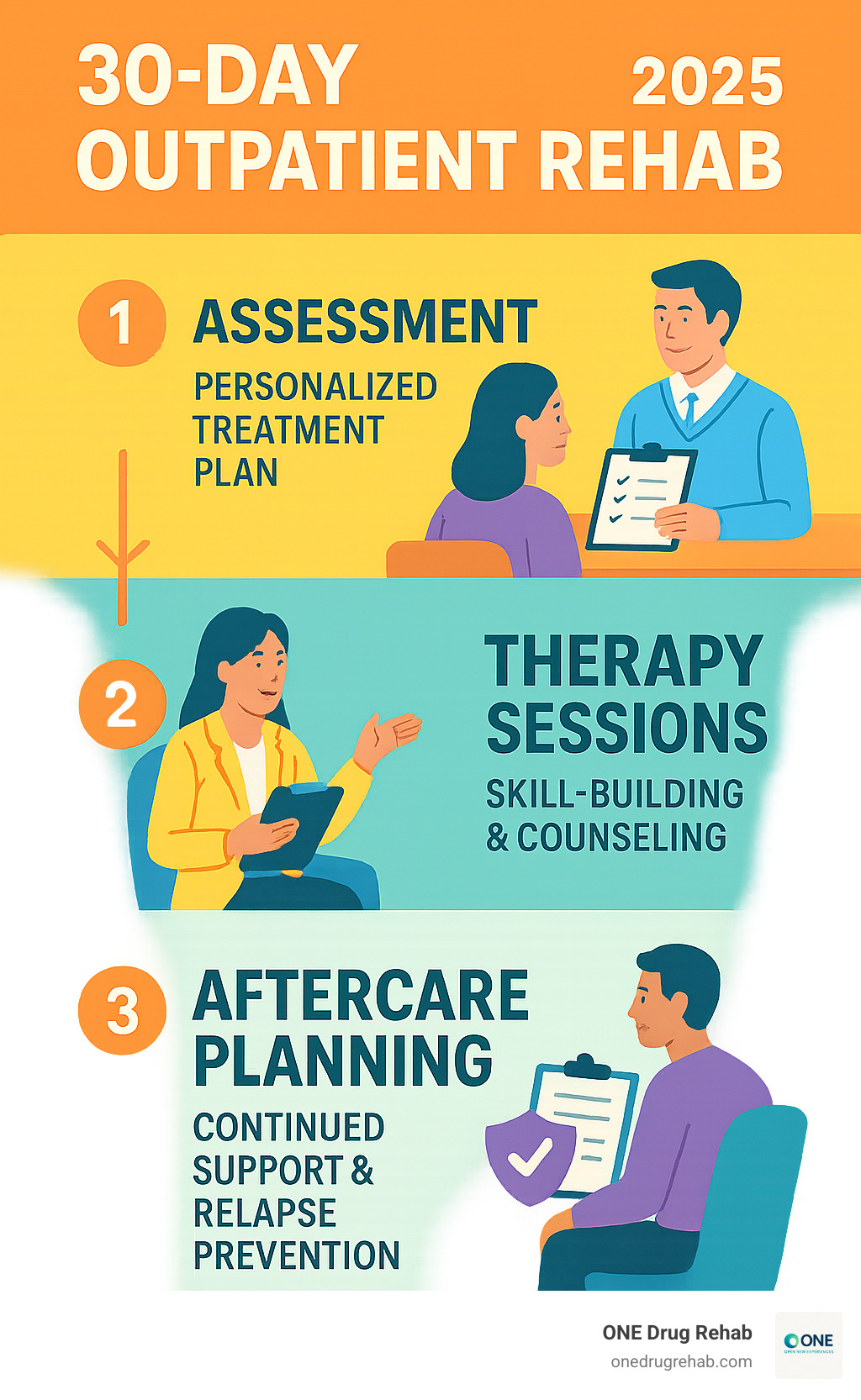
A 30 day outpatient rehab program provides a structured, supportive environment to steer addiction’s complexities. Unlike inpatient care, it allows you to maintain your daily life while receiving intensive treatment. You’ll attend therapy sessions for several hours on specific days each week and return home afterward.
The daily commitment varies by program intensity. Partial Hospitalization Programs (PHP) can be like a full-time job, requiring attendance five days a week. Intensive Outpatient Programs (IOP) are less intensive, with sessions three to five days a week for a few hours each day. The goal is to offer a robust therapeutic environment with flexibility.
Upon admission, a comprehensive assessment leads to an individualized treatment plan based on your specific needs, substance use severity, and any co-occurring mental health conditions. While full medical detox for severe withdrawal is rare in outpatient settings, some programs offer medically supervised detox for milder cases or coordinate with a detox facility. The primary focus is on behavioral therapies and developing coping skills in your real-world environment.
To illustrate the differences, here’s how a 30 day outpatient rehab program compares to its inpatient counterpart:
| Feature | 30-Day Outpatient Rehab | 30-Day Inpatient Rehab |
|---|---|---|
| Living Arrangement | Live at home, attend sessions at facility | Reside at the treatment facility 24/7 |
| Cost | Generally more affordable (no room & board) | Higher cost due to accommodation and round-the-clock care |
| Intensity | Structured, but with more personal freedom and real-world exposure | Highly structured, 24/7 supervision, removed from triggers |
| Ideal Candidate | Mild to moderate SUD, stable home, work/family commitments, strong support system | Severe SUD, unstable home, co-occurring disorders, need for intense supervision |
| Medical Supervision | Limited; may coordinate detox, medication management | Constant medical monitoring, especially during detox |
Typical Therapies and Activities
A 30 day outpatient rehab program uses various evidence-based therapeutic modalities to equip you with tools for lasting sobriety.

You can expect a blend of:
- Individual Counseling: One-on-one sessions to explore personal issues, develop coping strategies, and set recovery goals.
- Group Therapy: A cornerstone of outpatient care, providing peer support and a safe space to share experiences and practice social skills.
- Family Therapy: Involves loved ones to improve communication, heal relationships, and build a supportive home environment.
- Cognitive Behavioral Therapy (CBT): Helps you identify and change negative thought patterns and behaviors related to substance use.
- Dialectical Behavior Therapy (DBT): Focuses on emotional regulation, distress tolerance, and mindfulness, especially for those with intense emotions.
- Motivational Improvement Therapy (MET): Helps resolve ambivalence about treatment and strengthens your motivation for change.
Many programs also integrate holistic approaches (yoga, meditation) and educational workshops on topics like addiction science and relapse prevention. This comprehensive approach addresses your physical, mental, and emotional health. We encourage you to explore more about evidence-based behavioral therapies to understand their scientific backing.
A Sample Weekly Schedule
A key advantage of a 30 day outpatient rehab program is its integration into your life. It helps you balance therapy with work, school, and family, which is crucial for building sustainable recovery skills in a real-world context.
While schedules vary by intensity (PHP vs. IOP), a sample week might look like this:
- Monday: Individual Therapy (1 hr), Group Therapy (2-3 hrs), Optional Evening Support Group.
- Tuesday: Skills Workshop (2 hrs), Psychoeducational Group (2 hrs).
- Wednesday: Group Therapy (2-3 hrs), Family Therapy (1-1.5 hrs).
- Thursday: Individual Therapy (1 hr), Group Therapy (2-3 hrs).
- Friday: Life Skills Training (2 hrs), Wrap-up Group (1-1.5 hrs).
- Weekend: Personal time, family, and community support groups.
This structure provides intensive support during program hours while allowing you to apply new skills in your daily life.
Is This Program the Right Choice for You?
Choosing the right addiction treatment program is a deeply personal decision. While a 30 day outpatient rehab has many advantages, it’s not a one-size-fits-all solution. To determine if it’s right for you, assess the severity of your substance use, the strength of your support system, any co-occurring mental health disorders, and your personal motivation. Commitment and accountability are crucial in an outpatient setting where you manage much of your recovery independently.
Since treatment is not universal, we encourage you to explore different types of addiction treatment to get a full picture of your options.
Who is a 30-Day Outpatient Rehab Program Best Suited For?
A 30 day outpatient rehab program is often an ideal choice for individuals with:
- Mild to moderate Substance Use Disorder (SUD): Your addiction doesn’t require 24/7 medical supervision or management of dangerous withdrawal symptoms.
- A strong, stable home support system: You have a supportive living environment free from active substance use and negative influences.
- Work, school, or family commitments: The program’s flexibility allows you to maintain your daily responsibilities.
- A need for step-down care: It serves as a valuable transition from a more intensive inpatient program, providing continued support.
- First-time treatment needs: If your substance use concerns are recent and manageable, it’s a less disruptive way to start your recovery.
Key Benefits of Choosing This Path
Choosing a 30 day outpatient rehab program offers several unique benefits:
- Flexibility: Therapy can be scheduled around work, school, or family life, fitting treatment into your existing responsibilities.
- Affordability: Without the cost of room and board, outpatient programs are significantly more affordable than inpatient options.
- Maintaining Daily Life: You continue living at home, which can be comforting and grounding during treatment.
- Real-World Coping Skills: Living at home provides immediate opportunities to practice new coping skills and relapse prevention strategies in your everyday environment.
- Privacy: Outpatient programs can offer a higher degree of privacy compared to residential stays.
- Stronger Family Involvement: Living at home makes it easier to integrate family members into the treatment process through therapy and education, which is vital for long-term recovery. We offer resources for support for families in addiction recovery.
Potential Challenges and Disadvantages
While a 30 day outpatient rehab program has many advantages, it’s important to be aware of potential challenges:

- Exposure to Triggers: Living at home means you’ll encounter daily triggers, requiring strong self-awareness and commitment to your recovery plan.
- Less Structure: Compared to inpatient rehab, outpatient programs offer less structure, demanding a high degree of self-discipline and accountability.
- Requires High Motivation: Success hinges on personal motivation, as you are responsible for your recovery outside of therapy hours.
- Not Suitable for Severe Addiction: This setting may not provide the necessary level of care for severe SUDs, a history of relapse, severe co-occurring disorders, or an unsafe home environment.
- Potential for Medical Complications: The lack of 24/7 medical supervision can be risky for those with a history of severe withdrawal symptoms.
It’s also worth noting that treatment completion rates highlight the need for sustained commitment. You can find more research on treatment completion rates, which underscores the importance of finding the right fit for your needs.
Navigating the Logistics: Cost, Insurance, and Finding a Program
If a 30 day outpatient rehab program seems right for you, the next step is navigating the logistics. Understanding costs, insurance, and selecting a reputable program can feel complex, but careful planning is crucial for a successful journey.
ONEDrugRehab.com is a third-party, non-affiliated online directory offering unbiased information to help you research options and find rehab near you.
How Much Does a 30-Day Outpatient Rehab Program Typically Cost?
The cost of a 30 day outpatient rehab program is typically more affordable than inpatient care because it doesn’t include room and board. Costs generally range from $3,000 to $10,000 for a 30-day period, with an average around $5,700.
Several factors influence the price:
- Location: Urban areas with a higher cost of living are often more expensive.
- Services Offered: A wider array of therapies or amenities increases the cost.
- Program Intensity: A PHP costs more than an IOP due to more service hours.
- Staff Credentials: Highly experienced staff may lead to higher fees.
Beyond paying out-of-pocket, options exist to manage expenses. State-funded programs and nonprofits may offer free or low-cost services, though waitlists can be long. Many facilities also provide sliding scale fees based on income or payment plans. These are excellent avenues to explore if you need to find rehab without insurance.
Is It Covered by Insurance?
Yes, 30 day outpatient rehab programs are often at least partially covered by health insurance. The Affordable Care Act (ACA) and mental health parity laws require most health plans to provide coverage for substance use disorder treatment, often on par with other medical services.
Most private insurance plans, as well as government-funded programs like Medicaid and Medicare, typically cover a portion of outpatient rehab costs. Your exact coverage depends on your specific plan, including deductibles, co-pays, and whether the facility is in-network.
The best way to understand your coverage is to contact your insurance provider directly. Many rehab facilities also offer to verify your benefits for you, which can clarify what your plan covers, your out-of-pocket costs, and any treatment limitations. For more information on treatment options and payment, resources like SAMHSA’s National Survey on treatment facilities can be informative.
Factors to Consider When Choosing a Program
Choosing the right 30 day outpatient rehab program is critical. It’s about finding the best fit for your unique needs, not just the closest or cheapest option. Ask potential facilities these key questions:
- Licensing and Accreditation: Is the facility licensed by the state and accredited by organizations like JCAHO or CARF? This ensures quality standards.
- Treatment Philosophy: Does their approach (e.g., 12-step, evidence-based, holistic) align with your beliefs?
- Staff Credentials: Are the therapists, counselors, and medical staff licensed and experienced professionals?
- Dual Diagnosis Capabilities: Can they provide integrated treatment for co-occurring mental health disorders like depression or anxiety?
- Specific Therapies Offered: Do they offer evidence-based therapies like CBT and DBT, or specialized groups for your needs?
- Medication-Assisted Treatment (MAT): Do they incorporate MAT (e.g., buprenorphine, naltrexone) if it’s appropriate for you?
- Aftercare Support: What ongoing support and planning do they provide? This is vital for long-term recovery.
- Family Involvement: How does the program include family members through therapy or education?
- Logistics: How flexible is the schedule? What are the patient expectations, costs, and financial aid options?
Being fully informed is essential for your health and journey. You can also gain insights by reading rehab facility reviews from former patients.
Success Rates and Life After Treatment
It’s natural to wonder about the effectiveness of a 30 day outpatient rehab program. Success in recovery is more than just sobriety; it’s about rebuilding your life, from family trust to professional stability, and finding hope.
It’s also important to understand that relapse is not failure. Consider it a detour, not a dead end. Recovery is a lifelong journey, not a sprint, requiring patience, dedication, and a strong support system.

What Are the Success Rates and What Influences Them?
Addiction is a chronic condition, and like other chronic diseases, it has relapse rates. Research shows addiction relapse rates are between 40-60%, similar to conditions like diabetes or hypertension. This means that while setbacks can happen, most people who commit to treatment achieve sobriety and improve their lives.
Several key factors influence success in a 30 day outpatient rehab program:
- Personal Commitment: Your willingness to actively participate and accept change is crucial.
- Program Quality: A facility with experienced staff and evidence-based treatments provides better tools.
- Support Network: A strong support system at home and active engagement in aftercare make a significant difference.
- Co-occurring Disorders: Integrated treatment for conditions like depression or anxiety is essential for lasting recovery.
Research from the National Institute on Drug Abuse (NIDA) suggests treatment lasting less than 90 days may have limited effectiveness. A 30-day program is a powerful foundation, but it should be followed by ongoing support and care.
Aftercare and Ongoing Support
Graduating from a 30 day outpatient rehab program is the start of a new life, but the skills you’ve learned require ongoing practice. A continuum of care is a safety net that provides support as you steer life’s challenges.
Key aftercare and ongoing support options include:
- Step-down Programs: Transitioning to less intensive outpatient therapy for consistent support.
- Sober Living Homes: Structured, drug-free living environments with peers on similar recovery journeys.
- Alumni Programs: Stay connected to your treatment community through check-ins, events, and social support.
- Individual Therapy: Continue one-on-one counseling to process challenges and maintain mental health.
- Support Groups: Accessible and powerful resources like Alcoholics Anonymous or SMART Recovery offer peer support and guidance.
- Family Counseling: Continue to heal relationships and ensure your home environment remains supportive.
The goal of aftercare is to build a strong support network and skill set, making recovery your new normal. Your aftercare plan should be customized to your specific needs.
Frequently Asked Questions about 30-Day Outpatient Rehab
It’s natural to have questions when you’re exploring something as important as addiction treatment. Here are some of the most common questions people ask about 30 day outpatient rehab programs:
Can I keep my job while attending a 30-day outpatient program?
Yes. A key advantage of 30 day outpatient rehab is its flexibility. Programs are structured so you can schedule therapy sessions around work, school, or family commitments. With good time management, you can balance your daily responsibilities with your recovery journey.
Is 30 days long enough for addiction treatment?
A 30-day program is an effective starting point for many. It provides time to stabilize, learn foundational skills, and build a support network. It’s a powerful jumpstart to recovery.
However, recovery is a long-term journey. Research from the National Institute on Drug Abuse (NIDA) suggests that treatment lasting less than 90 days may have limited effectiveness. Therefore, a 30 day outpatient rehab program should be viewed as a strong foundation—the first step in a longer process that requires robust aftercare and continued support.
What happens if I relapse after the program?
A relapse is not a sign of failure. Addiction is a chronic disease, and relapse can be part of the recovery process, often indicating that your treatment plan needs adjustment.
The best response is to immediately reach out to your support network—your therapist, sponsor, or treatment provider. They can help you get back on track, reassess your needs, and adjust your aftercare plan. View it as a learning opportunity and quickly seek help to resume your recovery journey.
Conclusion
Taking the first step toward recovery is a brave act of change. A 30 day outpatient rehab program offers a flexible and effective way to start this journey, providing structured support and therapeutic tools while allowing you to maintain your daily life and responsibilities.
This guide has covered what these programs entail, who they are best for, their benefits and challenges, and the logistics of cost and insurance. While a 30-day program is a powerful foundation, recovery is an ongoing process that thrives on continued care.
Finding the right fit is key. ONEDrugRehab.com is a trusted, non-affiliated resource providing clear information to help you steer addiction treatment. We encourage you to use our tools to research and compare rehab centers and programs. This way, you can make an informed choice.
Your recovery is possible, and a 30 day outpatient rehab program can be the crucial first step toward the healthy, sober life you deserve.