

Why Faith-Based Rehab Can Be a Powerful Path to Recovery
Faith based rehab combines evidence-based addiction treatment with spiritual guidance, offering a holistic approach that addresses the physical, emotional, and spiritual roots of substance abuse. These programs integrate traditional therapies like counseling and detox with practices such as prayer, Bible study, and pastoral support to help individuals rebuild their lives through faith.
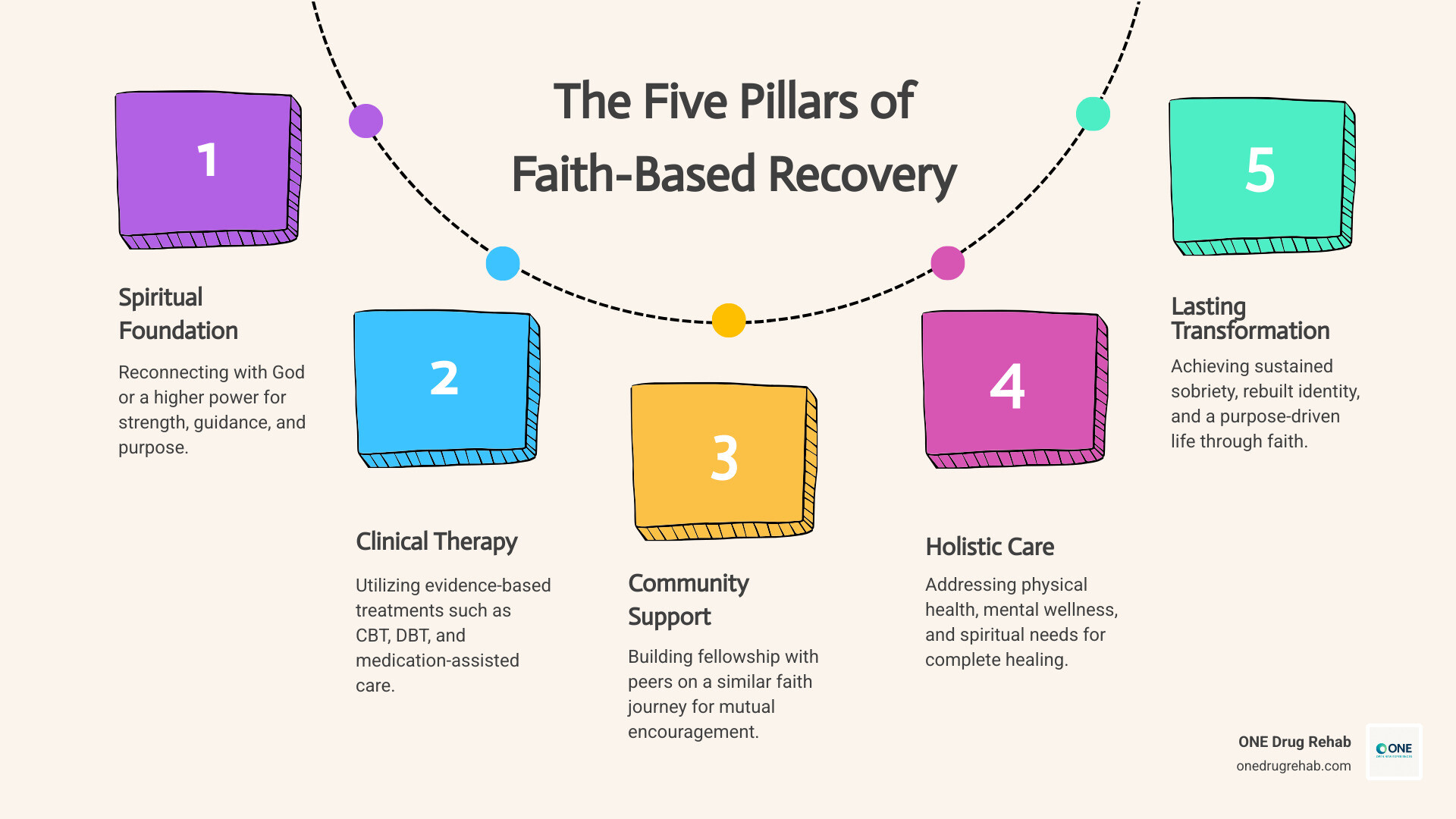
Key components of faith-based addiction treatment:
- Spiritual Foundation: Reconnecting with a higher power for strength and guidance.
- Clinical Therapy: Using evidence-based treatments like CBT and DBT.
- Community Support: Building fellowship with others on a similar faith journey.
- Holistic Care: Addressing physical, mental, and spiritual needs together.
If you’re struggling with addiction and your faith is important to you, you might feel like you’ve disappointed God or lost your spiritual connection. You’re not alone. Research shows that spirituality can provide an “unshakeable feeling of strength” during recovery and significantly improve life satisfaction.
Faith-based programs don’t just focus on sobriety. They help you rebuild your identity, find forgiveness, and develop a sense of purpose that lasts long after treatment ends. These programs exist across many denominations—Christian, Catholic, Jewish, Muslim, and Buddhist—and can range from free, donation-funded centers to private facilities that accept insurance. Whether you’re looking for yourself or a loved one, understanding what faith-based rehab offers can help you make an informed choice.
Faith based rehab glossary:
What is Faith-Based Addiction Treatment and How Does it Differ from Secular Programs?
At its core, faith based addiction treatment integrates spiritual principles into the recovery process, viewing healing as a journey that encompasses the body, mind, and spirit. This approach recognizes that for many, addiction creates a spiritual void. By reconnecting with their faith or a higher power, individuals can find a profound source of strength and purpose to overcome substance abuse.
While many treatment programs acknowledge a higher power, faith-based programs explicitly weave religious teachings, scripture, and spiritual practices into daily routines. For instance, a Christian program might frame addiction as a spiritual malady overcome through a renewed relationship with God, emphasizing forgiveness and redemption. This approach directly addresses spiritual emptiness, offering a framework for purpose-driven recovery that goes beyond simple abstinence.
To better understand the distinctions, let’s look at a comparison:
| Aspect | Faith-Based Rehab – | –
| Core Philosophy | Faith based rehab programs intertwine clinical treatment with spiritual principles, viewing sobriety as a spiritual journey. They may incorporate specific religious beliefs (e.g., Christian, Catholic, Jewish, Buddhist, Muslim, Lutheran, Methodist, Protestant) into every aspect of recovery, emphasizing the healing power of a higher power or God. The focus is on finding purpose and meaning through faith, addressing spiritual emptiness. |
| Role of Higher Power | A central component, often framed within a specific religious context (e.g., Jesus Christ in Christian programs). Individuals are encouraged to surrender to a higher power, find strength in their faith, and rebuild their relationship with God or a spiritual entity. This connection is seen as foundational for lasting recovery. |
| Treatment Modalities | Combines evidence-based therapies (e.g., CBT, DBT, MAT, individual and group counseling, trauma therapy) with spiritual practices. Modalities include Bible study, prayer groups, worship services, pastoral counseling, scripture reading, religiously-integrated cognitive-behavioral therapy (RCBT), and faith-based 12-step programs (like Celebrate Recovery). |
| Community Focus | Strong emphasis on fellowship and community among individuals who share similar faith values. This creates a supportive, Christ-centered, or spiritually-aligned environment where peers encourage each other, share experiences, and hold each other accountable, often extending to church communities. |
| Goals | Aims for holistic healing—addressing physical, mental, emotional, and spiritual needs. The ultimate goal is not just sobriety but life change, rebuilding identity, finding forgiveness, and developing a sense of purpose and meaning through faith for long-term recovery and satisfaction. |
| Aspect | Secular Rehab – | –
| Core Philosophy | Focuses on evidence-based practices and psychological principles to treat addiction as a disease. The emphasis is on understanding behaviors, underlying mental health issues, and developing coping skills without necessarily incorporating religious doctrine. |
| Role of Higher Power | While 12-Step programs (often integrated into secular rehab) refer to a “higher power,” it’s typically a non-denominational concept, allowing individuals to define it as they see fit (e.g., group, nature, universe). It’s a spiritual concept, but not overtly religious. |
| Treatment Modalities | Primarily uses evidence-based therapies such as Cognitive Behavioral Therapy (CBT), Dialectical Behavior Therapy (DBT), trauma-informed care, individual and group therapy, family counseling, and Medication-Assisted Treatment (MAT). Focuses on scientific and psychological approaches. |
| Community Focus | Emphasizes peer support and community within the therapeutic setting and through secular support groups. The community is built around shared experiences of addiction and recovery, mutual understanding, and accountability, but not necessarily shared religious beliefs. |
| Goals | Aims for abstinence, relapse prevention, and improved mental and physical health. The focus is on equipping individuals with practical tools, psychological resilience, and a supportive network to maintain sobriety and lead a healthy, self-directed life. |
What to Expect in a Faith Based Rehab Program
When you enter a faith based rehab program, you’ll find a blend of clinical professionalism and spiritual devotion. Most programs incorporate a structured routine to nurture your recovery holistically. You can expect regular participation in spiritual activities like Bible study, prayer, meditation, and worship services. Pastoral counseling is also usually available, offering guidance from clergy who understand the challenges of addiction.
These spiritual elements are integrated with evidence-based clinical care. You’ll still receive therapies like Cognitive Behavioral Therapy (CBT) and Dialectical Behavior Therapy (DBT), but they may be framed within a biblical worldview. For instance, a therapist might encourage you to lean on your higher power when facing negative thoughts or use scripture to help you find self-forgiveness. The goal is to address your physical, mental, emotional, and spiritual needs for true, lasting healing. For more detailed insights, explore our comprehensive guide: More info about faith-based treatment.
The Role of Spirituality in Overcoming Addiction
Addiction often leaves a profound sense of spiritual emptiness. Faith based rehab programs address this by helping individuals renew their relationship with God or a higher power. This connection provides a powerful source of strength to anchor individuals during recovery.
One of the most significant benefits is the ability to cope with shame and guilt. Faith-based programs offer a path to forgiveness and redemption, which can be incredibly liberating. As our research highlights, individuals can use biblical verses to help forgive themselves for past mistakes, fostering a sense of peace and acceptance that is crucial for healing.
Studies show the positive impact of spirituality on recovery. One study found that a significant majority of participants credited spirituality for providing an “unshakeable feeling of strength.” Another noted that a connection to a higher power significantly contributed to participants’ overall life satisfaction. These findings underscore that spirituality acts as a powerful buffer against triggers and a source of resilience. By building a strong spiritual foundation, individuals gain a renewed sense of purpose, hope, and inner peace, fostering a profound, lasting change.
Top 10 Faith-Based Rehab Programs: A Detailed Review
Navigating the landscape of addiction treatment can be overwhelming, but for those seeking a path rooted in spiritual principles, faith based rehab offers a unique and powerful option. We’ve compiled a list of some of the most prominent and impactful faith-based programs, each with its own distinct approach to integrating spiritual growth with recovery. This section provides an overview of various programs known for their commitment to integrating faith and recovery.
1. Teen Challenge Inc.

Teen Challenge Inc. is a globally recognized and influential faith based rehab organization with a strong emphasis on a Christ-centered curriculum. They offer long-term residential programs designed to help both youth and adults overcome life-controlling issues, primarily addiction. Their approach is deeply rooted in biblical principles, focusing on spiritual change as the key to lasting recovery. Residents engage in Bible study, counseling, work therapy, and education, all within a structured, supportive Christian environment. Teen Challenge operates a vast network of centers worldwide, making it one of the most accessible faith-based recovery options. To dig deeper into their mission and programs, you can Learn more about Teen Challenge Inc..
2. Faith Farm Christian Residential Treatment Center
Faith Farm Ministries stands out as a unique faith based rehab option, offering a completely free residential program. Located in Florida with multiple campuses (Boynton Beach, Fort Lauderdale, and Okeechobee), Faith Farm employs a work therapy model where residents contribute to the operation of the ministry, often through thrift stores or farm work. This work not only covers their expenses (food, clothing, shelter) but also instills a sense of responsibility, work ethic, and self-worth. Their holistic support system integrates spiritual guidance, counseling, education, and vocational training, all aimed at fostering life change through the Gospel of Jesus Christ. They’ve been helping individuals for over 70 years. For more comprehensive Details on Faith Farm.
3. U-Turn for Christ
U-Turn for Christ offers a distinct faith based rehab experience, often characterized by its ranch-based settings and a two-phase program. The core of their methodology is biblical discipleship, where individuals immerse themselves in scripture and Christian teachings. A significant component of their program involves manual labor, which serves as a form of therapy, teaching discipline, responsibility, and the value of hard work. This rigorous, Christ-centered environment is designed to break the cycle of addiction by fostering spiritual growth and practical life skills. If you’re interested in a program that combines physical work with spiritual introspection, you can Explore U-Turn for Christ.
4. Faith Home Teen Challenge
Faith Home, an affiliate of Teen Challenge, specializes in providing faith based rehab for women and children. This program is particularly focused on helping women heal from trauma, often a significant underlying factor in addiction, and facilitating family restoration. Their Christ-centered approach aims to empower women through evidence-based treatment combined with spiritual care, helping them accept their spiritual beliefs and connect to a higher power. They strive to provide a supportive community where women can rebuild their lives and mend family relationships. You can find more information on their specific offerings through their Provider profile for Faith Home.
5. Great Lakes Adult Teen Challenge
Serving the Midwest region, Great Lakes Adult Teen Challenge provides faith based rehab programs for both men and women. Like other Teen Challenge affiliates, their focus is on long-term, residential care that integrates spiritual principles with practical life training. They offer vocational training opportunities, helping residents develop marketable skills that are crucial for successful reintegration into society and maintaining long-term sobriety. Their Christ-centered curriculum and supportive community are designed to foster spiritual growth and personal responsibility. For more detailed Information on Great Lakes ATC.
6. Adult Teen Challenge Midsouth
Adult Teen Challenge Midsouth, based in Tennessee, offers a faith based rehab program deeply embedded within a community-driven recovery model. Leveraging the strong local faith network in Tennessee (where over 85% of residents are affiliated with a house of faith), this center provides a supportive environment for individuals seeking spiritual and physical healing from addiction. Their programs combine biblical teachings, counseling, and peer accountability, encouraging participants to draw strength from their faith and their community. This location specifically benefits from the extensive utilization of programs like Celebrate Recovery throughout Tennessee. You can learn more about their approach on the Midsouth ATC details.
7. Buffalo Adult and Teen Challenge
Buffalo Adult and Teen Challenge operates as a faith based rehab center dedicated to equipping individuals with essential life skills for a successful transition back into society. Beyond spiritual guidance and addiction treatment, their program focuses on practical aspects of recovery, including re-entry support and comprehensive aftercare planning. This ensures that residents are not only spiritually grounded but also prepared for the challenges of independent living post-treatment. Their Christ-centered approach helps individuals develop the resilience and skills needed for long-term sobriety. For more about their specific offerings, see More on the Buffalo program.
8. Teen Challenge of Texas, Azle
Teen Challenge of Texas in Azle offers gender-specific faith based rehab programs, providing custom support for men and women. Their structured environment is designed to help individuals address the root causes of their addiction, integrating spiritual principles with therapeutic interventions. By focusing on the underlying issues that contribute to substance abuse, coupled with a strong spiritual foundation, they aim for deep and lasting change. The program emphasizes Christ-centered values, personal responsibility, and community support. Additional insights can be found in the Texas Teen Challenge info.
9. Adult Teen Challenge Vermont
Adult Teen Challenge Vermont provides a faith based rehab experience with a New England focus, often characterized by its smaller, more intimate setting. This allows for highly individualized spiritual guidance and personalized care, ensuring that each resident’s unique needs and spiritual journey are addressed. Their Christ-centered program combines counseling, Bible study, and community support to help individuals find freedom from addiction and rebuild their lives on a spiritual foundation. For more information, visit the Vermont ATC provider page.
10. Christian Detox Programs
While not a long-term residential program, Christian Detox Programs play a crucial role in the overall faith based rehab continuum. These specialized facilities focus on the initial, medically supervised withdrawal phase, but with the added layer of spiritual support. This means that individuals undergoing detox can receive medical care to manage withdrawal symptoms, while also being introduced to spiritual principles, prayer, and pastoral care from the very beginning of their recovery journey. This spiritual foundation during detox can help prepare individuals for the deeper work of residential treatment, setting a positive tone for their entire recovery process. For a comprehensive understanding of this vital first step, consult our Guide to Christian Detox Programs.
Navigating Your Path to a Faith Based Rehab Program
Finding the right faith based rehab program is a personal journey. It’s about finding a community where you feel understood, supported, and spiritually nourished.
When searching for a reputable center, look for accreditation from bodies like the Joint Commission or CARF, which signify high standards of care. Inquire about the qualifications of the staff, ensuring they are licensed and experienced in integrating faith with clinical therapy. Don’t hesitate to call facilities, ask about their programs, and learn how they integrate faith-based values. A tour or conversation with staff can help determine if a program is the right fit.

Insurance, Cost, and Duration of Treatment
Concerns about cost should not be a barrier to seeking help. Many health insurance plans cover faith based rehab programs, especially those offering evidence-based treatment. Federal laws like the 2008 Mental Health Parity and Addiction Equity Act (MHPAEA) and the Affordable Care Act (ACA) mandate coverage for substance use disorders.
However, coverage levels vary. Always verify your benefits with the rehab center’s admissions team. They can clarify your plan’s coverage, out-of-pocket costs, and any available financial assistance. Some programs, like Faith Farm, are even free, funded by donations and work therapy.
Program duration can range from 30 days to over a year, depending on individual needs. Effective programs also emphasize aftercare, including continued counseling and support groups to maintain the spiritual foundation built during treatment.
Addressing Co-Occurring Disorders and Potential Challenges
Addiction often co-occurs with mental health disorders like depression, anxiety, or PTSD, known as a dual diagnosis. A quality faith-based program will integrate mental health care, offering therapies like CBT and DBT through a spiritual lens. Therapists may combine talk therapy with prayer to address both the substance use and the mental health condition.
While beneficial, it’s important to find a program that aligns with your personal beliefs. Most faith-based rehabs in the U.S. are Christian-centered, and while many are welcoming, a rigid theological stance could hinder recovery if it doesn’t resonate with you. Ensure the program has licensed clinicians on staff to provide professional medical and psychological care, balancing spiritual guidance with clinical best practices.
Frequently Asked Questions about Faith-Based Recovery
Are faith-based programs only for Christians?
While many faith based rehab programs in the U.S. are Christian-based, they are not exclusively for Christians. Many programs welcome individuals from all backgrounds who are open to exploring spirituality in their recovery. Programs also exist for other faiths, including Jewish, Buddhist, and Muslim traditions. The key is finding a program whose philosophy aligns with your personal beliefs.
What is the difference between faith-based rehab and 12-Step groups like AA?
Faith-based rehab is a comprehensive, structured treatment program that provides clinical care (like therapy and detox) alongside spiritual guidance (like Bible study and pastoral counseling). It’s a holistic approach to initial and ongoing recovery.
12-Step groups like AA are peer-led support fellowships, not treatment programs. They focus on shared experience and a spiritual concept of a “higher power,” which members define for themselves. While not tied to a specific religion, they are a crucial aftercare resource. Many faith-based rehabs incorporate 12-Step principles, sometimes through programs like Celebrate Recovery, which is a Christ-centered version. You can learn more about AA’s principles at Alcoholics Anonymous (AA).
What are the success rates of faith-based rehab?
Measuring success in recovery is complex, but studies show positive outcomes for faith based rehab. Research indicates that spirituality provides an “unshakeable feeling of strength” and contributes significantly to life satisfaction during recovery. While exact success rates vary, the focus on holistic healing—addressing physical, mental, and spiritual needs—often leads to profound, long-term life changes. This emphasis on internal growth, forgiveness, and purpose can be a powerful factor in sustaining sobriety.
Conclusion: Finding Hope and Healing on Your Terms
Your journey to recovery is deeply personal, and finding the right path is paramount. Faith based rehab offers a unique and powerful avenue for those who seek to integrate their spiritual beliefs into their healing process. As we’ve explored, these programs provide a holistic approach, combining evidence-based clinical therapies with spiritual guidance, strong community support, and a focus on lasting change.
The benefits are clear: from finding an unshakeable feeling of strength in your faith to coping with the burdens of shame and guilt through forgiveness, faith can be an extraordinary tool for recovery. Whether through the structured, Christ-centered curricula of Teen Challenge programs or the free, work-therapy model of Faith Farm, countless individuals have found renewed purpose and freedom from addiction.
We understand that navigating the many options can be daunting. That’s why ONEDrugRehab.com is here as a third-party, non-affiliated resource, providing general information to help you research treatment options without endorsing specific providers. Our goal is to empower you with accurate and comprehensive information, enabling you to make the best choice for yourself or your loved one.
You are not alone on this journey. The right support, combined with clinical excellence and spiritual nourishment, can lead you to a life of lasting recovery and profound peace. Your journey to lasting recovery starts with the right support.
We invite you to explore our directory and take the next step towards healing. Explore our directory of faith-based recovery centers.