
Why Christian Family Support Matters Now More Than Ever
Christian family support provides faith-based resources, counseling, and community to help families steer challenges while strengthening their relationship with God and each other. Here’s what’s available:
Core Types of Christian Family Support:
- Spiritual Guidance – Prayer, Bible study, and pastoral counseling
- Professional Counseling – Licensed therapists who integrate biblical principles
- Community Resources – Church groups, marriage retreats, and parenting classes
- Crisis Support – Faith-based addiction treatment, marriage rescue programs, and mental health services
Today’s families face unprecedented challenges—from screen addiction and anxiety to cultural pressures and relationship breakdowns. If you’re feeling overwhelmed by these pressures, you’re not alone.
But here’s the good news: you don’t have to steer these challenges alone.
Faith-based counseling services across the country hear from hundreds of families every single month seeking help. Many churches and ministries work with licensed therapists who integrate faith with clinical expertise. Local congregations often offer support groups, parenting classes, and crisis intervention rooted in biblical truth.
This guide will show you where to find help—whether you’re struggling with a difficult marriage, worried about your kids, or facing addiction in your family. We’ll explain how faith-based support differs from secular counseling, share practical strategies for building a God-honoring home, and point you to resources that can make a real difference.
Your family can be more than just surviving. With the right support, you can thrive.
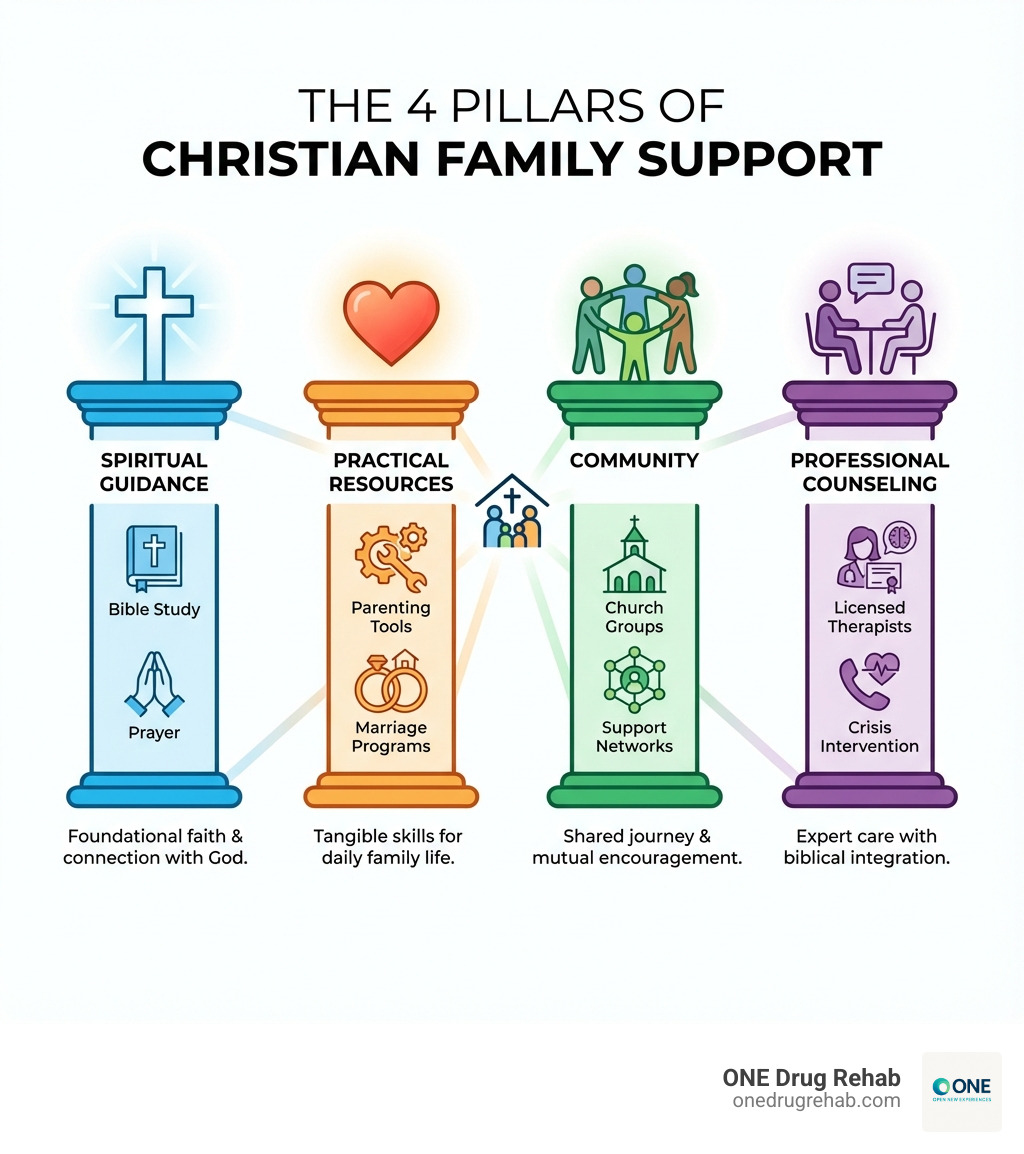
Simple guide to Christian family support:
The Christ-Centered Difference: Faith as the Foundation for Healing

When we talk about Christian family support, we’re not just discussing problem-solving techniques or communication strategies. We’re talking about a holistic approach that places faith and reliance on God at its very core. This is the fundamental distinction that sets Christ-centered family support apart from secular family counseling.
While secular counseling often focuses on psychological theories, behavioral modifications, and interpersonal dynamics, Christ-centered support integrates these valuable tools within a spiritual framework. It acknowledges that true healing and lasting change often stem from a deeper relationship with God, guided by biblical principles. The goal isn’t just to resolve immediate issues, but to foster spiritual growth and ultimately glorify God within the family unit.
Here’s a quick look at how these two approaches differ:
| Feature | Christ-Centered Family Support | Secular Family Counseling |
|---|---|---|
| Foundation | Rooted in Christian principles and Scripture. | Based on psychological theories and empirical research. |
| Spiritual Component | Integrates faith, prayer, and reliance on God as essential. | Focuses on psychological and behavioral aspects; generally no spiritual component. |
| Goals | Spiritual growth, glorifying God, restored relationships aligned with biblical teachings. | Resolving issues, improving functioning, enhancing communication. |
| View of Human Nature | Individuals created in God’s image, fallen due to sin, in need of redemption through Christ. | Generally adopts a humanistic perspective, focusing on self-actualization and innate goodness. |
What Makes Christ-Centered Support Unique?
The uniqueness of Christ-centered support lies in its foundational belief that God’s Word has the power to bring about permanent change in our hearts, minds, and wills. It’s not just about coping mechanisms; it’s about a complete reorientation towards God’s design for family.
- Rooted in Scripture: Every piece of advice, every therapeutic approach, and every encouragement is filtered through the unchanging truth of the Bible. This provides a stable and authoritative guide for navigating life’s complexities.
- Integration of Prayer: Prayer is not an add-on; it’s an integral part of the process. We believe in the power of God to intervene, to provide wisdom, and to bring comfort. Counselors and support groups often pray with and for families, inviting divine presence into their struggles.
- Goal of Glorifying God: The ultimate aim of Christ-centered support is not just family happiness, but for the family to reflect God’s love and character to the world. This gives a deeper purpose to every effort and every challenge overcome.
- Redemption Through Christ: We acknowledge that we are imperfect people living in an imperfect world. The message of redemption through Jesus Christ offers hope, forgiveness, and the power to overcome past mistakes and present struggles.
- Lasting Change: Relying on Christ is ultimately how we find and keep the strength to make change last. This spiritual anchoring can provide resilience that secular methods might not fully address, leading to more profound and enduring change.
Benefits of Integrating Faith into Family Counseling
Integrating spiritual growth and biblical principles into family counseling offers a wealth of benefits that extend beyond typical therapeutic outcomes:
- Deeper Purpose: When families understand their purpose within God’s grand narrative, their problems take on a new perspective. They learn to view challenges not as roadblocks, but as opportunities for growth and deeper reliance on God.
- Shared Values: For Christian families, a shared faith provides a common language and a unified moral compass. This common ground can strengthen bonds and provide a framework for making difficult decisions.
- Eternal Perspective: Integrating faith helps families look beyond immediate circumstances to an eternal hope. This perspective can provide immense comfort during times of grief, loss, or seemingly impossible struggles.
- Hope Beyond Circumstances: Faith offers a powerful antidote to despair. Even when circumstances don’t change immediately, the belief in a loving, sovereign God provides an unwavering source of hope and peace.
- Community Accountability: Many Christ-centered support systems involve a community aspect, whether through church groups or ministries. This provides a network of support and accountability, reminding families they are not alone and encouraging them to live out their faith in practical ways.
Christ-centered family support offers a comprehensive path to healing and thriving, recognizing that our spiritual well-being is intrinsically linked to our overall family health.
Building a God-Honoring Home: Practical Strategies for Daily Life

Building a strong, God-honoring foundation in our homes is not an accident; it’s an intentional effort. In a world constantly vying for our attention and shaping our values, proactive parenting and creating a spiritual atmosphere are more vital than ever. We want our homes to be guides of light, shining brightly with God’s presence. This begins with integrating foundational Christian disciplines into our daily lives.
Laying a Strong Foundation
Just as a house needs a solid foundation to withstand storms, our families need spiritual bedrock. This involves consistent practices that anchor us in faith:
- Consistent Church Attendance: Being part of a local church community provides regular teaching, worship, and fellowship. It’s a place where our children see faith lived out collectively and where we can find encouragement and spiritual nourishment.
- Family Prayer Habits: Prayer is our direct line to God. Establishing regular family prayer times – whether at meals, before bed, or in moments of need – teaches our children to rely on God for everything. It also fosters intimacy and vulnerability within the family. We can pray for each other, for our community, and for the world.
- Reading God’s Word Together: The Bible is our instruction manual for life. Reading scripture as a family, even just a verse or two each day, helps us understand God’s character and His will for us. It equips us with wisdom and discernment to steer societal pressures.
- Modeling Faith: More than anything we say, our children learn from what we do. When they see us praying, reading the Bible, serving others, and making godly decisions, they witness faith in action. This authentic modeling is perhaps the most powerful way to instill lasting faith.
Weaving God into Your Everyday Routine
It’s not enough to have faith on Sundays; we need to weave God into the fabric of our daily lives. This means maintaining an awareness of God in our household, making Him a part of the ordinary moments.
- Intentional Family Dinners: In our busy lives, dinner can become rushed or fragmented. But intentional family dinners, even once a week, offer invaluable together time. This is a chance to share highs and lows, discuss the day, and connect. You might start or end with a short prayer or a thought about God’s goodness.
- “Green Time” Outdoors: We often compete with screens and digital technology. Counter this by incorporating “green time” – spending time outdoors in nature, leaving technology behind. This can be a calming reset, allowing for conversations, reflection, and appreciation for God’s creation.
- Unplugging from Technology: Intentionally setting boundaries around technology creates space for real connection. This might mean designating certain times or areas of the home as screen-free zones, encouraging face-to-face interaction and shared activities.
- Bedtime Prayers and Stories: Establishing bedtime moments provides a peaceful end to the day. This could involve reading books together, reading from the Bible, and praying as a family. It’s a time for quiet reflection, imparting spiritual truths, and reinforcing that God is always with us.
Equipping Children with Resilient Faith
Today’s children face immense societal pressures, from cultural shifts to the constant bombardment of information online. As Christian parents, we are called to equip our children with a faith strong enough to withstand these wind and waves.
- Open Communication: Create an environment where your children feel safe to ask tough questions about faith, culture, and their own struggles. Listen without judgment and respond with grace and biblical truth.
- Teaching a Biblical Worldview: Help your children understand the world through God’s eyes. Discuss current events, media, and societal trends from a biblical perspective, helping them discern truth from falsehood.
- Answering Tough Questions: Don’t shy away from difficult topics. Whether it’s about identity, suffering, or other religions, be prepared to point them to biblical answers and acknowledge that some questions may not have easy answers, but God is still good.
- Modeling Grace and Forgiveness: When we inevitably fall short, our response is crucial. Modeling humility, seeking forgiveness, and extending grace teaches our children the transformative power of the Gospel. It shows them that faith isn’t about perfection, but about reliance on a perfect God.
By intentionally weaving these strategies into our daily lives, we can build homes where God’s presence is evident, and where our children are firmly rooted in a resilient, living faith.
Where to Find Christian Family Support: From Local Churches to National Ministries
Finding the right Christian family support can feel overwhelming, but a wide network of resources exists to help. Whether you need local community or broader guidance, help is available. We’ll explore common sources and how you can tap into their offerings.
Major Ministries and What They Offer
Many well-established Christian organizations are dedicated to nurturing and strengthening families. They provide extensive resources, often reaching people across the country and around the world.
- Family-Focused Ministries: Various Christian ministries are dedicated to helping families thrive. They often offer:
- Marriage & Parenting Content: Articles, broadcasts, and practical advice on topics like strengthening your marriage, managing expectations, and parenting according to biblical principles.
- Counseling & Help: Some ministries provide free, confidential one-time consultations with trained Christian counselors or maintain lists of licensed therapists who integrate faith into their practice.
- Digital Resources: Websites, podcasts, apps, and online stores with books and materials focused on marriage, parenting, and spiritual growth.
- Mission & Vision: These organizations typically share a commitment to nurturing and defending the family and promoting biblical truths in everyday life.
- Cru (Campus Crusade for Christ): While often associated with campus ministry, Cru also has significant resources for families, equipping them to deepen their walk with Jesus and strengthen relationships.
- Family Resources: Cru offers articles, events, and retreats specifically for families. They aim to help families integrate faith into all areas of family life, seeing it as a “family adventure.”
- Community & Discipleship: They emphasize building community and offer resources for children’s discipleship and studies like “Defending the Military Marriage” and “When You Love a Prodigal.” Explore their family resources at Resources for your family’s journey.
- FamilyLife: Known for its focus on marriage and family, FamilyLife provides resources for marriage enrichment programs and pre-marital counseling.
- Marriage Events: They host popular events like the Weekend to Remember retreats, designed to help couples reconnect and strengthen their bond. They also offer marriage cruises and local marriage & parenting groups.
- Blended Families: FamilyLife offers specific resources for stepfamilies and blended families, recognizing the unique challenges they face.
- Biblical Principles: Their resources, like “Two Becoming One,” are grounded in Scripture and aim to help couples move from a performance-based approach to one centered on faith.
Examples of helpful resources from major ministries include:
- Articles and broadcasts on marriage and parenting
- Small-group studies and discipleship guides for families
- Events and retreats focused on marriage and parenting
- Educational content integrating biblical and practical perspectives
Local Avenues for Christian Family Support
While large ministries offer broad support, local resources provide invaluable face-to-face interaction and community.
- Your Local Church: This is often the first and best place to look. Many churches offer:
- Support Groups: For various needs like grief, addiction, marriage enrichment, or single parenting.
- Counseling: Pastoral counseling or referrals to trusted Christian counselors.
- Parenting Classes: Workshops and seminars on raising children with biblical values.
- Marriage Small Groups: Opportunities for couples to grow together and support one another.
- Community Organizations: Look for Christian community centers or non-profits that partner with churches to serve families. For example, some organizations partner with local congregations to offer support to vulnerable children and families through befriending, mentoring, and temporary hosting.
- Professional Christian Counseling: Sometimes, specialized help is needed. You can look for licensed Christian counselors who integrate faith with clinical expertise. These professionals can address a wide range of issues, from marriage conflict to anxiety and depression, always with a faith-centered approach.
Don’t underestimate the power of proximity and personal connection. Local support can provide a sense of belonging and practical help custom to your specific community.
Navigating Tough Times with Faith-Based Help
Even the strongest families face seasons of struggle, from the quiet erosion of a marriage to the grip of addiction. These challenges can feel isolating, but within the framework of Christian family support, there is hope and a path to healing. Faith-based resources are uniquely positioned to offer not just solutions, but spiritual resilience and comfort during a crisis.
Strengthening a Struggling Marriage
Marriage is a beautiful, God-ordained institution, but it’s also profoundly challenging. Communication breakdowns, infidelity, financial stress, or simply drifting apart can inflict deep wounds. Christ-centered support for marriage goes beyond surface-level fixes, aiming for restoration rooted in biblical principles.
- Pre-marital Counseling: Before couples even say “I do,” Christian pre-marital counseling helps lay a strong foundation, addressing expectations, communication, conflict resolution, and spiritual alignment.
- Marriage Enrichment Programs: For couples who want to proactively strengthen their bond, biblical marriage studies and enrichment programs offer insights into building a thriving relationship. These programs help couples move from a performance-based approach to one grounded in faith, focusing on healthy communication, handling trials, and ending negative cycles.
- Marriage Retreats: Events like marriage-focused weekends and conferences provide dedicated time away for couples to reconnect, learn, and grow together spiritually. These faith-based gatherings often combine teaching, personal reflection, and opportunities to rekindle intimacy.
- Christian Counseling: When difficulties become overwhelming, seeking a Christian marriage counselor can provide a safe space to address deep-seated issues. These counselors blend clinical expertise with biblical wisdom, helping couples steer infidelity, communication breakdowns, and other significant challenges with grace and truth.
Help for Specific Parenting Challenges
Parenting is a journey filled with joys and trials. From navigating the early years to guiding teenagers through societal pressures, Christian parents often seek wisdom and support.
- Prodigal Children: When a child strays from faith or makes destructive choices, parents can feel heartbroken and helpless. Many Christian resources offer spiritual encouragement and practical guidance for parents enduring this painful experience, reminding them that God walks beside them every step of the way.
- Blended Family Dynamics: Stepfamilies face unique complexities. Some ministries and churches offer specific resources to strengthen stepfamilies and help break generational cycles of divorce, focusing on integrating faith into these new family structures.
- Raising Kids in a Digital Age: Parents frequently wrestle with the challenges of screens and digital technology. Christian teaching can help you set healthy boundaries, foster real-world connection, and equip children with faith to withstand online pressures.
- General Parenting Support: Christian organizations and local churches provide a wealth of articles, podcasts, classes, and events on various parenting topics, from discipling children to managing expectations and fostering spiritual growth.
Overcoming Addiction with Christian Family Support
Addiction doesn’t just affect an individual; it devastates entire families. Christian family support offers a unique blend of clinical treatment and spiritual healing, recognizing that addiction is often a spiritual battle as much as a physical and psychological one.
- Integrating Faith and Clinical Care: Christian drug rehab programs are becoming more common, integrating scripture, prayer groups, and spiritual counseling with evidence-based clinical therapies. These programs aim for holistic healing, addressing the physical, emotional, mental, and spiritual aspects of addiction.
- Spiritual Counseling & Prayer Groups: In addition to traditional therapy, these programs provide dedicated spiritual guidance. Counselors and spiritual mentors help individuals strengthen their relationship with God, finding motivation and accountability rooted in faith. Prayer groups offer a powerful community of support and intercession.
- 12-Step Programs with a Christian Emphasis: While 12-step programs have spiritual roots, many Christian rehabs offer explicitly Christ-centered versions or integrate biblical principles into the traditional steps.
- Holistic Healing: The goal is not just sobriety, but a transformed life. This includes addressing co-occurring mental health disorders (dual diagnosis), rebuilding relationships, and fostering a renewed sense of purpose found in God.
- Finding Resources: If your family is struggling with addiction, finding a suitable treatment center is crucial. As an online directory in the addiction treatment industry, ONEDrugRehab.com provides general information about drug rehab facilities, including options for Christian rehab centers. We offer a non-affiliated resource for users to research treatment options without endorsing specific providers, helping you explore the right fit for your loved one’s journey to recovery and holistic healing.
Frequently Asked Questions about Christian Family Support
We understand you might have questions about how Christian family support can specifically help your situation. Here are answers to some common inquiries:
Is Christian counseling only for very religious people?
Absolutely not! While Christian counseling is rooted in biblical principles and often integrates prayer and faith, it’s for anyone seeking a faith-integrated approach to their challenges. You don’t need to be a long-time churchgoer or have a perfect faith to benefit. Many individuals, regardless of where they are in their spiritual journey, find hope, purpose, and practical guidance grounded in biblical principles. It’s about inviting a spiritual dimension into your healing process, which can be profoundly impactful for anyone open to it.
What if my spouse or family member isn’t a Christian?
This is a common and understandable concern. While ideal to have everyone on the same page, many resources for Christian family support focus on what you can control: your own faith, actions, and reactions. A Christian counselor or support group can equip you to:
- Love your family well: Learn to extend grace, practice forgiveness, and communicate effectively, even in the face of differing beliefs.
- Be a guide of light: Your consistent faith, peace, and loving actions can be a powerful testimony to your family members.
- Set healthy boundaries: Learn to protect your spiritual and emotional well-being while still loving and engaging with your non-Christian family members.
Many resources acknowledge and address the complexities of unequally yoked relationships, offering strategies for navigating them with wisdom and grace.
How do I know if a Christian counselor is qualified?
This is a crucial question, as competence and faith integration are both important. When seeking a Christian counselor, we recommend looking for professionals who possess both:
- Clinical Licensure and Credentials: Ensure the counselor holds appropriate state licensure (e.g., Licensed Professional Counselor (LPC), Licensed Marriage and Family Therapist (LMFT), Psychologist (PhD or PsyD), Licensed Clinical Social Worker (LCSW)). These credentials signify that they have met rigorous educational and experiential standards.
- Integration of Faith: Beyond their clinical training, they should be explicit about how they integrate their Christian faith into their practice. You can ask about their theological perspective, how they use scripture, and their understanding of the role of faith in healing.
Organizations like the Focus on the Family Christian Counselors Network are excellent starting points. They have carefully reviewed the values and credentials of thousands of licensed therapists nationwide, ensuring they align with Christian values and ethical standards. Don’t hesitate to conduct an initial consultation to ensure the counselor’s approach and beliefs are a good fit for your family.
Conclusion: Your Family’s Journey to Thriving in Faith
We’ve explored how Christian family support offers more than just temporary fixes; it provides a comprehensive, faith-integrated approach to building strong, resilient families. From the unique foundation of Christ-centered counseling to the practical strategies for a God-honoring home, and the vast network of ministries and local churches, help is available.
Your family is a precious gift, and in a world that often seeks to undermine its foundation, it can truly be a guide of light. We encourage you to take that first step, whether it’s exploring resources, joining a local group, or seeking professional Christian counseling. You don’t have to steer the challenges of marriage, parenting, or addiction alone. With God’s grace and the support of His people, your family can not only survive but truly thrive.
To learn more about how faith can be a powerful component in overcoming life’s toughest challenges, including addiction, you can Learn more about faith-based recovery centers.