
Why Christian Detox Programs Offer Hope for Healing
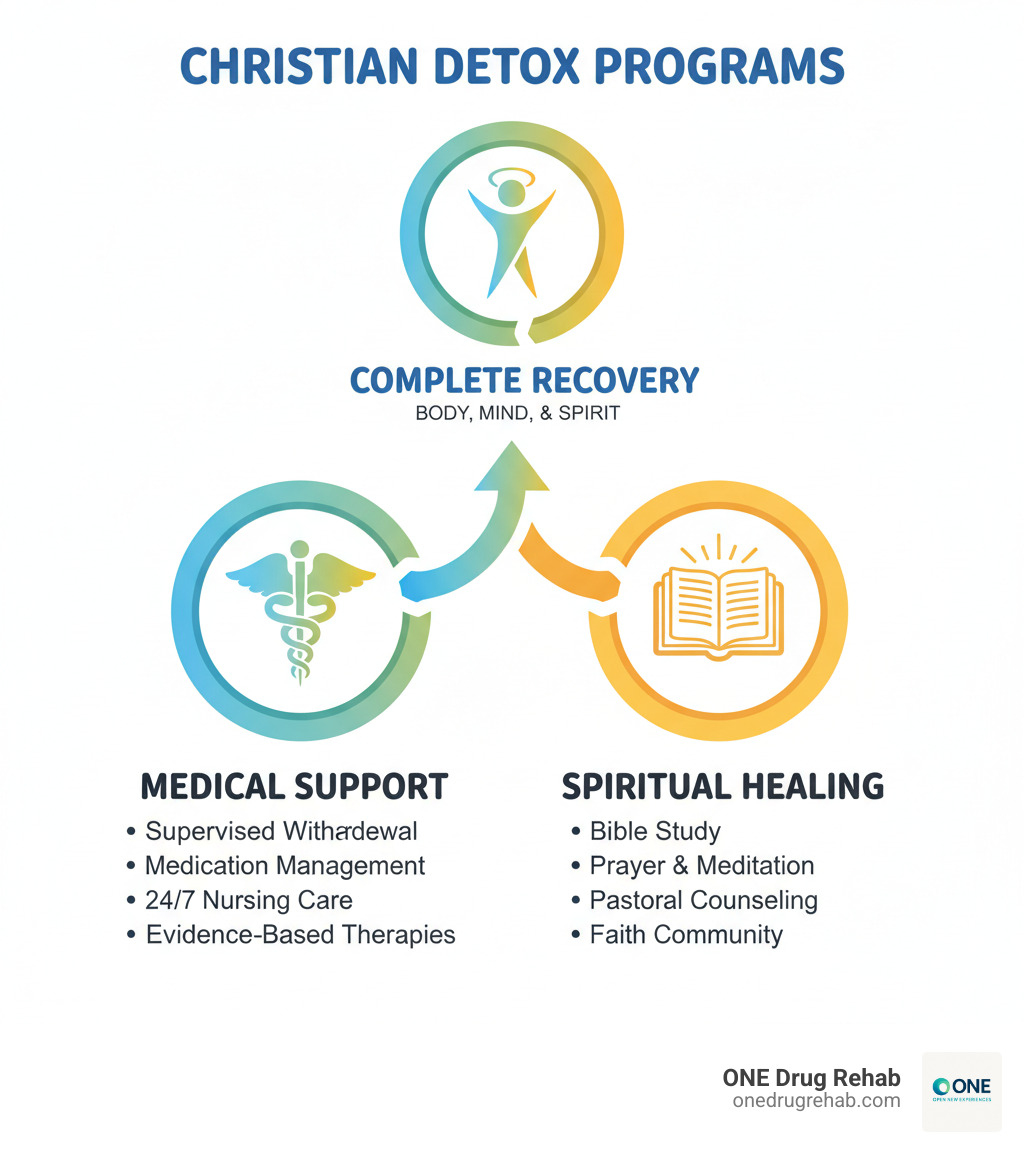
Christian detox programs blend medical supervision with spiritual guidance, treating addiction as both a physical dependency and a spiritual void. These faith-based centers integrate evidence-based therapies with biblical principles, prayer, and pastoral counseling to heal the whole person—body, mind, and spirit.
Key features of Christian detox programs:
- 24/7 medical supervision during withdrawal
- Scripture-based counseling and Bible study
- Prayer and meditation for coping
- Pastoral guidance from ministers or chaplains
- A supportive faith community
- Dual diagnosis treatment for co-occurring mental health issues
- 12-step programs with Christ as the Higher Power
This approach is rooted in the belief that true freedom from addiction comes through spiritual change. Research supports this, with 73% of U.S. addiction treatment programs including spiritual elements. Furthermore, 82% of clients who had a spiritual awakening during rehab remained abstinent for a year, compared to 55% of those who did not.
For many, traditional treatment misses the spiritual dimension of recovery. Christian detox programs fill this gap by treating addiction as a spiritual malady requiring divine intervention alongside clinical care. This guide will cover everything from their core philosophy to practical details like cost and insurance.
What is a Christian Detox Program?
A Christian detox program offers a path to healing that addresses the body, mind, and spirit simultaneously. It combines medical care for withdrawal with the healing power of faith, operating on the belief that addiction is often a sign of a deeper spiritual void. The treatment’s spiritual foundation is built on Christ-centered recovery and biblical principles. Instead of just managing the shame and guilt of addiction, these programs offer forgiveness and redemption through God’s grace, helping individuals feel made new.
The Core Philosophy: More Than Just Sobriety
Christian detox programs aim for more than just sobriety; they seek to help individuals find their God-given identity. Viewing addiction as a spiritual malady, the goal is to reconnect with faith and find purpose in Christ. This creates a new life foundation built on faith. The role of grace is central, emphasizing that God’s grace is sufficient, rather than relying solely on willpower. This approach is supported by research, with approximately 86% of studies finding that faith reduces alcohol-related risks.
How It Differs from Secular Detox
The key difference between Christian and secular detox is the specific focus on Jesus Christ as the higher power. This is not a vague spirituality but a central relationship with God.
- Integration of Scripture: Biblical wisdom is woven into daily therapy and treatment decisions.
- Pastoral Counseling: In addition to secular therapists, you receive guidance from ministers or chaplains who understand both addiction and faith.
- Community of Believers: You become part of a fellowship that provides encouragement, prayer, and shared understanding.
- Emphasis on Spiritual Change: Recovery is framed as a spiritual awakening, breaking free from spiritual bondage, not just substances.
For people of faith, this integrated approach often feels more complete. To learn more about comprehensive treatment, explore our resources on Holistic Drug Treatment.
The Integrated Approach: Combining Faith and Clinical Care

Christian detox programs integrate faith and science, weaving them together for a stronger approach to recovery. Since 73% of U.S. addiction treatment programs include spirituality, it’s clear this integrated model is essential for many. These programs treat the whole person by providing medical attention for the body, therapeutic care for the mind, and spiritual nourishment for the soul.
Core Components of Christian Detox Programs
While each program is unique, most share these key elements:
- Medically Supervised Detox: 24/7 medical care to ensure safety and comfort during withdrawal, using proven medication protocols.
- Individual and Group Counseling: One-on-one sessions with licensed, faith-informed therapists and group therapy with peers who share your faith and struggles.
- Bible Study and Theological Instruction: Central to healing, these sessions help apply biblical principles to recovery.
- Prayer and Meditation: Daily tools for connecting with God and managing stress. Some programs teach practices like Lectio Divina. You can learn more about this via A guide to Lectio Divina.
- Worship Services and Pastoral Guidance: Communal worship and spiritual mentorship from ministers or chaplains help address spiritual questions that arise during recovery.
The Role of Faith, Prayer, and Scripture
In Christian detox, faith becomes a source of daily strength. Prayer transforms from a ritual into a lifeline for managing cravings and anxiety, while Scripture becomes a practical guidebook for a new way of living. Building a relationship with God helps fill the void that addiction once occupied, replacing it with unconditional love and purpose. This hope, rooted in biblical teachings, provides a foundation for becoming the person God created you to be.
Addressing Co-Occurring Mental Health Disorders
Addiction often co-exists with depression, anxiety, or trauma. Christian detox programs are equipped to handle this through dual diagnosis treatment, addressing addiction and mental health issues simultaneously within a spiritual framework.
This faith-integrated mental health care may use approaches like Religiously-Integrated Cognitive Behavioral Therapy (RCBT), which combines proven therapeutic techniques with your spiritual beliefs. Trauma-informed spiritual care creates a safe space to process past hurts, using faith to help find forgiveness. Programs offer daily sessions on topics like anxiety, grief, self-esteem, and trauma recovery, often weaving in the 12-Steps with Christ as the Higher Power. This comprehensive approach addresses root causes for lasting change.
Navigating Your Options in Christian Detox Programs

Finding the right Christian detox program means matching your specific needs, addiction severity, and personal circumstances. Understanding your options regarding program types, quality, and cost is the first step.
Types of Programs: Inpatient vs. Outpatient
Christian detox is offered in two main formats: inpatient (residential) and outpatient.
Residential treatment provides 24/7 care in a live-in facility. This intensive approach is ideal for severe addiction or for those needing to escape a triggering home environment. It offers constant medical and spiritual support.
Outpatient treatment allows you to live at home and attend scheduled sessions. This flexible option works well for those with a strong support system and daily responsibilities. It helps you apply new coping skills in real-time. For more details, see our guide on Inpatient vs. Outpatient Rehab.
| Feature | Inpatient Christian Detox | Outpatient Christian Detox |
|---|---|---|
| Structure | Highly structured, 24/7 supervision, live-in facility | Flexible, individuals live at home, attend scheduled sessions |
| Intensity | Intensive, removes individuals from daily triggers | Less intensive, allows for integration into daily life |
| Ideal Candidate | Severe addiction, dual diagnosis, unstable home environment | Moderate addiction, strong home support, work/family responsibilities |
Finding the Right Christian Detox Programs for You
To find the best fit, consider these factors:
- Theological Approach: Does the program’s understanding of Christianity align with your beliefs?
- Medical and Clinical Quality: Is 24/7 medical supervision available? Are counselors licensed professionals using evidence-based treatments?
- Staff Credentials: Look for trained counselors, medical staff, and spiritual leaders with experience in addiction recovery.
- Program Duration and Structure: Does the program offer lengths (e.g., 30, 60, 90 days) that suit your needs?
- Aftercare Support: What ongoing support, like alumni programs or church connections, is provided after treatment?
- Environment: Does the facility feel safe, supportive, and caring?
For a broader look at treatment options, explore our guide on Types of Addiction Treatment.
Insurance and Cost Considerations
Financial concerns shouldn’t prevent you from seeking help. Many options are available:
- Insurance Coverage: Many health insurance plans cover faith-based programs. Contact the facility’s financial counselors to verify your benefits.
- Private Pay: Costs can range from $5,000 to $15,000 per month. Many centers offer payment plans.
- Charitable and Low-Cost Options: Some programs, like John 3:16 Ministries, are free, funded by donations. Also, look for scholarships, sliding scale fees, or state-funded options that partner with faith-based organizations.
- Christian Cost-Sharing: These programs pool resources from faith communities to cover medical expenses, including treatment.
The Journey to Lasting Sobriety: Benefits, Outcomes, and Aftercare
Completing a Christian detox program is the start of a new journey. Stepping back into daily life with renewed faith and new tools allows you to build a life of purpose and joy. With the right support system and continued spiritual growth, you can achieve lasting sobriety that goes beyond simply not using substances.
Proven Benefits and Success Rates
Faith-based recovery shows powerful results. Research indicates that 82% of clients who experienced a spiritual awakening during rehab remained abstinent for one year, compared to just 55% of those without one. Other benefits include:
- An unshakeable feeling of strength from a relationship with God.
- Faith as a protective factor, with 86% of studies finding that religious beliefs reduce alcohol-related risks.
- Increased life satisfaction and a renewed sense of meaning.
- Holistic healing of emotional wounds and broken relationships, creating a strong foundation for long-term recovery.
For more insight into recovery outcomes, explore our resources on Drug Rehab Success Rates.
The Importance of Community and Aftercare
A supportive community is one of the strongest predictors of lasting sobriety. Christian detox programs emphasize aftercare to ensure you are not alone after treatment. This includes:
- Faith-based support groups that combine recovery wisdom with Bible study and prayer.
- Christ-centered sober living homes that provide a structured, supportive environment as you rebuild your life.
- Ongoing mentorship from alumni, pastors, or spiritual guides for encouragement during challenges.
- Church involvement to provide a spiritual home and opportunities to serve others.
Organizations like Alcoholics Anonymous (AA) offer additional support that aligns well with faith-based principles. You can also find specialized Christian Recovery Programs for ongoing, faith-specific support. Recovery becomes about finding purpose, rebuilding relationships, and using your story to give others hope.
Frequently Asked Questions about Christian Detox
Here are answers to some common questions about this path to recovery.
Can individuals of other faiths or no faith attend?
Yes, most Christian detox programs welcome people from all backgrounds. You do not need to be a Christian or convert to receive care. The key is having an open heart and willingness to explore spirituality as part of your healing. These programs focus on universal concepts like hope, forgiveness, and purpose. While you will participate in faith-based activities, the goal is to create space for spiritual growth, not to pressure you into conversion. Respect for the faith-based environment is all that is asked.
What is the typical duration of a program?
Program length varies to fit individual needs.
- The detox phase typically lasts 5-10 days, depending on the substance and level of dependency.
- Residential programs often last 30, 60, or 90 days. Research shows that longer treatment generally leads to better outcomes.
- Long-term Christian programs can last 6 months to a year, offering more time for deep change.
The right duration for you will be determined during your initial assessment based on your addiction severity and recovery goals.
What is the role of the 12-Steps in these programs?
The 12-Steps are often a natural fit, as the original program was founded on Christian teachings. In a Christian context, the “Higher Power” is explicitly Jesus Christ, which can be powerful for people of faith. Christian 12-Step programs integrate traditional step work with Bible study, prayer, and church fellowship. You will work through admitting powerlessness and making amends, but with scripture as your guide and Christ as your strength. This can give the steps deeper meaning and provide a stronger foundation for change. For more resources, you can explore Christian 12 Step materials.
Conclusion
Taking the first step toward recovery requires courage, but you don’t have to walk the path alone. For many, Christian detox programs offer profound healing by addressing the body, mind, and spirit. By bridging medical expertise with spiritual wisdom, these programs provide a comprehensive approach that treats the whole person. It’s about more than physical dependence; it’s about healing deep wounds, finding forgiveness, and renewing your sense of purpose.
The power of faith in recovery is significant, with studies showing that a spiritual awakening dramatically increases long-term sobriety rates. Lasting freedom is possible by surrendering your struggles and building your recovery on a foundation of faith.
Whether you’re facing addiction to drugs or alcohol, with or without co-occurring mental health challenges, these programs offer a path that honors both clinical needs and spiritual healing. Seeking help is an act of faith and courage.
We at ONEDrugRehab.com are here to support you. Our directory helps you research options without pressure or bias. We believe that combining professional treatment with faith makes incredible change possible. Don’t wait to start your journey toward a new life of purpose, peace, and freedom.
Find a faith-based recovery center