
Drug Rehab Success Rates: The Truth for 2025
Understanding Drug Rehab Success Rates: The Reality Behind the Numbers
Drug rehab success rates vary widely depending on how “success” is defined. Research shows that approximately 40-60% of people in recovery experience some form of relapse, which is similar to relapse rates for other chronic diseases like diabetes or hypertension.
Quick Facts About Rehab Success:
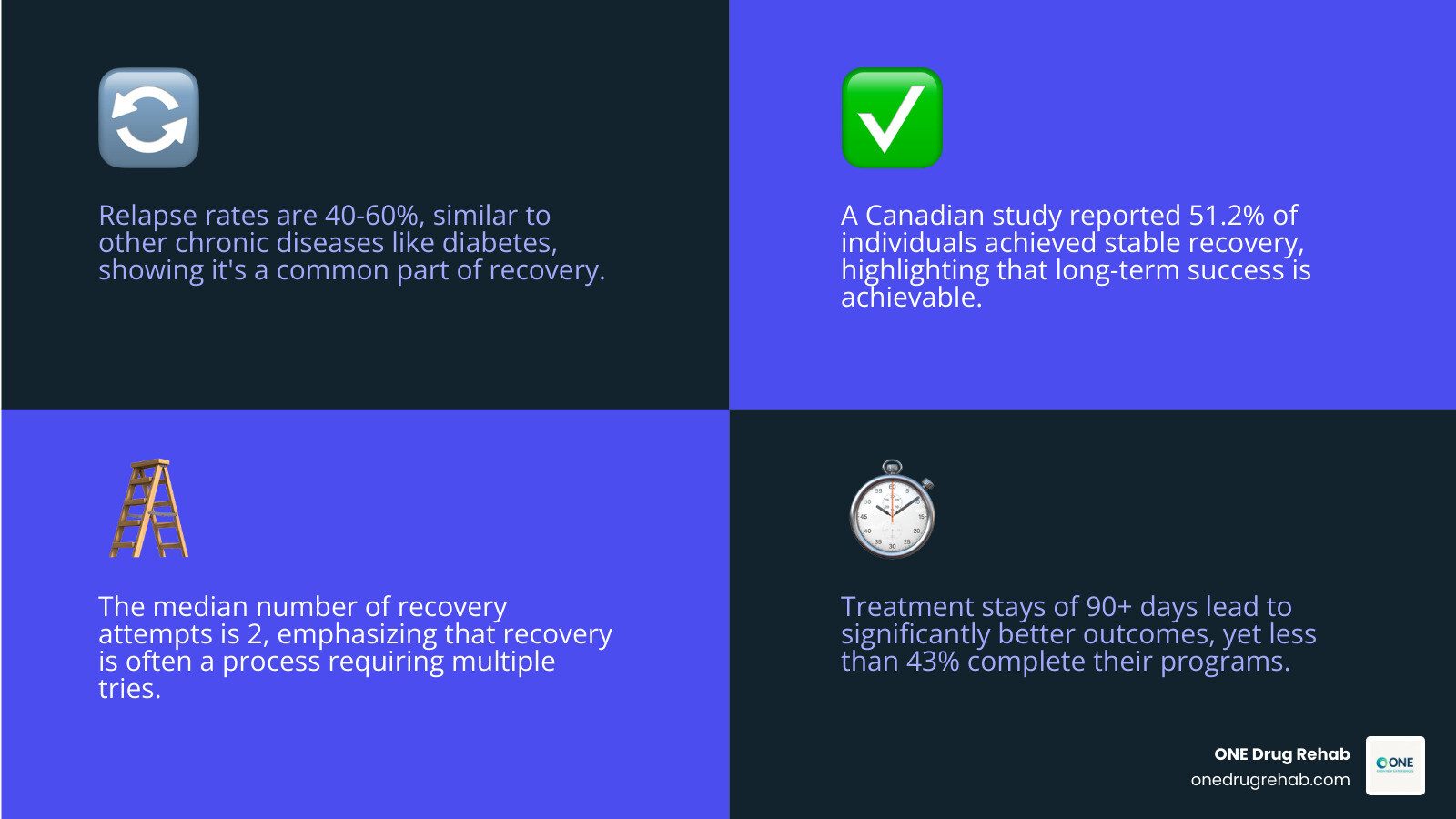
- 40-60% of people may relapse, but this doesn’t mean treatment failed
- 51.2% of people achieve stable recovery without any relapse (Canadian study)
- Median recovery attempts: 2 (though some need more)
- Treatment completion: Less than 43% complete their programs
- Length matters: 90+ days of treatment shows better outcomes
- Success isn’t just sobriety: Improved health, relationships, and quality of life count too
The lack of a single “success rate” can be confusing. This, combined with alarming statistics—like nearly 108,000 overdose deaths in 2022—can create fear around seeking help. Many people believe myths: that rehab doesn’t work, that relapse is immediate, or that one must hit “rock bottom” first.
The reality is more hopeful. Addiction is a treatable chronic medical condition, not a moral failing. Recovery looks different for everyone, and “success” means much more than just stopping drug use.
Understanding the real numbers helps you make informed decisions and set realistic expectations for the recovery journey.
Drug rehab success rates terminology:
Defining “Success”: Why a Single Number Doesn’t Tell the Whole Story

When people ask about drug rehab success rates, they often want a single number. But recovery is too complex to be measured so simply. If someone with diabetes manages their blood sugar better but still needs insulin, is that a failure? The same logic applies to addiction recovery.
Abstinence isn’t the only metric for success. While it’s a common goal, progress shows up in many ways:
- Improved quality of life: Waking up with hope instead of despair is a huge win.
- Better psychological well-being: Learning to manage co-occurring anxiety, depression, or trauma without substances is a major achievement.
- Returning to work or school and rebuilding relationships are tangible signs of progress.
- Physical health improvements, like returned energy and better overall wellness, are also victories.
The National Institute on Drug Abuse agrees. Their Principles of effective treatment from NIDA emphasize that good treatment addresses a person’s whole life, not just their drug use.
Success in recovery is personal. It might mean being present for a child’s graduation or getting through a stressful day without using. Both matter equally.
The Chronic Disease Model of Addiction
Understanding drug rehab success rates is easier when you view addiction as a chronic disease, like diabetes or high blood pressure. This is a medically accurate model.
Relapse is part of recovery for many. Addiction’s relapse rate of 40-60% is comparable to other chronic diseases like diabetes (30-50%) and hypertension (50-70%). When a person with diabetes has a blood sugar spike, we don’t call their treatment a failure; we adjust it. The same approach works for addiction.
Relapse signals a need for treatment adjustments, not a reason to give up. It provides valuable information about what needs to change in the treatment plan, removing shame and guilt.
Long-term management is key. Just as people with other chronic conditions need ongoing care, those in recovery benefit from continuous support like therapy, support groups, or regular check-ins. You can learn more about this approach at More info about addiction recovery. Recovery is a journey, not a destination, and every step forward counts.
Understanding the Statistics: A Realistic Look at Drug Rehab Success Rates

When looking for treatment, you deserve to know what the drug rehab success rates actually look like. Research shows that 40-60% of people in recovery experience relapse, a rate similar to other chronic diseases. Treatment completion is also complex, with less than 43% of people finishing their initial program, often for various personal reasons.
However, the news is genuinely encouraging. A study by the Canadian Centre on Substance Use and Addiction found that 51.2% of people achieved stable recovery without a single relapse. This means over half of those who get treatment can stay in recovery from the start.
Success rates vary by substance and treatment:
- Heroin and Opioids: Medication-assisted treatment (MAT) can reduce use by 90%. Inpatient completion rates (65%) are significantly higher than outpatient (35%).
- Alcohol: About 25% of patients maintain sobriety for a year, while many others dramatically reduce drinking (an 87% reduction in use). Support groups improve these results.
- Cocaine: Recovery relies on behavioral therapies, with longer residential stays (90+ days) showing better one-year outcomes.
- Methamphetamine: While challenging, structured programs like the Matrix Model have shown 60% sobriety rates after six months.
How Many Recovery Attempts Are Typical?
The reality of recovery is more hopeful than the horror stories suggest. A national study on recovery attempts found that the median number of serious recovery attempts was just 2. This means half of all people who successfully recovered did so in two tries or fewer.
The average (mean) was higher at 5.35, but this number is skewed by a small group needing many more tries. The median offers a more realistic picture for most. This finding shows that you don’t need to expect years of cycling through treatment; for most, success comes relatively quickly with the right approach.
How do demographics affect drug rehab success rates?
Personal circumstances influence the recovery journey, though they don’t determine the outcome. Research shows a few patterns:
- Race and ethnicity can play a role, with some groups needing more attempts, likely due to disparities in access to quality care and support.
- A stable, supportive relationship is linked to needing fewer recovery attempts.
- Co-occurring mental health conditions like depression are associated with more attempts, highlighting the importance of dual diagnosis treatment.
While the path may be bumpier for some, the destination of stable recovery can be just as rewarding. Understanding these factors is about setting realistic expectations and finding the right support for your situation.
Key Factors That Directly Influence Treatment Outcomes

Recovery isn’t just luck or willpower. Certain factors consistently improve drug rehab success rates. Most of these are things you can control or look for when choosing a program. Critical factors include the program’s quality, your personal investment, and your post-treatment support system. For a deeper look at options, explore Types of Addiction Treatment.
The Program’s Role: Length of Stay and Quality of Care
The program you choose is your recovery’s foundation. Key elements include:
- Length of Stay: This is perhaps the most critical factor. The National Institute on Drug Abuse recommends at least 90 days of treatment for effectiveness. Data shows leaving before 90 days leads to high relapse rates. For women in residential treatment, staying six months or more resulted in 68-71% abstinence rates.
- Evidence-Based Therapies: Therapies like Cognitive Behavioral Therapy (CBT) and Dialectical Behavior Therapy (DBT) are crucial. They provide practical skills to change thought patterns and manage emotions.
- Dual Diagnosis Capability: This is vital, as about half of people with addiction also have a mental health condition. Treating both together improves outcomes.
- Staff-to-Patient Ratio: A low ratio ensures more individual attention and personalized care.
- Retention Rates: These act as a program’s report card. Higher completion rates often signal better support and stronger outcomes.
The Individual’s Journey: Motivation and Support
Your commitment and support system are equally important.
- Personal Motivation: While external pressure can help initiate treatment, internal motivation is what sustains recovery when it gets tough.
- Family Involvement: When family participates in therapy, they become powerful allies, helping to heal damaged relationships.
- Support Network: Building a network through groups like AA or NA provides understanding and connection with peers who have shared experiences.
- Addressing Underlying Trauma: Effective treatment helps you process past pain in healthy ways rather than numbing it with substances.
- Recovery Capital: This refers to all the resources (personal, social, practical) that support your recovery. Building it creates a stronger foundation for lasting sobriety.
How to Identify an Effective Rehab Program
Knowing what to look for makes choosing a rehab program easier and directly impacts drug rehab success rates. Look for these signs of a quality program:
- Accreditation: Approval from bodies like CARF or The Joint Commission ensures the facility meets high standards for safety and care.
- Licensed and Certified Staff: The program should be staffed by licensed physicians, therapists, and nurses.
- Individualized Treatment Plans: A one-size-fits-all approach doesn’t work. Your plan should be custom to your specific history, needs, and goals.
- Full Continuum of Care: This ensures support from detox through outpatient care and beyond, providing smooth transitions.
- Aftercare Planning: Good programs help you plan for ongoing support like therapy, support groups, and alumni programs.
- Positive Client Reviews and Outcomes: Look for facilities that are transparent about their success and have positive feedback.
You can compare different options using our Compare Rehab Centers tool to make this process easier.
Questions to Ask a Potential Treatment Center
When you call a facility, be prepared with questions. A reputable center will welcome them.
- “What therapies do you use?” Listen for evidence-based approaches like CBT, DBT, and Motivational Interviewing.
- “What are your staff’s qualifications?” Inquire about their licenses and experience.
- “How do you handle co-occurring disorders?” This is crucial if you have mental health issues, as integrated treatment is key.
- “What does aftercare involve?” Look for specific, long-term support plans, not vague promises.
- “What is your treatment philosophy?” Ensure their approach (e.g., abstinence-based, MAT) aligns with your needs.
- “What is the typical length of stay?” 90 days or more is generally more effective.
Finally, get clear on costs and insurance to avoid financial stress. Our Rehab Insurance Verification page can help with this step.
Frequently Asked Questions about Rehab Success
Here are honest answers to common questions about drug rehab success rates, based on research and experience.
What is a realistic success rate for drug rehab?
There’s no single percentage that captures success. It’s a collection of positive changes, from complete abstinence to reduced use alongside improved health and relationships.
Research provides helpful context: about 40-60% of people experience relapse, similar to rates for other chronic illnesses. More encouragingly, a Canadian study found 51.2% of people achieved stable recovery without any relapse, and other research shows 70% of people report better quality of life within a year of treatment.
Recovery is a long-term process of sustained positive change, not a one-time event where perfection is expected from day one.
How long should I stay in rehab for the best chance of success?
Longer stays consistently lead to better outcomes. NIDA suggests at least 90 days for effectiveness, as research confirms this duration significantly reduces relapse rates compared to shorter stays.
This time is crucial because your brain needs time to heal from the chemical changes caused by addiction. The right duration, however, depends on individual needs, including addiction severity, substance type, and co-occurring mental health conditions. A longer stay isn’t a sign of weakness; it’s an investment in a strong foundation for recovery.
Does relapse mean that addiction treatment has failed?
No, relapse is not a failure. This is a critical point. It’s a common part of the recovery process for a chronic condition, much like a person with diabetes might have a blood sugar spike. It doesn’t mean treatment has failed.
A relapse signals a need to re-evaluate and adjust the treatment plan, not to give up. It provides valuable information about what needs to change. The key is to get back into treatment quickly. Don’t see relapse as the end of the story, but as a guide for the next chapter of recovery.
Conclusion: Finding Hope and the Right Path to Recovery
When you started reading about drug rehab success rates, you may have wanted a simple number. The reality is more nuanced and far more hopeful than any single statistic.
Statistics provide context, not destiny. Knowing that relapse is possible, that most people succeed within a few attempts, and that a 90-day stay improves outcomes helps set expectations. But these numbers don’t define your personal story. Your recovery depends on your motivation, the quality of your treatment, your support system, and how well underlying mental health issues are addressed.
The most encouraging truth is that recovery is absolutely possible. Millions of people who once struggled with addiction now live fulfilling lives. Many had setbacks, but they didn’t give up—and neither should you.
Finding the right treatment makes all the difference. It’s about finding a program with evidence-based care that addresses your specific needs and supports you long-term.
At ONEDrugRehab.com, we exist to help you make informed decisions. We provide unbiased information to help you research your options thoughtfully, without promoting specific facilities.
Taking the first step is often the hardest part. By seeking information, you’ve already shown incredible courage. This willingness to learn is a powerful predictor of success. When you’re ready, our resources can help you Find the right rehab near you. Seeking help is a sign of strength. Your recovery story is waiting to be written.