

Why Holistic Bipolar Treatment Centers Are Changing Mental Health Recovery
Holistic bipolar treatment centers offer a comprehensive approach to managing bipolar disorder by treating the whole person—mind, body, and spirit—rather than just the symptoms. This integrated model provides hope for those seeking more than traditional medication management.
Key Features of Holistic Bipolar Treatment Centers:
- Integrated Care: Blends evidence-based therapies (CBT, DBT) with complementary practices.
- Multidisciplinary Teams: Psychiatrists, therapists, and wellness experts collaborate on your care.
- Personalized Plans: Treatment is customized to your unique needs and any co-occurring conditions.
- Mind-Body-Spirit Focus: Addresses physical, emotional, and spiritual well-being.
- Dual Diagnosis Support: Simultaneously treats co-occurring bipolar disorder and addiction.
Bipolar disorder involves extreme mood swings, and traditional treatment often focuses heavily on medication. However, many individuals require more comprehensive support. Research shows that those with bipolar disorder are four times more likely to develop a substance use disorder, highlighting the need for a whole-person approach to achieve lasting recovery.
Holistic centers improve traditional care by combining proven medical treatments with therapies like yoga, nutritional counseling, and art therapy. By addressing mental, physical, and spiritual health together, this approach helps individuals build skills for long-term wellness and find balance in all areas of life, offering hope to those who haven’t found relief through medication alone.
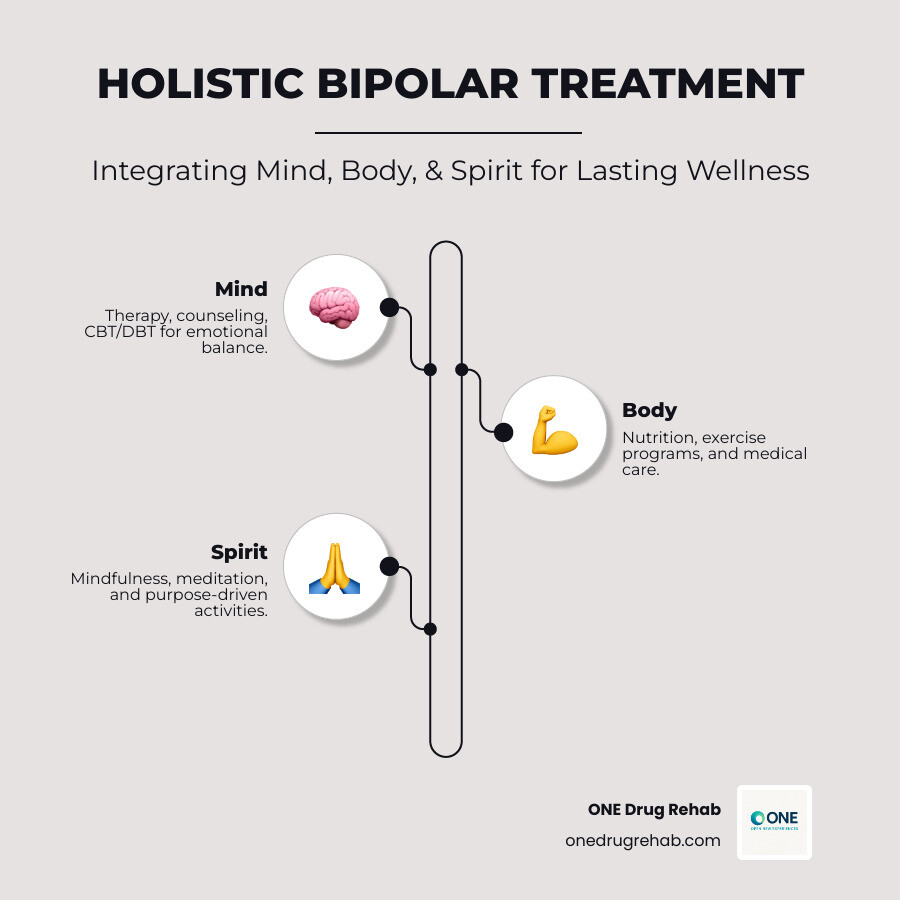
Holistic bipolar treatment centers word guide:
The Holistic Philosophy: Treating the Whole Person
The struggles of bipolar disorder and addiction are often deeply connected. More than 40 percent of people with bipolar disorder also struggle with substance use, frequently creating a painful cycle of self-medication where substances worsen mood swings. Breaking this cycle requires treating both conditions simultaneously.
This is where the holistic philosophy excels. Holistic bipolar treatment centers recognize that mental, physical, and spiritual health are intertwined. As the link between addiction and mental illness shows, effective treatment must address every aspect of your well-being.
- Physical Wellness: This involves optimizing health through nutrition, exercise, and sleep, often supported by practices like acupuncture and massage to reduce stress.
- Emotional Balance: Therapy helps you manage intense emotions, develop coping skills, and build the resilience needed to steer mood swings.
- Spiritual Well-being: This focuses on finding meaning and purpose, not necessarily through religion, but through practices like mindfulness, nature, or art to ground you in your recovery.
By addressing mind, body, and spirit together, this approach provides a complete toolkit for building a fulfilling, stable life with a lower chance of relapse.
Evidence-Based Clinical Therapies
Proven clinical therapies are the foundation of effective holistic treatment, providing tools for lasting change.

Cognitive Behavioral Therapy (CBT) is a key treatment in holistic bipolar treatment centers. It helps you identify and challenge negative thought patterns that fuel mood swings and substance use. You can learn more about understanding CBT to see how it develops balanced perspectives.
Dialectical Behavior Therapy (DBT) is especially helpful for intense emotions and impulsivity. It teaches practical skills in mindfulness, emotion regulation, distress tolerance, and effective communication.
Family-focused therapy involves loved ones to improve communication, reduce conflict, and build a supportive home environment, which is crucial for maintaining progress.
These psychosocial interventions complement medical treatment. While medication stabilizes mood, therapy teaches you the skills to live well, manage stress, and build resilience for long-term recovery.
Complementary and Alternative Practices
Holistic bipolar treatment centers improve traditional care by integrating complementary practices that nurture your whole being.

These practices are designed to improve, not replace, standard medical care. Common therapies include:
- Yoga and Meditation: These cornerstone practices combine movement, breathing, and mindfulness to reduce stress and improve mood regulation.
- Nutritional Counseling: Experts help you identify foods and supplements that support stable moods and address deficiencies.
- Exercise Programs: Structured physical activity is a proven tool for managing mood. You can learn more about holistic fitness programs.
- Art and Music Therapy: These creative outlets provide a way to express emotions that are difficult to verbalize.
- Acupuncture and Massage: These therapies help reduce stress, manage anxiety, and release physical tension.
As The Use of Complementary and Alternative Medicine in the United States shows, these approaches are increasingly popular. When supervised by professionals and integrated with primary medical care, they provide powerful tools for self-care and long-term recovery.
What to Expect from Holistic Bipolar Treatment Centers
Knowing what to expect can ease the process of starting at a holistic bipolar treatment center. The journey begins with a crucial first step: an accurate diagnosis.
Accurate diagnosis is the foundation of your care. Bipolar disorder can mimic other conditions, so the best centers conduct thorough evaluations to create a complete picture of your unique situation. This ensures your treatment plan is perfectly customized.
Next, you’ll work with a multidisciplinary team of specialists. This includes a psychiatrist for medication management, a therapist for individual and group sessions (using CBT, DBT), a nutritionist for brain-healthy meal plans, and wellness experts like yoga instructors or art therapists. This team collaborates to provide integrated care.
Your personalized treatment plan is developed from these different perspectives, reflecting that no two people with bipolar disorder are alike. It considers your symptoms, history, goals, and any co-occurring conditions.
Most importantly, you can expect a safe and supportive environment. These centers foster a non-judgmental atmosphere where you can explore difficult feelings and focus on healing.
Residential vs. Outpatient Programs
Choosing between residential and outpatient care is a major decision. The right choice depends on your specific needs and level of support required.
| Feature | Residential Treatment | Outpatient Treatment |
|---|---|---|
| Immersion Level | Full-time, 24/7 care, immersive environment | Part-time, allows living at home, integrates into daily life |
| Structure | Highly structured daily schedule | Flexible schedule, self-directed structure |
| Support Access | Constant access to medical and therapeutic support | Scheduled appointments, less immediate support |
| Distraction | Minimal external distractions | More exposure to daily stressors and triggers |
| Cost | Generally higher due to 24/7 care and amenities | Generally lower, more accessible |
| Ideal Candidate | Severe symptoms, co-occurring addiction, unstable home environment, need for intensive monitoring | Stable symptoms, strong support system, work/school commitments, stepping down from residential |
Residential treatment provides an immersive, 24/7 environment to focus entirely on recovery, typically for 2-4 months. It’s ideal for those with severe symptoms, co-occurring addiction, or an unstable home life, offering a distraction-free space for deep therapeutic work.
Outpatient programs offer flexibility, allowing you to live at home and maintain work or school commitments while attending scheduled therapy. This option works well for those with stable symptoms and a strong support system, or as a step-down from residential care.
A mental health professional can help you assess your needs and decide which of the types of addiction treatment is the best fit for you.
Key Components of a Holistic Bipolar Treatment Center
Holistic bipolar treatment centers are defined by their integrated care model, where all aspects of treatment work together cohesively.

Key components include:
- Coordinated Medication Management: Your psychiatrist, therapist, and nutritionist collaborate, ensuring medication is supported by therapy and diet. Research shows medication is more effective when combined with psychotherapy.
- Individual and Group Therapy: Individual sessions offer confidential space for personal work, while group therapy provides connection with peers who understand your struggles.
- Nutritional Support: Personalized meal planning and education on how food affects mood can significantly impact your daily well-being.
- Education and Life Skills: Holistic education programs empower you with knowledge about your condition, stress management, and practical life skills for long-term stability.
- Relapse Prevention: You’ll develop concrete strategies for handling triggers, managing medication, and seeking support after treatment.
This integrated approach prepares you to build a fulfilling life, creating a foundation for long-term wellness.
Navigating Your Path to Recovery
Finding the right treatment center is a critical first step. Your journey begins with an honest self-assessment to understand the scope of your challenges and determine the level of care you need. If you have co-occurring substance use, look for centers specializing in dual diagnosis treatment for the best chance at recovery.
When researching facilities, ask detailed questions to find the right fit. Key areas to investigate include:
- Staff Qualifications: Ensure the team is licensed and experienced in treating bipolar disorder and co-occurring addiction.
- Accreditations: Look for accreditations from organizations like the Joint Commission or CARF, which signal a commitment to high standards of care.
- Treatment Philosophy: Find a center whose approach feels supportive and right for you.
- Personalized Plans: Confirm that the center creates customized treatment plans rather than using a one-size-fits-all approach.
- Aftercare Planning: Inquire about long-term recovery strategies, as aftercare is vital for maintaining wellness.
Finding the Right Holistic Bipolar Treatment Center for You
Finding the right holistic bipolar treatment center is easier with unbiased resources like our directory at ONEDrugRehab.com. Use our platform as a starting point to filter options by location (including rehab near me), care type, and specialized programs.
When comparing programs, dig deeper than surface details. Prioritize centers that specialize in dual diagnosis if you have a co-occurring addiction. Consider if their specific holistic therapies (e.g., yoga, art therapy) and approach to family involvement align with your needs.
Location is another key factor. While staying close to home has benefits, a new environment can be healing. Think about whether a rural or urban setting would best support your recovery.
Finally, read reviews and testimonials for insights into a center’s environment and effectiveness, but focus on overall patterns rather than single comments. The goal is to find a program that aligns with your values and provides the comprehensive care you need.
Understanding Insurance and Costs
The financial side of treatment can be daunting, but many holistic bipolar treatment centers offer accessible options.
Navigating insurance coverage is a key step. Most providers cover bipolar disorder treatment, including residential/outpatient programs and therapy. To understand your specific coverage, call your insurance company or use our rehab insurance verification tool. A center’s admissions team can also help you verify benefits.
If insurance is limited, private pay options are available. Many centers offer reasonable rates, payment plans, financing, or sliding scale fees. Don’t assume you can’t afford care without asking. You can also explore resources for addiction treatment without insurance.
Ask providers for a clear breakdown of all costs to avoid surprises. Investing in quality treatment is an investment in your long-term health and well-being.
Frequently Asked Questions about Holistic Bipolar Treatment
How does a holistic approach differ from traditional bipolar treatment?
Traditional treatment often focuses on symptom management, primarily through medication. While vital, this may not address the whole person.
A holistic approach takes a broader view, treating the mind, body, and spirit as interconnected. It differs by:
- Integrating complementary therapies: Practices like yoga, nutrition, and art therapy are woven into your core treatment plan.
- Emphasizing lifestyle: It addresses sleep, diet, exercise, and stress as key components of health.
- Addressing underlying causes: It may investigate nutritional deficiencies or hormonal imbalances that affect mood.
The goal of holistic care is not just to reduce symptoms but to build resilience and create a balanced, sustainable life.
Is it possible to manage bipolar disorder without medication in a holistic setting?
This is a complex question. For many, medication is a life-saving tool for stabilizing mood swings, and discontinuing it without medical guidance is dangerous. Untreated bipolar disorder can have serious consequences.
The goal at most holistic bipolar treatment centers is not to eliminate medication, but to use it optimally. Holistic therapies act as a powerful complement, working to make medication more effective and improve your overall quality of life. By addressing root causes like nutritional deficiencies or lifestyle factors, some individuals may be able to reduce their reliance on medication over time.
However, this must be done under strict medical supervision. The initial goal is always stabilization, which typically involves medication. Holistic care provides an individualized approach, but it is not a standalone replacement for medication, especially for Bipolar I disorder.
What is the success rate for holistic treatment of co-occurring bipolar and substance use disorders?
Success in treating co-occurring disorders isn’t a single statistic. It’s defined by improved quality of life, reduced symptoms, and long-term sobriety. This means better relationships, greater stability, and healthy coping skills.
While exact rates for holistic centers vary, the approach is very promising. Research consistently shows that integrated dual diagnosis treatment—treating both conditions simultaneously—is far more effective than addressing them separately. You can explore statistics on co-occurring disorders to learn more.
Holistic bipolar treatment centers are designed to break the cycle of self-medication by addressing the root connections between mood and substance use. By combining evidence-based therapies with wellness practices and strong aftercare planning, this comprehensive approach provides a powerful foundation for long-term recovery, stability, and a better quality of life.
Take the First Step Towards Balanced Wellness
Living with bipolar disorder and co-occurring addiction is an uphill battle, but you don’t have to face it alone. A path to recovery exists, and it begins with hope.
As this guide has shown, holistic bipolar treatment centers offer comprehensive care that heals on every level—mind, body, and spirit. This approach empowers you to build a life of balance and meaning, not just manage symptoms. You’ll gain a toolkit of skills to steer the ups and downs of recovery, supported by a team that understands the interconnectedness of your well-being.
Recovery is a journey, and hope is real. Every day, people find stability and joy through this comprehensive approach.
At ONEDrugRehab.com, we are a non-affiliated resource committed to providing unbiased information to help you make the best choice. The hardest step is often the first one. Let us help you find a program that addresses both bipolar disorder and any co-occurring conditions.
Your journey to balanced wellness can start today. Let us help you find the right addiction treatment program for you. Your recovery matters, and with the right holistic care, you can build the fulfilling life you deserve.