

Why Choosing a Rehab is a Critical First Step to Lasting Recovery
Choosing a rehab is a critical first step, but with thousands of options, it can feel overwhelming. The right choice significantly impacts treatment effectiveness and your entire recovery journey. This guide will empower you to make an informed decision.
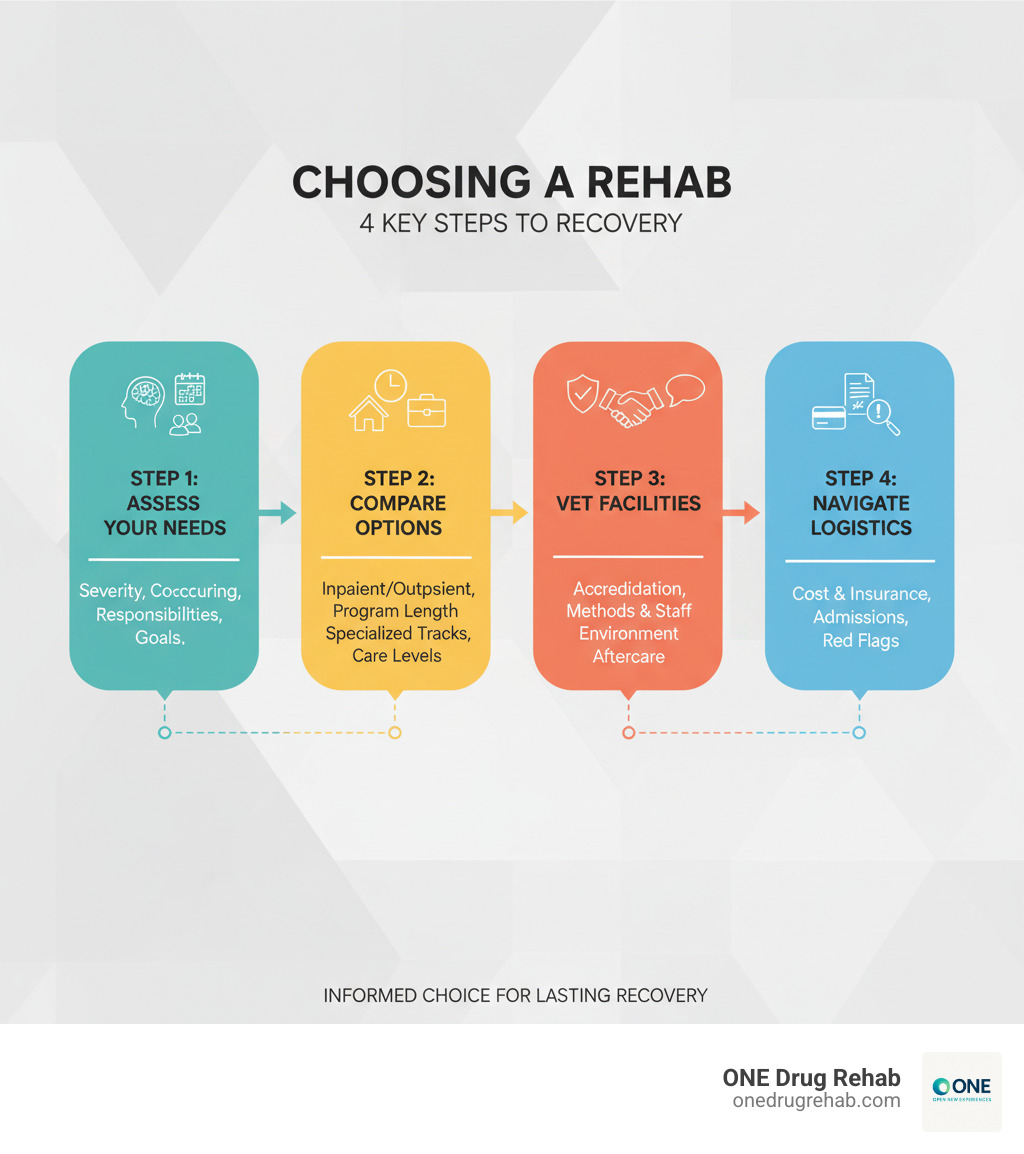
Quick Guide to Choosing a Rehab:
- Assess Needs: Evaluate addiction severity, mental health, and personal responsibilities.
- Compare Options: Understand inpatient vs. outpatient, program lengths, and specialized tracks.
- Vet Facilities: Check accreditation, staff credentials, and evidence-based methods.
- Steer Logistics: Verify insurance, understand costs, and watch for red flags.
Key factors to evaluate:
- Licensing, accreditation, and qualified staff
- Evidence-based therapies (CBT, DBT, MAT)
- Integrated treatment for co-occurring disorders
- Comprehensive aftercare and support
- Program length (90+ days shows better outcomes)
- A supportive relapse policy
Understanding what to look for makes the process manageable. Research shows that longer treatment yields better results: over 80% of those in programs lasting more than 30 days remained substance-free a year later, compared to about 50% for 28-day programs. This guide walks you through each step, helping you spot quality care, avoid predatory practices, and find a center that fits your unique needs for long-term success.
Step 1: Assess Your Unique Recovery Needs
Before comparing facilities, start by understanding your specific situation. The most effective programs are personalized to your unique circumstances.
This first step involves an honest look at several key areas. Consider your addiction severity—how long have you been using and how has it impacted your life? What substances are involved? Also, think about your personal responsibilities, such as work or family, which will influence your treatment options. A teenager’s needs differ greatly from those of a working professional or a senior. We offer specialized resources to help, including our Addiction Treatment Teens Complete Guide, Inpatient Rehab for Seniors Complete Guide, and Inpatient Rehab for Professionals Guide. This personalized approach is backed by scientific research on personalizing treatment, which shows it improves the chance of long-term success.
Defining Your Goals for Choosing a Rehab
What does success mean to you? For some, it’s simply achieving sobriety. For others, recovery includes relationship repair, developing life skills, or meeting career objectives.
Defining your personal needs and goals helps you identify which programs will serve you best. A facility focused on vocational training is ideal if you want to return to the workforce, while one with intensive family therapy is better if healing relationships is your priority. Think beyond just stopping substance use. What kind of life do you want to build? Answering these questions will guide your choice.
Addressing Co-Occurring Disorders
Addiction rarely travels alone. About half of all people with a substance use disorder also have a co-occurring mental health condition, known as a dual diagnosis.
Anxiety, depression, and trauma (PTSD) are often deeply intertwined with addiction. Sometimes mental health issues lead to self-medication, while other times substance use worsens mental health. Because of this, your mental health history is a critical factor when choosing a rehab. Treating the addiction without addressing underlying mental health issues makes recovery difficult and increases the risk of relapse.
Look for programs that offer integrated treatment for co-occurring disorders. These facilities have staff qualified to treat both conditions simultaneously. Our Co-occurring Disorder Treatment guide explains what to look for. For specific concerns like anxiety, see our Inpatient Rehab Anxiety Guide. As the NIH HEAL Initiative notes, when addiction and mental illness collide, integrated care is essential.
Step 2: Understand and Compare Treatment Options
Once you’ve assessed your needs, it’s time to explore your options. The “best” treatment is the one that fits your specific situation. Treatment programs vary in intensity, structure, and duration, as outlined by the American Society of Addiction Medicine’s continuum of care. Our Types of Addiction Treatment guide details these options.

Program length is a critical factor. While 28-day programs are common, research shows longer treatment is more effective. About half of people in 30-day programs remain substance-free after a year, but that rate jumps to over 80% for those in programs of 90 days or longer. More time allows for deeper work on underlying issues and building a stronger foundation for recovery. Learn more in our Drug Rehab Success Rates guide.
Inpatient vs. Outpatient Programs
A key decision is choosing between inpatient (residential) and outpatient treatment.
Inpatient rehab involves living at the facility 24/7, typically for 28-90+ days. This immersive, structured environment removes you from daily triggers and provides constant medical and therapeutic support. It often begins with medically supervised detox. For severe addiction or co-occurring disorders, this intensive care offers the best chance of success. Our Inpatient Rehab for Drugs guide covers this option.
Outpatient rehab allows you to live at home while attending treatment sessions. It’s more flexible, less disruptive to daily life, and more affordable. Levels of care vary:
- Partial Hospitalization Programs (PHPs): The most intensive, with 6+ hours of treatment daily.
- Intensive Outpatient Programs (IOPs): A step down, with about 9 hours of treatment per week.
- Traditional Outpatient: A few hours of treatment per week.
Explore these in our Outpatient Alcohol Rehab Programs and IOP Drug Program guides.
| Feature | Inpatient Rehab | Outpatient Rehab |
|---|---|---|
| Pros | – 24/7 immersive care & supervision | – Live at home, maintain daily routines |
| – Removes you from triggers & negative influences | – Less expensive | |
| – Higher success rates, especially for severe addiction | – More flexibility with work/family | |
| – Integrated medical & mental health care | – Practice coping skills in real-world settings | |
| Cons | – Disruptive to daily life, job, family | – Less intensive care & supervision |
| – More expensive | – Exposure to triggers & negative influences | |
| – Limited contact with outside world | – Higher risk of relapse if home environment is unstable | |
| – Can feel isolating for some | – May require strong self-motivation | |
| Best For | – Severe addiction, unstable home environment | – Less severe addiction, stable home environment |
| – Dual diagnosis, complex medical needs | – Strong support system at home | |
| – Those needing intensive, structured care | – Step-down care after inpatient treatment |
While residential treatment often has higher success rates due to its immersive nature, outpatient can be effective for those with less severe addiction and strong home support. It’s also a common step-down option after inpatient care.
Specialized Treatment Tracks
Many facilities offer specialized tracks for different groups, which can significantly improve comfort and effectiveness.
- Gender-specific programs create safer environments for opening up about sensitive topics.
- Age-specific programs address the unique developmental and social challenges of teens, young adults, and seniors.
- LGBTQ+ affirming care provides a safe space that understands the unique stressors faced by this community.
- Faith-based programs, like our Christian Detox Programs, integrate spiritual principles into healing.
- Language-specific programs, such as Spanish Speaking Rehab Centers, ensure clear communication.
- Programs for specific addictions, detailed in our Alcohol Addiction Rehab guide, address the unique medical and psychological aspects of different substances.
Step 3: The Ultimate Checklist for Choosing a Rehab
Now it’s time to investigate specific facilities. Think of this as hiring a partner for your recovery journey—one that’s qualified, transparent, and aligned with your goals. This checklist will help you separate quality care from flashy marketing. For a detailed comparison, use our Compare Rehab Centers guide. The National Institute on Drug Abuse Treatment Page also offers trustworthy guidance.

Verifying Program Quality and Staff Credentials
Amenities are nice, but quality clinical care is what matters. This starts with credentials.
- Licensing: Every facility must be licensed by its state. This is a non-negotiable legal requirement ensuring basic safety and operational standards.
- Accreditation: This is voluntary but crucial. Accrediting bodies like The Joint Commission and CARF hold facilities to higher, industry-specific standards of care and performance. Accreditation is a strong sign of quality.
- Staff Qualifications: The best programs use a multidisciplinary team of medical doctors, nurses, psychiatrists, licensed therapists, and certified addiction counselors. Don’t hesitate to ask about staff credentials and experience. A reputable facility will be transparent. You can verify physician credentials via the American Society of Addiction Medicine’s physician finder.
Evaluating Treatment Philosophy and Methods
A facility’s methods must be proven to work. Look for evidence-based therapies, which are backed by scientific research. Key approaches include:
- Cognitive Behavioral Therapy (CBT): Helps change negative thought patterns that fuel addiction.
- Dialectical Behavior Therapy (DBT): Teaches skills for managing intense emotions and distress.
- Motivational Interviewing: Helps you find your own motivation for change.
For opioid and alcohol addiction, ask about Medication-Assisted Treatment (MAT), which combines therapy with FDA-approved medications and has been shown to improve recovery outcomes.
Your treatment plan should be individualized, not a one-size-fits-all program. It should be created after a thorough assessment and adapt as you progress. Many programs also integrate holistic therapies like yoga, meditation, or art therapy to support overall well-being, as explored in our Holistic Drug Treatment guide.
Ask how the facility measures success and tracks progress. Be wary of any program that guarantees a “cure” or “100% success.” Recovery is complex, and such claims are dishonest. Finally, group therapy is a vital component for building connection, which you can learn more about in our guide on How Does Group Therapy Help Addiction.
Assessing Environment, Aftercare, and Family Support
The context of your recovery is just as important as the clinical program.
- Location and Setting: Do you need a secluded environment away from triggers, or do you prefer to stay close to your home support system? There’s no single right answer.
- Comfort and Amenities: A safe, respectful environment helps you focus on healing. Options like Rehab with Private Rooms or Pet Friendly Inpatient Rehab can make a significant difference for some.
- Aftercare Planning: Recovery doesn’t end at discharge. Quality programs create comprehensive aftercare plans from day one, including ongoing therapy, alumni programs, and connections to resources like 12 Step Meetings.
- Relapse Policy: Relapse is a common part of recovery. A good facility views it not as a failure but as an opportunity to adjust your treatment plan. Ask about their policy—a supportive, non-punitive approach is best.
- Family Involvement: Addiction affects the whole family. Programs that offer family therapy and education help heal relationships and build a stronger support network for your return.
Step 4: Navigating Costs, Insurance, and Admissions
Understanding the financial side of treatment is a crucial step. While costs can seem high, help is often available through insurance, payment plans, and other assistance programs.
The admission process is typically straightforward. After choosing a facility, you’ll undergo a phone assessment to ensure it’s a good fit, verify your insurance, and schedule an intake date. You have rights as a patient, including confidentiality and informed consent.
Understanding Costs and Insurance Coverage
Treatment costs vary widely. A 30-day outpatient program can range from $1,400 to $10,000, while a 30-day inpatient stay may cost $5,000 to $20,000 or more. Always ask for the total program cost upfront to avoid hidden fees for services like medication management or specialized therapies.
Most health insurance plans are required to cover substance abuse services, thanks to the Affordable Care Act and mental health parity laws. This includes marketplace plans, employer-sponsored plans, Medicare, and Medicaid. You can explore options at Mental health and substance abuse health coverage options | HealthCare.gov.
The key is determining if a facility is in-network with your insurance, which typically means lower out-of-pocket costs. Our Rehab Insurance Verification tool can help you understand your benefits, and our Does Insurance Cover page explains what’s usually covered.
If you don’t have insurance, don’t lose hope. Many facilities offer payment plans, sliding-scale fees based on income, or scholarships. State-funded programs are another low-cost or free option. Our Find Rehab Without Insurance guide details these alternatives.
Red Flags and Avoiding Predatory Practices
Unfortunately, some unethical providers exist. Protect yourself by watching for these red flags.
- High-Pressure Sales Tactics: A quality center will give you time to make an informed decision, not pressure you to commit immediately.
- Vague Success Claims or Guarantees: No reputable program can guarantee a “cure” or 100% success. Such claims are dishonest.
- Patient Brokering: This is an illegal practice where “brokers” receive kickbacks for referrals, often sending you to an inappropriate facility for their own profit.
- Lack of Transparency: A legitimate program will be open about its licensing, accreditation, staff credentials, and costs. If they are evasive, that’s a major problem.
- Overemphasis on Luxury Amenities: While comfort is important, the marketing should focus on clinical care and staff qualifications, not just the pool or gourmet meals.
- Unusual Financial Offers: Be wary of offers to pay for your insurance or travel. These often come with hidden strings and may indicate unethical business practices.
For more guidance, the Massachusetts government offers excellent advice on Avoiding addiction treatment scams | Mass.gov. Trust your instincts; if something feels wrong, it probably is. There are many high-quality, ethical centers available.
Frequently Asked Questions about Selecting a Rehab
We’ve covered a lot, but here are answers to some common questions that arise when choosing a rehab.
How long should rehab last?
There’s no single answer, but research shows that longer treatment leads to better outcomes. While 28-day programs are common, the National Institute on Drug Abuse (NIDA) suggests that treatment lasting 90 days or more is most effective.
A key statistic highlights this: over 80% of patients in programs longer than 30 days were substance-free a year later, compared to about half for typical 30-day programs. A longer stay provides the time needed to address underlying issues, develop strong coping skills, and build a solid foundation for long-term recovery. The right length depends on your individual needs, addiction severity, and progress.
What is the difference between licensing and accreditation?
This is a key distinction for evaluating quality.
- Licensing is mandatory. A facility must be licensed by the state to operate legally. It ensures they meet minimum standards for health and safety.
- Accreditation is voluntary. It signifies a facility has gone above and beyond the minimum requirements. Accrediting bodies like The Joint Commission and the Commission on Accreditation of Rehabilitation Facilities (CARF) conduct rigorous evaluations of a facility’s quality of care, staff qualifications, and patient outcomes.
Think of it this way: licensing is the minimum requirement, while accreditation is a mark of excellence. Look for both when choosing a rehab.
What happens if I relapse during treatment?
Relapse is a common part of the recovery journey for many and should not be seen as a failure. A high-quality program will have a supportive, not punitive, approach.
Instead of immediate discharge, the treatment team should use the relapse as a learning opportunity. They will likely:
- Adjust your treatment plan by increasing therapy or exploring new coping strategies.
- Provide additional support, such as more one-on-one counseling.
- Reinforce learning by helping you understand triggers and strengthen your relapse prevention plan.
Avoid any program with a zero-tolerance policy that expels patients for relapsing. A supportive approach is crucial for effective, long-term recovery, a reality discussed in our Does Rehab Work guide.
Your Path to Recovery Starts with the Right Choice
You are now equipped with the knowledge to make an informed decision. Choosing a rehab is about finding the right partner for your recovery. By assessing your needs, comparing options, vetting facilities, and understanding the logistics, you are investing in yourself and your future.
The right treatment center, with qualified staff and evidence-based methods, can make all the difference. Recovery is absolutely possible, and it starts with this crucial first step.
You don’t have to do this alone. ONEDrugRehab.com is a third-party resource designed to give you the unbiased information you need to find a provider that truly meets your needs. We don’t endorse any specific facility; our goal is to empower your choice.
When you’re ready, find a treatment provider that meets your needs. Trust the process, and remember that every recovery story begins with the courage to take the first step. Today, that can be you.