
Your Path to Accessible Recovery Starts Here
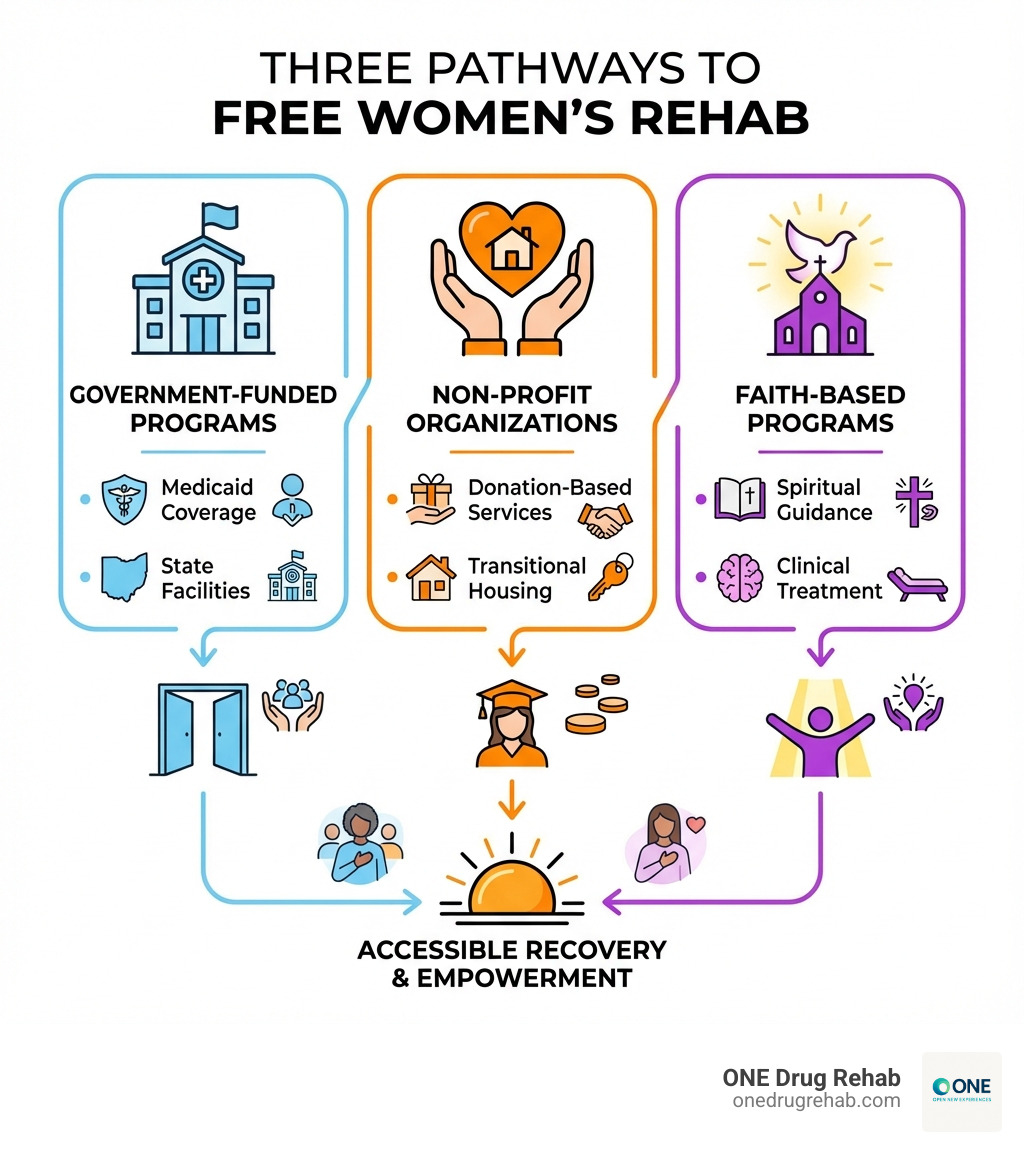
Free women’s rehab centers provide addiction treatment at no cost through government funding, non-profit organizations, and faith-based programs. Here’s how to access them:
Quick Access Guide:
- Government-Funded Programs: Contact your state’s Department of Health or use FindTreatment.gov to locate state-funded facilities that accept Medicaid or offer free services
- Non-Profit Organizations: Organizations like Dove Recovery House and Salvation Army provide free residential treatment funded by donations and grants
- Faith-Based Programs: Churches and religious organizations often offer free recovery programs combining spiritual support with clinical care
- Eligibility Requirements: Most programs require proof of low income, state residency, and lack of insurance coverage
Addiction treatment can feel out of reach when you’re worried about cost. Many women who need help right now believe they can’t afford rehab—and that belief keeps them stuck.
But here’s the truth: financial barriers don’t have to stop your recovery journey.
Research from SAMHSA shows that 45% of addiction treatment facilities provide free or minimal-payment services. Another 58% offer sliding fee scales based on what you can actually afford. These programs exist because addiction is a health crisis, not a luxury service.
Women face unique challenges in seeking treatment—childcare responsibilities, past trauma, social stigma, and co-occurring mental health disorders like depression and anxiety. Free women’s rehab centers understand these barriers and design their programs specifically to address them.
Whether you’re a mother worried about your children, someone without insurance, or simply overwhelmed by the cost of private treatment, accessible options exist in your community right now.
Why Women-Specific Addiction Treatment Matters
When we talk about addiction, it’s crucial to acknowledge that women often experience it differently than men. These differences aren’t just biological; they’re deeply rooted in social, psychological, and cultural factors. That’s why free women’s rehab centers are not just a nice-to-have, but a vital component of effective recovery.
One of the primary barriers women face when seeking addiction treatment is social stigma. Society often judges women more harshly for substance use, especially mothers, leading to immense shame and guilt that can prevent them from reaching out for help. We understand that this stigma can feel suffocating, but we want you to know that seeking help is a sign of incredible strength, not weakness.
Another significant barrier is the weight of childcare responsibilities. Many women are primary caregivers, and the thought of leaving their children to enter a residential program can be an impossible hurdle. Concerns about who will care for their kids, how they will afford it, and the potential impact on their children’s well-being can keep women trapped in a cycle of addiction. We’ll explore programs that address this critical need later in this guide.
Beyond these practical concerns, women are disproportionately affected by co-occurring disorders, such as depression, anxiety, and post-traumatic stress disorder (PTSD). Research shows that many women struggle with past sexual trauma that often goes unaddressed, directly influencing their addictive behaviors. These complex mental health challenges require integrated, dual-diagnosis treatment that understands the intricate link between trauma and substance use.
The importance of trauma-informed care in free women’s rehab centers cannot be overstated. This approach recognizes the pervasive impact of trauma and integrates this understanding into all aspects of treatment. Instead of asking “What’s wrong with you?”, trauma-informed care asks “What happened to you?”, fostering a safe and supportive environment where healing can truly begin.
Effective treatment for women often incorporates evidence-based therapies custom to their unique experiences. These therapies help women develop coping skills, process trauma, and build healthier relationships. Some of the most effective include:
- Cognitive Behavioral Therapy (CBT): This therapy helps women identify and change negative thought patterns and behaviors that contribute to substance use. It’s like having a kind but firm coach who helps you reframe your thinking.
- Dialectical Behavior Therapy (DBT): Particularly useful for women with co-occurring disorders and a history of trauma, DBT focuses on emotional regulation, distress tolerance, interpersonal effectiveness, and mindfulness. It teaches you how to steer intense emotions without resorting to unhealthy coping mechanisms.
These therapies, combined with a supportive, gender-specific environment, create a powerful foundation for lasting recovery. To dive deeper into the benefits of a structured, women-only recovery environment, we invite you to read our comprehensive guide to inpatient rehab for women.
Exploring the Types of Free Women’s Rehab Centers
The good news is that numerous avenues exist for women to access addiction treatment without facing prohibitive costs. These free women’s rehab centers are often supported by a combination of public and private funding, all united by the common goal of helping individuals reclaim their lives. We generally categorize these into three main types: government-funded programs, non-profit organizations, and faith-based initiatives. Each offers a unique approach and set of resources, often complementing each other within a broader community support network.

State-Funded and Government-Sponsored Programs
Many states and the federal government allocate significant resources to combat addiction, understanding that it’s a public health crisis. These programs are supported by public funding and aim to provide essential treatment services to those who need it most, regardless of their financial situation.
A crucial component of government-funded support is through health insurance programs like Medicaid and Medicare. The Affordable Care Act (ACA) played a pivotal role in expanding access to substance use disorder (SUD) and mental health services. It mandates that all health insurance providers, including Marketplace plans and most individual and small group plans, cover these essential health benefits. This means that if you qualify for Medicaid, your addiction treatment costs may be fully covered, often with $0 co-pays for services in some states. You can learn more about The Affordable Care Act’s role in coverage. For a deeper understanding of how this can benefit you, we recommend exploring our resource on Medicaid-approved rehab centers.
Beyond direct insurance, government-funded programs often receive grants from entities like the Substance Abuse and Mental Health Services Administration (SAMHSA). These grants are aimed at expanding access to treatment, including Medications for Opioid Use Disorder (MOUD). These funds support public mental health and substance use treatment centers, allowing them to offer free or low-cost services.
A particularly important aspect of state-funded programs is their provision for pregnant women and mothers struggling with addiction. Many government-funded initiatives prioritize these populations, recognizing the dual impact of addiction on both the mother and child. Some programs offer specialized prenatal care, and some even provide on-site childcare services to remove that critical barrier for mothers seeking help. This means that if you’re pregnant or a mother, you may find accelerated access or specific programs designed to support your unique needs.
The Role of Non-Profit and Community Organizations
Non-profit organizations are the unsung heroes in the landscape of accessible addiction treatment. These organizations operate not for profit, but for purpose, often relying on a combination of donation-based funding, private endowments, and grant-supported services from foundations and government agencies. Their mission is to fill the gaps where other services might fall short, providing compassionate care to individuals who might otherwise go without.
Many non-profit organizations focus on a holistic approach to recovery, addressing not just the substance use itself, but the underlying issues and life skills necessary for long-term sobriety. Common services offered by these free women’s rehab centers include:
- Transitional Housing: Providing safe, sober living environments after initial treatment, often crucial for women rebuilding their lives.
- Job Training and Vocational Support: Equipping women with the skills needed to gain meaningful employment, fostering independence and self-sufficiency.
- Life Skills Education: Covering everything from financial literacy and budgeting to parenting classes and healthy relationship building.
- Case Management: Offering personalized support to steer legal, housing, and health challenges.
- Aftercare and Alumni Programs: Ensuring ongoing support and community connection long after formal treatment ends.
A shining example of such an organization is the Dove Recovery House for Women. Located in Marion and Dubois counties, Indiana, Dove House is Marion County’s largest recovery residence for women. It offers free transitional housing and comprehensive programming, including trauma therapy, parenting classes, nutrition workshops, and job readiness training. Their dedication to empowering women is evident in their high success rates, with over 70% of residents successfully completing their program or being on track to do so. Non-profits like Dove House are invaluable, created and sustained by the generosity of donors, corporate sponsors, and grants.
Faith-Based Recovery for Women
Faith-based programs offer a unique and deeply spiritual path to addiction recovery, catering specifically to women who find strength and solace in their faith. These programs integrate spiritual guidance with traditional clinical care, providing a holistic approach that nurtures the mind, body, and spirit. National organizations recognize the effectiveness of faith-based initiatives in fostering recovery, highlighting their role in the broader treatment landscape.
In faith-based free women’s rehab centers, you’ll often find a strong emphasis on community and peer support. Many programs use a 12-Step model, which, while not exclusively religious, often incorporates spiritual principles. This framework encourages personal accountability, self-reflection, and reliance on a “higher power” as understood by the individual.
Beyond the 12 steps, these centers provide a structured environment that fosters purpose-driven recovery. Services might include:
- Spiritual Counseling: Guidance from chaplains or spiritual leaders who help women explore their faith as a resource for healing.
- Bible Study or Religious Services: Opportunities for worship and communal spiritual practice.
- Mentorship: Connecting women with others in recovery who share similar faith backgrounds.
- Therapeutic Activities: Often combined with evidence-based therapies like CBT, but framed within a spiritual context.
Faith-based programs often provide free or very low-cost residential treatment. Many emphasize a faith-based approach to restoring women to “freedom, redemption, and a hope-filled life” through spiritual support and foundational living principles. These programs understand that for many women, a strong spiritual foundation is an essential component of lasting sobriety. While faith-based, many do not require adherence to specific religious beliefs, focusing instead on universal spiritual principles like hope, forgiveness, and community.
Your Guide to Finding and Accessing No-Cost Treatment
Finding the right support when you’re ready for recovery is a monumental step, and we want to make that journey as clear and straightforward as possible. Navigating free women’s rehab centers involves understanding eligibility, knowing where to look, and what to expect during the admissions process.
How to Qualify for Free Women’s Rehab Centers
While the idea of “free” treatment sounds universally accessible, these programs often have specific eligibility requirements to ensure resources go to those most in need. Don’t let this discourage you; these criteria are designed to help, not hinder.
Typically, eligibility for free women’s rehab centers hinges on a few key factors:
- Proof of Income: Most free and low-cost programs, especially government-funded and non-profit ones, require documentation of your income to demonstrate a financial need. This often involves comparing your income to Federal Poverty Guidelines. For instance, Mariposa Lodge Women’s Treatment Center uses these guidelines to determine qualification for free or sliding-scale treatment. We understand that this can feel intrusive, but it’s a necessary step to access these vital services.
- Residency Status: Many state-funded programs require proof of state residency. This ensures that the resources funded by state taxpayers are serving the local community.
- Lack of Insurance or Underinsurance: A primary qualification for many free programs is having no health insurance or being underinsured, meaning your current insurance doesn’t adequately cover addiction treatment costs. If you’re looking for solutions for addiction treatment without insurance, these free centers are often your best bet.
- Documenting Addiction Severity: While not always a barrier, some programs might prioritize individuals based on the severity of their addiction or co-occurring health issues. This is often determined during an initial assessment.
- Prioritization for Certain Populations: As we’ve discussed, pregnant women, mothers with dependent children, and veterans are often prioritized for admission to certain free programs. This recognizes their heightened vulnerability and the broader societal impact of their addiction.
Each program will have its own specific criteria, so always inquire directly about their requirements.
Finding Free Women’s Rehab Centers in Your Area
Now that you know what to look for, where do you actually find these elusive free women’s rehab centers? We’ve compiled the best resources to help you in your search:
- ONE Drug Rehab’s Provider Directory: Our own directory is designed to be a comprehensive, third-party resource for researching treatment options. While we don’t endorse specific providers, we aim to offer a broad overview to help you start your search.
- Online Treatment Locators:
- The SAMHSA website is a key resource. Their treatment locator allows you to filter search results by payment options, including free services, making it invaluable for those in financial need.
- FindTreatment.gov is another confidential and anonymous government resource. Authorized by the 21st Century Cures Act, it helps individuals locate facilities for mental and substance use disorders, and you can filter by payment options.
- Community Health Departments: Your local or state health department often has lists of publicly funded treatment centers and can guide you to resources in your area.
- Local Support Organizations: Don’t underestimate the power of local community. Reach out to local churches, food banks, homeless shelters, or domestic violence shelters. These organizations are often well-connected to local free rehab services and can offer referrals or direct assistance.
The journey to finding the right place might take a little persistence, but it’s a journey well worth taking.
The Admissions Process: What to Expect
Once you’ve identified a potential free women’s rehab center, the next step is the admissions process. While it can vary slightly between facilities, here’s a general overview of what you should expect:
- The Initial Phone Call or Referral: This is usually your first point of contact. You’ll speak with an admissions counselor or intake specialist who will gather basic information about your situation, your substance use history, and your immediate needs. This is also your opportunity to ask about their specific programs for women, eligibility criteria, and what makes them unique.
- A Comprehensive Intake Assessment: If you meet the initial criteria, you’ll typically undergo a more in-depth assessment. This can involve interviews, questionnaires, and sometimes psychological evaluations. The purpose is to understand the full scope of your addiction, any co-occurring mental health issues, your living situation, and your overall health. This assessment helps the center determine if their program is the right fit for you and what level of care you require.
- Medical and Psychological Evaluations: Depending on the program, you may need a medical evaluation to assess your physical health and any potential withdrawal symptoms that might require medically managed detox. A psychological evaluation can further identify any underlying mental health conditions that need to be addressed concurrently with your addiction.
- Understanding Potential Waitlists: It’s a reality that some free women’s rehab centers, especially those offering highly sought-after residential programs, may have waitlists. Don’t be discouraged by this. Ask about the typical wait time and if they can recommend other resources in the interim. Some facilities may even offer same-day admission for emergencies, so always be upfront about the urgency of your situation.
- Collaborating on a Personalized Treatment Plan: Once admitted, you’ll work with a team of professionals to develop an individualized treatment plan. This plan will outline your recovery goals, the therapies you’ll participate in, any medications you’ll receive, and the duration of your stay. This collaborative approach ensures that the treatment is custom to your unique needs and circumstances.
The admissions process is designed to ensure you receive the most appropriate and effective care. Be honest and open during these discussions; the more information you provide, the better equipped the team will be to help you.
Frequently Asked Questions About Free Rehab for Women
We know you probably have a million questions swirling in your mind. Let’s tackle some of the most common ones we hear about free women’s rehab centers.
Are free rehab centers as effective as private ones?
This is a fantastic and very common question. The short answer is: absolutely, yes! The effectiveness of addiction treatment isn’t determined by the price tag or the luxury amenities, but by the quality of care, the evidence-based therapies offered, and most importantly, your commitment to recovery.
Free women’s rehab centers focus on the core essentials of recovery: medical assistance, therapy, and support groups. They are staffed by qualified professionals, often including licensed therapists, counselors, and medical personnel, who are just as dedicated as those in private facilities. While you might not find gourmet meals or spa services, you will find:
- Evidence-Based Treatment: Many free centers offer therapies like CBT, DBT, and trauma-informed care, which are proven to be effective.
- Qualified Staff: Professionals in these centers are often passionate about helping underserved populations and bring a wealth of experience.
- Strong Community: The shared experience of overcoming adversity can create powerful bonds and a robust support system among residents.
Individual motivation is a key factor in successful recovery. A motivated individual in a free program often achieves better outcomes than an unmotivated one in a high-cost private facility. Effective treatment is not determined by cost; it’s determined by the quality of the therapeutic interventions and the individual’s engagement with the process.
What if I don’t qualify but still can’t afford treatment?
Don’t despair! If you don’t meet the strict eligibility requirements for completely free programs, there are still numerous pathways to affordable treatment. We believe that financial status should never be a barrier to getting the help you need.
Consider these options:
- Sliding Scale Fees: A significant number of facilities offer a sliding fee scale. This means the cost of treatment is adjusted based on your income and ability to pay. It’s a strong option that can make quality care accessible to a wider range of individuals.
- Facility Payment Plans: Many rehab centers, even private ones, are willing to work with you on a payment plan. This allows you to pay for treatment in manageable installments over time.
- Rehab Scholarships and Grants: Some organizations and even individual treatment centers offer scholarships or grants to help cover treatment costs. You might need to apply and demonstrate need, but these can be game-changers.
- Research Studies/Clinical Trials: Participating in a clinical trial for addiction treatment can sometimes provide free or low-cost care as part of the study. This can be a way to access cutting-edge treatments without the financial burden.
For a comprehensive exploration of all your options when facing financial constraints, we highly recommend reading our complete guide to affordable treatment centers.
Are there programs that accommodate mothers with children?
Yes, absolutely! This is a critical area of support, recognizing the unique challenges mothers face. Many free women’s rehab centers and government-funded programs understand that separating a mother from her children can be detrimental to both.
You’ll find:
- Specialized Programs for Mothers: These programs are specifically designed to address the needs of mothers, offering a supportive environment where they can focus on their recovery without the added stress of childcare concerns.
- On-Site Childcare Services: Some residential programs provide on-site childcare, allowing mothers to live at the facility with their children. This is a huge relief, as it removes the primary barrier for many women.
- Parenting Classes: Beyond childcare, these programs often incorporate parenting classes and workshops, helping mothers develop healthy parenting skills and strengthen their bond with their children.
- Family Therapy to Heal Relationships: Addiction impacts the entire family. Family therapy is often an integral part of these programs, helping to repair relationships and build a supportive family unit.
Many programs also explicitly welcome pregnant individuals at any stage and help connect them with valuable resources for themselves and their babies, along with parenting classes and family reunification services.
If you are a mother struggling with addiction, please know that there are compassionate programs designed with you in mind. If you need immediate support, please Call the 988 Suicide & Crisis Lifeline for immediate support.
Conclusion: Accept a Hopeful Future in Recovery
We hope this guide has illuminated the many accessible pathways to recovery available for women. It’s our firm belief that recovery is accessible to every woman, and financial status should never be a barrier to health and healing.
Taking the first step towards seeking help is a profound act of courage and a true sign of strength. It’s a declaration that you are worthy of a life free from the grip of addiction, a life filled with purpose, joy, and empowerment through sobriety.
While we’ve focused on finding free women’s rehab centers, the journey doesn’t end with treatment. Many programs offer aftercare planning, alumni groups, and ongoing support services to help you maintain sobriety long-term. Organizations like Dove Recovery House boast robust alumni programs, and Casa Serena even offers a “Lifetime Aftercare Program,” ensuring continued connection and support. These services are vital for navigating the challenges of early recovery and building a fulfilling, sober life.
At ONEDrugRehab.com, we are here as a valuable, non-affiliated resource for exploring your options. We encourage you to use the information and links provided in this guide to begin your search. The path to a hopeful future in recovery is waiting for you. Don’t hesitate to reach out and find a women’s treatment center to start your journey today. You deserve it.