

Understanding Drug Rehab Success Rates
When asking what is the success rate of drug rehab, it’s important to know that there’s no single, simple answer. Addiction recovery is a complex journey, and success looks different for everyone. The data shows that while 40-60% of people experience relapse—similar to other chronic diseases like diabetes—a significant number find lasting recovery. In fact, 30-60% of people remain sober for at least one year after treatment, and 72% of people with a history of substance use problems consider themselves recovered or in recovery.
Success in rehab is about more than just sobriety. It includes meaningful improvements in relationships, employment, mental health, and legal standing. Addiction is a chronic brain disease, not a moral failing. Like other chronic conditions, it requires ongoing management where the goal is progress, not perfection. For example, a Canadian study found that 51.2% of people achieved stable recovery without a single relapse, and 99% of individuals with co-occurring mental health issues showed improvement after comprehensive treatment.
Your recovery journey is unique. The key is finding the right treatment for your situation and staying committed to the process, even if it takes multiple attempts.
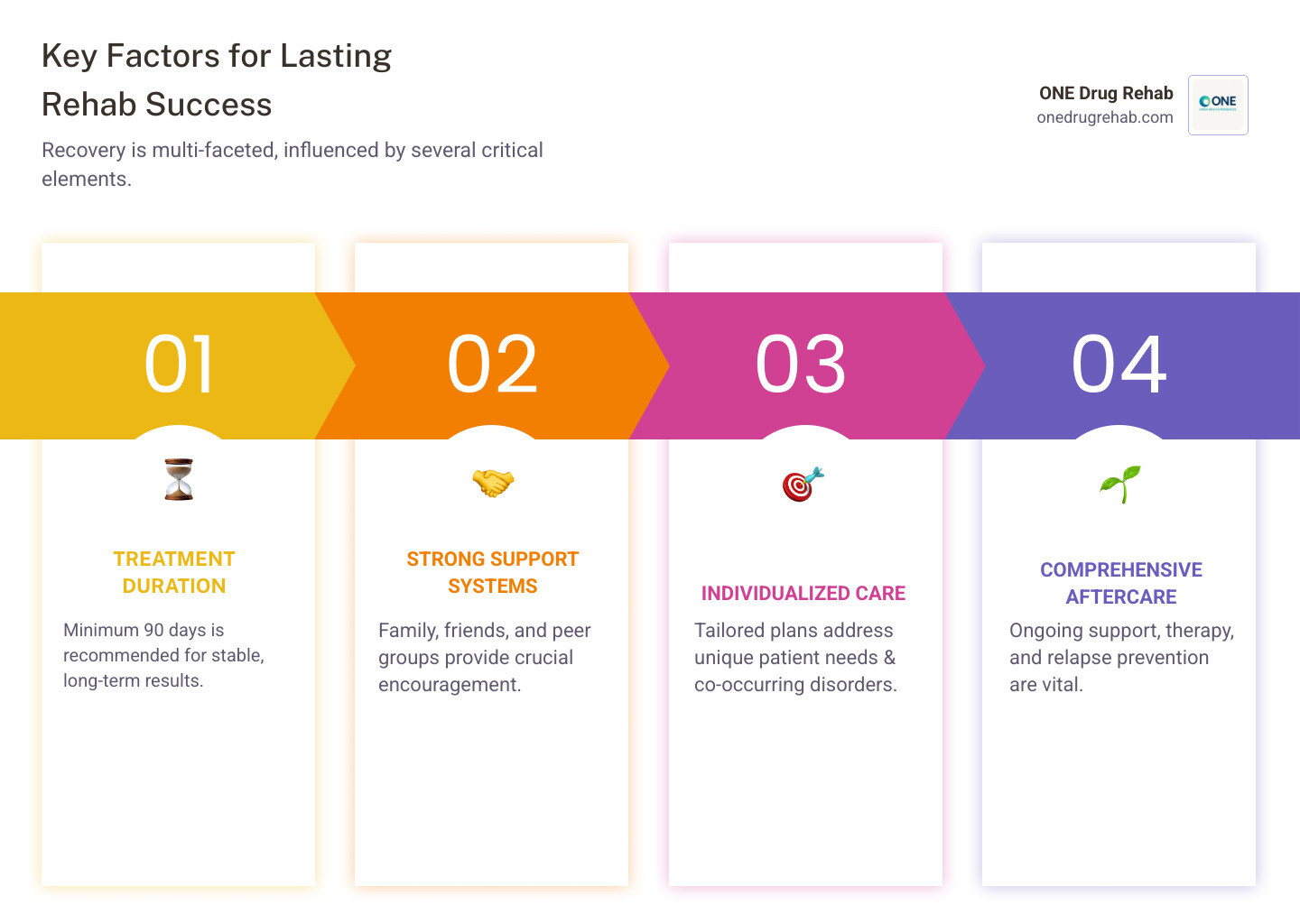
What is the success rate of drug rehab helpful reading:
- alcohol addiction rehab
- inpatient vs outpatient alcohol rehab success rates
- what percentage of heroin addicts recover
How Success in Drug Rehab is Defined and Measured
When people ask “what is the success rate of drug rehab,” they often want a simple percentage. However, success in addiction recovery is not a black-and-white issue. The modern approach has moved beyond measuring only complete sobriety and now accepts a broader definition that includes overall quality of life improvements.
This holistic view recognizes that addiction impacts every part of a person’s life. Success is measured by positive changes in:
- Overall Wellbeing: Can the person function day-to-day without the constant thought of substance use? Biopsychosocial assessments help track these improvements.
- Employment and Social Function: Is the person able to hold a job, attend school, and contribute to their community?
- Legal Status: Has the person resolved legal issues related to substance use and avoided new ones?
- Psychological Health: Are they developing healthy coping mechanisms and addressing underlying mental health conditions?
Treatment facilities also use internal metrics like retention rates (how many people stick with the program) and engagement in aftercare to gauge effectiveness, as both are linked to better long-term outcomes. You can find more info about addiction recovery success rates to dive deeper.
Why There Isn’t One Single “Success Rate”
The lack of a single, universal success rate for drug rehab stems from several key factors:
- Varying Definitions: One center might count program completion as success, while another requires a full year of sobriety. This makes direct comparisons impossible.
- Different Treatment Modalities: Inpatient, outpatient, and medication-assisted treatments have different structures and goals, so their success metrics naturally vary.
- Individual Factors: A person’s substance of choice, severity of addiction, mental health status, and support system all heavily influence their outcome.
- Lack of Standardized Reporting: Unlike many medical fields, the addiction treatment industry has no universal reporting requirements, leading to inconsistent data.
- Self-Reported Data: Many studies rely on individuals to honestly report their substance use, which can be unreliable.
Instead of one rate, it’s more accurate to think of a spectrum of recovery outcomes, from reduced harm to complete abstinence.

Relapse as Part of the Recovery Process
One of the most harmful myths is that relapse means rehab has failed. Addiction is a chronic illness, much like diabetes or asthma. Relapse rates for addiction are between 40-60%, which is similar to the rates for these other chronic medical conditions.
A relapse is not a moral failing; it is a sign that the treatment plan needs adjustment. It provides valuable information about triggers and coping strategies that need more attention. The skills learned in rehab are not lost after a relapse. In fact, they often help individuals return to sobriety more quickly.
Recovery is about progress, not perfection. A setback is an opportunity to reinforce one’s commitment to recovery with a modified approach. For more on this, see the science of addiction and recovery.
What is the Success Rate of Drug Rehab? A Look at the Data
Now that we’ve established that “success” is multi-faceted, let’s look at what the research says about what is the success rate of drug rehab. The data is encouraging: treatment works for most people who stay engaged. Beyond just reducing substance use, individuals in recovery report improved social functioning, decreased criminal activity, and better overall health.
A 2023 study found that over 72% of people who had a substance use problem considered themselves either recovered or in recovery. This highlights the transformative power of treatment and ongoing support. The key takeaway is that continued care—whether through aftercare programs, therapy, or support groups—is crucial for lasting change.
Success Rates by Substance
Success rates can vary depending on the substance, as different drugs require different treatment approaches.
-
Opioids and Heroin: Medication-Assisted Treatment (MAT), which combines medications like buprenorphine (Suboxone) or methadone with therapy, is a game-changer. Studies show MAT can lead to a 90% reduction in heroin use. Without MAT, heroin relapse rates can be as high as 90%. This makes MAT essential for many. Learn more about What Percentage of Heroin Addicts Recover?.
-
Alcohol: Treatment for alcohol use disorder is highly effective. Former patients report cutting their drinking by 87%. Peer support groups like Alcoholics Anonymous (AA) also play a major role. After one year of attending AA, members’ sober days increase from 20% to 80%.
-
Cocaine and Stimulants: While there are no FDA-approved medications for cocaine addiction, behavioral therapies are effective. The Matrix Model, a structured therapy program, has shown that 60% of participants were sober after six months. For methamphetamine, residential treatment is often necessary, with one study showing 33 out of 100 patients remaining sober after three months.
For more on this topic, a Canadian study on life in recovery offers valuable insights.
Success Rates by Treatment Type
Both inpatient and outpatient treatment can be effective; the best choice depends on individual needs.
-
Inpatient/Residential Treatment: This involves living at a facility for intensive, structured care, typically for 30-90 days. Removed from daily triggers, patients can focus entirely on recovery. This immersive environment leads to higher completion rates of up to 65%. Find out more about Inpatient Rehab for Drugs.
-
Outpatient Programs: This flexible option allows individuals to live at home while attending regular therapy sessions. It’s suitable for those with less severe addictions or strong home support. The completion rate is lower, around 35%, often due to the challenges of balancing treatment with daily life.
The key is to choose the right level of care for your situation. You can explore various Types of Addiction Treatment to understand all your options.
Key Factors That Influence Rehab Success
The success rate of drug rehab is not just about the program itself; it’s heavily influenced by personal factors.
-
Motivation: A genuine desire to change is the most critical factor. While it’s normal to feel scared or uncertain, a spark of readiness is essential for treatment to take hold.
-
Co-Occurring Mental Health Issues: Over 55% of people with substance use disorders also have a mental health condition. Treating both simultaneously (dual diagnosis) is vital. Programs that do this report that 99% of these individuals show improvement.
-
Support Systems: A strong network of supportive family and friends provides a crucial safety net. Conversely, toxic environments can sabotage recovery efforts.
-
Aftercare Planning: Rehab is the beginning, not the end. A solid aftercare plan, including ongoing therapy and support groups, is essential for navigating life after treatment.

The Critical Role of Treatment Duration
Quick fixes do not work for addiction. The National Institute on Drug Abuse (NIDA) is clear: treatment lasting at least 90 days is necessary for the best outcomes. Programs shorter than this have significantly lower success rates.
Why does longer treatment work? It takes time for the brain to heal and for new, healthy habits to form. A longer stay allows individuals to work through underlying issues, practice coping skills in a safe environment, and build a solid foundation for recovery. One study showed that substance abstinence rates were five times higher for those who stayed in treatment longer than the minimum required time. While the average stay is 30-90 days, committing to a longer duration gives you the best chance at lasting success. NIDA’s principles of effective treatment provide more detail on this.
The Impact of Recovery Attempts
Most people don’t achieve sobriety on their first try. A national study found the median number of serious recovery attempts was only 2, while the average was about 5. This means that for most people, stable recovery is achieved within a few dedicated efforts.
Each attempt is a learning experience, not a failure. It provides valuable data on what works and what doesn’t for you. If you’ve tried before, you’re in good company. The key is persistence. Don’t let past setbacks discourage you from trying again. You can read more in this national study on recovery attempts.
How to Find an Effective Rehab Program
Choosing the right facility is a critical step, as the success rate of drug rehab often depends on finding a program that fits your needs. Here are key markers of a high-quality treatment center:
- Accreditation: Look for accreditation from respected bodies like the Commission on Accreditation of Rehabilitation Facilities (CARF) or the Joint Commission. This ensures the facility meets high standards for care and safety.
- Evidence-Based Therapies: The program should use scientifically proven methods like Cognitive Behavioral Therapy (CBT) and Dialectical Behavior Therapy (DBT).
- Qualified Staff: The team should include licensed medical doctors, psychiatrists, and therapists with expertise in addiction.
- Individualized Treatment Plans: Avoid cookie-cutter approaches. A quality program will create a plan custom to your unique history and goals.
- Continuum of Care: The best programs offer a full range of services, from detox to inpatient/outpatient care and comprehensive aftercare planning.
We’ve put together resources to help you Compare Rehab Centers to make an informed decision.
Questions to Ask a Treatment Facility
When researching facilities, be prepared to ask direct questions. A reputable center will be transparent.
- Therapies Offered: Do they use evidence-based methods? Do they offer individual, group, and family therapy?
- Approach to Co-Occurring Disorders: How do they treat addiction and mental health issues like depression or anxiety simultaneously?
- Aftercare Program: What support is available after formal treatment ends? (e.g., alumni groups, ongoing therapy).
- Measuring Progress: Do they track only sobriety, or also improvements in wellbeing, relationships, and employment?
- Staff Credentials: What are the qualifications and experience of the clinical team?
- Philosophy on Relapse: Do they view relapse as a failure or as a learning opportunity that requires a treatment adjustment?
For more insights, check out our Rehab Facility Reviews.
Life After Rehab: Sustaining Long-Term Recovery
Completing rehab is a major achievement, but the journey continues. Sustaining recovery involves building a new life that supports sobriety.
- Develop New Habits: Actively build new, healthy routines to replace old patterns. This could include exercise, meditation, or new hobbies.
- Build a Sober Support Network: Surround yourself with people who support your recovery. This may mean distancing yourself from old relationships centered on substance use. Sober living homes can be very effective.
- Continue with Therapy: Ongoing therapy provides a safe space to manage challenges and reinforce coping skills.
- Engage in Peer Support: Groups like Alcoholics Anonymous (AA), Narcotics Anonymous (NA), or SMART Recovery offer connection with people who understand your experience.
- Find Purpose: Recovery opens up space to pursue education, find meaningful work, or help others, creating a life so fulfilling that substances are no longer appealing.
Frequently Asked Questions about Drug Rehab Success
Here are answers to some of the most common questions about what is the success rate of drug rehab.
How long does it take to recover from addiction?
Recovery is a lifelong process, not a finite event. However, research from the National Institute on Drug Abuse shows that treatment lasting at least 90 days is typically needed to achieve stable, long-term results. During this time, the brain begins to heal, and new, healthy coping mechanisms are established. For many, recovery is a journey of continuous improvement, with life getting richer and more meaningful over time.
Does relapse mean rehab didn’t work?
Absolutely not. Relapse does not mean rehab failed. Addiction is a chronic disease, and relapse is a common feature, occurring in 40-60% of individuals—a rate similar to other chronic conditions like diabetes. A relapse is a sign that the treatment plan needs to be adjusted. The skills learned in rehab are not lost and can help a person get back on track, often with a stronger understanding of their recovery needs.
Can you recover without professional rehab?
While some people do recover without formal treatment (a 2020 study found 54.1% of people in remission did so without professional help), it is often much more difficult, especially for moderate to severe addiction. Professional rehab provides a structured, safe environment with medical supervision, evidence-based therapies, and peer support—all of which are proven to increase the chances of sustained recovery. Seeking professional help is a smart choice to give yourself the best odds of success.
Your Path to Recovery is Unique
As we’ve explored the success rate of drug rehab, it’s clear that your journey is your own. There is no single statistic that can define your potential for a new life.
Success is multi-faceted, measured not just in sobriety but in rebuilt relationships, stable employment, and improved mental health. Recovery is absolutely possible, with over 72% of people with a history of substance use considering themselves recovered or in recovery. The path may include setbacks—the 40-60% relapse rate for this chronic disease shows that course corrections are normal.
Research consistently points to key factors for success: engaging in treatment for 90 days or more, finding the right type of care (whether inpatient or medication-assisted), and persistence. Most people require more than one attempt, with a median of 2 serious recovery attempts leading to stable recovery.
At ONEDrugRehab.com, we believe in hope and action. We don’t endorse specific providers but instead offer a neutral, comprehensive directory to help you research and compare options for your unique journey. Your story is not over. Today is a new opportunity to take the next step.
Find the right treatment program for you