

The Path to Recovery Starts with Understanding Your Options
Alcoholism rehabilitation programs offer a path to healing for those with alcohol use disorder. If you’re searching for treatment, understanding your options is the first step.
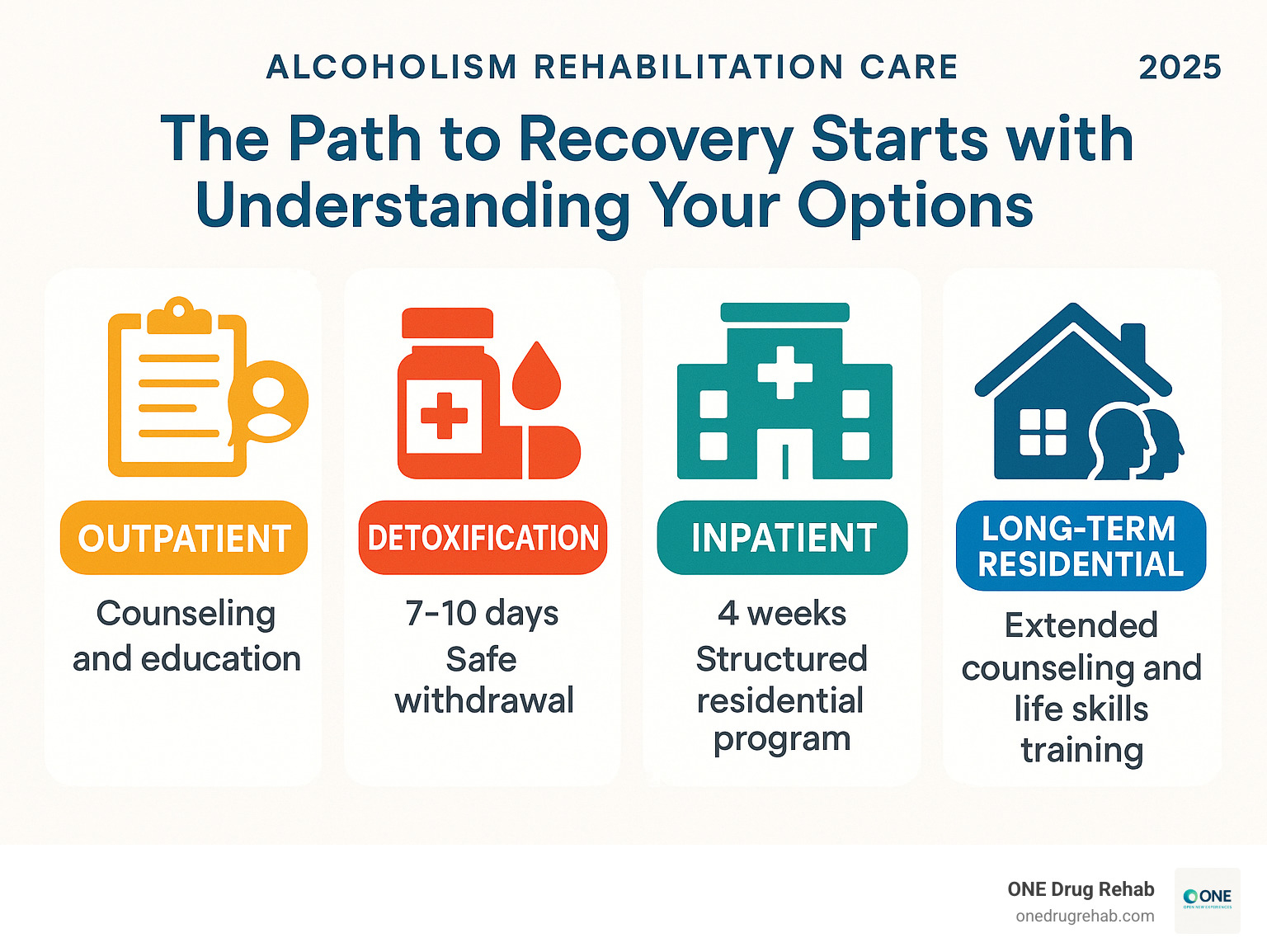
Types of Alcoholism Rehabilitation Programs:
- Inpatient/Residential: 24/7 care in a facility (30-90+ days)
- Outpatient: Treatment while living at home (varying intensity levels)
- Detoxification: Medically supervised withdrawal (2-7 days)
- Intensive Outpatient (IOP): Multiple sessions per week
- Partial Hospitalization: Day treatment programs
Key Treatment Components:
- Medical detox and withdrawal management
- Individual and group therapy
- Medication-assisted treatment
- Care for co-occurring mental health disorders
- Aftercare and relapse prevention planning
Alcohol is the most used substance in Canada, with nearly one in five Canadians drinking excessively. The consequences are severe: 95% of non-treated alcoholics die from their addiction an average of 26 years earlier than they would otherwise.
However, recovery is absolutely possible. Alcohol addiction is a treatable illness that changes the brain, requiring medical and therapeutic intervention, not just willpower. Modern rehabilitation programs use evidence-based treatments that go far beyond the traditional options many people expect. This guide will walk you through finding the right program for your specific needs.
Alcoholism rehabilitation programs definitions:
- addiction recovery success rates
- success rate of rehab for drugs
- what percentage of heroin addicts recover
Understanding the Core Components of Alcohol Treatment
Alcohol addiction is a complex illness that changes how the brain works. Because an addict’s brain is a changed brain, addiction has rewired neural pathways, making it incredibly difficult to simply stop drinking without help. Effective alcoholism rehabilitation programs use professional, evidence-based methods that combine therapy and, when appropriate, medication. The best programs customize treatment, as each person’s path to recovery is unique. You can learn more about the scientific research behind these treatment options from the National Institute on Alcohol Abuse and Alcoholism.
The Critical First Step: Medically Supervised Detox
Quitting alcohol abruptly after heavy use can be dangerous. The brain remains in a hyper-alert state, leading to withdrawal symptoms like anxiety, tremors, and nausea. In severe cases, withdrawal can cause life-threatening seizures, hallucinations, or delirium tremens (DTs).
For this reason, anyone who drinks heavily should not try to quit without medical supervision. Medically supervised detox ensures safety and comfort while the body adjusts. Professionals manage withdrawal symptoms, often using medications to prevent dangerous complications. The process typically takes 2 to 10 days.
Detox is only the first step. It stabilizes the body, but the psychological work of recovery—addressing the root causes of drinking and building a sober life—begins after detox is complete.
Addressing Co-Occurring Disorders
An estimated 50% of people with a substance use disorder also have a co-occurring mental illness like depression, anxiety, PTSD, or bipolar disorder. Often, alcohol is used to self-medicate the symptoms of these conditions. This is known as a dual diagnosis.
Treating one condition without addressing the other is rarely effective. The most successful alcoholism rehabilitation programs offer integrated care, where a team of specialists treats both the addiction and the mental health condition simultaneously. When seeking treatment, look for a program that screens for and provides comprehensive care for co-occurring disorders. You can find more information at our Co-occurring Disorder Treatment page.
The Role of Medications in Recovery
Medication-assisted treatment (MAT) combines FDA-approved medications with counseling and therapy to support recovery. These medications are not a substitute for addiction but are tools to help the brain heal and reduce the risk of relapse.
-
Naltrexone (pills or a monthly injection called Vivitrol) blocks the rewarding effects of alcohol, which can significantly reduce cravings.
-
Acamprosate (Campral) helps restore the chemical balance in the brain that is disrupted by chronic drinking, easing the physical and emotional distress of post-acute withdrawal.
-
Disulfiram (Antabuse) creates an unpleasant physical reaction (nausea, headache, vomiting) if alcohol is consumed, acting as a strong deterrent.
These medications are most effective as part of a comprehensive treatment plan that includes therapy and ongoing support, providing a stable foundation for building a sober life.
Navigating the Landscape of Alcoholism Rehabilitation Programs
After detox, the next step is choosing a treatment program. Today’s alcoholism rehabilitation programs offer more options than ever, designed to meet people at different stages of their recovery journey. The American Society of Addiction Medicine (ASAM) provides criteria to help match individuals with the appropriate level of care, from flexible outpatient services to intensive residential treatment.
There is no single approach that fits everyone. Some people need 30-day programs, while others require 60, 90 days, or longer to build a solid foundation for sobriety. The key is finding what works for your unique situation.
Inpatient vs. Outpatient Programs: Which is Right for You?
Choosing between inpatient (residential) and outpatient treatment is a major decision. Both are effective but serve different needs.
Inpatient programs require you to live at the facility, providing a safe, structured environment focused entirely on recovery. This includes 24/7 medical and emotional support, daily therapy, and removal from environmental triggers. The community aspect of living with peers in recovery is also highly beneficial. Inpatient care is often recommended for those with severe alcohol use disorder (AUD), co-occurring conditions, or an unstable home environment. Costs for a 30-day program typically start around $6,000 and can go up to $20,000, with longer stays costing more.
Outpatient programs allow you to live at home and attend treatment sessions, offering the flexibility to maintain work, school, or family commitments. This model is more cost-effective, with 90-day programs often starting around $5,000. Outpatient care allows for the immediate application of coping skills in real-world situations and is suitable for individuals with milder AUD, a stable home life, and strong motivation.
| Feature | Inpatient (Residential) | Outpatient |
|---|---|---|
| Environment | Live at facility, 24/7 supervision | Live at home, attend sessions |
| Intensity | Highly intensive, immersive | Flexible, varying intensity (IOP, PHP) |
| Cost | Generally higher (room, board, intensive care) | Generally lower |
| Flexibility | Limited, full-time commitment | High, allows for work/family |
| Support | Constant, peer community within facility | Relies on external support, home environment |
| Suitability | Severe AUD, co-occurring disorders, unstable home environment | Milder AUD, stable home, strong motivation, need for flexibility |
For more details on flexible treatment, see our page on Outpatient Alcohol Rehab Programs.
Specialized Treatment Centers
Modern alcoholism rehabilitation programs have evolved to serve diverse populations with unique needs, recognizing that a one-size-fits-all approach is ineffective.
- Gender-specific programs for men or women create safe spaces to address issues like trauma and societal pressures.
- Luxury facilities provide high-end amenities alongside clinical care, allowing clients to focus on recovery in a comfortable setting.
- Faith-based programs integrate spiritual principles and religious teachings with evidence-based therapies.
- Executive rehab caters to professionals, offering amenities like private workspaces to help them stay connected to their careers.
- LGBTQ+ affirming care provides a supportive environment that addresses the unique challenges faced by sexual and gender minorities.
- Programs for seniors focus on age-related health concerns, prescription drug interactions, and social isolation.
Finding a specialized program where you feel understood can significantly improve the treatment experience. Explore these options further at Types of Addiction Treatment.
Therapeutic Approaches: The Heart of Healing
Therapy is the core of any effective alcoholism rehabilitation program. Through individual, group, or family counseling, individuals gain insight into their addiction, develop coping skills, and address the underlying causes of their alcohol use, building a foundation for lasting sobriety.
Evidence-Based Behavioral Therapies
Modern addiction treatment relies on therapies proven effective by scientific research. These approaches help individuals change the thought patterns and behaviors that lead to drinking.
- Cognitive Behavioral Therapy (CBT): Helps identify and change negative thought patterns and behaviors, teaching skills to manage triggers.
- Dialectical Behavior Therapy (DBT): Teaches skills in mindfulness, distress tolerance, emotion regulation, and interpersonal effectiveness, often for co-occurring disorders.
- Rational Emotive Behavior Therapy (REBT): Helps individuals replace irrational beliefs that lead to self-defeating behaviors with healthier thoughts.
- Motivational Interviewing (MI): A client-centered approach that helps resolve ambivalence and strengthen internal motivation for change.
- Matrix Model (MM): A structured, comprehensive approach combining various therapies, family education, and 12-step facilitation.
- Contingency Management (CM): Uses incentives and rewards for positive behaviors, such as maintaining sobriety.
These therapies provide practical tools for navigating the challenges of recovery.
The Rise of Holistic and Alternative Therapies
Many alcoholism rehabilitation programs now include holistic therapies that treat the whole person—mind, body, and spirit. These approaches focus on the mind-body connection to reduce stress, improve emotional regulation, and promote overall well-being.
- Yoga and Meditation: Promote mindfulness, reduce stress, and foster a sense of calm.
- Art and Music Therapy: Provide a creative outlet for processing emotions and building self-esteem.
- Equine Therapy: Interactions with horses teach responsibility, empathy, and self-awareness.
- Acupuncture and Massage: Can help alleviate physical discomfort, reduce cravings, and promote relaxation.
When used alongside conventional treatment, these therapies can significantly improve the recovery journey. You can learn more about these approaches in our guide to Holistic Treatment Programs.
Finding and Paying for Quality Care
Seeking help for alcohol addiction is a courageous decision. While finding the right treatment can feel overwhelming, quality care is available, and there are many options for funding it. Taking that first step is key, even if you feel hesitant—about 60% of individuals may not initially want to go to rehab.

How to Find Accredited Alcoholism Rehabilitation Programs
When searching for alcoholism rehabilitation programs, accreditation is a key indicator of quality and safety. Look for credentials from respected bodies like The Commission on Accreditation of Rehabilitation Facilities (CARF) and The Joint Commission. These signify that a facility meets high standards for patient care.
Beyond accreditation, ensure the facility is licensed by the state. It’s also vital to inquire about the qualifications of the staff. A quality program will have a diverse team of credentialed professionals, such as licensed therapists, board-certified physicians, and certified addiction counselors.
Don’t hesitate to ask questions about treatment philosophy, therapies offered, and aftercare planning. Reading patient reviews can also provide insight. The goal is to find a facility where you feel confident in the care you will receive. For more details, see our guide on Rehab Accreditation Standards.
Understanding the Costs and Payment Options for Alcoholism Rehabilitation Programs
Cost is a major concern for many, but treatment can be affordable. Prices for alcoholism rehabilitation programs vary widely. Outpatient programs typically cost between $5,000 and $10,000 for a 90-day program. Inpatient rehab for 30 days usually runs from $6,000 to $20,000, while 60- or 90-day programs can range from $12,000 to $60,000.
Health insurance can significantly offset these costs. The Affordable Care Act requires most insurance plans, including private insurance, Medicaid, and Medicare, to cover substance use treatment. Coverage varies by plan, so it’s important to check your specific benefits.
If you lack adequate insurance, other options exist. The Substance Abuse and Mental Health Services Administration (SAMHSA) offers grants, and many facilities provide sliding scale fees based on income or offer payment plans. Don’t let cost be a barrier to getting the help you need. Explore our guide on Addiction Treatment Without Insurance for more information.
The cost of treatment is an investment in your health and future, far outweighed by the ongoing costs of addiction.
Life After Rehab: Ensuring Long-Term Success
Completing an alcoholism rehabilitation program is a major achievement, but it marks the beginning of a lifelong recovery journey. Addiction is a chronic condition that requires ongoing management, much like diabetes or heart disease. With the right aftercare and support, long-term recovery is entirely achievable. Learn more about what to expect in our guide to addiction recovery success rates.
Transitioning from the structured environment of rehab back to daily life can be challenging. This is why a solid aftercare plan is essential for navigating triggers and maintaining sobriety.
The Importance of Aftercare and Ongoing Support
Before leaving treatment, you should have a comprehensive aftercare plan. This roadmap for maintaining sobriety may include several components:
- Sober living homes provide a structured, supportive environment that bridges the gap between intensive treatment and independent living.
- Alumni programs, like the one-year of group therapy offered by EHN Canada to its graduates, keep you connected to a supportive community.
- Continued therapy helps you steer life’s stressors without returning to alcohol.
- Relapse prevention planning involves identifying personal triggers and creating a concrete plan to manage them effectively.
Building a Strong Support System
Building a strong support network is essential for long-term success, as recovery can sometimes feel isolating.
Family therapy helps heal relationships damaged by addiction and teaches healthy communication. Many programs offer family components because recovery is more successful when loved ones are involved. Learn more about how treatment can help at rehab for families.
Peer support groups offer understanding from others with shared experiences. There are several options available:
- Alcoholics Anonymous (AA) is a well-known 12-step program that has helped millions. You can find local meetings at AA.org.
- SMART Recovery uses a science-based, self-empowerment approach to manage cravings and make healthy choices.
- LifeRing Secular Recovery is a non-religious, abstinence-based group focused on personal responsibility and peer support.
Finding a community where you feel understood is key. Trying different groups can help you find the right fit. Asking for help is a sign of strength, and leaning on others is a vital part of a strong recovery.
Frequently Asked Questions about Alcoholism Rehabilitation
Deciding to seek help for yourself or a loved one brings up many questions. Here are answers to some of the most common concerns about alcoholism rehabilitation programs.
How do I know if I or a loved one needs an alcohol rehab program?
It can be difficult to recognize when professional help is needed. Key warning signs include:
- Inability to quit or cut down: Despite repeated attempts and promises, you find yourself unable to control your drinking.
- Negative consequences: Alcohol use continues despite causing problems with your health, relationships, job, or finances.
- Increased tolerance: You need to drink more alcohol to achieve the same effect.
- Withdrawal symptoms: You experience physical or psychological discomfort like anxiety, tremors, or nausea when you stop drinking. Experiencing withdrawal is a serious sign that medical supervision is needed.
- Concerns from others: Friends, family, or coworkers have expressed worry about your drinking habits.
If these signs are familiar, it is time to consider professional help.
What is a typical day in an inpatient rehab like?
Inpatient alcoholism rehabilitation programs are structured to create a healing and supportive community. While schedules vary, a typical day is organized to provide routine and purpose after the chaos of addiction.
Days usually start early with breakfast, followed by a mix of therapeutic activities. A daily schedule often includes:
- Group therapy: Sessions focused on addiction education, coping skills, and peer support.
- Individual counseling: One-on-one time with a therapist to address personal issues and develop a recovery plan.
- Educational workshops: Classes on topics like the science of addiction, nutrition, and stress management.
- Holistic activities: Yoga, meditation, art therapy, or fitness classes.
- Recreation and free time: Time for personal reflection, journaling, or connecting with peers.
Evenings may involve more group activities or 12-step meetings before a set bedtime to restore healthy sleep patterns.
Can I be forced to go to rehab?
While treatment is most effective when voluntary, there are legal situations where it can be mandated. The options vary by location and circumstance.
- Involuntary commitment laws (like the Marchman Act in some states) allow family members to petition a court for mandatory treatment if a person is a danger to themselves or others. This requires a legal process and clear evidence of harm.
- Court-ordered treatment is more common and may be required as part of a sentence for alcohol-related offenses, such as a DUI, as an alternative to jail time.
- A professional intervention is a structured process where family and friends, guided by an interventionist, confront the individual, express their concerns, and present treatment as a solution. The goal is to motivate the person to accept help voluntarily.
Even if someone enters treatment reluctantly, the supportive environment and clarity gained from sobriety can often lead to genuine motivation for change.
Conclusion
Taking the first step toward recovery from alcohol use disorder is a courageous and life-changing decision. This guide has explored the comprehensive landscape of alcoholism rehabilitation programs, from the necessity of medically supervised detox to the variety of therapeutic approaches and levels of care available.
We’ve seen that addiction is a treatable brain disease and that modern medicine offers medications to support recovery. Whether you need the 24/7 structure of inpatient care or the flexibility of an outpatient program, there is a path that fits your unique needs. Specialized centers ensure that everyone can find a supportive environment.
Effective treatment is built on evidence-based therapies like CBT, complemented by holistic practices that heal the mind, body, and spirit. While practical concerns like cost can feel like barriers, options like insurance, sliding scale fees, and grants make care accessible.
Most importantly, recovery is an ongoing journey. A strong aftercare plan, continued therapy, and a robust support system—including peer groups like Alcoholics Anonymous—are the cornerstones of lasting success.
The hopeful truth is that recovery is possible. Treatment works, and you do not have to face this journey alone. Seeking help is a sign of strength.
ONEDrugRehab.com provides a comprehensive directory to help you research and compare rehab centers that fit your specific needs. We’re here to help you find the right program and take that crucial first step toward the healthy, sober life you deserve.