
Understanding the Path to Recovery
How rehab works is a question that weighs heavily on the minds of millions facing addiction. If you’re reading this, you or someone you care about may be at a crossroads—acknowledging addiction and considering treatment, but feeling overwhelmed by the unknown.
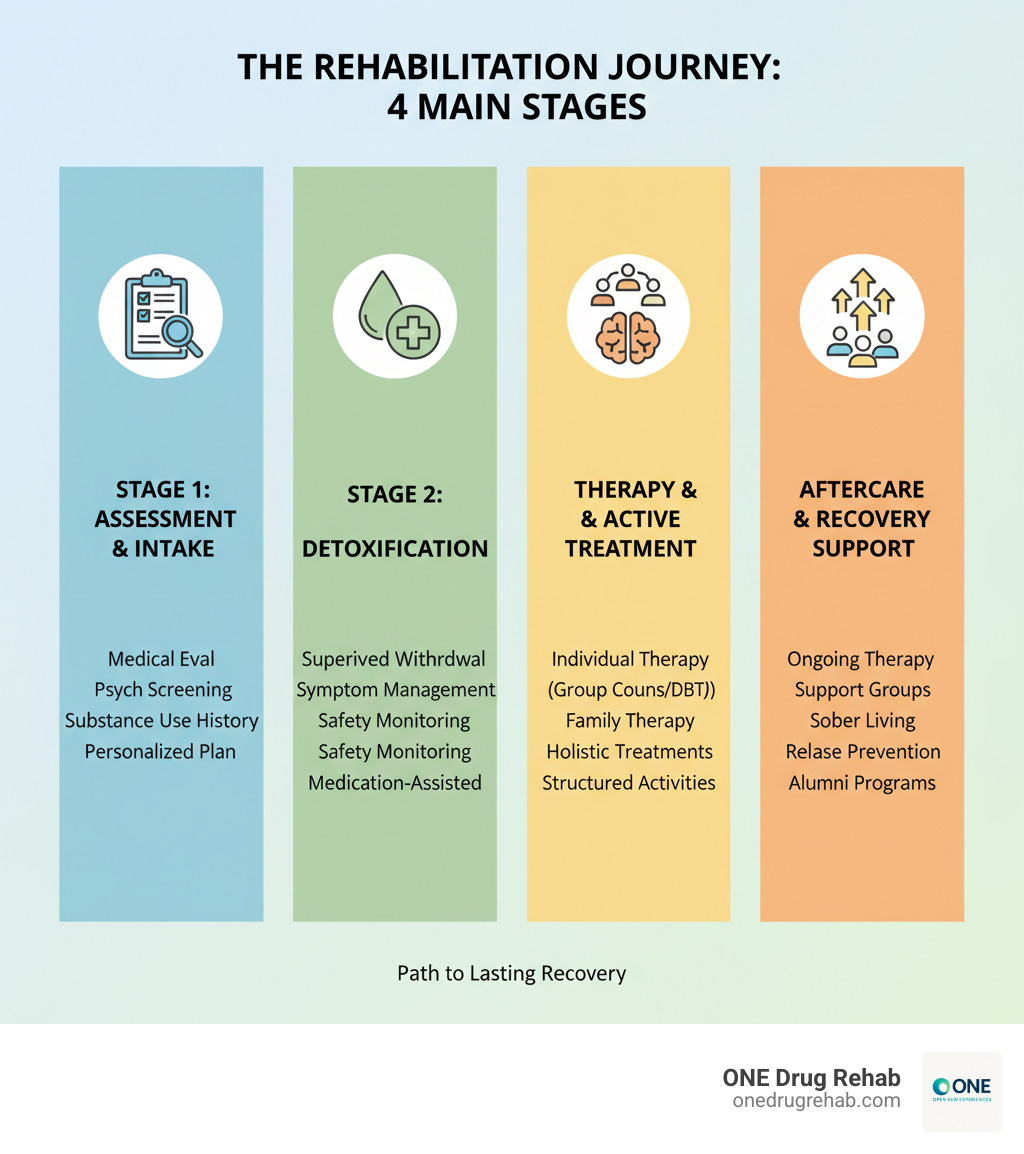
Here’s the quick answer: Rehab works through a structured, four-stage process designed to help individuals safely stop using substances and build the skills needed for long-term recovery:
- Assessment – Medical and psychological evaluation to create a personalized treatment plan
- Detoxification – Safely removing substances from the body under medical supervision
- Therapy and Treatment – Addressing the psychological, emotional, and behavioral aspects of addiction through various therapeutic approaches
- Aftercare – Ongoing support and relapse prevention strategies for sustained sobriety
The statistics are sobering: more than 48 million people were in need of substance use treatment in 2023. Yet only a fraction receive the help they need, often because the rehab process feels intimidating or mysterious.
This guide breaks down exactly how rehabilitation works—from that first phone call to long-term recovery support. We’ll walk through each stage of treatment, explain the difference between inpatient and outpatient programs, and show you what a typical day in rehab actually looks like.
The unknown can be scary. But knowledge about the process can make the journey to recovery feel less overwhelming and more manageable. Whether you’re researching for yourself or a loved one, understanding how rehab works is the first step toward making an informed decision about treatment.
Recovery is possible. Let’s explain the process together.
Starting the Journey: The Intake and Assessment Process
Taking that first step toward treatment can feel overwhelming. You might be wondering what happens when you actually reach out for help, or whether you’ll be judged for your situation. Here’s the truth: the intake and assessment process is designed to be supportive, not intimidating. Think of it as the beginning of a conversation about how rehab works for your specific needs.

Your first contact with a treatment facility is usually a confidential consultation, often just a phone call. This is your chance to ask questions without commitment—about the program, the costs, what to expect. It’s also when the facility starts to understand what you’re dealing with and whether they can help.
The assessment that follows is absolutely essential. No two people experience addiction the same way, which means no two treatment plans should look identical either. The purpose of this evaluation is to create a personalized roadmap for your recovery—one that addresses your physical health, mental wellbeing, and the specific circumstances that brought you here.
During the medical evaluation, a healthcare professional will conduct a physical exam to assess your overall health. They’ll look for any complications from substance use and may run drug and alcohol tests. This isn’t about catching you in a lie—it’s about understanding exactly what your body has been through so they can keep you safe during treatment.
The psychological screening goes deeper into your mental and emotional health. A counselor or clinician will sit down with you for an in-depth conversation about your mental health history, any trauma you’ve experienced, and the feelings or situations that fuel your substance use. This part matters tremendously because addiction rarely exists in isolation. In fact, over 70% of adults who began treatment for addiction between 2022 – 2023 also required treatment for a co-existing mental health condition. This is why modern treatment centers focus on integrated care that addresses both addiction and mental health together.
Your substance use history is another crucial piece of the puzzle. The team will ask about which substances you’ve used, how long you’ve been using them, how often, and whether you’ve tried to quit before. They’ll also want to know about your personal life—your living situation, job, relationships, and who you can count on for support. All of this information helps paint a complete picture of where you are and what you need.
Here’s something important: honesty is absolutely key during this process. We understand the instinct to downplay your substance use or hide certain details out of shame or fear. But the assessment is confidential, and the more truthful you are, the better equipped the treatment team will be to help you. Think of it this way—you wouldn’t hide symptoms from a doctor treating a broken bone. Addiction deserves the same honesty.
The assessment also plays a practical role in figuring out how to pay for treatment. The information gathered helps determine what level of care you need, which is essential for insurance approval. If you’re wondering whether your insurance will cover rehab, you can often verify your benefits directly through resources like our Rehab Insurance Verification page.
One last thing: the assessment isn’t a one-and-done deal. As you move through treatment, the clinical team will continue to check in and adjust your plan based on how you’re progressing. Recovery isn’t a straight line, and your treatment plan shouldn’t be rigid either. This ongoing assessment ensures that what you’re receiving is actually working—and if it’s not, changes can be made.
This initial phase is the foundation of everything that comes next. It might feel like a lot of questions and evaluations, but each piece of information helps build a treatment plan that’s truly yours.
The Core Treatment Process: How Rehab Works
Once the assessment is complete and a personalized treatment plan is in place, you’ll move into the core treatment phase. This is where the real work of recovery begins—where you’ll not only safely end substance use but also build the essential skills for a healthier, more fulfilling life.
Understanding how rehab works at this stage means recognizing that treatment isn’t just about stopping drugs or alcohol. It’s about healing your mind, body, and spirit through detoxification, intensive therapy, and a carefully structured daily routine designed to support your change.
The statistics tell us why this comprehensive approach matters: more than 48 million people were in need of substance use treatment in 2023. Those who receive proper treatment through these core phases have the best chance at lasting recovery.
Stage 1: Medically Supervised Detoxification
For many, the first critical step in the recovery journey is detoxification, or detox. This is simply the process where your body rids itself of drugs or alcohol. While it sounds straightforward, it’s actually a vital medical stage, especially for substances like alcohol, benzodiazepines, and opioids, which can cause severe and potentially dangerous withdrawal symptoms.
What is detox? Think of it as hitting the reset button on your body’s chemistry. After prolonged substance use, your body has adapted to function with that substance present. When you suddenly stop, your system needs time to readjust, and this adjustment period can be physically uncomfortable—and sometimes medically dangerous.
Why is detox important? Attempting to detox on your own, especially from certain substances, can be extremely risky and even life-threatening. Alcohol withdrawal, for example, can cause seizures or delirium tremens (DTs), a potentially fatal condition. Medical supervision ensures your safety and comfort throughout this challenging period.
During detox, medical teams monitor your vital signs around the clock, manage painful or uncomfortable withdrawal symptoms, and can administer medications to ease the process. This is often referred to as Medication-Assisted Treatment (MAT), which uses controlled substances to help manage withdrawal and cravings safely. The timeline varies by substance—alcohol detox typically takes about 9 days, while cocaine detox may be achieved in 3-4 days, though symptoms can linger for up to four weeks.
Detox facilities can be stand-alone or part of a full-service rehab center. If you’re looking for less intensive options that allow you to maintain work or family commitments, some facilities offer Outpatient Detox Programs, where you receive medical support while living at home.
Detox is only the first step. This is crucial to understand. While detox addresses the physical dependence, it doesn’t tackle the psychological, emotional, or behavioral aspects of addiction. Think of it as clearing the ground before you can start building a new house. For lasting recovery, the next stage—therapy—is absolutely indispensable.
The Heart of Healing: Therapies and Treatments in Rehab
With your body stabilized, the focus shifts to what we call the heart of healing: therapy and counseling. This is where you’ll explore the root causes of your addiction, develop coping mechanisms, and learn to live a life free from substance dependence. It’s often during this phase that real breakthroughs happen—those “aha” moments when things finally start to make sense.
Individual therapy provides a safe, confidential space to discuss personal issues, trauma, and triggers with a trained counselor. This one-on-one time is invaluable for addressing the unique circumstances that contributed to your addiction. Two of the most effective approaches are Cognitive Behavioral Therapy (CBT), which helps you identify and change negative thought patterns and behaviors that contribute to substance use, and Dialectical Behavior Therapy (DBT), which focuses on emotional regulation, distress tolerance, and mindfulness—particularly beneficial for those with intense emotional experiences or trauma.
Group therapy provides something equally powerful: the realization that you’re not alone. Sitting in a circle with peers facing similar struggles creates a sense of community that many describe as transformative. You’ll offer mutual support, share insights, and hold each other accountable. This camaraderie helps reduce the isolation that often accompanies addiction and shows you that recovery is possible—because you’ll see others doing it right alongside you.
Family therapy recognizes an important truth: addiction impacts everyone around you. These sessions help repair damaged relationships, improve communication, and educate loved ones about addiction and recovery. Family members learn to address codependency and enabling behaviors, while you work together to rebuild trust and create a healthier support system for your long-term recovery.
One of the most critical aspects of modern rehab is Co-occurring Disorder Treatment. Many individuals struggling with addiction also have co-existing mental health conditions like anxiety, depression, or PTSD. In fact, over 70% of adults in treatment have a co-occurring mental health condition. Integrated treatment for both addiction and mental health is vital for successful long-term recovery—you can’t treat one without addressing the other.
Beyond traditional talk therapy, many rehabs incorporate Holistic Drug Treatment approaches to promote overall well-being. These might include Art Therapy Addiction programs where you process emotions through creative expression, or practices like yoga, meditation, and mindfulness for stress reduction and self-awareness. Nutritional counseling and fitness programs help restore physical health, while some facilities even offer equine therapy or nature therapy for unique healing experiences.
The goal of these therapies is to equip you with a robust toolkit of coping skills, self-awareness, and emotional regulation techniques. You’ll learn to identify triggers before they catch you off guard, manage stress without substances, and start building a fulfilling life in recovery—one that feels worth maintaining.
A Day in the Life: What to Expect in a Rehab Facility
One of the biggest unknowns for many entering rehab is what a typical day actually looks like. Will you be bored? Overwhelmed? Constantly in therapy? The reality is that residential (inpatient) rehab offers a highly structured routine that, while it may feel unfamiliar at first, becomes a comforting framework for healing.
Morning activities typically start early with a healthy breakfast. Many facilities incorporate meditation or yoga to promote a relaxed state of mind and establish healthy habits right from the start. These practices help set a positive, centered tone for the day ahead—something that might feel strange if you’re used to waking up anxious or in withdrawal.
The bulk of your day will be dedicated to afternoon therapy sessions. This includes individual counseling, various group therapy sessions covering topics like psychoeducation, life skills training, and processing emotions, and potentially family therapy. You might also participate in specialized sessions for anger management, trauma work, or grief counseling. It sounds like a lot, but the variety keeps things engaging and addresses recovery from different angles.
Nutritional meals are provided throughout the day—regular, healthy food that supports your healing body and mind. Proper nutrition plays a bigger role in recovery than many people realize, helping to repair damage caused by substance use and stabilize your mood.
Free time is built into the schedule for personal reflection, journaling, reading, or engaging in recreational activities. Many rehabs offer amenities like gyms, art studios, or outdoor spaces for sports or quiet contemplation. This time helps you refind hobbies and learn to enjoy sober recreation—skills that will serve you well after treatment ends.
Evening meetings often include participation in 12-Step programs like Alcoholics Anonymous (AA) or Narcotics Anonymous (NA), either on-site or in the local community. These meetings foster sober relationships and provide ongoing peer support that extends beyond your time in rehab. You’ll start building a network of people who understand your journey.
Finally, facilities emphasize the importance of sleep. A proper sleep schedule is crucial for both physical and mental recovery, and rehabs create an environment conducive to restful sleep—often for the first time in years for many residents.
This structured routine minimizes opportunities for negative thinking or boredom, allowing you to fully immerse yourself in the healing process. It might feel regimented at first, but most people come to appreciate the stability it provides during a time of significant change. You’re building coping skills day by day, hour by hour, through this intentional structure. And importantly, you’re doing it with peer support all around you—people who understand exactly what you’re going through because they’re going through it too.
Choosing Your Path: Inpatient vs. Outpatient Rehab
When you’re ready to seek treatment, one of the most important decisions you’ll face is choosing between inpatient and outpatient rehab. Both paths can lead to successful recovery, but they offer vastly different experiences in terms of intensity, structure, and how they fit into your daily life.
Understanding how rehab works means recognizing that there’s no single “right” answer—the best choice depends entirely on your unique situation. The severity of your addiction, your home environment, work obligations, family responsibilities, and even your mental health all play a role in determining which program will give you the best chance at lasting sobriety.
Inpatient rehab (also called residential treatment) means you’ll live at the treatment facility full-time, typically for 30, 60, or 90 days. You’re completely immersed in a structured, supportive environment away from the triggers and stressors of everyday life. This intensive level of care is ideal if you’re dealing with severe addiction, have tried outpatient treatment without success, or don’t have a stable, supportive home environment. The 24/7 medical supervision is particularly important if you’re detoxing from substances like alcohol or benzodiazepines, where withdrawal can be dangerous. Learn more about Inpatient Rehab for Drugs.
Outpatient rehab, on the other hand, allows you to live at home and maintain your daily responsibilities while attending scheduled treatment sessions. You’ll visit the facility several times a week for therapy and counseling, then return home in the evenings. This flexibility makes outpatient care ideal if you have a strong support system at home, work or family obligations you can’t leave, or a less severe addiction. It’s also often used as a step-down after completing inpatient treatment. For a comprehensive overview, check out our Outpatient Rehab Program Ultimate Guide.
Within outpatient care, there are different levels of intensity. Intensive Outpatient Programs (IOP) require you to attend treatment for several hours a day, multiple days per week—usually around 9-12 hours weekly. Partial Hospitalization Programs (PHP) are even more intensive, often requiring 5-6 hours of treatment per day, five days a week, though you still sleep at home. These programs bridge the gap between full residential care and traditional outpatient treatment.
Here’s a quick comparison to help you visualize the differences:
| Feature | Inpatient Rehab | Outpatient Rehab |
|---|---|---|
| Living Arrangement | Live at the facility 24/7 | Live at home, attend scheduled sessions |
| Intensity of Care | High – constant supervision and support | Moderate to high – regular sessions with time between |
| Ideal Candidate | Severe addiction, unstable home environment, need for medical detox | Mild to moderate addiction, strong support system, work/family obligations |
| Flexibility | Low – full commitment required | High – can maintain daily responsibilities |
The honest truth is that inpatient programs often provide the best outcomes for severe addictions because they remove you from your triggers entirely and provide round-the-clock support. But that doesn’t mean outpatient treatment isn’t effective—for many people with less severe addictions or strong home support, it works beautifully and allows them to maintain their lives while getting help.
Understanding How Rehab Works with Specialized Programs
Beyond choosing between inpatient and outpatient, you’ll find that many facilities offer specialized programs designed for specific populations. These programs recognize that different groups face unique challenges in recovery and benefit from custom approaches.
Teens and adolescents need age-appropriate treatment that addresses developmental issues and family dynamics. Working professionals might need flexible scheduling or executive programs that understand the pressures of high-stakes careers—our Inpatient Rehab for Professionals Guide explores these options in depth. Couples can attend treatment together, working on both individual recovery and relationship healing. Seniors benefit from programs that address age-related health concerns and life stage issues.
LGBTQ+ individuals often thrive in affirming environments where they can address addiction alongside issues of identity and discrimination. Some facilities even offer pet-friendly programs, recognizing that the comfort of a beloved companion can be crucial to healing—learn more at Pet Friendly Inpatient Rehab. Language barriers shouldn’t prevent anyone from getting help, which is why Spanish Speaking Rehab Centers and other multilingual programs exist.
These specialized programs aren’t just nice extras—they can significantly improve your chances of success by addressing the specific factors that contribute to your substance use. When you feel understood and supported in all aspects of your identity and circumstances, you’re more likely to engage fully in treatment and build lasting recovery.
The path you choose matters less than taking that first step. Whether you opt for the immersive experience of inpatient care or the flexibility of outpatient treatment, what’s most important is finding a program that fits your needs and gives you the best chance at building a life in recovery.