

Understanding Your Options: Why Choosing the Right Therapy Matters
Addiction therapy methods are evidence-based treatments that help individuals overcome substance use disorders through counseling and skill-building. Research shows that professional treatment significantly reduces substance use and improves quality of life, with outcomes comparable to managing chronic diseases like diabetes or hypertension.
Because addiction is different for every person, a custom treatment plan is essential. Key approaches include:
- Cognitive Behavioral Therapy (CBT)
- Dialectical Behavior Therapy (DBT)
- Motivational Interviewing (MI)
- Eye Movement Desensitization and Reprocessing (EMDR)
- Individual, Group, & Family Counseling
- Twelve-Step Facilitation
Factors like co-occurring mental health conditions, trauma, and the severity of substance use mean each person requires a personalized plan. The good news is that treatment works, and studies show that positive outcomes strongly correlate with staying in treatment for 90 days or more. People who complete comprehensive therapy often see improvements in their relationships, employment, and overall health.
This guide breaks down the most effective, research-backed therapy methods to help you understand your options and create a personalized recovery plan.
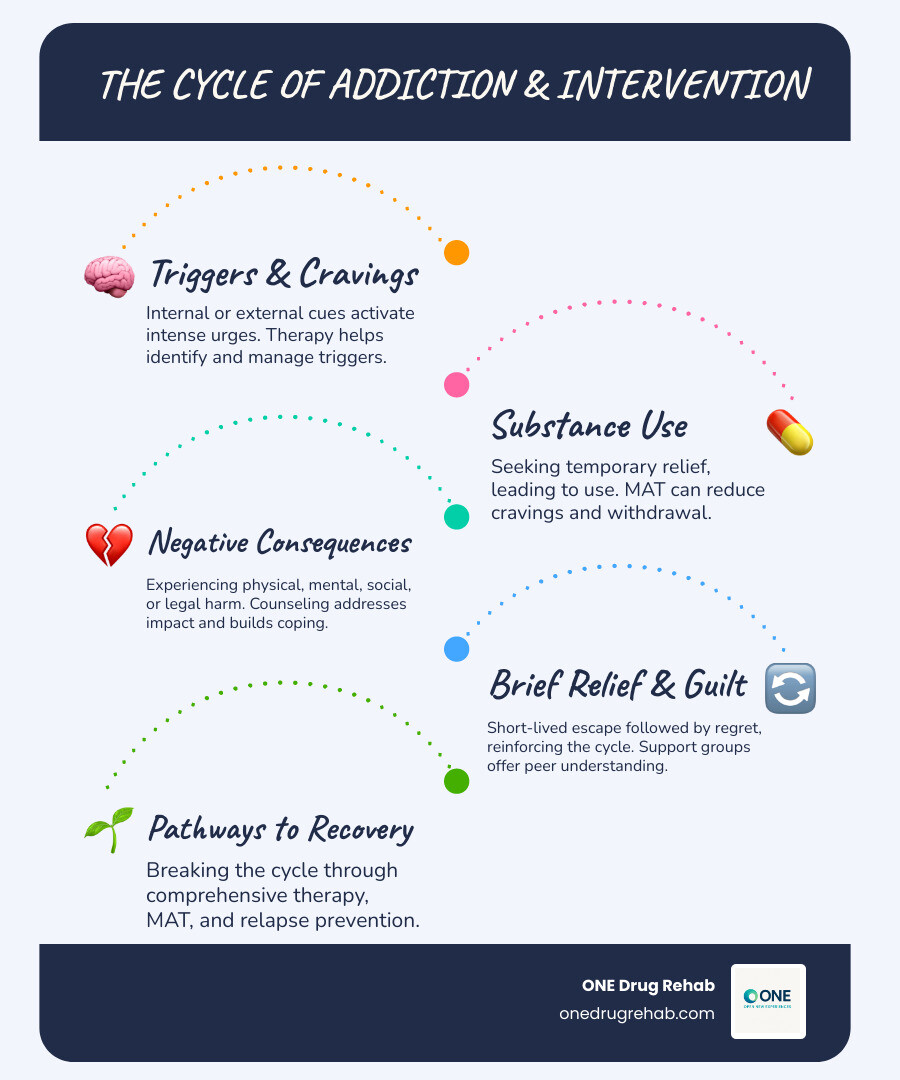
Core Evidence-Based Addiction Therapy Methods
Recovery from addiction requires professional guidance and a plan custom specifically to you. Decades of research have identified several addiction therapy methods that consistently help people break free from substance use. These proven interventions are used by treatment centers to help individuals change behaviors, build new skills, and create lasting recovery.
Most treatment centers rely on behavioral therapies because they address the root causes of addiction, whether it’s trauma, chronic stress, or other contributing factors.

Cognitive Behavioral Therapy (CBT)
Cognitive Behavioral Therapy is a cornerstone of addiction treatment, built on the idea that your thoughts, feelings, and behaviors are connected. By changing negative thought patterns, you can change how you feel and act.
In CBT, a therapist helps you identify triggers for substance use through functional analysis. You then build practical coping strategies to handle those triggers without turning to substances. CBT provides lifelong skills for managing stress and finding healthy alternatives to drug or alcohol use. Research shows the positive effects of CBT often increase even after treatment ends, with studies supporting its effectiveness for cannabis, cocaine, alcohol, and other substance use disorders. Scientific research on CBT continues to validate its use.
Dialectical Behavior Therapy (DBT)
Dialectical Behavior Therapy builds on CBT by adding skills for managing intense emotions. Originally for Borderline Personality Disorder, DBT is highly effective for individuals with co-occurring disorders, where addiction exists alongside conditions like depression or anxiety.
DBT teaches four core skills: Mindfulness to observe thoughts without judgment, distress tolerance to cope with discomfort, emotional regulation to manage intense feelings, and interpersonal effectiveness to improve communication and relationships. The therapy balances acceptance of difficult feelings with a commitment to positive change, supporting long-term recovery. For more details, see More on Dialectical Behavior Therapy.
Eye Movement Desensitization and Reprocessing (EMDR)
Trauma is a common driver of addiction, as unprocessed painful memories can fuel the need to self-medicate. Eye Movement Desensitization and Reprocessing is a therapy designed to help the brain heal from trauma.
In EMDR, you recall distressing memories while a therapist guides your eye movements (bilateral stimulation). This eight-phase process helps your brain reprocess traumatic memories, reducing their emotional charge. The link between PTSD and addiction is well-documented, and over 30 controlled studies have shown EMDR’s effectiveness in helping people move past trauma that fuels substance use. To learn more, visit What is EMDR?.
Motivational Interviewing (MI)
Ambivalence about change is a common barrier to recovery. Motivational Interviewing is a collaborative conversation designed to help you explore your own reasons for change and resolve this internal conflict.
An MI therapist acts as a guide, using empathy to understand your perspective and help you see the gap between your current behavior and your personal goals. The process avoids confrontation and instead works to build your internal motivation and self-efficacy—your belief that you can change. A condensed version, Motivational Improvement Therapy (MET), has shown strong results for alcohol use disorders. MI is often combined with other therapies to improve engagement. Learn more at Understanding Motivational Interviewing.
The Role of Individual and Group Counseling
Counseling is the foundation of most addiction therapy methods and comes in two essential forms.
Individual counseling provides a private, one-on-one space to explore personal factors driving your addiction. The trusting relationship you build with your counselor, or therapeutic alliance, is one of the strongest predictors of successful recovery.
Group counseling offers the powerful reminder that you are not alone. It reduces isolation, allows you to practice new social skills in a supportive environment, and provides accountability and diverse perspectives from peers on the same journey.

Family and Couples Therapy
Addiction is often called a “family disease” because it impacts everyone involved. Family and couples therapy brings loved ones into the recovery process to heal relationships, improve communication, and learn how to support recovery without enabling harmful behaviors.
Evidence-based approaches help family members understand addiction as a disease and provide a platform for setting healthy boundaries. Research shows that family therapy is particularly effective for adolescent substance use disorders, as a supportive home environment dramatically improves the chances of long-term success. For more information, see Substance abuse treatment and family therapy.
Other Important Addiction Therapy Methods
Several other approaches can improve recovery:
- Psychodynamic Therapy explores unconscious motivations and unresolved conflicts from the past that may drive substance use.
- Experiential Therapy uses hands-on activities like art, music, or adventure therapy to engage emotions non-verbally.
- Holistic Therapies such as yoga, meditation, and acupuncture promote overall well-being and stress reduction, which can decrease substance use.
- Twelve-Step Facilitation is a strategy that introduces individuals to support groups like Alcoholics Anonymous (AA) and Narcotics Anonymous (NA). It focuses on acceptance, surrender, and active involvement in the peer support community, which can be invaluable for long-term recovery. For a detailed manual, see the Twelve-step facilitation therapy manual.
Building a Comprehensive and Individualized Treatment Plan
There is no “one-size-fits-all” approach to overcoming addiction. Every person’s journey is shaped by their unique history, genetics, and environment, so the path to recovery must be just as personalized. Building a comprehensive treatment plan means matching the right services to your specific problems, including the substance used, addiction severity, and any co-occurring mental health conditions like depression or anxiety.
Someone with deep trauma might need EMDR alongside CBT, while a person with severe alcohol dependence may benefit from a combination of therapy and medication. Research consistently shows that treatment duration matters: people who stay in treatment for 90 days or more have significantly better outcomes. This gives you time to practice new skills, build healthy routines, and establish a strong support network.

Why There Is No Single “Most Effective” Therapy
The effectiveness of any addiction therapy method depends on how well it fits your particular situation. Addiction is a complex issue influenced by brain chemistry, past experiences, and mental health. The best approach is always personalized care.
Factors that shape your treatment path include:
- Substance type: Opioid addiction often responds well to medication and therapy, while cocaine dependence may see results with CBT alone.
- Personal history: A history of trauma may require trauma-focused approaches like EMDR.
- Severity of addiction: A mild disorder might be managed with outpatient therapy, while a severe addiction may require residential treatment.
Often, the specific therapy technique matters less than the relationship between you and your therapist. This “therapeutic alliance” is one of the most powerful predictors of success. For more information on various treatment options, check out our page on More info about treatment options.
Combining Therapy with Medication-Assisted Treatment (MAT)
For many people struggling with opioid or alcohol addiction, Medication-Assisted Treatment (MAT) is a game-changer. MAT combines FDA-approved medications with counseling and behavioral therapies for a “whole-person” approach. The medication addresses the physical side of addiction—cravings and withdrawal—while therapy addresses the psychological and behavioral aspects.
MAT medications work by reducing intense cravings, managing withdrawal symptoms, and normalizing brain chemistry. For opioid use disorder, common medications include methadone, buprenorphine (Suboxone), and naltrexone. For alcohol use disorder, options include naltrexone, acamprosate, and disulfiram. These are not a replacement for addiction but are medical tools that provide the stability needed to engage in the deeper work of recovery.
Research consistently shows that combining medication with psychotherapy improves outcomes, leading to higher rates of abstinence and better quality of life. To explore these options, Learn about MAT options.
Understanding the Levels of Care
Recovery is a journey through different stages, each requiring a different level of support. Understanding these levels of care helps you choose the right path.
- Detoxification: Medically supervised withdrawal to safely clear substances from the body. It addresses physical dependence but is not a standalone treatment.
- Inpatient/Residential Treatment: 24/7 care in a structured, substance-free facility. It’s ideal for severe addiction or unstable home environments. Longer stays, such as the recommended 90-day treatment duration, often provide the best foundation.
- Partial Hospitalization Program (PHP): Intensive therapy for several hours a day, multiple days a week, while living at home or in sober living.
- Intensive Outpatient Program (IOP): A step down from PHP, allowing you to maintain work or school responsibilities while receiving substantial therapeutic support.
- Standard Outpatient Treatment: The least intensive level, typically involving weekly therapy sessions for ongoing support.
- Sober Living Environments: Structured, substance-free residences that provide a supportive community during the transition back to independent living.
Your treatment intensity can and should change as your needs evolve. To find the right fit, you can Compare levels of care.
Core Strategies of Relapse Prevention Programs
Relapse can be part of the recovery journey, but it is not a failure. It’s a signal that your treatment plan may need adjustment. Relapse prevention (RP) programs are a critical part of addiction therapy methods, providing concrete skills to maintain long-term abstinence.
Core strategies include:
- Identifying Triggers: Pinpointing the internal (stress, anxiety) and external (people, places) cues that set off cravings.
- Developing Coping Skills: Learning healthy alternatives to use in high-risk situations, such as calling a sponsor, exercising, or practicing deep breathing.
- Managing Cravings: Using strategies like distraction and delay to ride out cravings, which are intense but temporary.
- Creating a Personalized Recovery Plan: Building a roadmap for handling slip-ups, including emergency contacts and steps to take when an urge is overwhelming.
- Cognitive Restructuring: Challenging and changing the distorted thoughts that rationalize substance use, such as “just one won’t hurt.”
RP is often woven into CBT and other therapies, empowering you with proactive tools to handle recovery’s challenges. For more insights, visit Relapse Prevention (RP).
Frequently Asked Questions about Addiction Therapy
When considering treatment, it’s natural to have questions. Here are straightforward answers based on what research shows.
What is the most effective therapy for addiction?
There is no single “most effective” therapy that works for everyone. The best addiction therapy methods are individualized, considering your specific substance, any co-occurring mental health conditions, personal history, and life circumstances.
That said, evidence-based practices like Cognitive Behavioral Therapy (CBT) and Motivational Interviewing (MI) consistently show strong outcomes. When psychotherapy is combined with pharmacotherapy (medication-assisted treatment), results are often even better, especially for opioid and alcohol use disorders. The quality of the relationship with your therapist—the therapeutic alliance—is also a powerful predictor of success.
How long does addiction treatment take?
The length of treatment varies. Addiction is a chronic condition, and recovery is a long-term process. The initial detoxification phase may last a few days to a week, but this only addresses physical withdrawal.
Research consistently shows that positive outcomes are strongly correlated with treatment lasting 90 days or more. This often involves continuous engagement across various levels of care, from inpatient to outpatient therapy and ongoing aftercare. Many people benefit from continued support for months or years to maintain their progress.
Is addiction therapy covered by insurance?
Yes, in most cases, addiction therapy is covered by insurance. The Mental Health Parity and Addiction Equity Act (MHPAEA) and the Affordable Care Act (ACA) mandate that most health plans provide mental health and substance use disorder benefits that are comparable to medical benefits.
However, the specifics—deductibles, co-pays, and in-network providers—vary by plan. We highly recommend verifying your benefits directly with your insurance provider before starting treatment. Treatment centers can often assist with this process.
If you’re concerned about costs, explore our resources on Rehab Cost Comparison, Addiction Treatment Without Insurance, Does Insurance Cover, Rehab Insurance Verification, and the Affordable Care Act to understand your options.
How to Find the Right Addiction Therapy for You
Finding the right addiction therapy methods for your unique journey is a pivotal step toward lasting recovery. While it can feel overwhelming, you don’t have to figure this out alone.

Recovery is absolutely possible. At ONEDrugRehab.com, our goal is to give you clear, unbiased information so you can make the best decision. As a third-party, non-affiliated resource, we don’t promote one facility over another.
Here’s how to start:
-
Consult a professional. Your doctor, a therapist, or an addiction specialist can help assess your needs, determine the right level of care, and identify any co-occurring conditions like depression or PTSD.
-
Assess your needs and preferences. Consider what environment feels safest for you. Do you prefer one-on-one or group settings? Is trauma-informed care a priority? Being honest about what you need is key.
-
Explore your options. Use reputable directories like ours at ONEDrugRehab.com to compare programs and learn about different therapy approaches. Look for accredited providers who use evidence-based practices like CBT and MI.
-
Verify your insurance coverage. Call your insurance company or ask a treatment center’s admissions team for help. Understanding the financial side upfront reduces stress later.
Taking the first step is often the hardest but most courageous part. You’re already here, learning about your options. Recovery isn’t just about stopping substance use; it’s about rebuilding your life and finding hope. With the right support and a therapeutic approach custom to your needs, you can get there.
We’re here to walk alongside you on this journey. Whether you’re just starting to explore treatment or are ready to reach out today, you’ll find the resources and guidance you need right here.
Find addiction therapy services near you