

The Journey to Whole-Person Recovery
A holistic treatment center takes a comprehensive approach to addiction recovery by addressing the mind, body, and spirit as interconnected parts of healing. Unlike traditional rehab programs that may focus primarily on stopping substance use, holistic centers treat the whole person and the underlying causes of addiction.
Key features of holistic treatment centers:
- Whole-person approach – Treats physical, mental, emotional, and spiritual aspects
- Natural therapies – Uses complementary methods like yoga, meditation, and acupuncture
- Individualized care – Creates personalized treatment plans based on each person’s unique needs
- Root cause focus – Addresses underlying trauma, stress, and imbalances that contribute to addiction
- Evidence-based integration – Combines traditional therapies (like CBT) with holistic modalities
- Co-occurring disorder support – Treats addiction alongside mental health conditions like depression and anxiety
This philosophy translates into a rich, multi-layered treatment experience. The whole-person approach means that physical healing through nutrition and fitness is given as much importance as mental healing through therapy. Emotional regulation is taught alongside spiritual exploration, creating a balanced foundation for recovery. The use of natural therapies complements this, offering gentle yet powerful ways to restore the body’s equilibrium. This can include everything from massage therapy to release physical tension to nutritional counseling that corrects biochemical imbalances caused by substance use.
By focusing on the root causes, these centers move beyond symptom management. Instead of just asking, “How do we stop the behavior?” they ask, “Why did the behavior start?” This deeper inquiry often uncovers unresolved trauma, chronic anxiety, or profound stress that substance use was attempting to medicate. Treatment is then custom to heal these core wounds, making relapse less likely.
Addiction affects every aspect of a person’s life. Research shows that approximately 40% of people with substance use disorders also have co-occurring mental health conditions. This complex reality requires a treatment approach that goes beyond just addressing the addiction itself. When addiction and a mental health disorder like depression or anxiety exist together, they can fuel each other, creating a cycle that is difficult to break. A holistic center provides integrated care that addresses both conditions simultaneously, understanding that healing one is critical to successfully managing the other.
Holistic centers recognize that lasting recovery happens when we heal the underlying imbalances that make someone vulnerable to addiction in the first place. As one treatment philosophy explains, true healing occurs when we “reclaim our minds, bodies, and souls by finding and maintaining balance in all aspects of our lives.”
The growing popularity of holistic approaches reflects a deeper understanding of addiction as a disease that requires comprehensive care. About 4 out of 10 adults in the United States now use some form of complementary and alternative medicine, and this trend continues to expand in addiction treatment settings as people seek more empowering and comprehensive paths to wellness.
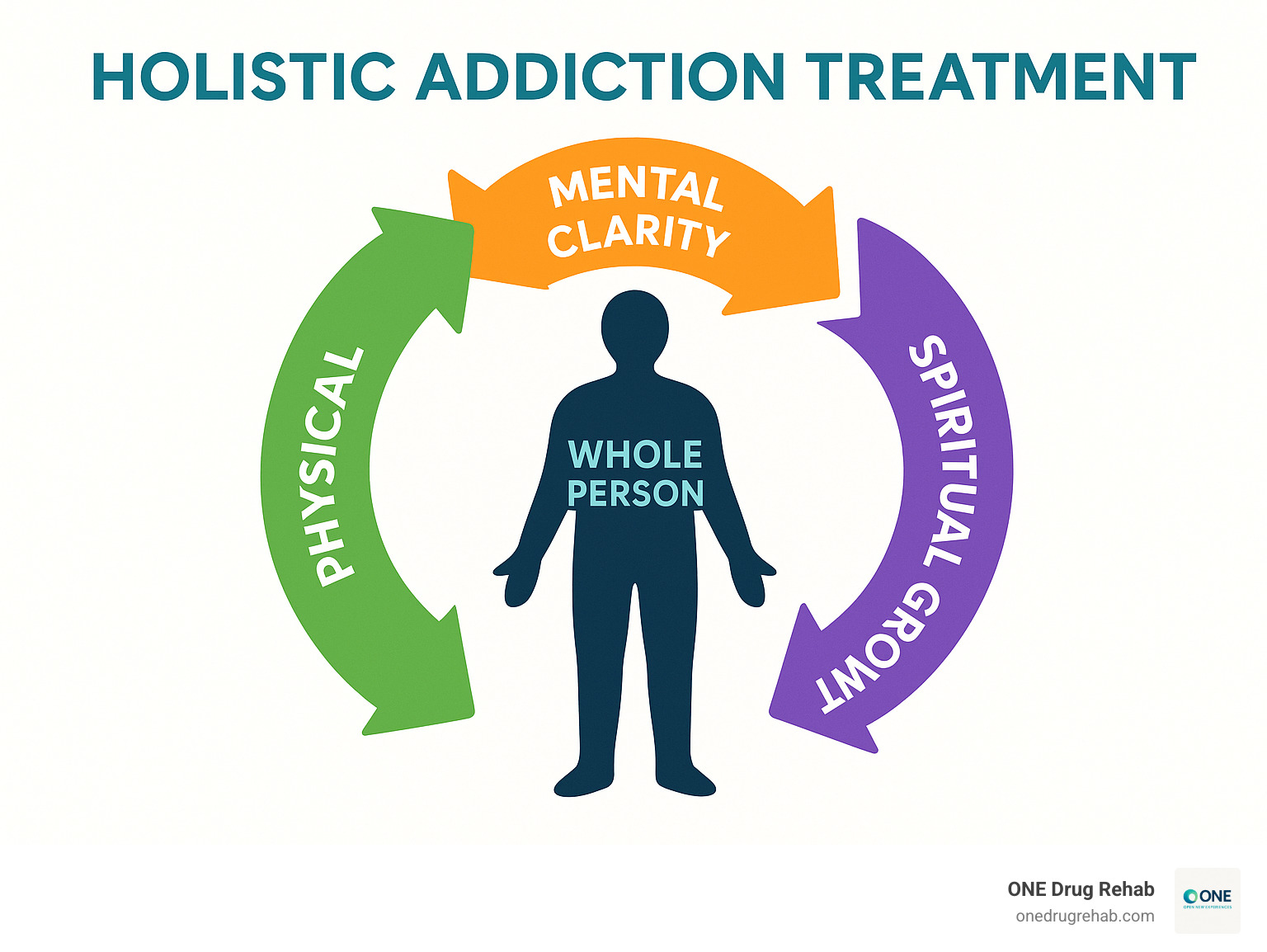
Simple holistic treatment center word guide:
What to Expect at a Holistic Treatment Center
Walking into a holistic treatment center feels different from the moment you arrive. There’s a sense of calm and possibility in the air, because these centers operate from a fundamentally different philosophy: you are more than your addiction.
While traditional rehab might focus primarily on stopping substance use through behavioral changes or medication, holistic centers take a much broader view. They see addiction as a complex disease that affects your mind, body, and spirit – and they believe lasting recovery requires healing all three areas together.
Think of it this way: if addiction has impacted every part of your life, shouldn’t your recovery address every part too? That’s exactly what whole-person healing is all about. Instead of just treating the symptoms of addiction, these centers dig deeper to find and heal the root causes that led to substance use in the first place.
Maybe you started using drugs to cope with trauma. Perhaps chronic stress or depression played a role. Or maybe there are biochemical imbalances affecting your brain chemistry. A holistic treatment center will explore all these possibilities and create a treatment plan that addresses your unique situation.
Individualized care isn’t just a buzzword here – it’s the foundation of everything they do. Your treatment team will spend time getting to know you as a person, not just as someone with an addiction. They’ll learn about your background, your strengths, your challenges, and your goals for recovery. This deep dive allows them to craft a program that resonates with you personally. For instance, a client with a history of trauma and anxiety might have a plan rich in trauma-informed yoga, EMDR (Eye Movement Desensitization and Reprocessing), and mindfulness, while another client struggling with depression and low self-worth might focus on CBT, nutritional therapy to boost mood, and trip therapy to build confidence.
This personalized approach means no two treatment plans look exactly the same. One person might benefit from yoga and nutritional therapy, while another thrives with art therapy and meditation. The beauty of holistic treatment is that it can be custom to fit who you are and what you need.
For more information about the various approaches available, you can explore different types of addiction treatment to better understand your options.
How Holistic Care Differs from Traditional Rehab
The differences between holistic and traditional rehab go much deeper than just the therapies offered. It’s really about two different ways of thinking about addiction and recovery.
Traditional programs often focus on managing symptoms – stopping the drinking, avoiding triggers, changing behaviors. These are important goals, but holistic centers believe they’re just the starting point. They want to understand why you started using substances and address those underlying issues, such as grief, social anxiety, or a lack of purpose, providing tools to heal these core problems.
While traditional rehab might rely heavily on medication-assisted treatment (MAT), holistic centers emphasize natural therapies that work with your body’s own healing abilities. This doesn’t mean they’re against medication when it’s needed; in fact, MAT can be a vital part of an integrated plan. However, the holistic goal is to use therapies like nutritional support, acupuncture, and exercise to reduce reliance on medication over time by restoring the body’s natural balance.
You’ll also notice a difference in how treatment is structured. Traditional programs often use standardized approaches where clients move through a set curriculum. Holistic centers create personalized treatment plans from day one, recognizing that your path to recovery will be unique to you. Your schedule and therapeutic activities are selected based on your specific needs, not a one-size-fits-all model.
Perhaps most importantly, holistic treatment addresses your spiritual needs alongside the physical and mental aspects. This doesn’t necessarily mean religion. Instead, it’s about helping you reconnect with your sense of purpose, values, and inner strength. It’s about answering the big questions: Who am I without my addiction? What gives my life meaning? This exploration can happen through meditation, time in nature, journaling, or creative expression, and many people find this spiritual component crucial for long-term recovery.
The Core Components: Healing Mind, Body, and Spirit
At the heart of every holistic treatment center is the understanding that true healing requires integrated therapies that work together seamlessly. You’re not just attending separate sessions for different problems – everything is connected and designed to support your overall wellness.
Physical wellness forms one crucial pillar of your recovery. Your body has been through a lot during active addiction, and it needs time and support to heal. This goes beyond basic health and digs into biochemical restoration. Nutritional therapy is key, as specific amino acids and vitamins can help repair neurotransmitter pathways damaged by substance use, reducing cravings and stabilizing mood. This is complemented by activities like yoga to rebuild the mind-body connection, massage therapy to release stored trauma and calm the nervous system, and even biofeedback to help you learn to regulate physiological responses like heart rate and muscle tension.
Mental clarity is another essential component. Addiction often clouds your thinking and makes it hard to process emotions in healthy ways. Through evidence-based therapies like cognitive behavioral therapy (CBT), you’ll learn to identify the automatic negative thoughts that lead to substance use and reframe them into healthier, more realistic ones. Mindfulness practices teach you to observe your thoughts and feelings without judgment, creating a crucial pause between an urge and an action.
Emotional regulation skills are woven throughout your treatment experience. Many people struggling with addiction never learned healthy ways to cope with intense feelings. Holistic centers often incorporate Dialectical Behavior Therapy (DBT), which provides practical skills in four key areas: mindfulness, distress tolerance, emotion regulation, and interpersonal effectiveness. You learn how to sit with difficult emotions without needing to escape them, a transformative skill for preventing relapse.
Spiritual growth rounds out the approach, helping you refind what gives your life meaning and purpose. This is a deeply personal journey and is not tied to any single religion. It might involve guided meditation, ecotherapy (healing through connection with nature), creative expression through art or music therapy, or exploring your personal values and beliefs in one-on-one sessions. The goal is to build a strong inner foundation of hope, self-worth, and connection to something larger than yourself.
To understand more about how addiction affects your overall health, you can learn about addiction’s effects on health from the National Institute on Drug Abuse.
The beauty of this integrated approach is that each component supports and strengthens the others. As your body heals and your brain chemistry balances, your mind becomes clearer. As you develop emotional skills, your spiritual connection deepens. It all works together to create a solid foundation for lasting recovery.