

Why Understanding Rehab Success Is Crucial
Rehab success rates are a primary concern when considering addiction treatment. Understanding if treatment works provides hope and direction for this life-changing decision.
Quick Answer: What Are Rehab Success Rates?
- Overall Success: 40-60% of people achieve sustained sobriety after completing treatment.
- Long-term Recovery: 75% of people who receive treatment eventually recover (CDC/NIDA study).
- Quality of Life: 86% report good or better health and quality of life at a 12-month follow-up.
- By Substance: Rates vary from 20-30% (meth) to 50-60% (alcohol).
- Key Factor: Success depends heavily on treatment completion, duration, and aftercare.
Addiction is a chronic medical condition, not a moral failure. Like other chronic diseases such as diabetes or hypertension, it requires ongoing management and support. Research consistently shows that treatment works.
As one researcher noted: “The longer you are able to stay in treatment, the more you are developing skills to help you stay abstinent.”
Crucially, “success” in recovery means more than just abstinence. It includes rebuilding relationships, improving physical and mental health, finding stable employment, and creating a fulfilling life without substances.
Rehab success rates terms to know:
Defining ‘Success’ in Rehab: It’s More Than Just Sobriety
True success in addiction treatment is more complex than just abstinence. If someone stops using substances but remains isolated, depressed, and unemployed, that isn’t a full recovery. Real success involves building a life you want to live.
This holistic view means improving every area of life: rebuilding trust with family, finding meaningful work, and learning to handle emotions without substances. The Office of National Drug Control Policy defines effective treatment as reducing substance use while improving health and restoring social functioning. This approach acknowledges that addiction affects the whole person.
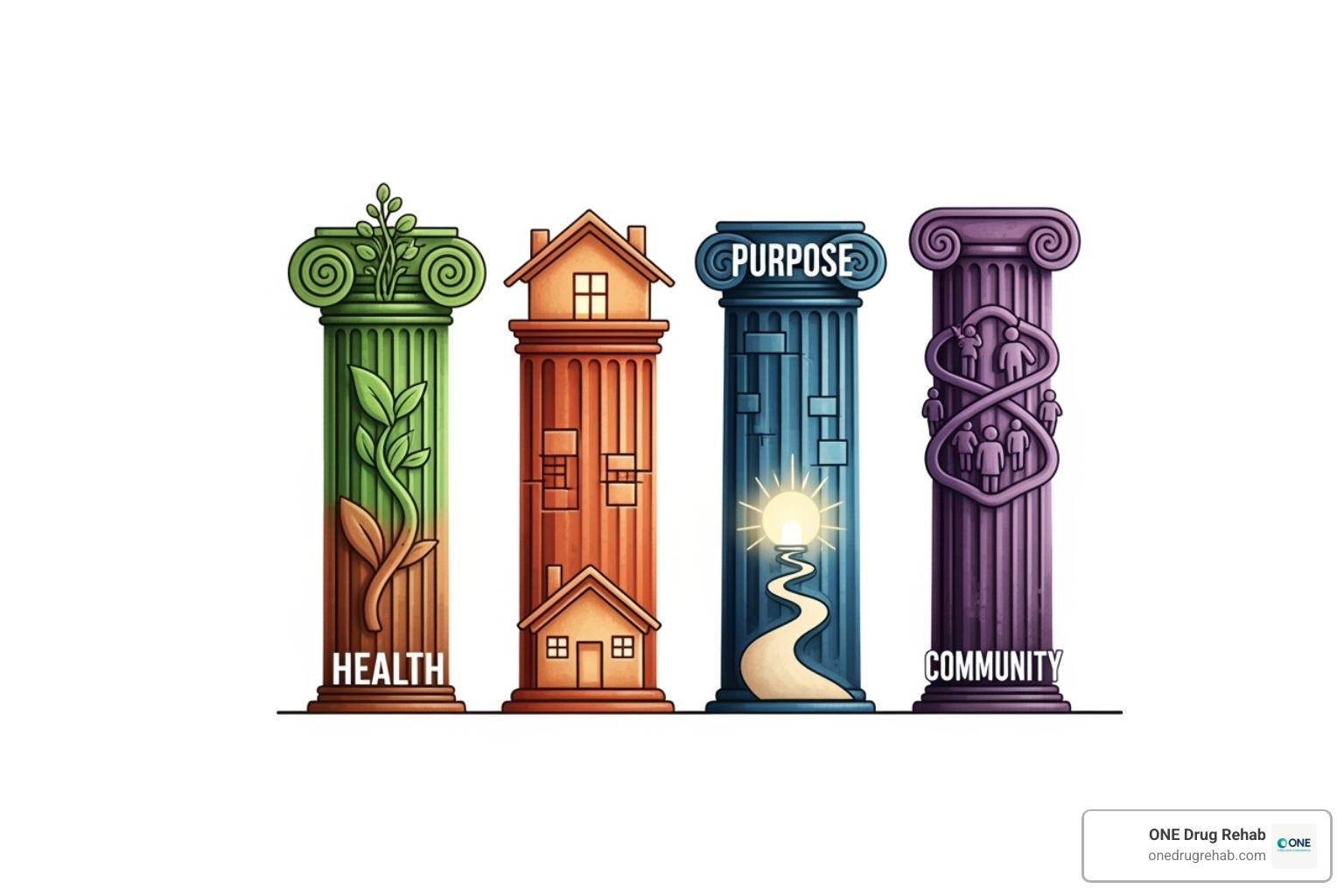
Key measures of success beyond sobriety include:
- Physical and Mental Health: Improved sleep, reduced anxiety, and better management of chronic health issues.
- Harm Reduction: For some, success may initially mean reducing the frequency and negative consequences of use, even if complete abstinence isn’t immediately achieved. Any reduction in harm is progress.
- Employment and Housing: Stable work and housing are natural results of sustained recovery, allowing a focus on career and life goals.
Measuring this broad definition of success is challenging. Every person’s journey is unique (patient heterogeneity), and there can be discrepancies between self-reported data and clinical assessments. However, treatment programs that focus on this whole-person approach see dramatically improved rehab success rates.
What Are the Actual Rehab Success Rates? A Look at the Data
Decades of research show that addiction treatment is remarkably effective. Studies consistently show that 40-60% of people achieve sustained sobriety after completing a rehabilitation program. A comprehensive study by the CDC and the National Institute on Drug Abuse (NIDA) found that 75% of people who receive treatment eventually recover.
Beyond sobriety, treatment transforms lives. Long-term data from a large, non-profit treatment network show that at a 12-month follow-up, 86% of its inpatient population reported good or better overall health and quality of life. You can explore more detailed findings through NIDA research on treatment effectiveness. The message is clear: professional treatment dramatically increases your chances of building the life you want.
Understanding the Nuances of Rehab Success Rates by Substance
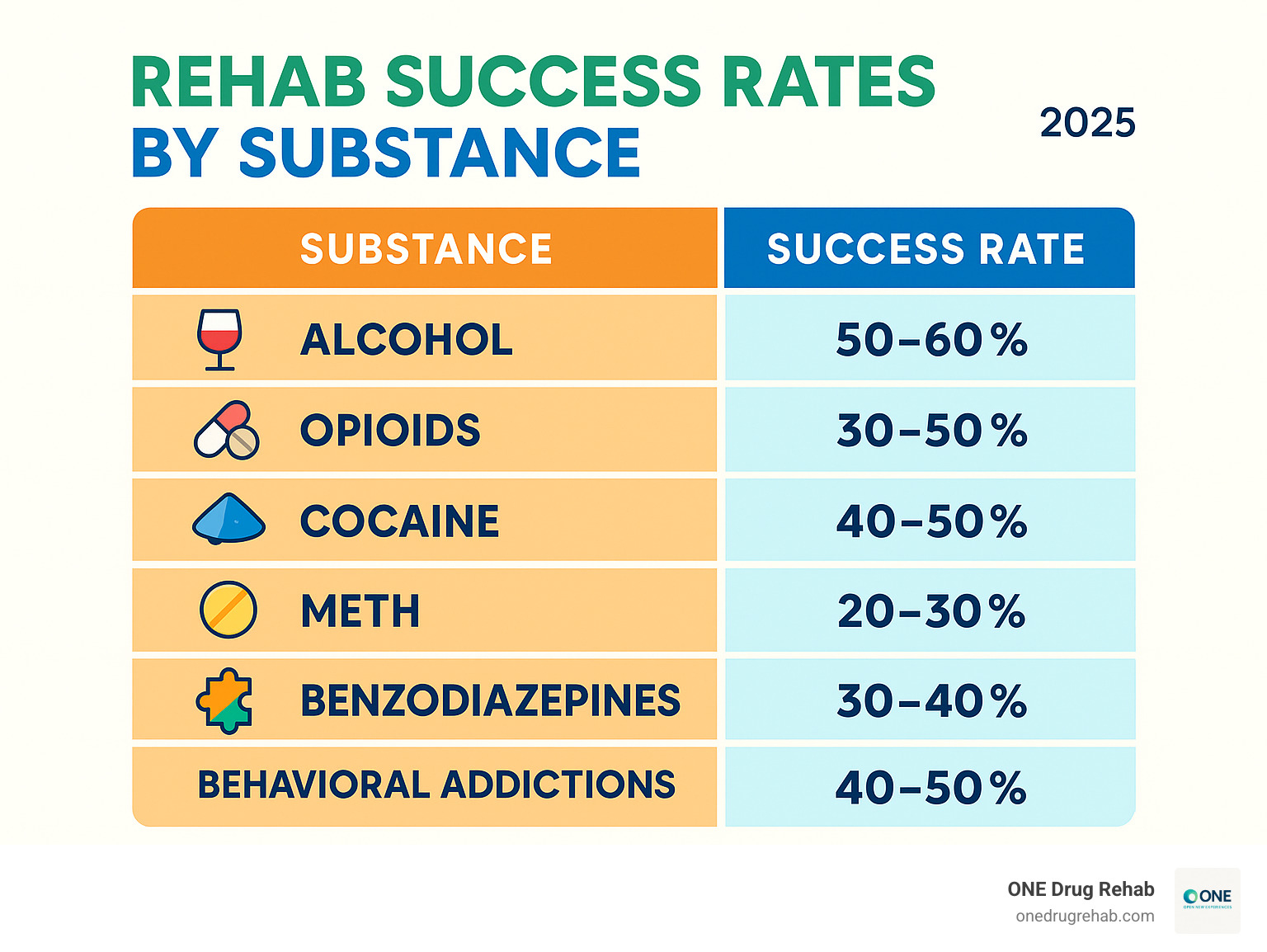
Rehab success rates vary by substance due to the different ways they affect the brain and body. Here’s a breakdown of typical success rates:
- Alcohol Use Disorder (50-60%): High success rates are supported by effective medications like naltrexone and disulfiram used alongside therapy.
- Cocaine Addiction (40-50%): Success relies on behavioral therapies, as there are no FDA-approved medications yet.
- Opioid Use Disorder (30-50%): Outcomes improve dramatically with Medication-Assisted Treatment (MAT). MAT (using methadone, buprenorphine, or naltrexone) can lead to 90% lower drug use and reduces deaths by 50% or more.
- Benzodiazepine Addiction (30-40%): Requires careful medical supervision during detox due to potentially dangerous withdrawal.
- Methamphetamine Addiction (20-30%): While medications are not yet available, behavioral therapies like CBT and Contingency Management still lead to significant life improvements.
- Behavioral Addictions (40-50%): Addictions like gambling respond well to therapeutic approaches used for substance use disorders.
The Impact of Treatment Setting and Modality
Where and how you receive treatment significantly impacts rehab success rates.
- Residential/Inpatient Programs: Offer the most intensive, 24/7 care in a structured environment away from triggers. This is often life-saving for those with severe addiction, co-occurring disorders, or unstable home lives.
- Outpatient Programs: Allow you to maintain daily responsibilities. Intensive Outpatient Programs (IOP) involve 9-12 hours of weekly programming. Even virtual IOP can be effective, with one study showing 69.6% abstinence at 12-month follow-up.
Regardless of the setting, the most effective programs use evidence-based therapies like Cognitive Behavioral Therapy (CBT), Dialectical Behavior Therapy (DBT), Motivational Interviewing, and Family Therapy. The key is finding a program that matches your specific needs. For more details, see our guides on types of addiction treatment and rehab for families.
Key Factors That Influence Rehab Success Rates
Success in recovery is not determined by a single factor but by a combination of personal, treatment, and environmental elements.

Key influences on rehab success rates include:
- Motivation to Change: Lasting recovery requires a genuine readiness to do the work.
- Severity of Addiction: Longer or more severe addiction often requires more intensive, long-term care.
- Co-occurring Mental Health Conditions: Integrated treatment for dual diagnoses like depression or anxiety alongside addiction is crucial for success.
- Quality of Treatment: Programs with qualified staff, evidence-based therapies, and personalized plans have better outcomes.
- Therapeutic Alliance: A strong, trusting bond between a client and their therapist is vital.
- Family and Social Support: A supportive home environment and a substance-free social circle provide a foundation for recovery. Programs that include rehab for families are highly valuable.
- Peer Support: Connecting with others on the same journey provides accountability and hope.
The Impact of Treatment Duration and Completion
One of the strongest predictors of long-term success is staying in treatment long enough. Recovery takes time to unlearn old patterns and build new skills. Research consistently shows that treatment for 90 days or more yields significantly better outcomes, as this is a critical period for the brain to form new neural pathways supporting recovery.
Statistics highlight the importance of completion:
- Women in residential treatment for six months or more had abstinence rates of 68-71%.
- One multi-site study found a staff-approved discharge decreased relapse odds by 50%. At 12 months, 59.5% of those with an approved discharge remained abstinent, compared to 42.4% who left against medical advice.
Leaving treatment early is like stopping an antibiotic course midway; the underlying issue may not be fully resolved. Studies consistently show that longer treatment improves outcomes, giving people the time needed for lasting change.
The Critical Role of Aftercare and Long-Term Support
Completing rehab is the beginning, not the end. Aftercare and long-term support are essential for maintaining success, as addiction is a chronic condition requiring ongoing management.
The transition back to daily life can be overwhelming. Effective aftercare provides a crucial support system:
- Relapse Prevention Plans: Personalized strategies to identify triggers and manage cravings.
- Sober Living Homes: A structured, substance-free bridge between intensive treatment and independent living.
- Peer Support Groups: Organizations such as Alcoholics Anonymous, Narcotics Anonymous, or SMART Recovery offer community and shared experience. They are most effective when combined with other forms of support.
- Ongoing Therapy: Continued counseling helps reinforce recovery skills.
- Building Recovery Capital: Developing internal resources (coping skills, self-esteem) and external resources (supportive relationships, stable housing, employment) is key to long-term success.
The Truth About Relapse and the Path to Recovery
Relapse is a common and often misunderstood part of the recovery journey. It is not a sign of failure, but rather a characteristic of managing a chronic disease.

The National Institute on Drug Abuse confirms that relapse rates for addiction (40-60%) are similar to those for other chronic conditions like hypertension (50-70%) and Type 1 diabetes (30-50%). Just as a blood sugar spike doesn’t mean diabetes treatment has failed, a relapse doesn’t negate the progress made in addiction recovery.
A relapse is a signal that the treatment plan may need adjustment. It offers a valuable opportunity to identify triggers and strengthen coping skills. Recovery is rarely a straight line; it’s a winding path where detours are part of the process of finding lasting sobriety.
How Many Attempts Does Lasting Recovery Typically Take?
A National study on recovery attempts provides a hopeful perspective on how many tries it takes to achieve lasting sobriety.
Researchers found that the median number of serious recovery attempts is just 2. This means half of all people who achieve recovery do so in two attempts or fewer. The average (mean) is higher at about 5 attempts, but this is skewed by a smaller group requiring more tries. Furthermore, about 13% of people resolve their substance use problem without any formal recovery attempts.
This data challenges the stereotype of addiction as a perpetually relapsing condition. Most people achieve lasting recovery within a few dedicated efforts. Each attempt is a step forward, not a failure.
Frequently Asked Questions About Rehab Effectiveness
Here are honest answers to common questions about rehab success rates and what to expect from treatment.
How many times does the average person go to rehab?
Research shows the median number of serious recovery attempts is 2, meaning half of all people who succeed do so in two tries or fewer. The average is higher (around 5) due to a smaller number of people needing more attempts. These “attempts” include any serious effort, from formal rehab to support groups. Many people achieve lasting sobriety after just one or two dedicated efforts.
What is the most successful type of rehab?
There is no single “most successful” type of rehab; success depends on finding the right fit for an individual’s needs. However, programs with higher rehab success rates typically share these features:
- A longer duration of care (90 days or more).
- Use of evidence-based therapies (e.g., CBT, DBT).
- Integrated treatment for co-occurring mental health disorders (dual diagnosis).
- A strong, comprehensive aftercare plan.
For severe addiction or unstable home environments, residential programs often provide a crucial, structured foundation for recovery.
Is relapse considered a failure of treatment?
No, relapse is not a failure. The National Institute on Drug Abuse classifies relapse as a common part of the recovery process, similar to recurrences in other chronic diseases like diabetes or asthma. Relapse rates for addiction (40-60%) are comparable to these other conditions. A relapse is a sign that the treatment plan needs to be adjusted, not that the person or the treatment has failed. It is an opportunity to strengthen coping strategies and re-engage with support.
Conclusion: Finding Your Path to Successful Recovery
After exploring rehab success rates, the key takeaway is that recovery is possible. Success is not just about abstinence but about rebuilding your life—improving health, relationships, and finding purpose.
The data is encouraging: 40-60% of people achieve sustained sobriety after treatment, and 75% eventually recover with professional help. These statistics prove that treatment works.
Relapse is not failure. It is a common part of managing a chronic condition. The goal is to get back on track and adjust your approach. With a median of just two serious attempts needed for lasting recovery, there is every reason to be hopeful.
To maximize your chances of success:
- Commit to Treatment Duration: Programs of 90 days or more provide the time needed to build lasting skills.
- Prioritize Aftercare: Ongoing support after initial treatment is crucial for long-term sobriety.
- Find Personalized Care: The best programs tailor their approach to your unique needs, including any co-occurring mental health conditions.
ONEDrugRehab.com is a third-party resource to help you research and compare facilities, providing the information you need to make an informed decision.
Our advice is to seek evidence-based care, commit to the full continuum of treatment, and build a strong support system. The journey isn’t always easy, but the data shows that people recover and transform their lives every day. Your recovery story can be one of them.
Ready to take the first step? Use our tools to compare rehab centers and find the right fit for you. We’re here to help you find your path to a healthier, more fulfilling life.