

Starting Your Recovery Journey: An Overview of Detox Treatment Options
When you’re ready to begin the path to sobriety, understanding detox treatment options is the crucial first step. Detoxification, or detox, is the process of safely removing substances from the body while managing withdrawal symptoms. It’s a critical bridge to long-term recovery, not the entire journey itself.
Here are the primary types of detox treatment options:
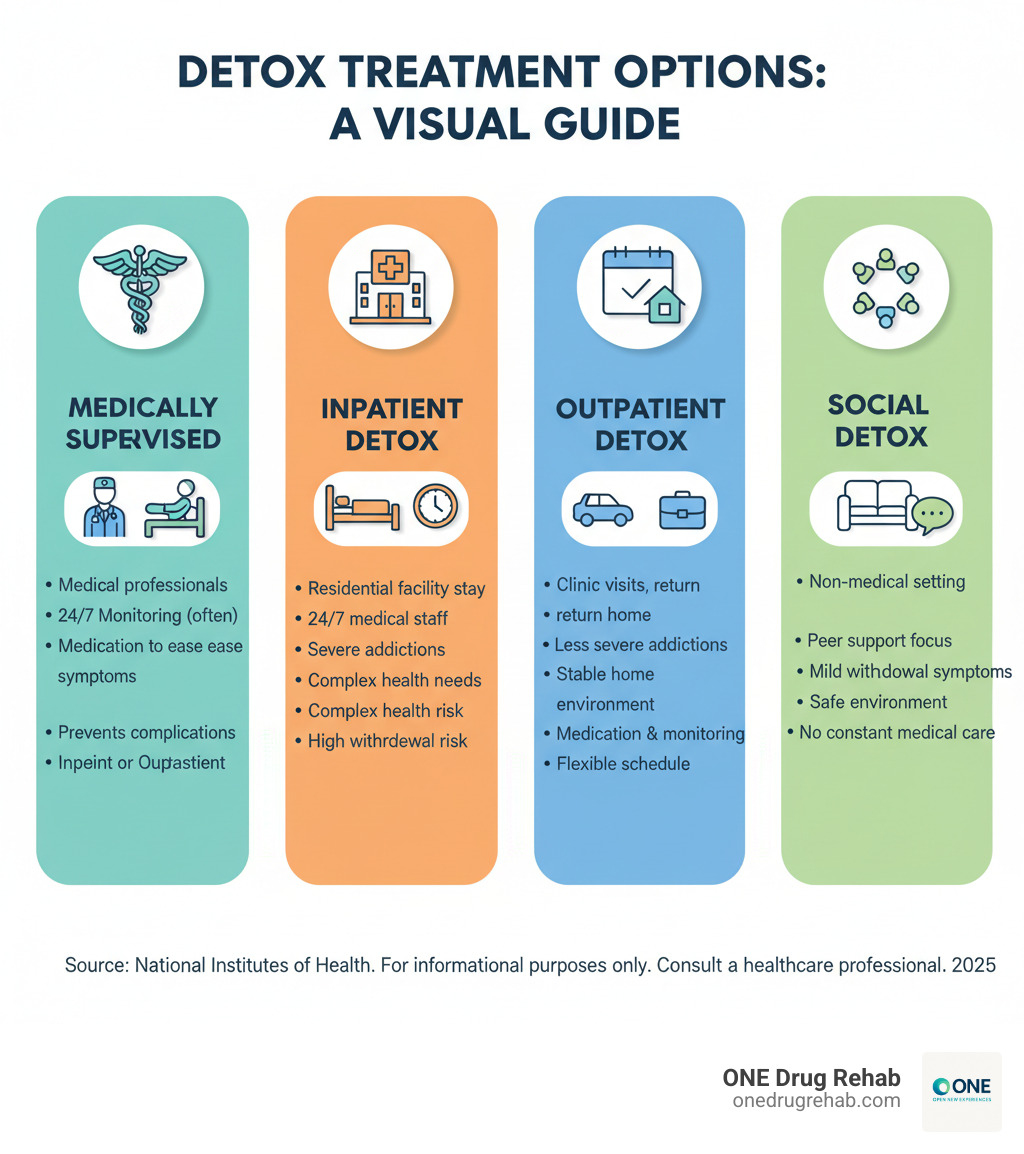
- Medically Supervised Detox: Medical professionals monitor your health and use medications to ease withdrawal symptoms and prevent complications.
- Inpatient Detox: You stay at a 24/7 medical facility, recommended for severe addictions or high withdrawal risks.
- Outpatient Detox: You visit a clinic for medication and monitoring but return home. This is for less severe addictions with a stable home environment.
- Social Detox: This offers non-medical support in a residential setting for those with mild withdrawal symptoms, focusing on peer support.
Facing a substance use disorder can feel overwhelming, but you are not alone. This guide will help you understand the different detox options to make an informed decision. Detox is just the beginning; it prepares you for the deeper work of addiction treatment.
Understanding Detox: The Critical First Step to Recovery
Detoxification is the first step in recovery, where your body clears itself of substances while professionals help you manage withdrawal. It’s a physical reset, but it’s crucial to understand that detox treatment options alone do not cure addiction. Detox addresses physical dependence—the body’s reaction to the absence of a substance. It doesn’t address the psychological roots of addiction, which is the focus of comprehensive treatment that follows.
Professional detox is crucial because withdrawal can be uncomfortable and even life-threatening. Medical supervision ensures symptoms are managed safely. Attempting to detox alone, especially from alcohol or benzodiazepines, can be fatal. Seeking professional help is the safest choice.

Medical vs. Non-Medical Detox
When exploring detox treatment options, you’ll find two main approaches:
Medical detox, or medically managed withdrawal, provides 24/7 monitoring by doctors and nurses. They use specific medications to ease withdrawal symptoms, reduce cravings, and prevent dangerous complications like seizures. These facilities follow strict safety protocols to handle any emergencies.
Non-medical detox, or social detox, offers a supportive, substance-free environment with peer support but without 24/7 medical staff or medication. It’s only suitable for mild withdrawal cases and is not recommended for alcohol, benzodiazepine, or heavy opioid use.
Unsupervised withdrawal (“cold turkey”) is dangerous. Abruptly stopping alcohol or benzodiazepines can cause fatal seizures. Opioid withdrawal is painful, often leading to relapse. A relapse after detox is especially dangerous because reduced tolerance increases the risk of a fatal overdose.
The Benefits of Medically Supervised Withdrawal
Choosing medically supervised withdrawal offers clear advantages:
- Patient Safety: 24/7 monitoring prevents emergencies and manages health risks.
- Symptom Management: Medications make the withdrawal process bearable and reduce severe discomfort.
- Reduced Relapse Risk: By managing symptoms and cravings, you are more likely to complete the detox process.
- Emergency Response: Immediate medical care is available for any complications that arise.
- Transition to Treatment: It provides a seamless path to the next phase of recovery, such as inpatient or outpatient therapy.
- Evidence-Based Care: Treatment is personalized and uses research-backed strategies for the best chance at success.
A Guide to Common Detox Treatment Options by Substance
Detox is not one-size-fits-all; it’s custom to your specific substance use, health, and history. The process begins with a thorough evaluation to create a personalized treatment plan. Throughout detox, a medical team monitors your vitals and manages any co-occurring mental health conditions, which is essential for safety and success.

Alcohol Detox Treatment Options and Medications
Medically supervised detox is strongly recommended for alcohol withdrawal, as it can be life-threatening. Symptoms like tremors and anxiety begin 6-24 hours after the last drink. More severe complications, such as seizures, can occur within 12-48 hours. Delirium Tremens (DTs), a potentially fatal condition with confusion and hallucinations, can appear 2-4 days later.
Medical supervision can prevent these complications. Benzodiazepines (e.g., diazepam, lorazepam) are used to reduce symptoms, prevent seizures, and manage anxiety. Nutritional support, especially thiamine (Vitamin B1), is also critical to prevent serious neurological damage. Other medications like anticonvulsants may also be used. For more information, see this guide from SAMHSA: Medication for the Treatment of Alcohol Use Disorder: A Brief Guide.
Opioid Detox Treatment Options
Opioid withdrawal is uncomfortable, though rarely life-threatening. The severe pain often leads to relapse, which is why medically supervised detox is crucial. Symptoms like muscle aches, sweating, and intense cravings begin 8-12 hours after using short-acting opioids (like heroin) or up to 48 hours for long-acting ones (like methadone).
Medications are key to managing opioid withdrawal. Methadone and Buprenorphine are opioid agonists that reduce symptoms and cravings. Non-opioid medications like clonidine help with physical symptoms, and other drugs can manage nausea or insomnia. Crucially, overdose risk increases after detox due to lowered tolerance. Overdose prevention education, including information on naloxone, is a vital part of the process. For more details, refer to TIP 63: Medications for Opioid Use Disorder.
Benzodiazepine & Sedative Detox
Stopping benzodiazepines (e.g., Xanax, Valium) abruptly can be fatal. Withdrawal carries a high risk of seizures, similar to alcohol withdrawal, making professional supervision essential. The safest method is a slow tapering schedule, where the dosage is gradually reduced over weeks or even months. This allows the brain to adjust and minimizes severe symptoms.
Close medical monitoring is critical to watch for complications. Anticonvulsants may be used to reduce seizure risk, and other medications can manage anxiety or insomnia. Rapid detox methods are not recommended due to significant dangers. A slow, medically managed taper is the only safe approach for these detox treatment options.
Beyond Detox: Your Path to Long-Term Recovery
Detox is not a cure for addiction; it’s the first step. Ongoing treatment is essential to address the psychological roots of substance use and prevent relapse. Without it, the risk of returning to substance use is high.

Types of Addiction Treatment Programs
After detox, several levels of care are available:
- Inpatient/Residential Programs: You live at a facility for 30 days to a year, receiving 24/7 structured care. This is best for severe addiction or unstable home environments.
- Partial Hospitalization Programs (PHP): Intensive treatment for several hours a day, multiple days a week, while living at home.
- Intensive Outpatient Programs (IOP): Offer 9-20 hours of treatment per week, allowing you to maintain daily responsibilities.
- Standard Outpatient Programs (OP): Less than 9 hours of treatment per week, suitable for mild issues or as a step-down from more intensive care.
- Sober Living Homes: Substance-free group homes that provide peer support and accountability during the transition to independent living.
Comprehensive Services for Lasting Sobriety
Quality treatment programs offer a range of services:
- Individual Therapy: One-on-one sessions to address personal triggers using methods like Cognitive Behavioral Therapy (CBT) and Dialectical Behavior Therapy (DBT).
- Group Counseling: A peer support setting to share experiences and learn from others.
- Family Therapy: Helps heal family relationships, improve communication, and educate loved ones.
- Dual Diagnosis Treatment: Integrated care that treats both a substance use disorder and a co-occurring mental health condition like depression or anxiety.
- Holistic Approaches: Complementary therapies like yoga, meditation, and art therapy that support well-being.
- Aftercare Planning: A personalized roadmap for continued recovery after leaving treatment.
Post-Detox Support for Recovery
Recovery is a lifelong process that requires ongoing support:
- Ongoing Therapy: Regular sessions to reinforce coping skills and steer challenges.
- Relapse Prevention Planning: Identifying triggers and creating a plan to manage cravings. A relapse is a sign that the treatment plan needs adjustment, not a failure.
- Support Groups: Peer-led groups like Alcoholics Anonymous (AA), Narcotics Anonymous (NA), and SMART Recovery provide community and accountability.
- Post-Detox Medications: For alcohol, medications like naltrexone can reduce cravings. For opioids, maintenance medications like methadone and buprenorphine stabilize brain chemistry and prevent relapse.
How to Find a Qualified Detox and Rehab Facility
Choosing a facility for your detox treatment options is a major decision. To steer the choices, look for these clear signs of quality care:
- Licensing and Accreditation: Ensure the facility is licensed by the state. Look for accreditation from The Joint Commission or CARF, which indicates high standards of care.
- Qualified Staff: The team should include licensed medical and therapeutic professionals with experience in addiction treatment.
- Evidence-Based Practices: Quality facilities use research-backed methods like CBT, DBT, and FDA-approved medications. Be wary of programs promising “miracle” cures.
- Individualized Treatment Plans: A good facility will create a personalized plan based on a comprehensive assessment of your specific needs, including any co-occurring disorders.
- Continuum of Care: Look for a facility that offers or coordinates a seamless transition from detox to other levels of care, like inpatient or outpatient programs, and helps with aftercare planning.
This process can feel daunting. For confidential, free assistance, you can reach out to SAMHSA’s National Helpline for treatment referrals and information.
You can also find a treatment center with ONEDrugRehab.com, a directory to help you research options without pressure. Taking this step shows courage, and the right facility will provide compassionate, professional care.
Frequently Asked Questions about Detox
Considering detox treatment options brings up many questions. Here are answers to some common ones.
How long does the detox process usually last?
The timeline for detox varies for each person. Key factors include:
- Substance Used: Alcohol detox often lasts about a week. Opioid withdrawal can be 3-5 days for short-acting drugs or weeks for long-acting ones. Benzodiazepine detox requires a slow taper over two or more weeks.
- Addiction History: A longer, more severe history of use generally means a longer detox.
- Individual Health: Age, metabolism, and overall health affect how quickly your body processes substances.
The acute phase of medical detox typically lasts 5 to 10 days. The primary goal is to complete the process safely, not quickly.
Is detox painful?
Withdrawal can be uncomfortable, but the goal of medical detox is to minimize pain and discomfort. Without support, withdrawal can be miserable, but with medical care, it is manageable. Medical staff use specific medications to manage symptoms like anxiety, nausea, and muscle aches. While you may still feel some mild symptoms, their intensity will be greatly reduced. Your comfort and safety are the staff’s top priorities.
Can I detox from drugs or alcohol at home?
While detoxing at home may seem appealing, it is extremely dangerous and highly discouraged. Withdrawal from certain substances, especially alcohol and benzodiazepines, can be life-threatening. Abruptly stopping can cause fatal seizures or, with alcohol, Delirium Tremens (DTs).
For other substances like opioids, the intense discomfort often leads to relapse. Relapsing after detox is especially dangerous due to a lowered tolerance, which significantly increases the risk of a fatal overdose. At home, you cannot manage complications like severe dehydration or medical emergencies.
A medical facility provides 24/7 monitoring, medication to manage symptoms, and immediate intervention for any complications. Professional supervision is the safest and most effective way to detox. Please use resources like SAMHSA’s National Helpline or find a treatment center with ONEDrugRehab.com to explore safe options.
Conclusion
This guide has covered the role of medical detox, specific detox treatment options by substance, and the continuum of care that follows. Remember: detox is the beginning of recovery, not the end. Detox stabilizes your body, but ongoing treatment is where you build the skills for a new life.
Recovery is possible. Millions of people are living proof that a life free from substance dependence can be built, one day at a time. The journey begins with the brave first step of asking for help.
If you or a loved one are ready to explore your options, find a treatment center on ONEDrugRehab.com to connect with qualified facilities. We are here to help you find the right fit to guide you through detox and beyond.
You deserve a life of health, hope, and freedom. The journey starts now, and you don’t have to walk it alone.